

The Renaissance ideal city was a plan for control.
Streets, walls, gates, squares, markets, water, and movement were meant to line up. The city should be easy to read, easy to defend, and easy for power to manage.
Some plans stayed on paper. Some were partly built. Palmanova shows the clean version because the geometry still survives.
The problem is simple. Order can help a city work. It can also make the city stiff, expensive, and hard to change.
For the broader style behind these plans, start with Renaissance architecture. For the older Roman planning logic behind many Renaissance ideas, use urban planning in ancient Rome.
What Made a City “Ideal”?

A Renaissance city was considered ideal when its plan made order visible.
That usually meant clear geometry, strong defenses, a central civic space, controlled building fronts, and streets that made movement legible. The city was supposed to be understandable from above and useful on the ground.

| Planning Goal | Typical Renaissance Move | What It Tried To Solve |
|---|---|---|
| Order | Grids, radial streets, circles, squares, and clear axes | The city could be read as one planned system. |
| Defense | Walls, bastions, gates, star forms, controlled approaches | The city could resist attack and manage access. |
| Civic life | Central square, market, council spaces, public halls | Trade, government, gathering, and ceremony had a clear center. |
| Status | Uniform façades, aligned streets, controlled building heights | Power looked stable from the street. |
| Health and movement | Wider streets, separated traffic, water management, planned routes | Air, sanitation, access, and circulation could be managed better. |
The Renaissance ideal city was not democratic in the modern sense. Most plans were created by rulers, theorists, engineers, and architects. The geometry reflected authority as much as civic improvement.
Geometry Was the Argument
Geometry did more than make the drawings look impressive.
A circle suggested unity. A square suggested order. A star shape handled defense and visibility. A central piazza gave the city a clear public heart. Straight streets made movement and surveillance easier. Uniform building fronts made private difference less visible from the street.
That is why ideal city drawings can feel so powerful. They compress many urban problems into one clean diagram.
But a clean diagram is not the same as a good city.
A real city has mud, noise, repair, markets, carts, waste, property disputes, money shortages, class separation, military pressure, and people who do not always behave the way a planner expects. Renaissance ideal city plans often looked more complete on paper than they felt in life.
Sforzinda: The City That Stayed on Paper

Filarete’s Sforzinda is one of the clearest Renaissance ideal city projects because it was not compromised by construction.
That is also the problem.
Designed in the 15th century for Francesco Sforza, Sforzinda used an eight-pointed star plan with radial streets and a controlled center. It was a city as argument: geometry could create civic order, defense, status, and moral clarity.
The plan is useful because it shows what Renaissance theorists wanted before the real world got involved. Gates align with routes. Routes pull toward the center. The outer shape reads as both defense and symbolism. The city becomes a diagram of control.
Sforzinda was never built. That matters. It shows the distance between an ideal plan and a city that can absorb cost, politics, terrain, trade, housing, and daily use.
The drawing is beautiful because nobody had to live with its compromises.
Pienza: The Ideal City as a Small Repair
Pienza is more useful than many perfect plans because it was not built from scratch.
It was an existing hill town reshaped through Renaissance planning ideas. That makes it more realistic. Instead of inventing a whole city on clean paper, the project worked inside existing streets, slopes, buildings, views, and property limits.
The result was not a perfect star or grid. It was a targeted urban edit.
The central space became the main move. Buildings around the square were coordinated so the town presented a clearer public face. The project showed how Renaissance planning could act like surgery: not replacing the whole city, but correcting the part that mattered most.
That is the practical lesson. Most cities are not rebuilt from zero. They are adjusted. A square is reframed. A street is clarified. A façade line is controlled. A public route becomes easier to understand.
Pienza shows that the ideal city could work best when it stopped trying to be total.
Palmanova: The Perfect Plan With a Hard Edge
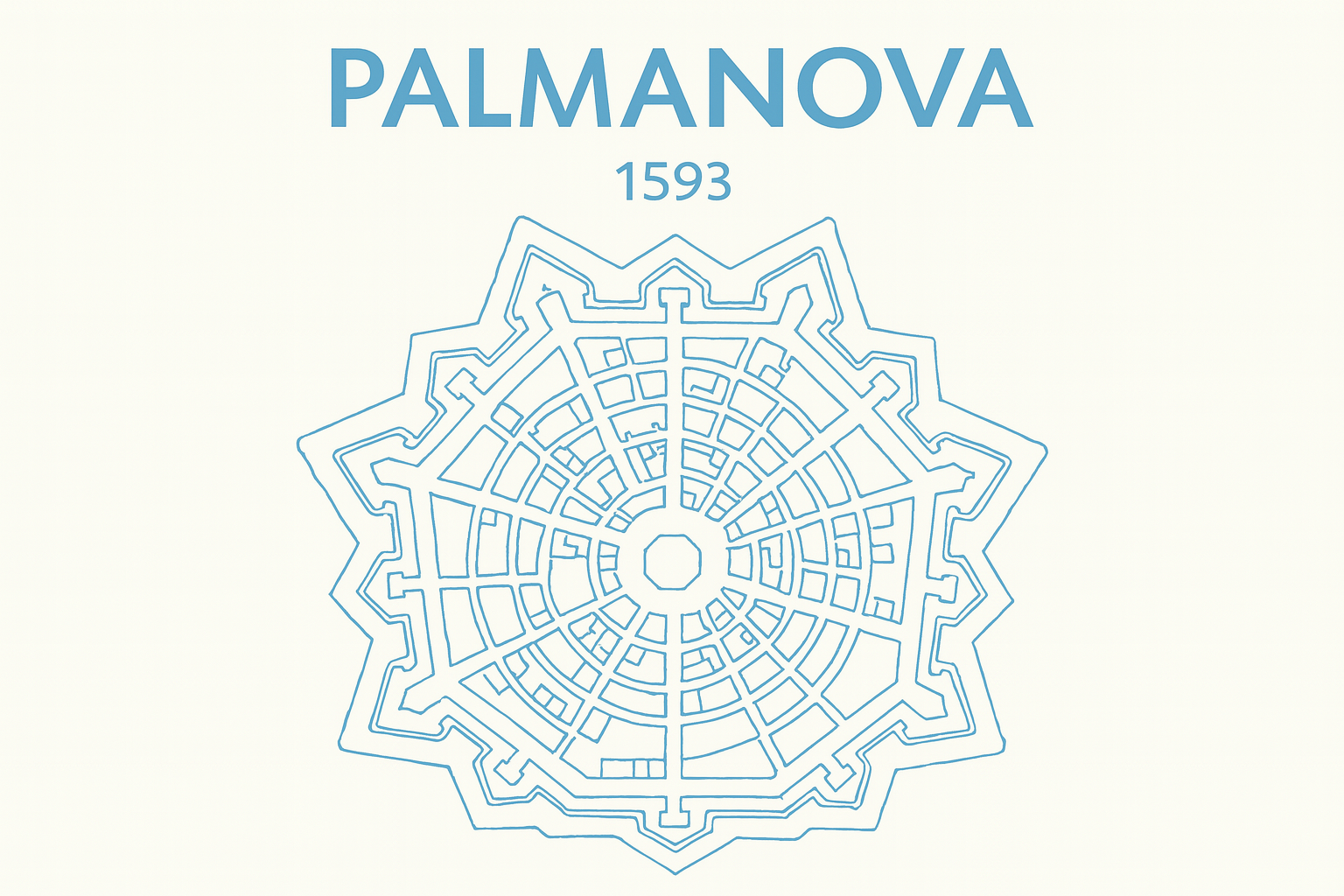
Palmanova is the page everyone wants because it looks like an ideal city from the air.
Founded by the Venetian Republic in 1593, Palmanova used a star-shaped defensive plan with radial streets and a central public space. The city’s geometry was not only visual. It was military, administrative, and symbolic.
The star form helped manage defense. The gates controlled entry. The radial streets tied the edge to the center. The central square gave the plan a visible heart.
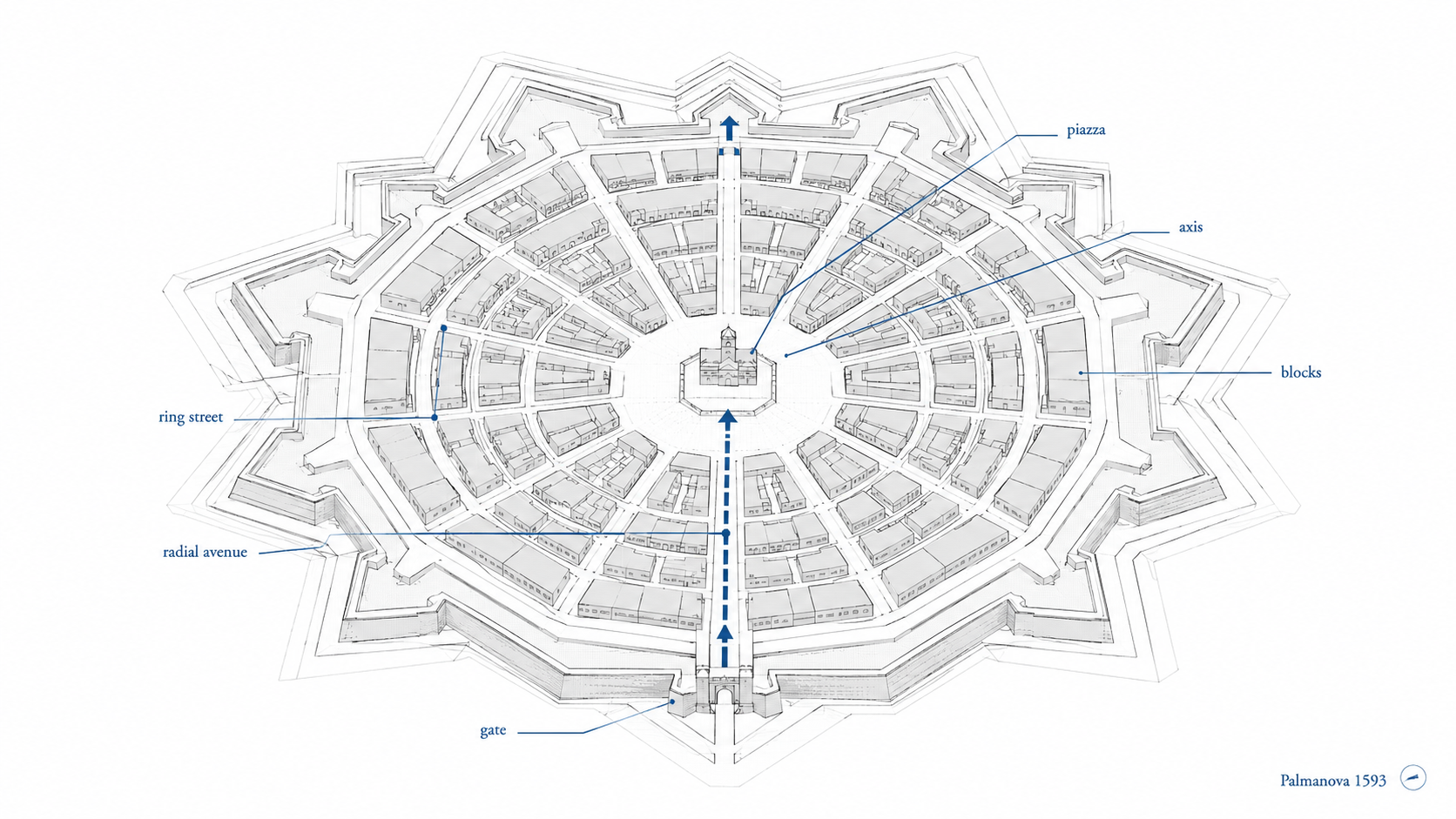
But Palmanova also exposes the weakness of ideal planning. A city can be geometrically brilliant and still feel too controlled. A plan can protect movement and restrict it at the same time. A defensive geometry can make a place memorable from above, while daily life on the ground depends on markets, housing, work, comfort, and flexibility.
This is why Palmanova is not only a success story. It is a warning.
When Order Becomes a Trap
This is the section most pages skip.
Ideal cities promise clarity. That promise is seductive. A clean plan makes the messy city look solvable. Draw a center. Draw streets. Draw walls. Assign functions. Control the façades. The city looks disciplined before one person moves into it.
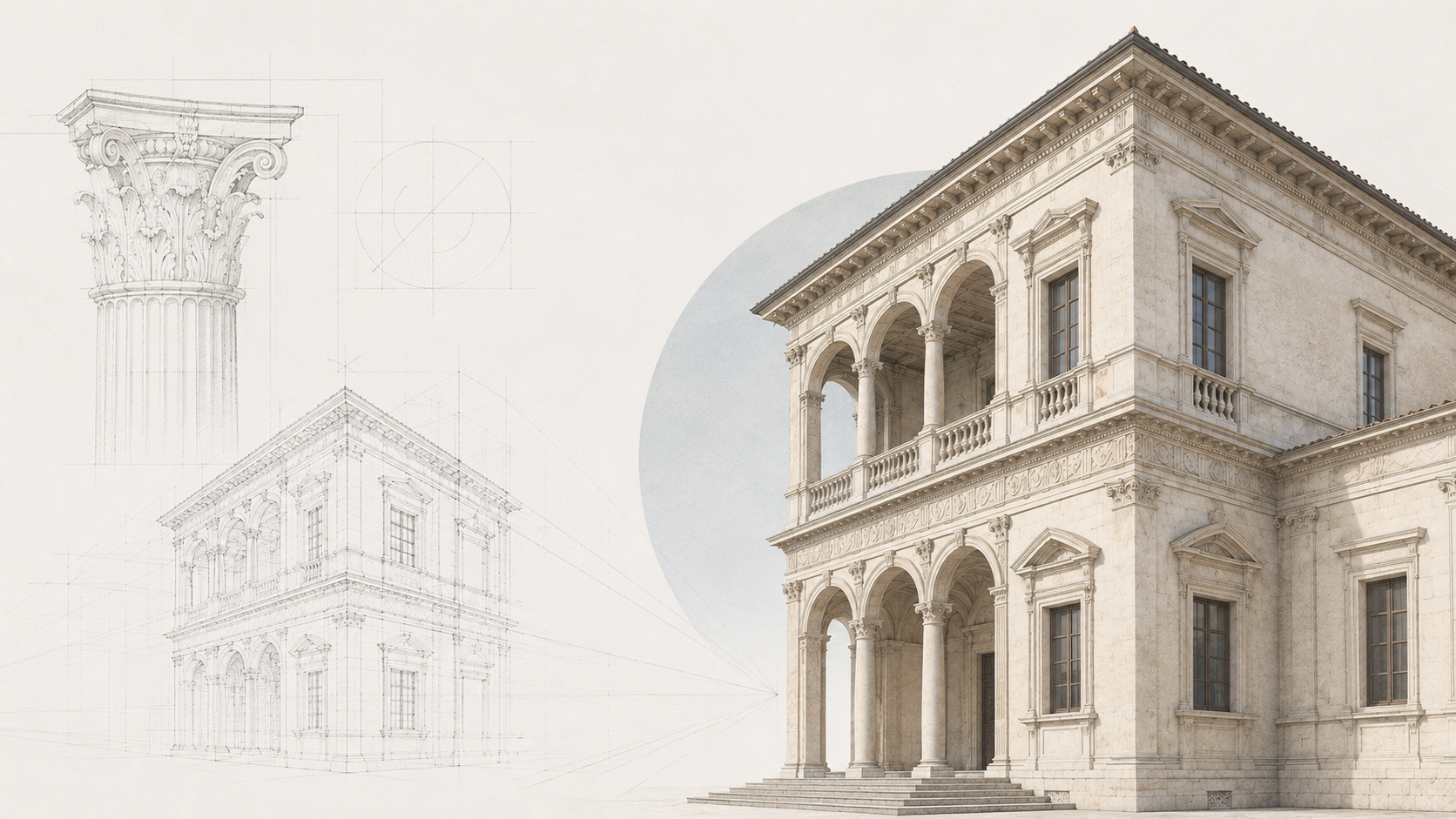
Then life starts pushing back.
Markets spill over. Houses change. Workshops need space. Deliveries do not follow symbolic axes. Poorer residents need flexibility. Defenses become obsolete. A square that looked perfect in plan may feel exposed, empty, or too formal. Streets that look rational from above may not support daily shortcuts, shade, noise, repair, or small trade.
That is the hard lesson. A city is not ideal because the drawing is perfect. It is closer to ideal when the plan can absorb use without breaking.
Modern master-planned cities still repeat the Renaissance mistake. They sell order from above: clean districts, perfect roads, controlled façades, and rendered public spaces. But the real test comes later. Can the city adapt? Can people find shade, work, services, transit, repair, and affordable housing? Can the street tolerate life that was not in the rendering?
The Renaissance ideal city remains useful because it shows both sides of planning: the power of order and the danger of over-control.
Leonardo’s City Was About Flow
Leonardo da Vinci’s ideal city sketches moved the question away from pure geometry.
His ideas responded to problems of crowding, sanitation, water, air, and movement. Instead of only asking how a city should look, Leonardo asked how it should function. He imagined separated levels, better ventilation, cleaner water movement, and routes that could divide traffic and daily life.
That makes his urban thinking feel surprisingly modern.
The key lesson is not that Leonardo predicted the modern city. That is too easy. The stronger point is that he treated urban design as a performance problem. Waste, carts, water, walking, air, and status should not all fight inside one tight street.
This is where Renaissance planning becomes more than symbolic geometry. It begins to ask how the city works as a system.
The Painted Ideal City Was Too Empty
The famous ideal city paintings from the late 1400s are beautiful because they remove the hard parts.
They show ordered streets, proportioned buildings, clean plazas, and rational perspective. They also show almost no real urban life. No crowding. No waste. No repairs. No market overflow. No conflict between private buildings and public order.
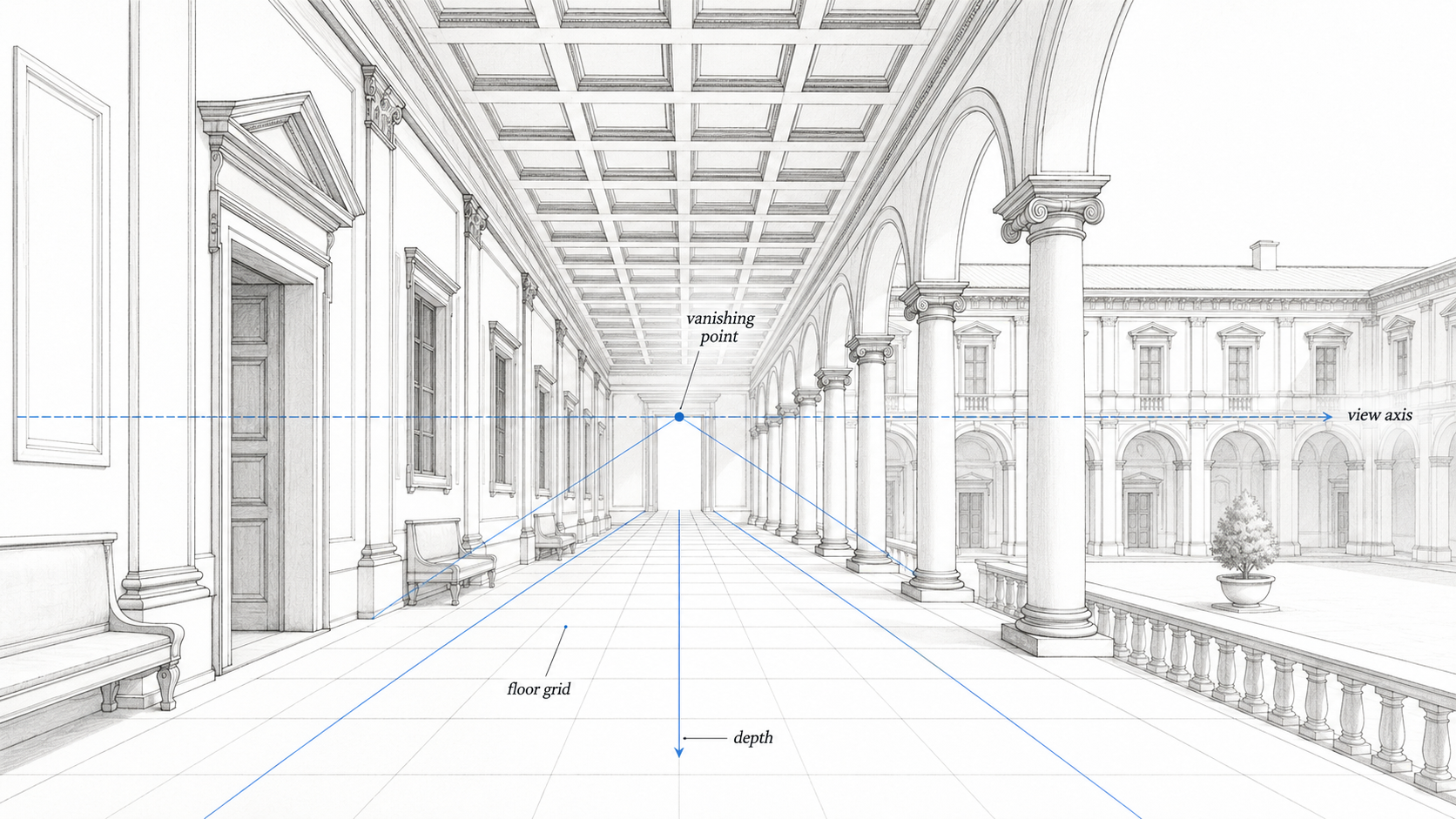
That emptiness is not a minor detail. It reveals the fantasy.
The ideal city in painting is a city without negotiation. The architecture is perfect because people are missing. That does not make the paintings useless. It makes them honest about the Renaissance dream: order before life.
For architecture students, that is the point worth remembering. Perspective can make a city look logical. It cannot prove that the city works.
What the Ideal City Controlled
The Renaissance ideal city controlled more than layout.
| Urban Element | What It Controlled | What Could Go Wrong |
|---|---|---|
| Central square | Public gathering, visibility, trade, authority | It could become too formal, exposed, or symbolic. |
| Radial streets | Movement from edge to center | They could privilege the center too much and weaken local life. |
| Walls and bastions | Defense, entry, separation | They could restrict growth and make expansion difficult. |
| Uniform façades | Visual harmony and civic identity | They could hide inequality and suppress local variation. |
| Zoning | Function, status, trade, work, administration | It could become rigid and top-down. |
| Perspective views | Visual order and symbolic depth | They could make the city look better than it functioned. |
This is the better way to study ideal cities. Do not only ask what shape they used. Ask what each shape tried to control.
Who Shaped the Idea?
The ideal city was not created by one architect.
Leon Battista Alberti helped turn architecture and city form into written theory. His work linked beauty, proportion, public order, and civic life.
Filarete made the ideal city visible through Sforzinda. His plan is valuable because it shows Renaissance planning as a complete diagram of power, defense, and order.
Francesco di Giorgio Martini pushed the connection between military planning and civic form. His drawings show how fortress logic and urban planning became harder to separate.
Vincenzo Scamozzi is often connected with Palmanova’s planning tradition. Whether read as one designer’s work or a larger Venetian military project, Palmanova shows how ideal-city thinking became practical defensive planning.
Leonardo da Vinci widened the discussion toward sanitation, movement, air, and water. That is why his city sketches still feel less decorative and more infrastructural.
Why Most Ideal Cities Stayed Theoretical
Perfect cities are expensive.
They require land control, political power, money, labor, military need, and long-term discipline. Most places already had people, buildings, roads, property lines, defenses, markets, and habits. A perfect geometric city is easy to draw only when the messy parts are removed.
That is why many Renaissance ideal cities stayed in drawings, treatises, and paintings.
The built examples were usually compromises. Pienza edited an existing town. Palmanova turned ideal-city geometry into military planning. Leonardo’s city stayed on paper. Sforzinda stayed theoretical. The painting tradition created perfect views, not buildable housing policy.
The ideal city was powerful because it gave planners a target. It failed when it forgot that cities are repaired, argued over, extended, occupied, and changed.
What Still Matters Today
The Renaissance ideal city still matters because modern planning keeps repeating the same tension.
We still want order. We still draw masterplans with clean diagrams, controlled districts, transit lines, civic centers, and rendered plazas. We still hope that a clear plan can make a better society.
Sometimes it can help.
Good planning can improve walkability, safety, transit, shade, drainage, public life, and access to services. But geometry alone cannot do that. A plan must allow repair, mixed use, daily shortcuts, informal life, affordability, and change over time.
The Renaissance ideal city teaches a useful warning: clarity is not the same as livability.
Reference Books Worth Keeping Nearby
The Image of the City by Kevin Lynch is not a Renaissance book, but it is useful for understanding how people read paths, edges, districts, nodes, and landmarks in real cities.
Ten Books on Architecture by Vitruvius is the older source Renaissance theorists kept returning to for proportion, planning, building judgment, and the idea that architecture could be reasoned through rules.
FAQ
What is a Renaissance ideal city?
A Renaissance ideal city is a planned city concept based on geometry, symmetry, defense, civic order, and human-scaled public space. It was meant to show how a rational society could be reflected in urban form.
Was Sforzinda a real city?
No. Sforzinda was Filarete’s theoretical ideal city plan. It was never built, but it became important because it showed how Renaissance thinkers imagined a city planned from first principles.
Is Palmanova a real Renaissance ideal city?
Yes. Palmanova was founded in 1593 by the Venetian Republic and is one of the clearest built examples of a Renaissance star-fort city with radial planning and a central civic square.
Why is Pienza important?
Pienza is important because Renaissance town-planning ideas were applied to an existing Tuscan hill town. It shows the ideal city as a focused urban intervention rather than a perfect city built from scratch.
Why did Renaissance planners use circles, squares, and stars?
These forms made order visible. Circles suggested unity, squares suggested rational structure, and star plans helped connect defense, gates, streets, and central space.
Were Renaissance ideal cities practical?
Only partly. They were powerful as drawings and political statements, but real cities needed flexibility, housing, trade, repair, growth, and daily use. Perfect geometry often struggled with those needs.
How did Leonardo da Vinci think about the ideal city?
Leonardo’s sketches focused less on symbolic geometry and more on performance: cleaner movement, water, air, sanitation, separated routes, and healthier urban life.
What is the biggest lesson from Renaissance ideal cities?
A city can look ordered from above and still fail on the ground. The real test is whether the plan supports daily life, change, access, comfort, repair, and public use.
Read This Next
Renaissance architecture explains the broader design language behind these plans: proportion, palaces, villas, façades, courtyards, and human-scaled order.
Urban planning in ancient Rome is the better next read for older precedents behind grids, forums, roads, infrastructure, and civic order.
Roman architecture style explains the public-building language Renaissance architects kept studying and adapting.
Architecture complete history gives the wider timeline if you want to place Renaissance planning between ancient, medieval, Baroque, and modern urban design.