
You’re thinking about architecture. Cool. Here’s the real first question: do you like the work, or do you just like the idea of the work?
Most students don’t quit because they “aren’t creative.” They quit because the workflow is slow, critique-heavy, and full of trade-offs: time, money, team decisions, and constraints you can’t ignore.
- How to test architecture interest without spending money.
- What to do in the next 30 days so you actually improve.
- Which classes help (and which ones are optional).
- How to build a starter portfolio that schools understand.
- How to evaluate summer programs and pre-college options.
Start With One Real Job

Your job right now is not “learn everything.” It’s to run a simple experiment: can you observe a space, diagnose what’s wrong, and propose a better layout with evidence?
If you enjoy that loop—observe → sketch → test → revise—you’re in the right neighborhood.
The Quick Reality Check
Architecture is not mostly “drawing pretty buildings.” It’s planning how people move, where daylight lands, where noise collects, what gets built first, and what gets cut when budgets shrink.
If you want one simple indicator: you don’t need to love math, but you do need to be okay with geometry, scale, and basic forces. Buildings don’t care about vibes.
Three Tests That Don’t Lie
Do these before you buy software, take a course, or tell everyone you’re “going to be an architect.”
Test 1: Redraw a Real Place
Pick one space you use every day: your bedroom, the kitchen, a classroom, the school hallway outside the cafeteria. Measure it roughly (feet and inches are fine) and redraw it as a simple plan.
- Goal: accuracy and clarity, not pretty linework.
- Time: 60–90 minutes.
- Proof you’re improving: version 2 reads faster than version 1.
Test 2: Fix One Problem With One Constraint
Choose one problem and one constraint. Example: “Make the classroom quieter” but you’re not allowed to change the walls. Or: “Make the bedroom feel larger” but you can’t buy new furniture.
- Goal: solve with layout, light, and circulation, not shopping.
- Time: 45–60 minutes.
- What schools notice: your reasoning and iteration.
Test 3: Build a Quick Model
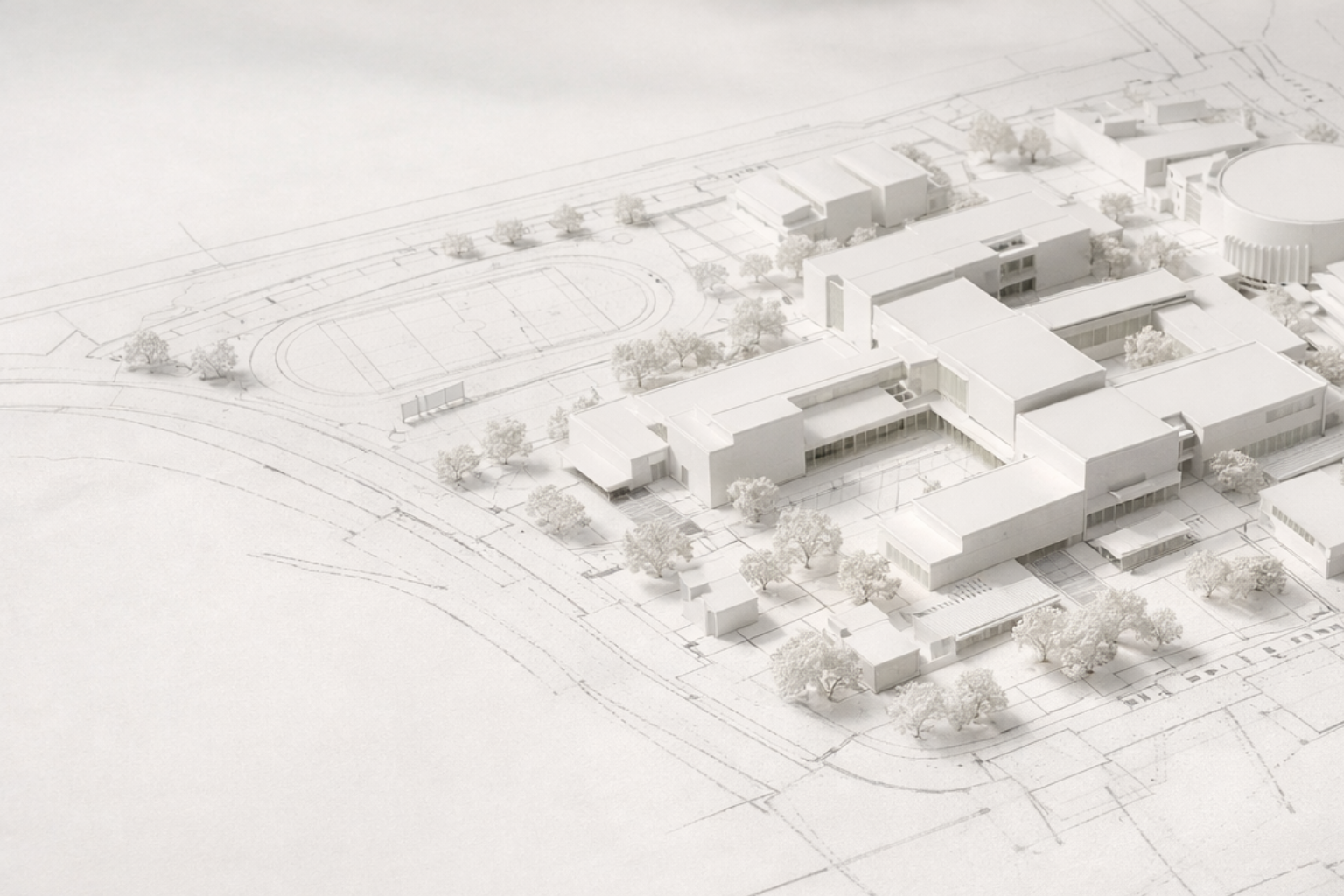
A basic model teaches proportion faster than another hour scrolling inspiration images. If you want a simple starting point, this helps: building small models and mockups.
- Materials: cardboard, foam board, tape, a sharp blade, a ruler.
- Time: 2–3 hours.
- What you learn: what “looks good on paper” doesn’t always work in volume.
Your 30-Day Starter Plan
Keep it boring. Boring works. The goal is output you can show, not motivation.
Week 1: Observation
- Take 15 photos of spaces that feel good and 15 that feel bad.
- Write one sentence under each: “This works because…” or “This fails because…”
- Sketch one plan from memory (no measuring yet). Then measure and redraw it.
Week 2: Plans That Read
- Draw 3 simple plans: a bedroom, a classroom corner, a small café seating zone.
- For each plan, show a path: entry → main activity → exit.
- Do one revision pass: fix one circulation pinch point.
Week 3: Section and Light
- Pick one of your plans and draw a simple section through a window.
- Mark where daylight hits in the morning and late afternoon (rough is fine).
- Change one thing to improve the light (shade, desk position, opening size, reflectance).
Week 4: One Small Project
Build a mini-project you can present in 2 minutes: “I found a problem, tested options, and chose a solution.”
- One plan (before/after).
- One section.
- One model photo or simple 3D view.
- Three bullet reasons for your final choice.
If you want structured beginner work to keep you moving, these are designed for that: Introduction to Architecture and Architecture classes for beginners.
High School Classes That Actually Help
Don’t overload your schedule trying to “optimize for architecture.” Pick the courses that build durable skills.
Priority Courses
- Geometry: scale, proportion, angles, basic layout thinking.
- Physics: forces, loads, why things stand up (or don’t).
- Art or Design: observation, composition, communicating ideas.
- Drafting/CAD (if offered): reading and making drawings.
- Woodshop/Makerspace: materials, tolerances, sequence, tools.
Good Electives If You Have Room
- Photography: framing, light, and learning to “see.”
- Computer science: logic and tools (helpful if you lean computational).
- Environmental science: climate thinking and resource constraints.
Portfolio Starter
A high school portfolio doesn’t need to look professional. It needs to show how you think and improve.
What To Include
- 2–3 observation sketches (spaces, streets, interiors).
- 2 plan drawings (one measured).
- 1 small project with before/after (layout improvement).
- 1 simple model (photos are fine).
- 1 page that shows iteration: version 1 → critique → version 2.
What To Avoid
- Only finished “pretty” drawings with no process.
- Random Pinterest-style collages with no decisions behind them.
- Software-heavy renders that hide weak planning.
This vs That
Most beginners waste time arguing about tools. Pick the workflow that matches your situation.
| Approach | Best For | Time Per Week | Where It Fails |
|---|---|---|---|
| Sketch First | Learning observation and layout fast | 3–5 hours | Staying loose forever and never measuring |
| Model First | Understanding volume, proportion, and structure | 4–6 hours | Building cool objects with no plan logic |
| Simple 3D First | Students who think spatially and want fast iteration | 3–5 hours | Chasing renders instead of solving layout problems |
| Program First | Students considering paid summer/pre-college options | Varies | Paying for “exposure” with no portfolio output |
Pre-College Programs and Summer Options
A lot of searchers want actual pre-college programs, not general advice. That’s valid. Just don’t buy a brochure. Your filter is simple: does the program produce work you can show?
What Good Programs Usually Give You
- Weekly critique and revision (not just lectures).
- A small project with deliverables: plan/section/model.
- Clear time expectations (studio hours are real).
- Portfolio guidance, not vague encouragement.
Questions To Ask Before You Pay
- How many hours per week are expected outside “class time”?
- What are the deliverables by the end (and can I see examples)?
- Is it beginner-friendly, or do they assume prior portfolio work?
- Who is teaching critique (faculty, working architects, TAs)?
- What happens if I fall behind for a week?
If you can’t afford a program, don’t panic. The 30-day plan above plus steady output often beats a short program where you never finish work.
Using AI Without Getting Lazy
AI can help you generate options fast. It can also freeze your growth if you use it as a replacement for thinking. Use it like a tutor: ask it to critique your plan, list constraints you missed, or propose alternate layouts you can test.
- Good use: “Give me three layout options for this plan and explain the trade-offs.”
- Bad use: “Design the whole project for me.”
Common Mistakes and Fixes
- Mistake: thinking you must be an amazing artist. Fix: draw clearly, label well, measure.
- Mistake: waiting for “the right time.” Fix: 3 hours a week beats a perfect future schedule.
- Mistake: collecting inspiration instead of making work. Fix: one small project per month.
- Mistake: choosing tools before skills. Fix: plan/section/model basics first.
Books and References
Books are useful once you’re already producing work. Put them after output, not before it.
MUST READ
📘 Architecture for Teens: A Beginner’s Book for Aspiring Architects
A beginner book that focuses on process and small challenges instead of vague inspiration.
Bonus Reading
These are more about space, home, and taste. Helpful if you’re building your “eye,” but don’t let them replace making drawings.
- Homebody by Joanna Gaines
- The Nesting Place by Myquillyn Smith
- The New Design Rules by Emily Henderson
- Remodelista by Julie Carlson
FAQ
Do I need to be good at math to start?
You need comfort with geometry and scale. Physics helps later. You don’t need to be a math genius on day one.
What’s the best first project?
Redraw and improve one real space you know well. Bedroom, classroom corner, small café seating zone. Real constraints make it easier, not harder.
Do I need expensive software?
No. Schools care more about clear thinking and iteration than flashy output. Start with paper and simple models, then add digital tools when you have something to model.
Are summer programs required?
Not required. Useful if they produce portfolio work and critique experience. If they’re mostly lectures, your money is better spent on time and materials.
How early should I start a portfolio?
Now. A portfolio is just evidence of work over time. The earlier you start, the less you panic later.
Final Notes
Don’t try to “be an architect” in high school. Just do the first job: observe, draw, test, revise. If that loop feels satisfying, keep going. If it feels miserable, that’s also useful information—better now than year two of studio.
Official Sources (Click to Expand)
Further Reading
- Architecture: Form, Space, & Order — Francis D.K. Ching
- The Poetics of Space — Gaston Bachelard
- Becoming an Architect: Guide to Careers in Design — Lee W. Waldrep
- NCARB Annual Report (Education and Licensure Data)