
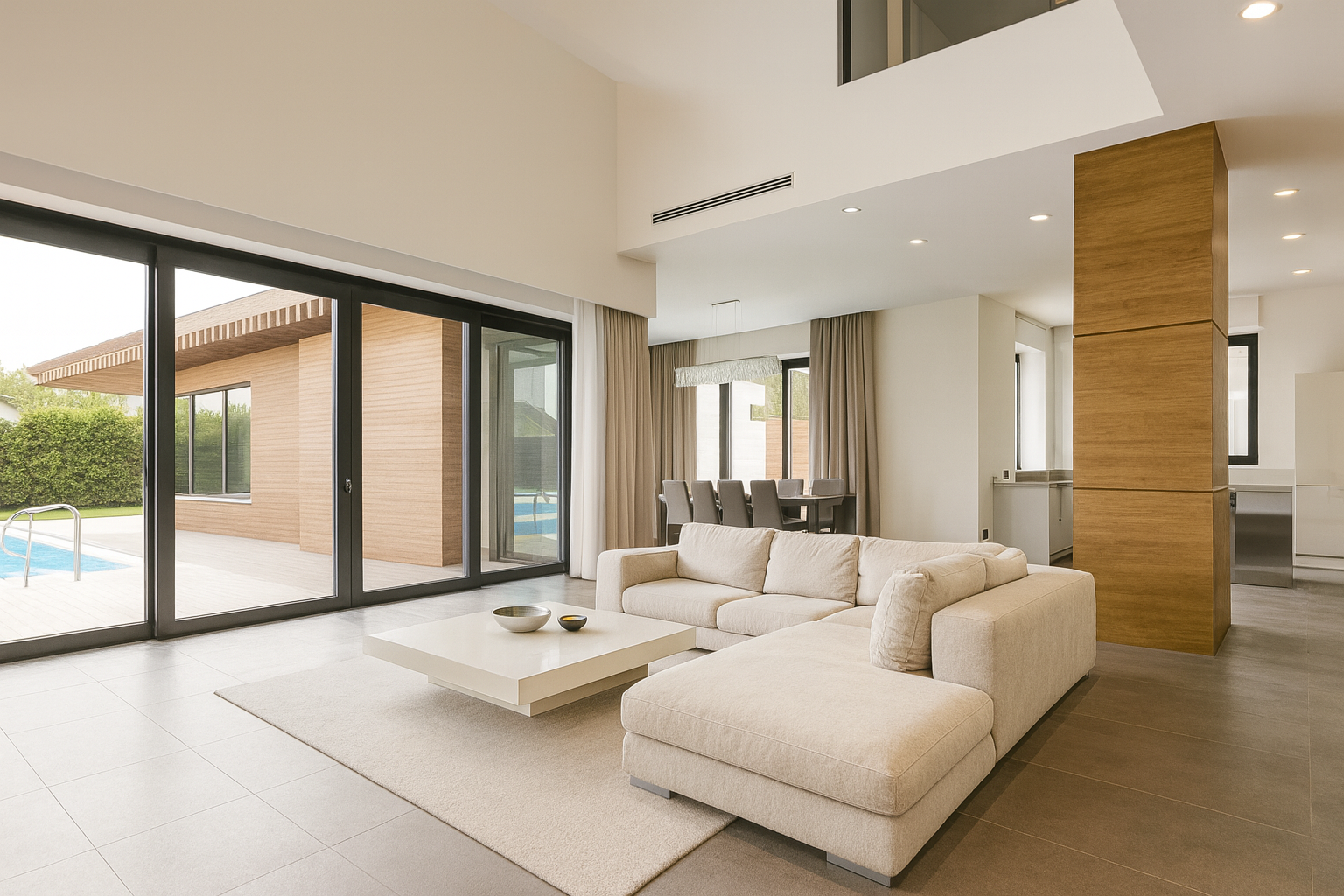
Expansive Windows: Flooring, Furniture, Ceilings, and Comfort
Expansive glass looks simple, but it pushes everything else in a room. Floors bleach, furniture cracks, ceilings glare, and cooling bills climb. The view only works if the interior holds up. What follows comes from jobs where we learned the hard way—what survived, what failed, and what to specify next time.
Floors under walls of glass
Wood flooring near large panes reacts faster than anywhere else. Oak crowns, maple checks, and darker stains go uneven within seasons. Engineered planks handle UV and humidity shifts better, but still need rugs or shading in high sun zones. I once saw a walnut floor turn grey on one side of a room in under three years—costly to sand, and it never matched again.
Stone and terrazzo can work well in cold climates. They store solar heat and release it slowly. In hot regions, the same slabs turn punishing unless shading is strong. Polished concrete slabs perform well when paired with radiant heating, but they reveal every glare line and surface ripple. Carpets and rugs fade in two seasons without UV control. Solution-dyed fibers hold color longer, but rotation is still mandatory.
Moisture testing is another overlooked step. A simple meter before install saves jobs from cupping and warping. → Buy a reliable flooring moisture meter on Amazon.
For design ideas that balance floor plans with large glazing, see Single Floor House Design: Stylish, Modern, and Practical Homes.
Furniture placement and survival
Sofas look great against glass until leather bakes, vinyl cracks, or fabrics bleach in one season. Low seating set slightly forward of the pane preserves sightlines and reduces damage. Floating pieces on rugs one or two meters from glass gives the view breathing room and saves upholstery.
Tables matter too. Glass on glass doubles glare, while wood or matte stone surfaces cut the reflection. Bookshelves close to curtain walls warp over time from solar gain. Keep storage away from direct exposure, or build in shading from the start.
Shades are the simplest insurance. UV-blocking rollers go in fast and save years of wear. → Pick up UV-blocking roller shades on Amazon.
More on balancing exterior glass with interior layout is covered in Modern House Designs: What People Are Building in 2025.
Ceilings and acoustics
A ceiling decides whether a glass-heavy room feels harsh or calm. Bare white drywall above reflective glazing turns into a blinding lightbox by noon. The echo is just as bad—hard surfaces bounce sound until conversation gets tiring.
Wood soffits soften both light and acoustics. Even thin strips or baffles break up glare and absorb echo. Acoustic treatments disguised as slats or perforated panels are another tool. Lighting strategy is critical: indirect strips along beams or coves prevent mirror-like reflections at night.
In one loft, two glass walls and a flat white ceiling forced occupants to tape fabric overhead just to work. That lesson sticks. The ceiling needs as much attention as the glass.
Good ready-made panels help tune both look and sound. → Find acoustic wood slat panels on Amazon.
Cooling and HVAC reality
Expansive windows test every cooling system. Even the best coated glass adds 20–30 percent more load if shading is missed. Displacement air systems—vents low with glass climbing high—work well but need planning. Chilled slabs pair naturally with polished concrete, but they sweat if humidity isn’t controlled.
Fixed panes look clean but trap heat. Adding high operable sections or tilt-turn units releases heat at night and cuts reliance on mechanical cooling. I’ve seen one gallery double its HVAC spend after blinds were ignored. Retrofitting shading after the fact never looks right.
A thermal camera catches leaks and hotspots before bills show up. → Buy a portable thermal camera on Amazon.
For canopy strategies that cut load before it hits the glass, see Window Canopy Design That Blocks Sun and Adds Style.
Privacy, shading, and control
Glass walls demand more than curtains. Built-in blinds between panes look neat but jam if not serviced. External louvers or overhangs stop heat before it enters. Landscape filters—trees, trellises, tall grasses—work as both privacy and cooling devices.
Retrofit smart films exist, but they cost and fail unevenly. I’ve walked into condos where residents taped aluminum foil to panes within two years of move-in. That’s what a lack of planning looks like.
For retrofits, a decent film kit can still transform use. → See smart tint film kits on Amazon.
Examples of glass-heavy exteriors that solved these issues are shown in Expansive Windows in Contemporary Architecture.
Long-term maintenance
Glass cleaning drives building management costs. Twelve-foot panes need tilt-turn access or permanent anchors for swing stages. Sealants fail first; joints at perimeter edges need inspection every three to five years. Stainless steel hardware is a must in coastal zones where salt kills lesser alloys in a season.
Glass coatings marketed as permanent usually last a decade at best. UV protection wears off and needs reapplication. Skipping it means flooring and furniture degrade faster inside.
Stainless kits designed for heavy glazing pay off. → Find stainless steel glass hardware kits on Amazon.
For detail on frame replacement when seals fail, see Wooden Window Frame Replacement: Step-by-Step Basics.
Case notes
Mountain chalet: solid oak floor shrank half an inch at seams. Engineered plank solved it.
Desert villa: leather sectional cracked in 18 months. Linen replacements held up.
Coastal loft: chilled slab worked until humidity spiked. Added a desiccant dehumidifier.
Urban tower: glare drove tenants mad. Retrofitted with film and automated blinds.
FAQ
- What flooring survives best under expansive glass? Engineered wood or stone with proper shading. Rugs need UV-stable fibers.
- How do you protect furniture from fading? Keep pieces off the glass, specify UV films, and rotate rugs and fabrics.
- Which ceilings stop glare and echo? Wood slats, baffles, or acoustic treatments beat plain drywall.
- Do you need special HVAC for full glass walls? Yes. Cooling loads rise unless displacement air or external shading is built in.
- Is smart glass worth the cost? For show homes or offices, yes. For long-term residential, failures make it risky.
- How often should seals be inspected? Every three to five years, with earlier checks in coastal zones.
- What’s the biggest maintenance mistake? Ignoring cleaning and access. Dirty panes kill the effect of expensive glass.
Resources
For deeper window design breakdowns, see Window Design: Complete Guide and Modern Windows: From Frames to Glass. For frame specifics, read Wooden Window Frames: Complete Guide or Aluminum Window Frames: Everything You Need to Know.
Books worth keeping: Architectural Detailing by Edward Allen, Building Construction Illustrated by Francis Ching, and Woodworking: The Complete Step-by-Step Manual.