
Many students apply to BA Architecture programs thinking they are starting the direct architect licensure path.
Sometimes they are not.
A BA in Architecture can be a strong degree. It can build design judgment, writing, research, visual thinking, urban awareness, and a serious portfolio. But in many schools, it is a pre-professional route that still requires an M.Arch later if the student wants to become a licensed architect.
That difference matters before you apply, not after graduation.
The degree is not weak. The danger is misunderstanding what it does.
What a BA in Architecture Really Is
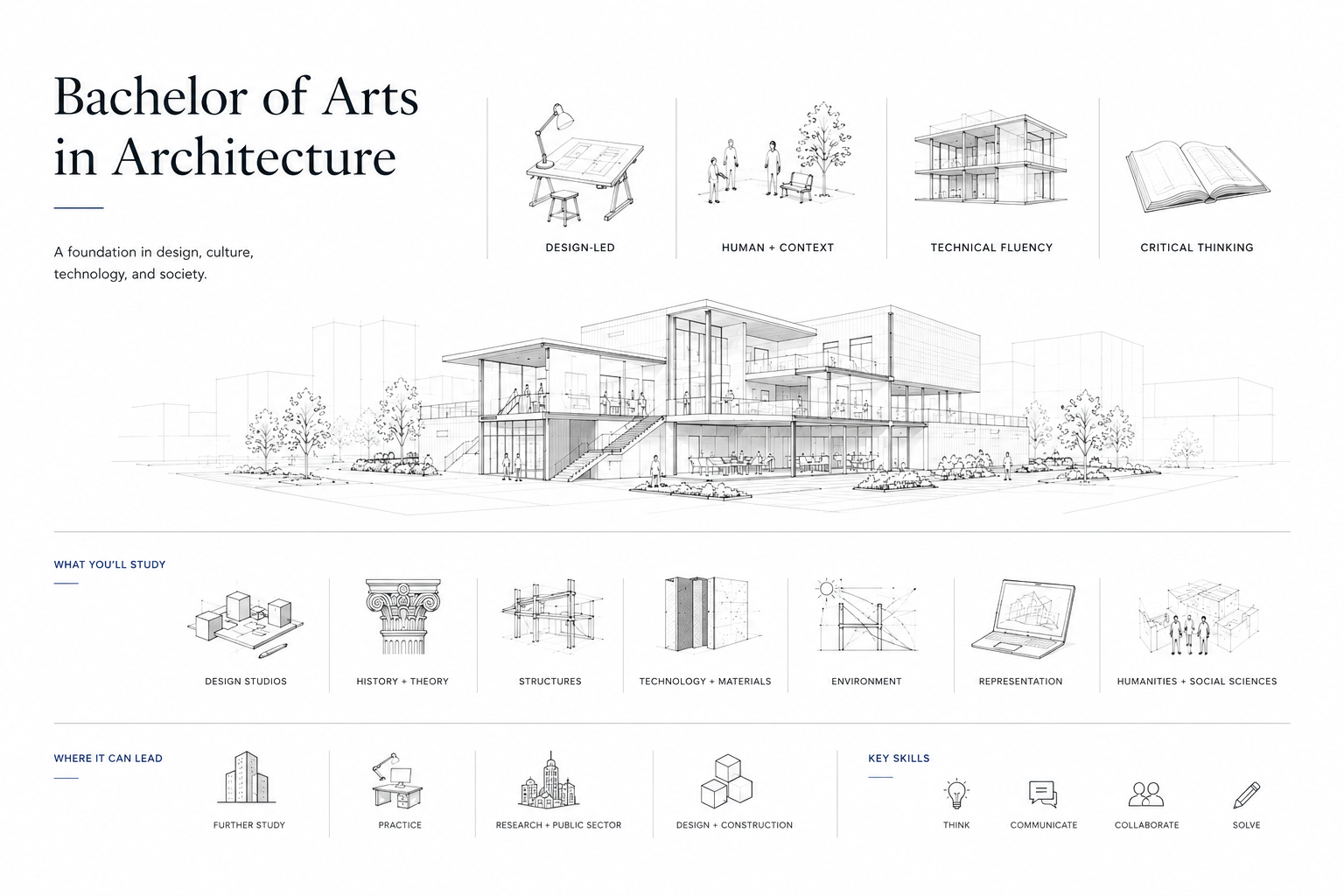
A BA in Architecture is usually a four-year undergraduate degree that studies architecture through design and liberal arts.
You still draw. You still make models. You still take studio. But the degree often gives more room to history, theory, writing, culture, cities, housing, environmental questions, and electives than a direct professional B.Arch program.
That can be useful. It can also be misunderstood.
The BA is often a good fit for students who want to think about buildings as part of culture, climate, politics, public space, preservation, housing, and everyday life. It is less direct for students who only want the fastest professional licensure route.
| Degree | Typical length | Common role | What to check |
|---|---|---|---|
| B.Arch | 5 years | Professional undergraduate architecture degree when accredited | Accreditation and licensure path |
| BA in Architecture | 4 years | Broad pre-professional architecture degree | Whether an M.Arch is needed later |
| BS in Architecture | 4 years | Often more technical or pre-professional | Professional status and graduate-school path |
For the full degree map, read Types of Architecture Degrees.
BA vs B.Arch
The B.Arch is usually built for students who already know they want the professional architecture path.
The BA in Architecture is usually broader. It can prepare students for graduate architecture school, but it may also lead into planning, design research, sustainability, policy, communications, heritage work, visualization, or other design-adjacent fields.
The key question is simple:
Does this degree qualify me for the next licensing step, or does it prepare me for an M.Arch later?
Do not guess. Check the school’s program page and the licensing rules for the country or state where you want to practice.
| Feature | B.Arch | BA in Architecture |
|---|---|---|
| Typical length | 5 years | 4 years |
| Main purpose | Professional architecture route | Broad architecture foundation |
| Licensure path | Usually more direct when accredited | Often needs M.Arch later |
| Best fit | Students committed to becoming licensed architects | Students who want architecture plus broader design options |
For the professional undergraduate route, read Bachelor of Architecture. For the more technical four-year route, read Bachelor of Science in Architecture.
What You Study
A BA in Architecture should not be treated as a light version of architecture school.
The good programs still make students work. The difference is the balance. Instead of pushing only toward professional technical training, the BA usually asks students to connect design with people, housing, public space, urban inequality, climate, preservation, cultural memory, and how buildings shape daily behavior.
| Course area | What it teaches | Why it matters |
|---|---|---|
| Design studio | Space, form, site, models, critique, revision | You learn how ideas survive testing |
| History and theory | Buildings, cities, movements, cultural meaning | You stop treating design as decoration |
| Drawing and representation | Plans, sections, diagrams, sketches, digital work | You learn to explain architecture clearly |
| Liberal arts | Writing, sociology, philosophy, environmental studies, politics | You learn what buildings do to people and places |
| Urban and social context | Housing, streets, public space, access, community, policy | You learn that design has consequences beyond the board |
The strongest BA programs do not hide from technical reality. They still teach enough structure, materials, climate, and construction logic to keep design grounded.
The Licensure Problem
This is where students lose time.
A BA in Architecture can sound like a professional architecture degree because the title includes “architecture.” But in many cases, the BA is not the accredited professional degree needed for the standard architect licensure path.
That means the student may need an M.Arch later.
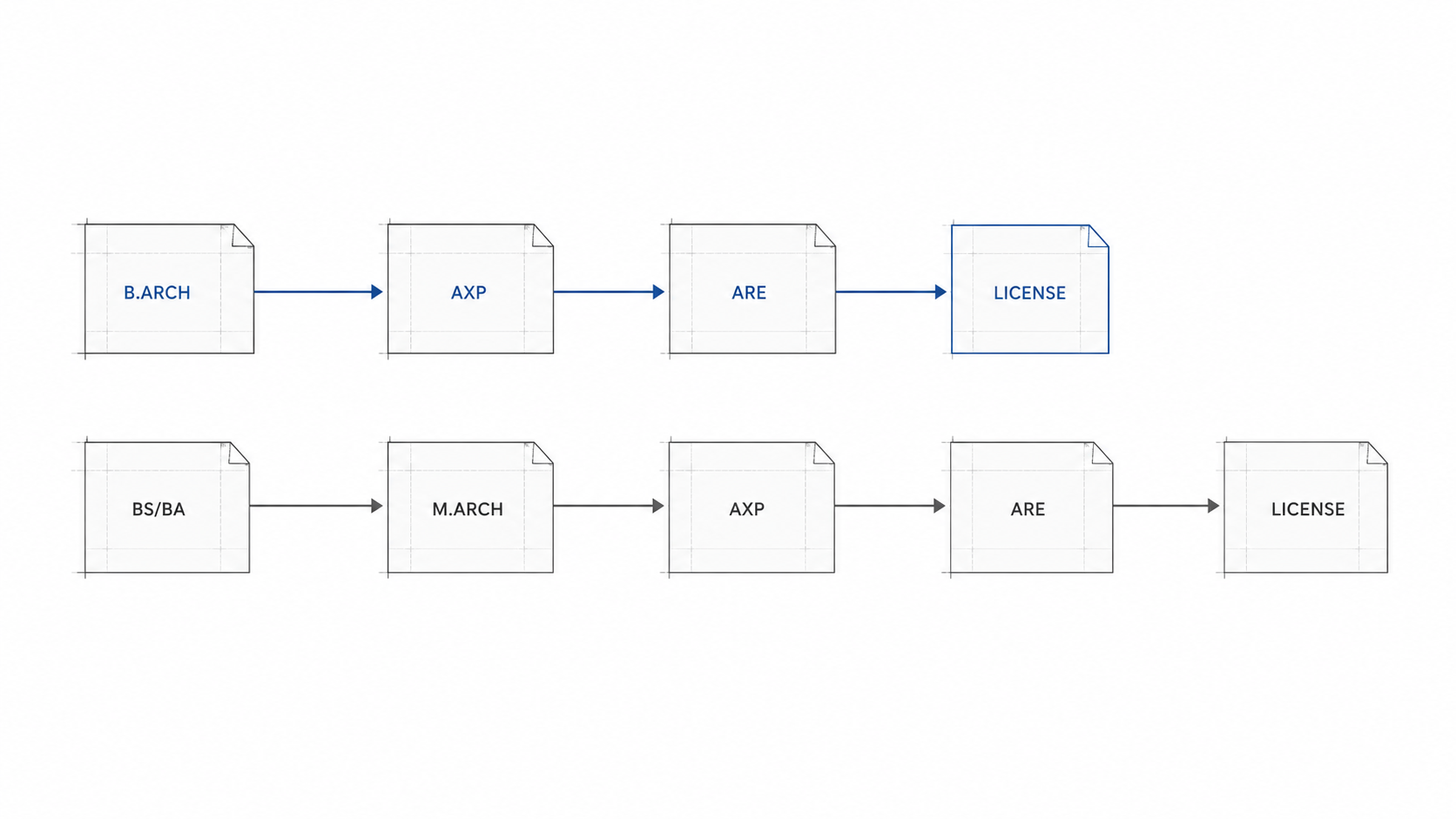
This is not automatically bad. A BA plus M.Arch can be a strong route. But it changes the cost, timeline, and plan.
| Path | Typical result | Risk |
|---|---|---|
| BA only | Design-related work, planning support, visualization, research, graduate-school preparation | May not qualify for licensure by itself |
| BA + M.Arch | Professional architecture route if the M.Arch is recognized | More years and more tuition |
| B.Arch | More direct professional undergraduate route when accredited | Less flexibility and heavier professional studio track early |
For the licensing route, read How to Become a Licensed Architect.
What Students Discover Too Late
The BA can feel flexible in a good way during the first year.
Then the real questions show up.
Students start asking whether their degree will qualify them for a professional M.Arch, whether their portfolio is strong enough, whether their studio work is too conceptual, whether they took enough technical courses, and whether the extra graduate degree was part of the plan from the beginning.
The degree works best when students know the trade-off early.
If you want the licensed architect path, use the BA to build a serious portfolio, strong grades, and a clear graduate-school plan. If you want a broader design career, use the BA to build a focused lane instead of floating through electives.
The danger is treating flexibility as a plan. Flexibility helps only when you use it deliberately.
Where the BA Route Can Be Strong
The BA in Architecture can be a smart choice for students who do not want to be boxed into one professional route too early.
It can work especially well for students interested in:
- architecture plus writing or research
- urban design and planning
- housing policy
- sustainability and environmental design
- heritage and preservation
- design criticism or publishing
- public-interest design
- graduate architecture school later
A good BA student should graduate with more than pretty boards. They should be able to explain why a design matters, who it serves, what problem it handles, and what trade-offs it creates.
The Portfolio Still Matters
A BA student cannot hide behind theory.
If you apply to an M.Arch later, your portfolio has to prove that you can design, draw, revise, and think spatially. Good writing helps. Strong ideas help. But weak visual work still hurts.
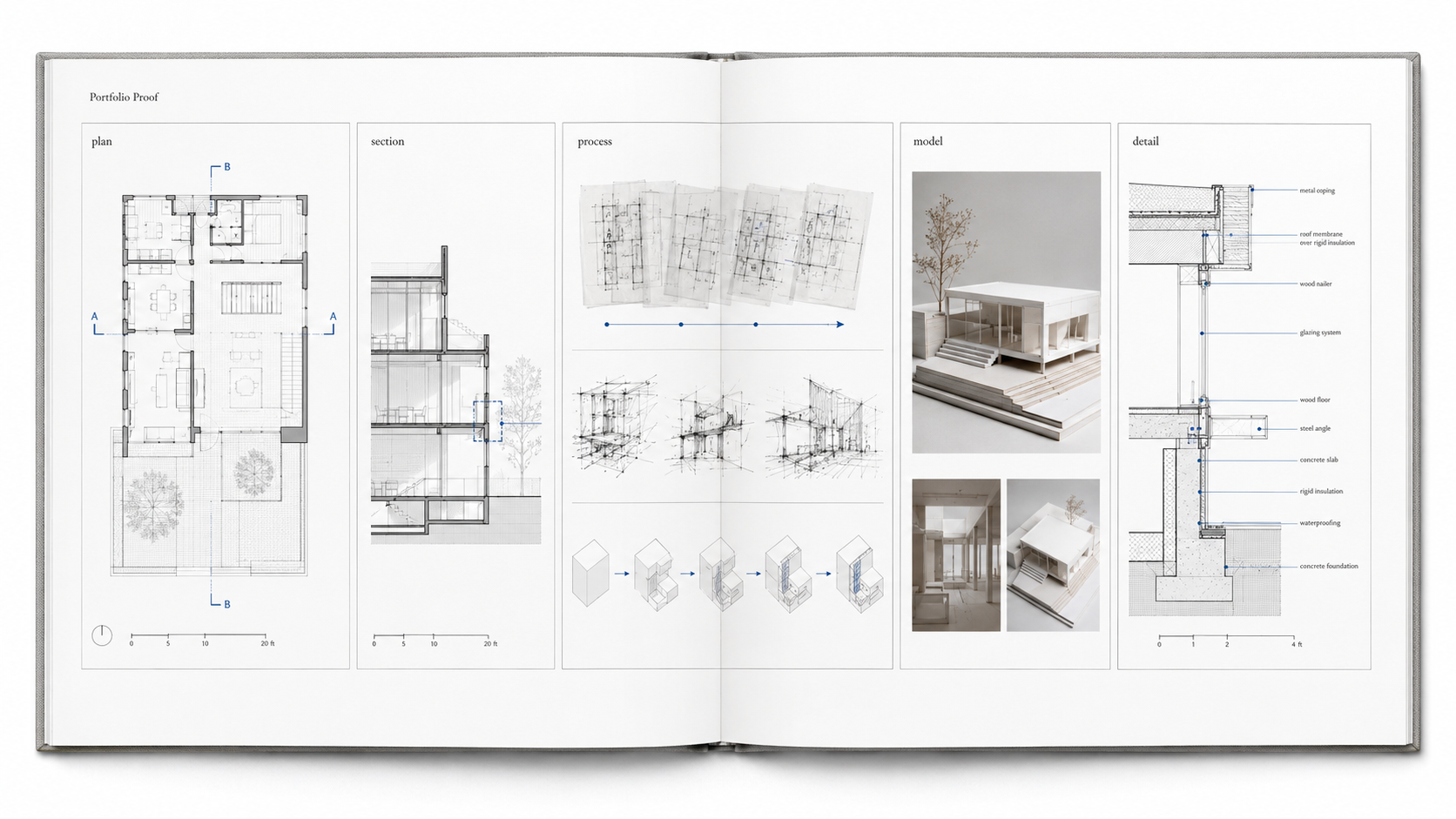
A strong BA portfolio should include:
- studio projects with clear process
- plans and sections, not only renderings
- site analysis
- model photos
- diagrams that explain the idea
- one or two research-driven projects
- short writing that explains decisions clearly
For portfolio help, read Real Architecture Portfolios.
Careers After a BA in Architecture
A BA in Architecture can lead into architecture offices, but the job title matters.
Without licensure, graduates should not present themselves as architects where the title is legally protected. Early roles may use titles such as design assistant, architectural designer, junior designer, planning assistant, visualization assistant, project assistant, or research assistant.
| Career lane | What the work may involve | What helps most |
|---|---|---|
| Architecture office support | Drawings, diagrams, models, presentations | Portfolio and software skill |
| Urban planning support | Maps, research, public-space studies, reports | Writing, mapping, urban analysis |
| Design research | Case studies, user research, environmental or social analysis | Research methods and clear writing |
| Visualization | Renderings, diagrams, presentation graphics | Digital tools and visual judgment |
| M.Arch preparation | Graduate school application and professional-degree path | Portfolio, transcript, recommendations |
For graduate study, read Master’s Degree in Architecture.
Online and International BA Programs
Online and international architecture programs need careful checking.
An online BA-style architecture degree may teach history, theory, digital tools, visual communication, or design foundations. But studio culture, critique, accreditation, and professional recognition are harder to judge from a program page.
International programs add another layer. A degree that works well in one country may need review, extra study, or a professional graduate degree before it helps with licensure somewhere else.
Before choosing any BA program, ask:
- Is this degree professional, pre-professional, or non-professional?
- Do graduates enter M.Arch programs?
- How does studio critique work?
- Is the portfolio strong enough for graduate applications?
- Will this degree be recognized where I want to work?
- What do graduates actually do after the program?
For online study, read Can You Earn an Architecture Degree Online?.
Books That Actually Fit This Degree
Do not turn the page into a shopping list. These books only make sense if they support the kind of thinking a BA Architecture student needs.
101 Things I Learned in Architecture School is useful for first-year design thinking because it explains studio ideas in short, visual lessons.
Architecture: Form, Space, and Order is still one of the clearest books for understanding form, space, organization, proportion, and basic architectural order.
The Eyes of the Skin fits BA students who want to understand architecture as a sensory and human experience, not only as plans and images.
Common Mistakes
| Mistake | Why it hurts | Better move |
|---|---|---|
| Assuming BA equals B.Arch | Student discovers the professional-degree gap too late | Check licensure path before applying |
| Taking only theory-heavy electives | Portfolio may look weak for M.Arch applications | Balance ideas with studio and visual work |
| Ignoring technical courses | Graduate school or office work becomes harder | Take structures, environmental systems, and construction seriously |
| Floating through flexibility | The degree becomes vague | Build a clear lane: urban, sustainability, research, portfolio, or M.Arch |
| Waiting until senior year to build a portfolio | Weak applications and rushed work | Save process work from year one |
FAQ
Is a BA in Architecture a professional degree?
Usually no. It is often a pre-professional or broad architecture degree. Students who want licensure often need a professional M.Arch later.
What is the difference between BA Architecture and B.Arch?
A B.Arch is usually the direct professional undergraduate route when accredited. A BA in Architecture is usually broader, more liberal-arts based, and often leads to graduate study if licensure is the goal.
Can I get a job with a BA in Architecture?
Yes, but job titles vary. Graduates may work in design support, planning support, visualization, research, interiors, heritage, or architecture offices under licensed professionals.
Can I become an architect after a BA in Architecture?
Often yes, but usually through an M.Arch or another recognized professional route afterward. Check the rules where you plan to practice.
Is a BA in Architecture worth it?
It can be worth it for students who want architecture plus broader design, culture, planning, or research options. It is risky only when students assume it replaces a professional B.Arch.
Do BA Architecture students need a portfolio?
Yes. A portfolio matters for graduate school and many design-related jobs. Process work, models, plans, sections, and clear diagrams matter more than glossy final images alone.
Read This Next
For the professional undergraduate path, read Bachelor of Architecture.
For the technical four-year path, read Bachelor of Science in Architecture.
For the full degree map, read Types of Architecture Degrees.
For graduate study after a BA, read Master’s Degree in Architecture.
For entry requirements, read Architecture Degree Entry Requirements.
Before You Choose the BA
A BA in Architecture is not a weak degree.
It is a different degree.
It works best when students use its flexibility on purpose: strong studio work, serious writing, a real portfolio, useful electives, and a clear next step.
The wrong way to choose it is to assume the word “architecture” automatically means licensure.
The right way is to decide where you want the degree to take you, then check whether the BA actually gets you there.