

Architecture Design Process Examples | Real Projects Step-by-Step
Real-world architectural design process examples. Learn how architects move from sketches to buildings in 7 clear steps, with visuals and insights.
How Architects Design Buildings | 7 Phases with Case Examples

From Concept to Construction | Architectural Design Process Explained
Architecture Workflow Examples | Pre-Design to Post-Occupancy

Learn the full architectural design process—from pre-design to post-occupancy. Real examples show how great buildings are planned, tested, and built.
1. Project Kickoff: Understanding Client Needs

Every successful architectural project begins with a deep understanding of the client's vision, needs, and constraints. This phase involves open dialogues to gather information about the desired functionality, aesthetics, budget, and timeline.
Key Activities:
-
Client interviews and questionnaires
-
Site visits and context analysis
-
Preliminary feasibility studies
Insight: Establishing a strong foundation through effective communication ensures that the design aligns with the client's expectations and the project's practical realities.
2. Conceptual Design: Exploring Ideas

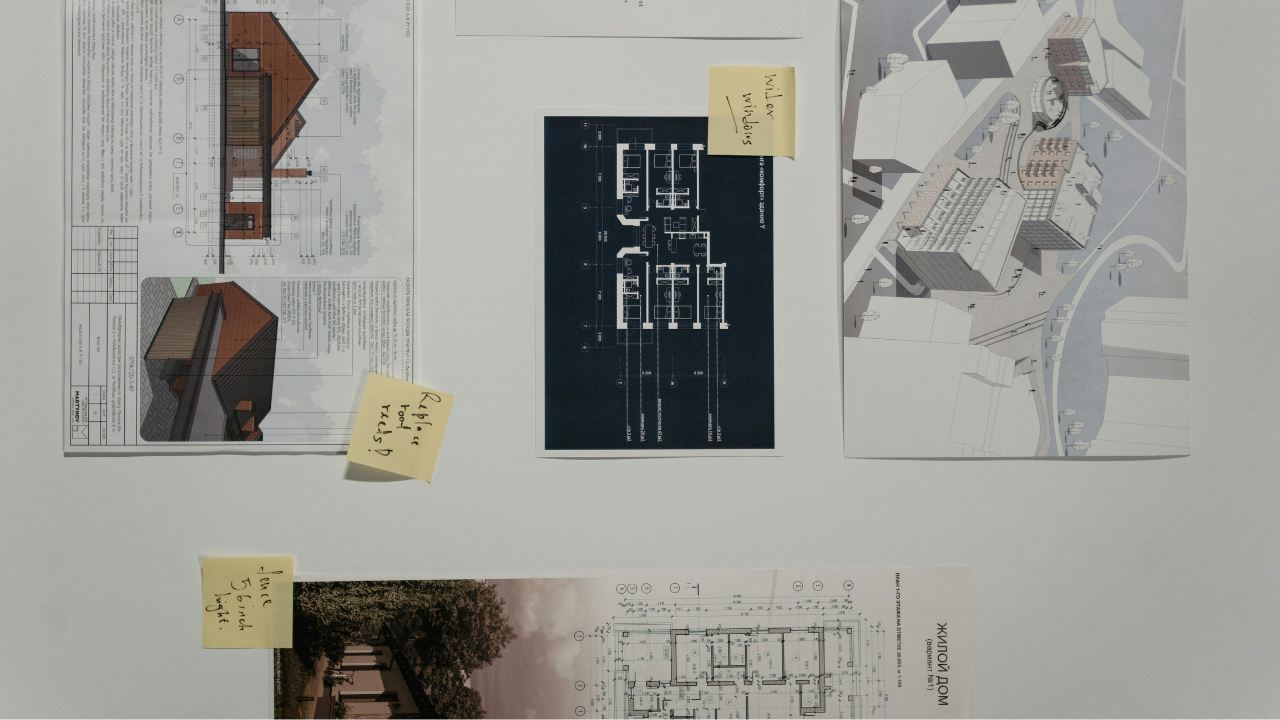
With a clear understanding of the project's requirements, architects begin exploring design concepts. This creative phase involves sketching, modeling, and experimenting with different ideas to find the most suitable solution.
Key Activities:
-
Hand sketches and digital models
-
Massing studies and spatial planning
-
Preliminary material and color palettes
Insight: Encouraging creativity and flexibility during this phase allows for innovative solutions that can be refined in later stages.
3. Design Development: Refining the Vision

Once a concept is selected, the design is developed in greater detail. This phase involves refining the architectural elements, integrating structural and mechanical systems, and selecting materials.
Key Activities:
-
Detailed floor plans, elevations, and sections
-
Coordination with engineers and consultants
-
Material and finish selections
Insight: Collaborative efforts during this phase ensure that all aspects of the design are cohesive and feasible, reducing the likelihood of costly changes later.
4. Construction Documentation: Preparing for Building

In this phase, comprehensive drawings and specifications are prepared to guide the construction process. These documents provide detailed information on every aspect of the building.
Key Activities:
-
Complete set of architectural drawings
-
Specifications for materials and systems
-
Permit applications and regulatory approvals
Insight: Thorough and accurate documentation minimizes misunderstandings during construction and helps keep the project on schedule and within budget.
5. Construction Administration: Bringing the Design to Life

As construction begins, architects play a crucial role in ensuring that the project is built according to the design intent. This involves regular site visits, reviewing submittals, and addressing any issues that arise.
Key Activities:
-
Site inspections and progress meetings
-
Reviewing shop drawings and samples
-
Responding to requests for information (RFIs)
Insight: Active involvement during construction helps maintain design integrity and allows for timely resolution of any challenges.
6. Project Completion: Finalizing and Evaluating

Upon completion, the project undergoes final inspections and evaluations to ensure it meets all requirements and standards. Feedback is gathered to assess the success of the design and identify areas for improvement.
Key Activities:
-
Final walkthroughs and punch lists
-
Occupancy permits and handover
-
Post-occupancy evaluations
Insight: Reflecting on the project's outcomes provides valuable lessons for future endeavors and contributes to continuous improvement in architectural practice.
Design Process in Architecture | What It Looks Like in Real Life
Step-by-Step Architectural Design | Pro Workflows + Case Study
In Focus: How to Embed Sustainability and Innovation in the Architectural Design Process

Sustainability and innovation aren’t checkboxes—they’re embedded decisions that shape every phase of a well-designed building.
The most successful projects don’t just add green features at the end—they start from first sketches with efficiency, adaptability, and resilience in mind.
What to Do — Practical, Design-Phase Strategies
▪ Site-Responsive Design
→ Example: A Toronto residential project oriented living spaces to maximize winter sun and reduce heating loads by 18%.
→ Action: Use local climate data to plan orientation, glazing, and shading early.
▪ Passive Systems First
→ Example: Passive cooling in a Dubai public library uses a stacked courtyard system to maintain indoor comfort with zero mechanical AC.
→ Action: Design natural airflow pathways before introducing HVAC.
▪ Material Lifecycle Planning
→ Example: In Melbourne, the Burwood Brickworks Shopping Centre sourced 80% of its materials within 500 km and achieved a Living Building Challenge Petal Certification.
→ Action: Choose materials based on full lifecycle impact (embodied carbon, sourcing, recyclability).
▪ Modular and Adaptive Layouts
→ Example: A Berlin co-working space used a movable wall grid system that allows tenant reconfiguration within 30 minutes.
→ Action: Design interior partitions and services to allow future reconfigurations with minimal waste.
▪ Integrated Systems Thinking
→ Action: Coordinate early with structural, mechanical, and sustainability consultants using BIM tools to find cross-disciplinary opportunities—like combining rainwater harvesting with HVAC greywater reuse.
What to Focus On (During Concept & Design Development)
● Longevity – Design systems and materials that age gracefully or can be easily replaced
● Energy Footprint – Aim for net-zero or passive-house standards when feasible
● User Behavior – Create architecture that encourages low-energy use through form, not just technology
● Post-Occupancy – Plan for performance tracking after handover (sensors, feedback loops)
“Sustainable buildings don’t come from sustainable features, they come from sustainable decisions made early and often.”
— Michael Green, Architect (MGA)
Modern architecture is judged not just by how it looks, but by how long it lasts, how little it wastes, and how flexibly it serves people. Start there—not after the fact.
Design Process Architecture Example: A Real-World Journey from Concept to Completion
🇺🇸 United States: Design Process in Action
1. New York City – Sumner Houses by Daniel Libeskind

Image: Sumner Houses in New York City, a public housing revitalization project designed by Daniel Libeskind blending modern form with community-focused urban design.
Location: Bedford-Stuyvesant, Brooklyn, NY
Client: NYC Housing Authority
Architect: Daniel Libeskind
Design Process in Detail:

- Pre-Design: This began with community engagement. The design team met with seniors and stakeholders to understand the emotional and physical needs of aging residents. Zoning limits and historic district constraints were mapped.
- Schematic Design: Libeskind introduced geometric window designs and focused massing studies to maximize daylight and views. Initial sketches emphasized openness while ensuring privacy for seniors.
- Design Development: Refined building sections, accessibility standards (ADA compliance), and structural strategy. Community rooms, gym, and medical center layouts were integrated based on feedback.
- Construction Docs: Collaborated with engineers to lock in material specs—focusing on low maintenance and thermal performance. CDs ensured compliance with NYC’s stringent energy and code requirements.
- Construction Admin: Weekly check-ins ensured design fidelity. Issues like ventilation upgrades and lobby accessibility were addressed through field reports.
- Completion: The project was monitored post-occupancy for comfort and energy efficiency.
Notable Insight: This wasn’t just about housing—it was about restoring dignity. Libeskind’s deliberate use of light, scale, and texture created a building that makes seniors feel proud, not warehoused.
2. Los Angeles – Chandler Tiny Home Village
Location: Chandler Blvd, Los Angeles, CA
Developer: Hope the Mission
Design Team: Lehrer Architects LA
Design Process in Detail:
- Programming: Emergency need drove the project. The city gave 13 weeks. The team prioritized speed, cost, and comfort. Each unit had to be livable, not just functional.
- Schematic Phase: Architects used modular prefab units. Colorful exteriors were intentionally non-institutional to promote dignity.
- Design Dev & CDs: Compact, efficient interiors were prototyped and tested. CD sets were streamlined to speed up approvals.
- Construction: LA’s expedited housing permit programs helped fast-track approvals.
- Post Occupancy: Continual adaptation. The city tracked resident feedback to inform future village rollouts.
Key Takeaway: Speed doesn’t have to mean sloppy. With clear focus and prefab planning, 40 homes were delivered with dignity.
3. Chicago – Los Vecinos SRO by Landon Bone Baker Architects
Location: Chicago, IL
Client: LUCHA (Latin United Community Housing Association)
Design Process in Detail:
- Programming: Architect held design charrettes with future residents to understand needs, fears, and cultural habits.
- Schematic Design: Safety and light were top concerns. Designs featured windows that invited daylight while maintaining privacy.
- Design Development: Materials were chosen for health: low VOC, durable finishes. Communal kitchens and shared lounges were fine-tuned.
- Construction Docs: CDs emphasized budget clarity and thermal performance.
- Construction: Builders worked closely with the architect. Adjustments were made on-site to preserve design integrity.
- Post-occupancy: Residents reported improved mental health due to color, light, and spatial flow.
Real Lesson: This project proves listening early can lead to fewer problems late. Co-creation led to long-term satisfaction.
United Kingdom: Regionally-Informed Design
The UK has its own way of getting things done when it comes to architecture — deeply tied to policy, community feedback, and sustainable targets.
Here’s how three standout projects went through their actual design phases, using the RIBA Plan of Work (Stages 0–7) as a reference.
1. London – Edgewood Mews by Peter Barber Architects

Image: Edgewood Mews in London, a contemporary housing development by Peter Barber Architects featuring pedestrian-friendly layout, textured brickwork, and socially focused urban design in a tight infill site.
Location: Finchley, North London
Architect: Peter Barber Architects
Type: High-density housing on a narrow lot
Design Phases Breakdown:
- RIBA 0 – Strategic Definition: The council issued a brief with tight land constraints and a clear goal: create high-quality, affordable housing in an awkward, narrow space. The site had poor access and local skepticism. Instead of ignoring it, the team leaned in.
- RIBA 1 – Preparation & Brief: Peter Barber met with local stakeholders to clarify needs: good walkability, human-scale housing, and minimal maintenance costs. Sketches were shared early.
- RIBA 2 – Concept Design: Barber used London’s historic mews and terraces as inspiration. He proposed small streets, courtyards, and tight-knit blocks that encouraged walking and interaction — all without the feel of a housing estate.
- RIBA 3 – Spatial Coordination: Homes were arranged to maximize light, solar gain, and cross ventilation. A mix of social and market units were interspersed, not separated.
- RIBA 4 – Technical Design: Materials were chosen for durability — brick, zinc cladding, no high-maintenance facades. Passive solar design was embedded through window orientation and thermal mass.
Results:
✓ 97 homes built — 50% affordable
✓ Community space integrated without extra land
✓ Walkable, socially cohesive, and already influencing other city plans
Lesson:
Smart density can feel intimate. The key? Design for how people actually live, not just how many units you can stack.
2. Manchester – New Islington Redevelopment
Location: New Islington, Manchester
Type: Mixed-use, mixed-income redevelopment
Design Strategy:
- RIBA 0–1: The local authority didn’t just approve a single design. They approved a framework for experimentation. Urban Splash (the developer) coordinated input from local residents, artists, planners, and councils.
- RIBA 2 – Concept Design: Instead of one big solution, multiple architectural firms designed different zones — from townhomes to schools to retail. Waterways, existing canal infrastructure, and open space were reimagined as public assets.
- RIBA 3–4: Modular and offsite construction was explored for rapid builds — especially in plots with repeatable layouts. Architects iterated with manufacturers to align form with prefab limitations.
- RIBA 5–6: Phased rollout. Projects went up based on feedback and funding, not just a locked timeline. Designs were allowed to shift.
Results:
✓ Major brownfield renewal without mass displacement
✓ Transit-friendly, canal-side living
✓ Still evolving — master plan remains open
Lesson:
Flexibility = resilience. If the plan can adapt, so can the city.
3. Edinburgh – Edinburgh Home Demonstrator
Location: Edinburgh, Scotland
Type: Pilot net-zero housing strategy
Led By: Edinburgh Napier University + City of Edinburgh Council
Project Insight:
- RIBA 0–1: Government partners wanted to understand how offsite construction could reduce both emissions and cost. The brief was clear: develop a scalable prototype with measurable impact.
- RIBA 2–3: Architects and engineers used digital twins — virtual models simulating energy, light, and airflow. Design options were tested before committing to construction.
- RIBA 4: The team finalized a highly insulated, timber-frame structure that could be prefabricated and assembled quickly.
- RIBA 5–6: The prototype unit was built, monitored, and tested in real use. Feedback loops helped refine future iterations.
Results:
✓ A working, monitored unit that feeds directly into Scottish housing policy
✓ Model is now being applied to larger sites
✓ Offsite methods proven for quality + speed
Lesson:
This is where policy meets practice. The government isn’t waiting for the market — they’re designing the blueprint themselves.
🇨🇦 Canada: Regional Sensitivity in Action
Canada’s approach to affordable and community-focused design isn’t one-size-fits-all. It changes city by city, shaped by climate, land cost, local politics, and public values. Below are 3 real examples that show how architecture adapts when those variables shift.
1. Toronto – St. Lawrence Neighbourhood
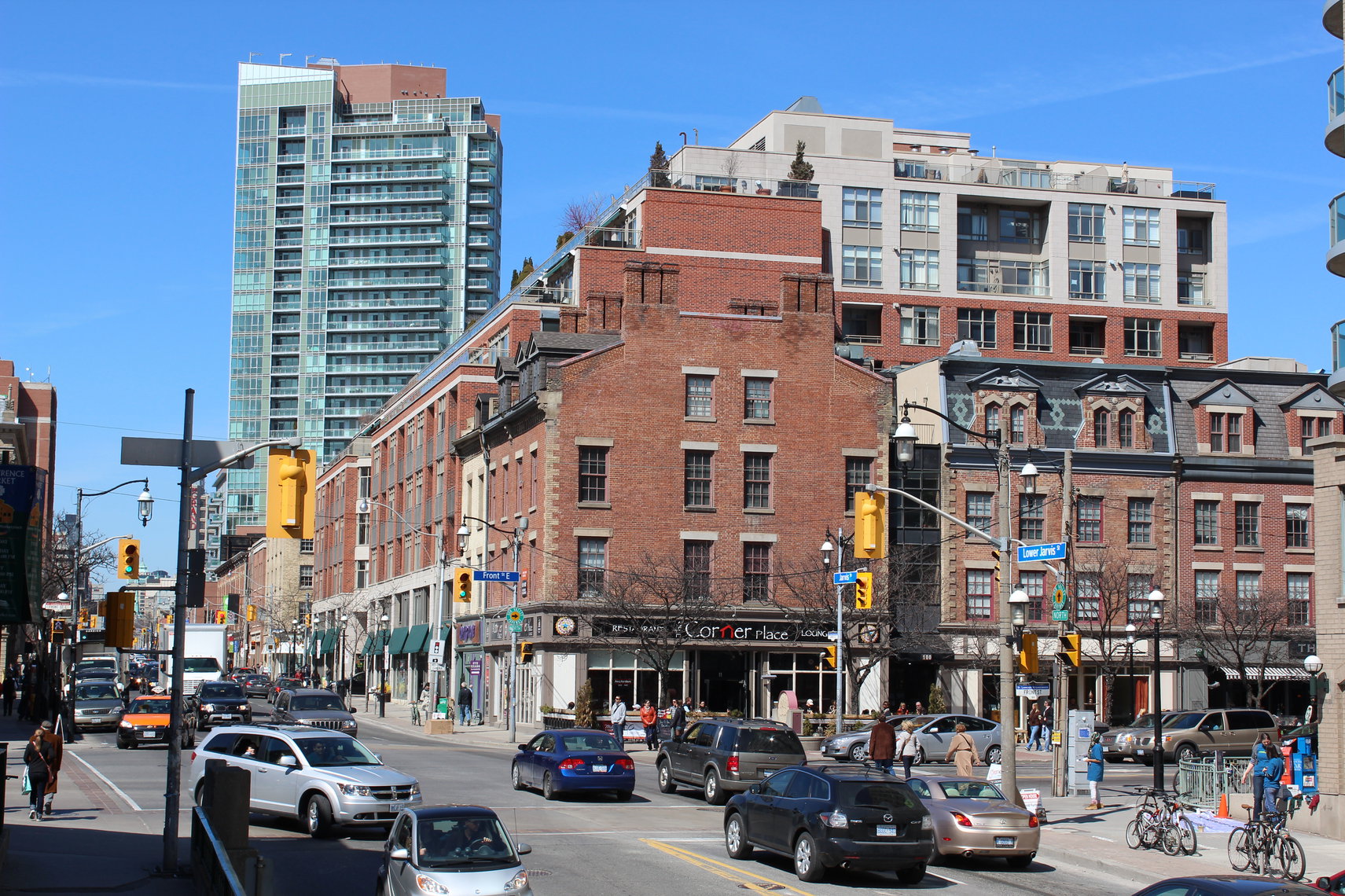
Image: Urban view of Toronto’s St. Lawrence neighbourhood, a landmark mixed-income housing project from the 1970s led by Alan Littlewood, showcasing walkability, brick façades, and human-scale design that shaped inclusive downtown living.
Location: Downtown Toronto, Ontario
Year Started: 1970s (but still relevant today)
Architect Team: Multiple, led by Alan Littlewood (City of Toronto Planning Dept.)
Pre-Design Vision:
Back in the '70s, Toronto made a bold move. Instead of pushing low-income families out to the suburbs, the city wanted to build affordable housing right downtown — close to transit, jobs, and schools.
The goals were clear:
-
Mixed-income: Avoid poverty pockets. Blend subsidized, co-op, and market housing together.
-
Walkable layout: Include parks, retail, schools — all within a few blocks.
-
Preserve scale: Low- and mid-rise instead of imposing towers.
Key Strategies:
● Zoning Leverage:
Toronto offered density bonuses to developers in exchange for building public amenities — daycare centers, parks, and community centers.
● Design Integration:
Architects studied European cities to figure out how to blend affordability with dignity. They used warm brick, human-scale streets, and varied façades to avoid a “cookie-cutter” feel.
● Phased Construction:
Instead of building all 4,000+ units at once, the city broke it into manageable phases. This let them adjust budgets, fix mistakes early, and respond to demand.
Why It Still Matters:
✓ The neighborhood remains one of the most successful urban housing projects in North America.
✓ It’s proof that low-income doesn’t have to mean low-quality.
✓ Cities around the world still study this project for lessons on mixed-income integration and downtown affordability.
2. Vancouver – Vienna House
Location: East Vancouver, British Columbia
Developer: City of Vancouver (landowner)
Built By: More Than a Roof Housing Society
Goal: Deep sustainability + social housing
Green Innovation from Day One:
● Passive House Standards:
Everything — from insulation to window placement — was optimized to reduce energy use by up to 80% compared to traditional builds.
● Site-Level Sustainability:
Stormwater was managed right on site. Instead of sending runoff to the sewer, bioswales and rain gardens filtered and reused it.
● Developer Selection Wasn't Just About Price:
Vancouver owned the land and made performance (not profit) the focus. Competing developers had to prove they could deliver social value and ecological results — not just hit a low bid.
Why It’s Unique:
✓ It's one of the first affordable housing projects in Canada to combine social goals with Passive House benchmarks.
✓ It shows what’s possible when cities treat land as leverage for better outcomes.
✓ The project pushed forward climate-responsive affordable design, not just as a concept — but in bricks and mortar.
3. Calgary – Rundle Affordable Housing (Student-Led)
Location: Calgary, Alberta
Initiator: University of Calgary – Schulich School of Engineering
Project Type: Redesign of Rundle Manor (existing housing)
A Fresh Twist: Student-Led, Real-World Stakes
This wasn’t just a class project. Students partnered with the Calgary Housing Company to reimagine Rundle Manor — a deteriorating affordable housing complex.
● Modular Planning:
Designs included unit types that could expand or contract based on changing family needs. This kept future retrofitting cheap and flexible.
● Sustainability Goals:
-
Cut CO₂ emissions using heat recovery systems
-
Optimize energy with triple-glazed windows and envelope upgrades
-
Analyze the cost-benefit curve of each design choice
What’s Different:
● The students weren’t just drawing ideas — they worked with real clients, presented to the city, and made professional-grade deliverables.
● The focus wasn’t just architecture — it was architecture + policy + engineering.
● Their proposals were grounded in cost, feasibility, and long-term payback — not just design flair.
What This Case Proves:
✓ Affordable housing doesn’t have to wait for top-tier architects.
✓ With the right mentorship, students can deliver serious value.
✓ Local governments should collaborate with universities — it brings in fresh thinking and creates future-ready designers.
Final Takeaway on Canada:
Canada’s affordable design process shows how context drives decisions — from snowy Alberta to rainy Vancouver. It also shows how design excellence isn’t limited to elite firms — it can come from students, policy makers, and city-owned land strategies.
Each city proves the same point in a different way:
→ If you respect the community, prioritize sustainability, and plan long-term — great architecture is possible at every budget.
Learning From the Greats: How Masters Made the Process Their Own
Frank Gehry: Embraced sketching and rough physical models to test emotional energy. Taught us: play before precision.
Zaha Hadid: Used fluid forms and parametric tools early. Taught us: don’t fight technology — bend it to vision.
Le Corbusier: Obsessed over modular proportion. Taught us: don’t just design the space — design the system behind it.
Tadao Ando: Minimalist clarity through light and material. Taught us: simplify until the idea shines.
For Architecture Students: What You Really Need to Know
● Learn to communicate your ideas clearly — visually and verbally.
● Practice feedback loops. That’s where the gold is.
● Don’t obsess over fancy software — sketch first, then digitize.
● Focus on the why behind the design, not just the looks.
● Learn building codes early. They shape your options.
For Working Architects: What’s Changing Today?
● Clients expect more than drawings — they want immersive previews.
● Collaboration tools (BIM, cloud platforms) are no longer optional.
● Regulations are tighter — sustainability, accessibility, and energy rules are real.
● The lines between architecture, interior, and landscape are blending.
● Everyone’s watching cost vs. value closer than ever.
For Homeowners Working With Architects
● Ask lots of questions. If something isn’t clear — it’s their job to explain.
● Get clarity on what’s included in each phase.
● Approve drawings in writing — avoid surprises later.
● Understand that good design takes time. Rushing = rework.
Bonus Tip: Pick an architect you’d trust with a tough conversation — not just the one with the nicest website.
FAQs
Q: How long does the architectural design process typically take?
A: The timeline varies based on project complexity, but a typical project may take several months from initial concept to completion.
Q: What is the architect's role during construction?
A: Architects oversee the construction to ensure it aligns with the design, address any issues, and facilitate communication among stakeholders.
Q: How are changes managed during the design process?
A: Changes are documented and reviewed collaboratively to assess their impact on the project’s scope, budget, and timeline.
Related
- Architecture Design Process: What Every Client and Architect Should Know
- Why Architectural Design Has 5, 6, or 7 Phases: Explained Simply
- Mastering the Materials Selection Process: A Step-by-Step Guide
- Building Construction Process: Avoid Costly Mistakes with These Tips
- Parametric Design Process: A Guide to Creating Cutting-Edge Structures