

The Truth About Rockwool Blown Insulation in Walls and Attics
Builder’s notes from real jobs. When it wins. When it doesn’t. How to install it without wasting money.
Why I reach for blown Rockwool
I use blown mineral wool when I need three things at once: steady thermal performance, quiet rooms, and a safer assembly around heat or wiring. It fills odd cavities. It resists flame. It dries out fast after small leaks. Most misses on site come from poor prep, not the material. Air leaks kill R-value. Gaps kill sound control. If you get the basics right, Rockwool behaves.
If you want a quick primer on natural alternatives before you commit, skim our guide to natural insulation materials. If you are still deciding between loose fills, this full list of thermal insulation types will help you sort by use case.
What Rockwool blown insulation is
Loose-fill mineral wool is made from basalt and recycled slag. The fibers get spun, bagged, and blown into place with a machine. In an open attic it looks like even snow. In walls it packs to a set density behind netting. The fibers are non-combustible and hydrophobic, which is a fancy way of saying they do not burn and they shed liquid water. That is why it shows up in fire-sensitive and moisture-touchy spots. If you want the straight definition and variants, see the quick explainer on loose fill mineral wool.
Where it actually works best
Attics that need even coverage
Open attics are the easy win. Rockwool blankets fast and hits depth without a lot of fuss. The trick is the prep. Seal the top plates, big penetrations, and any obvious chases first. Then blow to your target depth. Use tall depth markers. Keep soffit baffles clear so the insulation does not slide into the eaves. If your goal is a basic bill cut, start here then read the broader playbook on smarter insulation that reduces energy use.
Walls that need sound control
Dense-packed walls with mineral wool calm a house. You still need airtight drywall and sealed boxes. For a sound-first room like a nursery or office, Rockwool plus careful sealing gets you most of the way. If noise is your main reason for doing this, this short piece on using mineral wool for sound shows how the whole assembly adds up.
Risk zones around heat and services
Because the fibers do not burn, I am comfortable using Rockwool near cans, chimneys with proper clearances, and busy service runs. You still follow the rated details. Mineral wool is not a code pass by itself. Pair it with the right gypsum layers and trims to meet any listed fire assembly.
When I do not pick Rockwool
If I need an air barrier and high R in a thin profile, spray foam wins. If I am dense-packing an old balloon frame with lots of paths and I want a material that grabs the cavity hard, heavy cellulose is strong. If budget is razor thin and labor is free, blown fiberglass with meticulous air sealing can hit the mark. For a material-by-material overview without the sales pitch, the comparison set under hemp vs Rockwool and hemp vs fiberglass is a good sanity check.
Thermal performance in plain numbers
Installed R-value depends on depth in an attic and density in a wall. Manufacturers publish coverage charts that match bags, depth, and target R. Follow those charts. Do not guess. In attics, keep a rake handy and level high spots so you do not fool yourself at the rulers. In walls, aim for the specified pounds per cubic foot. Too light and it settles. Too heavy and you bow netting and waste bags.
If you want to see how this fits into the bigger thermal picture, the overview of insulation materials and best practices helps place Rockwool among the rest.
Moisture behavior and real-world drying
Here is what I see on jobs. Small roof leaks that are caught early dry out faster in mineral wool than in paper-based fills. The wool does not hold water the same way. That does not mean you can skip ventilation or air sealing. You still keep soffits open, ridge clear, and bath fans ducted outside. If the assembly gets soaked, fix the source, pull wet sections, and replace. Use a moisture meter before you close anything. I do not trust “feels dry” by hand.
RECOMMENDED TOOL
Use a basic meter before you close a wall. It saves rework and mold headaches.
→ General Tools Moisture Meter
Fire and safety notes that matter
Mineral wool fibers are non-combustible. That is useful, but it is not a free pass. Fire resistance is about the whole build. Gypsum type. Thickness. Fasteners. Sealed joints. Penetration collars. Use listed assemblies where required. Around chimneys and non-IC rated fixtures, respect clearances and shields. Where the code calls for a thermal barrier over foam, do not assume mineral wool changes that requirement. Follow the listing.
Sound control that actually works
Insulation alone does not fix noise. It helps. The dense fiber matrix absorbs airborne sound. You still need airtight drywall, resilient channels or sound clips where needed, and caulked boxes and seams. Doors and floor layers matter more than most people think. If the budget is tight, spend first on air sealing and door upgrades, then insulate, then add channel where it counts.
Costs you can plan for
Pricing moves by season and region, but here is the range I see on quotes for typical residential work:
- Material: roughly $1.50 to $2.50 per square foot at common depths.
- Pro install labor: roughly $0.50 to $1.00 per square foot depending on access and detail.
- Installed totals: often $2.00 to $3.50 per square foot for straightforward jobs.
DIY attics can come in cheaper if you already own PPE and you work clean. Dense-pack walls are best for a trained crew with the right tip set and gauges. Before you lock a number, kill air leaks. Dollars spent on sealing usually pay back faster than another inch of fluff.
FIELD PICK
If your attic smells musty or you live in a damp climate, run a dehumidifier while you air-seal and after leaks are fixed. It speeds drying and protects new insulation.
→ hOmeLabs Energy Star Dehumidifier
Tools and PPE that make the day go better
- Blower rated for mineral wool with clean hoppers and a long hose run.
- Nozzles for open blowing and for dense-pack work.
- Depth markers for attics. Netting and staplers for walls.
- Real respirator, goggles, gloves, long sleeves. A headlamp. Knee pads.
- Foam, caulk, and cut patches for air-sealing before you blow.
- Moisture meter for check-backs before close-up.
For a bigger picture on material choices beyond insulation, this straight guide to building materials basics gives useful context for students and homeowners.
How to install Rockwool in an attic
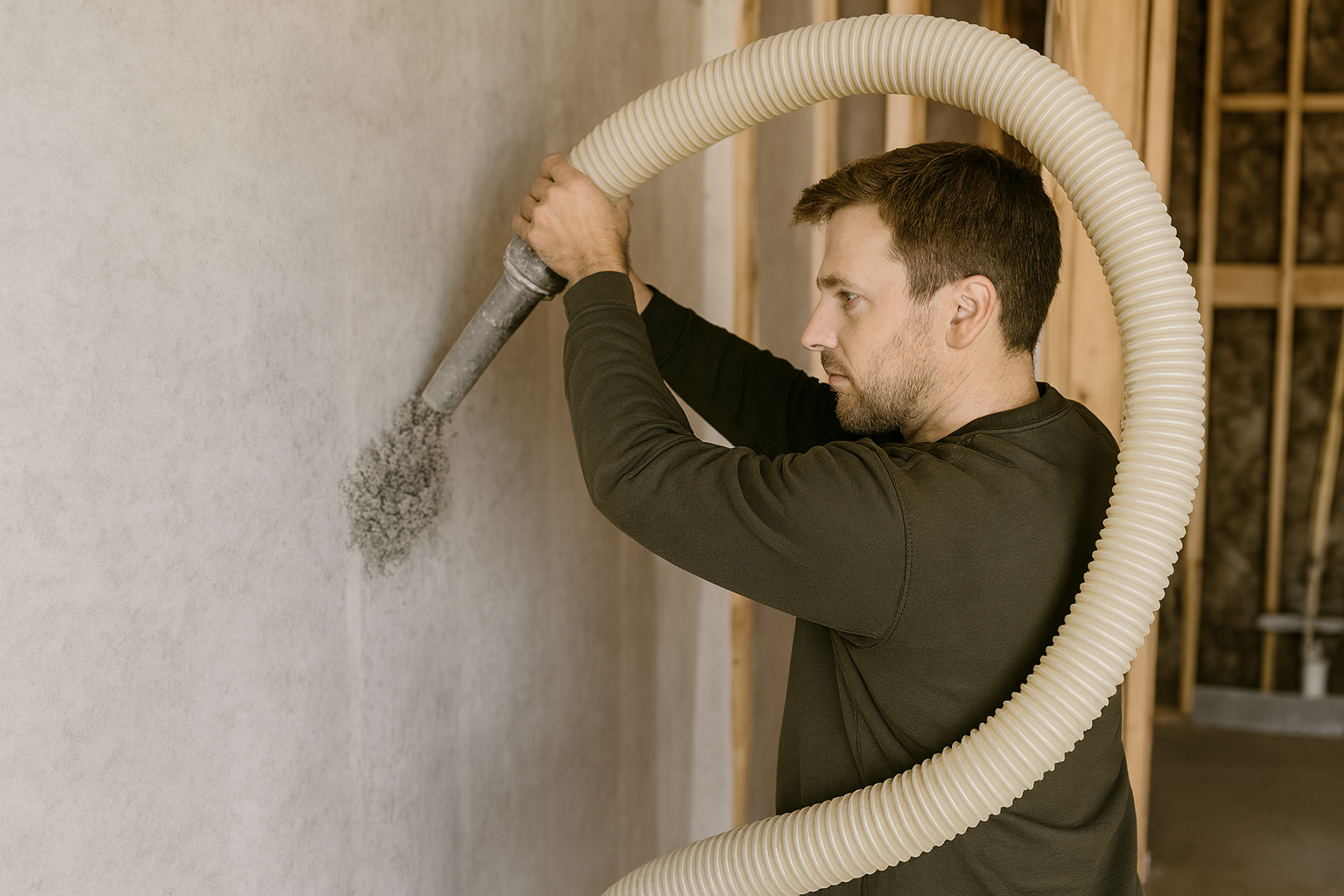
1. Prep and seal
Clear the deck. Pull old batts that are out of place. Seal big holes first. Top plates. Plumbing stacks. Electrical penetrations. Cap any open chases. Install baffles at every soffit bay and make sure they are long enough to rise above the final insulation depth.
2. Calibrate the machine
Run a test into a bin. Check flow, fluff, and throw. Adjust feed and air until you get a consistent blanket at the right density. Keep a simple log of bags used per area. That is how you catch mistakes early.
3. Blow to depth, not vibes
Start far from the hatch and work back. Keep the hose low and sweep side to side. Do not overfill valleys and starve ridges. Rake as you go. Hit the numbers on the rulers. The bag count should match the coverage chart for your target R.
4. Final check
Walk the deck again. Confirm depth, rulers visible, baffles clear, hatch insulated, and any can covers in place. Photograph the markers and bag labels for the homeowner file.
If you are new to the materials side and want a clear walk-through of what each product is doing in a house, skim our simple overview of what building materials are and how to choose them.
How to dense-pack walls without making a mess
1. Make a plan
Map stud spacing and wire runs. Install smart netting tight. Seal bottom plates and penetrations now. Pre-drill service holes where needed so you are not cutting a Swiss cheese later.
2. Pack by the numbers
Use the right tip. Fill from the bottom up. The hose should gently push back as density climbs. Check feel through the net. You want firm, not drum-tight. If you see bulges, you are heavy. If the net sounds hollow when you tap, you are light. Correct it now, not after drywall.
3. Close and seal
Patch holes clean. Tape seams. Caulk edges. Sound and thermal both depend on airtight drywall as much as the fill.
Curious how this compares to other wall options like sandwich panels and hybrids. This quick primer on sandwich panels shows where an insulated core makes sense instead of loose-fill.
Common mistakes I still see
- Skipping air-sealing. The most expensive mistake. Air moves through a gap and steals heat. Seal first.
- Trusting depth alone. Use depth markers and bag counts together. One by itself can lie to you.
- Burying wet materials. If the roof leaked last week, do not cover it and hope. Verify dry with a meter.
- Blocking soffits. Do not let the blanket drift into the eaves. Baffles are not optional.
- Ignoring boxes and cans. Seal boxes. Use IC-rated cans or proper shields and clearances.
- Under-packing walls. Too light and it settles. Follow the density target and feel the panel.
Safety, health, and work comfort
Wear a real respirator and goggles. The fibers can itch. Long sleeves help. Blow with a partner so you can keep flow steady and watch depth. Keep the work area lit and the hose path clear of trip points. Take breaks. Tired installers make sloppy passes and miss rulers.
If your project is part of a bigger sustainable upgrade, these sustainable building materials notes help you make better product choices beyond pure R-value.
What I do on my own projects
Attic first. Air-seal hard, then blown Rockwool to the climate target. I check ventilation, extend baffles, and insulate the hatch so it is not a giant hole in the lid. In walls, I spec dense-pack if the client wants quiet and safe handling around wiring. I still line up the drywall and caulking scope. If the house has damp issues, I fix drainage and run a dehumidifier before I spend a dollar on new insulation.
If you want to sense check a borderline plan like “cardboard as insulation” for temporary use, read the practical look at cardboard’s limits as an insulator. It explains where it fails and why.
DIY or hire a pro
Open attics are DIY-friendly if you respect prep. Dense-pack walls are a pro job unless you have the machine, tips, and a patient friend. Paying for dense-pack is cheaper than opening the wall twice. If you are hiring, ask for photos of depth markers, bag counts that match the chart, and a short written scope for air-sealing.
Codes, targets, and climate zones
Follow your local energy code for minimum R and ventilation rules. ENERGY STAR and utility programs often set higher targets that make sense. Inspectors vary. A simple job packet with bag labels, coverage charts, and photos clears up most questions. For a broader picture of how insulation fits into a house that lasts, see the quick explainer on sustainable house materials.
Troubleshooting after install
- Rooms still feel drafty. You missed air leaks. Check hatches, can lights, chases, and top plates.
- Ceiling looks lumpy. Rake level and confirm depth. Top off thin areas. Do not leave mounds.
- Musty smell. Find moisture. Use a meter. Run a dehumidifier. Vent bath fans outside.
- Noise still travels. Look at doors and flanking paths. Add seals and heavier slabs where it counts.
Rockwool vs the other common choices
Versus blown fiberglass. Fiberglass can be cheaper. It needs the same air-sealing and attention to depth. In my experience, Rockwool feels a touch better for sound and heat resistance near fixtures.
Versus cellulose. Dense cellulose grabs a cavity hard and can outperform in some wall retrofits. It holds moisture longer if leaks happen. Fire treatment varies by brand. I choose cellulose when I need the pack and the cost is tight.
Versus spray foam. Foam brings air-sealing and high R per inch. It costs more and needs careful ventilation planning. I spec foam when I am driving for an air barrier in thin sections or complex roofs, and Rockwool when I want safer fibers, good sound, and easy repairs later.
Simple checklist you can print
- Air-seal first. Big holes. Top plates. Chases. Soffits ready.
- Vent path open. Baffles set. Fans vented outside.
- Calibrate blower. Note bag count targets from the chart.
- Blow to depth. Rake level. Photograph rulers and labels.
- Seal boxes and edges. Insulate the hatch. Label the job.
- Moisture check before close-up. Fix sources, then insulate.
FAQ
Is Rockwool safe to install? Yes. Wear gloves, eye protection, and a respirator. Long sleeves help. Follow the product sheet.
Will it mold? Mineral wool is inorganic and sheds liquid water. Mold needs moisture and food. Keep assemblies dry and airtight.
How long does it last? Decades if kept dry and undisturbed. Check attics every couple of years for drift at eaves and around hatches.
DIY or hire? DIY an open attic with a rental blower and patience. Hire dense-pack walls.
What R should I target? Match your climate and code. Many homes do well with higher than minimum attic R. Use the manufacturer’s chart to hit the number honestly.
Related reading
- Cut bills the right way with this straight guide to insulation that actually saves energy.
- Curious about greener fibers. Start with natural insulation options and when they make sense.
- New to loose-fill. Get the basics of mineral wool as a loose-fill before you rent a blower.
Keep learning
Want one place to compare the whole set of insulation families with pros, cons, and job photos. See the no-nonsense overview of thermal insulation materials and practices. If you are planning a bigger envelope project, this wider look at sustainable materials that work will save you a few wrong turns.