

This is the kind of project people point at and say “we should do that.” Then the first winter hits, a control sequence drifts, tenants plug in space heaters, and the building gets blamed for behavior it never had a chance to control.
The Bullitt Center matters because it’s not a concept render. It’s a leased office building that chased full Living Building Challenge certification and had to live with the consequences: energy targets, water rules, occupant habits, maintenance reality. The hard stuff.
The Big Misunderstanding
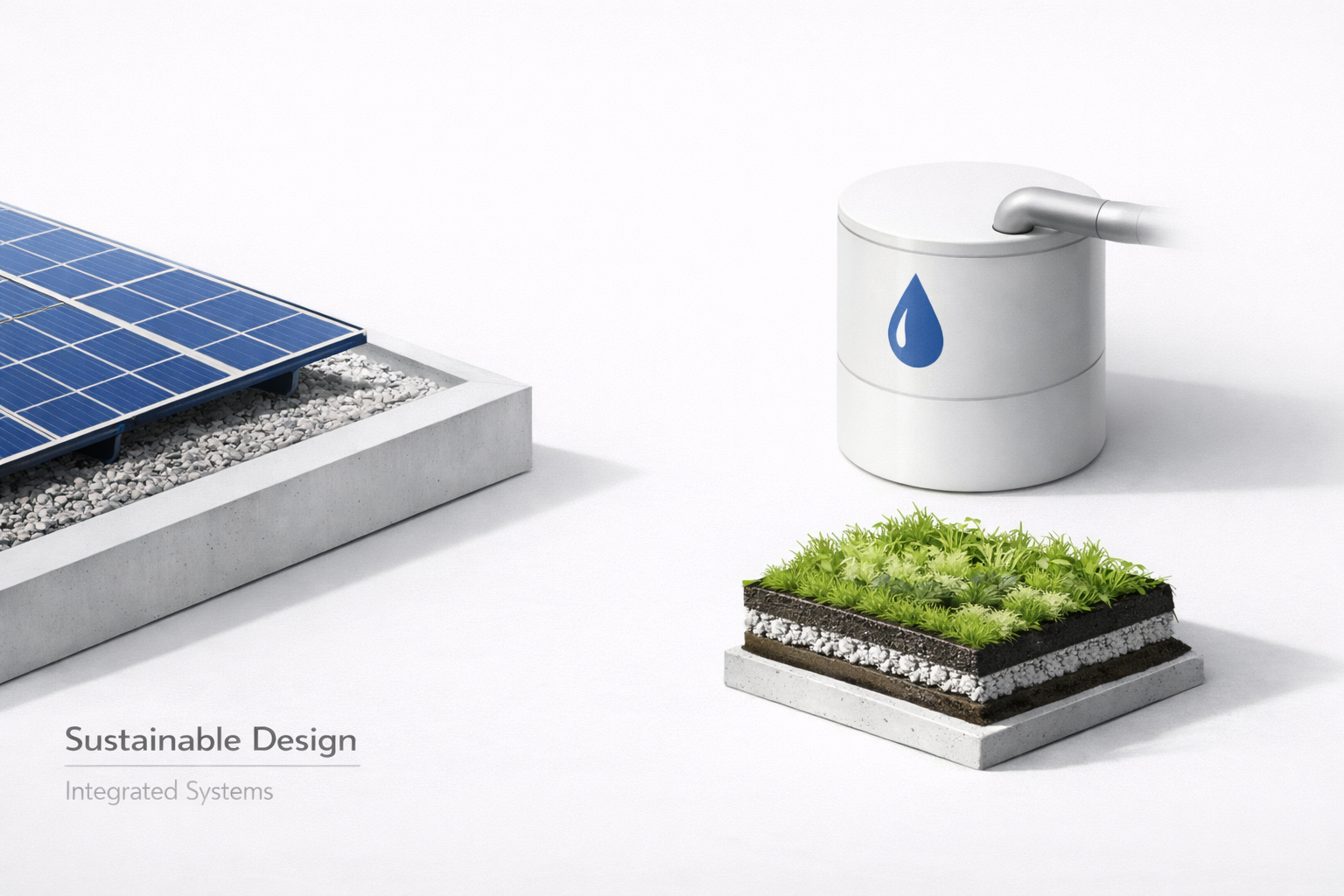
“Green features” don’t make a green building. Operations do. If you can’t hold a low Energy Use Intensity, enforce plug-load behavior, and keep systems commissioned, the plaque becomes a story you tell instead of performance you prove.
See Sustainable Building Examples: LEED, Living Building Challenge, BREEAM (Quick Tour)
What This Looks Like in Real Life
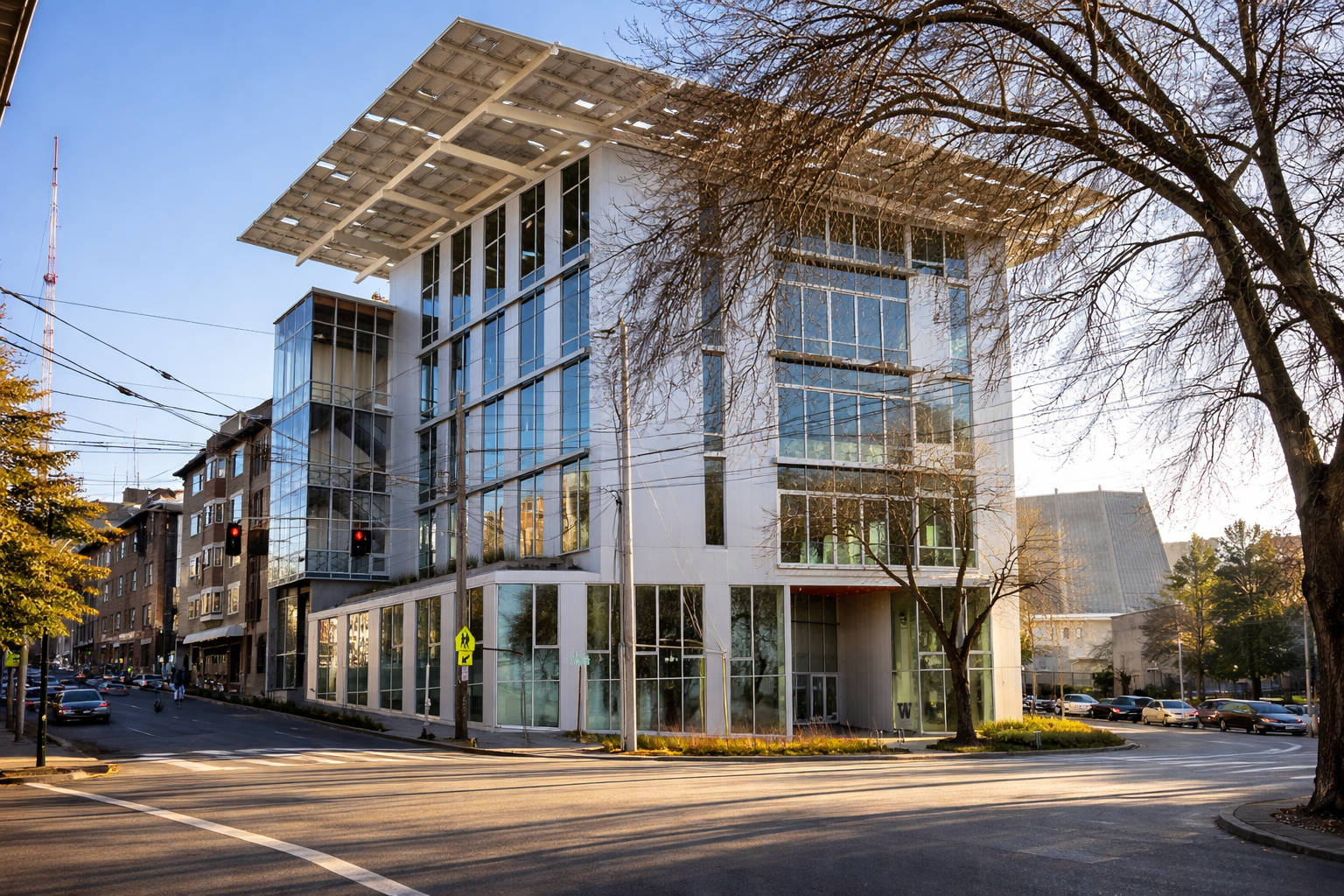
You’re a PM on a 6-story urban office project in the U.S. You want net-positive energy and serious water reduction. You’ve got a tight roof area, code officials who (rightfully) care about public health, and tenants who will bring in whatever equipment they want unless your lease and building systems say otherwise.
This is the Bullitt Center problem set. Not “how do we add solar.”
What They Got Right (The Big Calls)
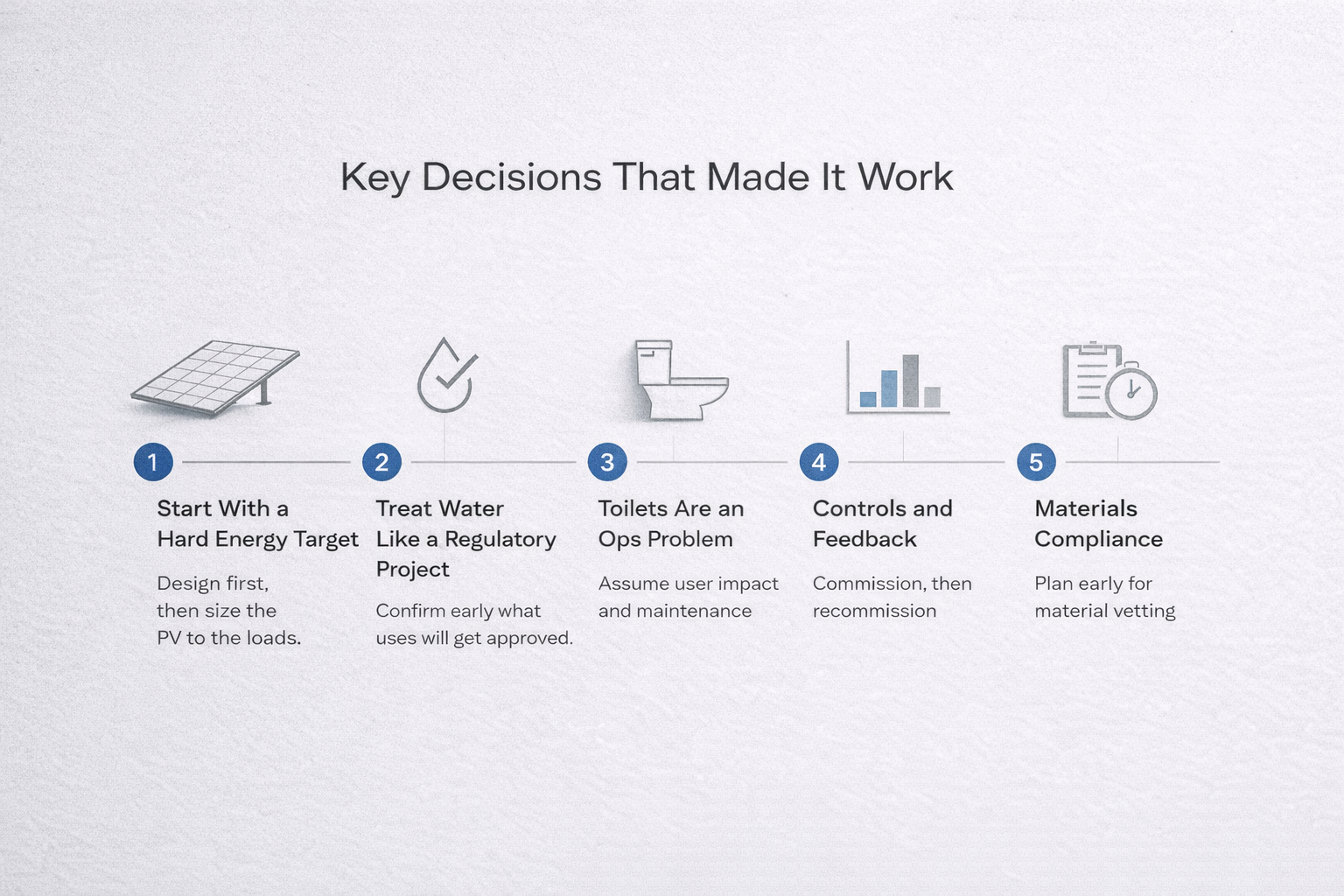
1) Start With a Hard Energy Target
The Bullitt Center’s on-site solar target is commonly described as a 244 kW rooftop PV array (575 panels) with an expected annual generation around 230,000 kWh/year. That number is useless unless the building’s loads are designed to fit under it.
Decision rule: size the PV last. First, design the building to hit a realistic low EUI. If you can’t get the loads down, the roof becomes a math problem you can’t solve.
2) Treat Water Like a Regulatory Project, Not a “System”
Rainwater harvesting is simple on paper. Potable rainwater in the U.S. is where reality shows up. The Bullitt Center’s system is built around a 56,000-gallon basement cistern, with staged filtration (vortex filter, cartridge filtration, carbon filtration) and UV treatment, plus chlorine at the end.
Decision rule: confirm early what your jurisdiction will permit (potable vs non-potable uses). If you assume “we’ll get approval later,” you’re betting the project on someone else’s risk tolerance.
3) Toilets Are an Ops Problem (Not a Marketing Feature)
Composting and ultra-low-water systems can reduce water use fast, but they’re not set-and-forget. The Bullitt Center’s documentation shows the system evolved after real occupancy behavior. A vacuum flush approach around 0.45 gallons per flush (about 7 cups) is still far below a standard 1.6 gpf code toilet, but it’s a different maintenance and user-experience world.
Decision rule: if your strategy depends on “perfect users,” it’s not a strategy. Plan for misuse, heavy traffic days, and maintenance staffing.
4) Controls and Feedback Are Not Optional
High-performance buildings lose the plot when nobody can see what’s happening. Energy dashboards, submetering, and control tuning are how you keep a target like 230,000 kWh/year from turning into a feel-good estimate.
Sequence that matters: commission at turnover, then recommission after 3–6 months of real occupancy. That’s when the drift shows up.
5) Materials Compliance Has a Schedule Cost
Living Building Challenge material requirements (including Red List constraints) can add lead time and procurement effort. The “green” choice isn’t always the easy-to-buy choice.
Decision rule: if you’re chasing strict materials requirements, treat it like a separate scope with a tracking log, submittal review time, and alternates pre-approved.
See: Methods of Sustainable Construction: Envelope First, Systems Second
What Usually Goes Wrong
Timing matters. These failures don’t show up in the marketing phase. They show up after move-in.
- Month 1–3: plug loads blow the energy model (space heaters, personal fridges, server closets, “temporary” equipment that becomes permanent).
- First winter: comfort complaints trigger overrides, then overrides become the default mode.
- Year 1–2: maintenance shortcuts (filters, sensor calibration, control tuning) show up as performance drift.
- Anytime: regulatory reality changes what your water strategy can legally do, depending on jurisdiction and approvals.
Red Flags and Stop Points
- You don’t have written confirmation on rainwater use (potable vs non-potable) early in design.
- Your tenant lease language is silent on plug loads and after-hours HVAC expectations.
- Commissioning is value-engineered into a single “checkbox” visit instead of an ongoing process.
- The project team can’t name who owns performance after turnover (facilities + controls + tenants).
The One Detail People Miss
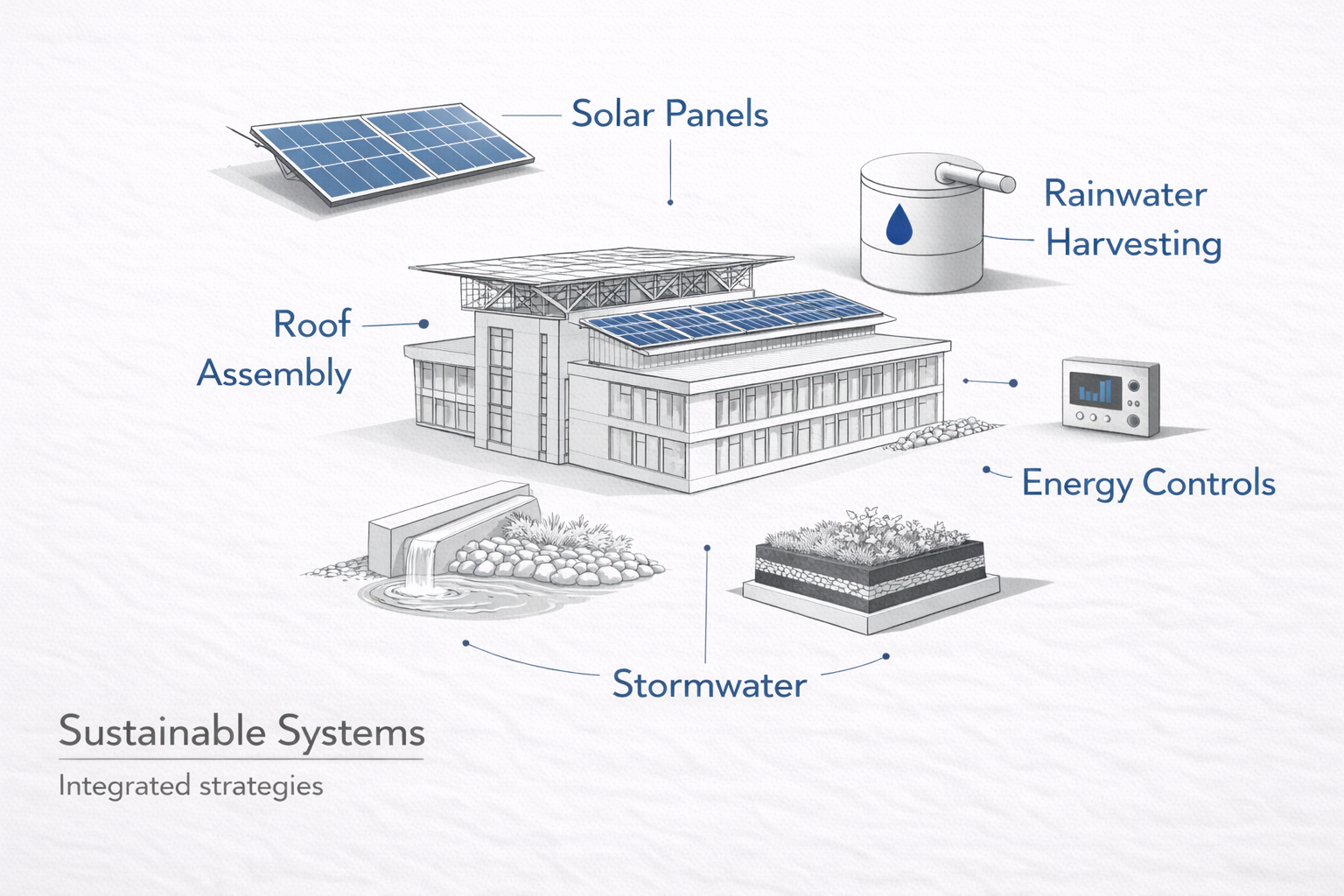
They design the building for net-positive performance, then lease it like a normal office.
The correct move: write performance into operations and leasing from day one. Plug-load limits, equipment rules, after-hours conditioning, blinds/daylight behavior, and who pays when someone breaks the rules.
What it prevents: the “the building doesn’t work” blame cycle that usually starts in the first winter and never really stops.
Limit: this only works if facilities has authority and tools (submetering + dashboards + enforcement). Otherwise it’s just words.
Common Traps
- Trap: “Solar makes it net-zero.”
Reality: solar only closes the gap after loads are brutally reduced. - Trap: “Rainwater harvesting is straightforward.”
Reality: potable rainwater is a public health and permitting conversation first. - Trap: “Composting toilets are a simple swap.”
Reality: they’re a maintenance and user-behavior system with staffing implications. - Trap: “Certification equals performance forever.”
Reality: performance is held by operations, not the award.
Checklist
- Set an energy cap early (target EUI) before you talk PV size.
- Model plug loads like a pessimist. Then design policy around it.
- Confirm rainwater legality early (potable vs non-potable) and document it.
- Detail water filtration and maintenance intervals like an O&M manual, not a brochure.
- Budget commissioning as an ongoing scope (turnover + 3–6 month recommissioning).
- Plan for controls drift and sensor calibration (assign ownership).
- Track materials compliance (Red List-style constraints) with a log and approved alternates.
- Write performance expectations into leasing and tenant onboarding.
FAQ
Is the Bullitt Center “net-positive” in the real world?
It was designed and certified to meet net-positive energy and water imperatives, but like any high-performance building, outcomes depend on operations, occupancy behavior, and ongoing tuning.
How big is the solar system?
It’s widely described as a rooftop array around 244 kW using 575 panels, with an annual production target around 230,000 kWh/year.
How does the rainwater system work?
Roof catchment feeds a large cistern (often cited as 56,000 gallons) and then runs through staged filtration and UV, with chlorination used as part of treatment. Details and legal use depend on jurisdiction.
Are composting toilets worth it?
They can be, but only if you plan for maintenance, user behavior, and approvals. Low-water alternatives like vacuum flush can still cut use dramatically versus standard 1.6 gpf fixtures.
What’s the fastest way these projects fail?
Plug loads and overrides. Space heaters, server closets, and “temporary” gear can destroy the energy model in the first few months.
What should I ask my design team if I want a building like this?
Ask for a target EUI, a plug-load policy, a commissioning plan (including post-occupancy), and written confirmation on rainwater legality early in design.
Can a smaller project copy these ideas?
Yes. The transferable lessons are load reduction, water strategy clarity, and operational enforcement. You don’t need the full badge to benefit from the discipline.
Does this apply outside the U.S.?
The principles transfer. The water and sanitation rules often do not. Treat potable rainwater and waste systems as jurisdiction-dependent.
Final Notes
The Bullitt Center isn’t interesting because it has “green features.” It’s interesting because it tried to make performance enforceable in a normal city, with normal tenants, under real rules. That’s the bar. If your project team can’t name who owns performance after move-in, you’re not building a high-performance building. You’re building a high-performance story.
Read next: Eco-Friendly Interior Design: Paint, Floors, and Furniture That Won’t Off-Gas Forever.