
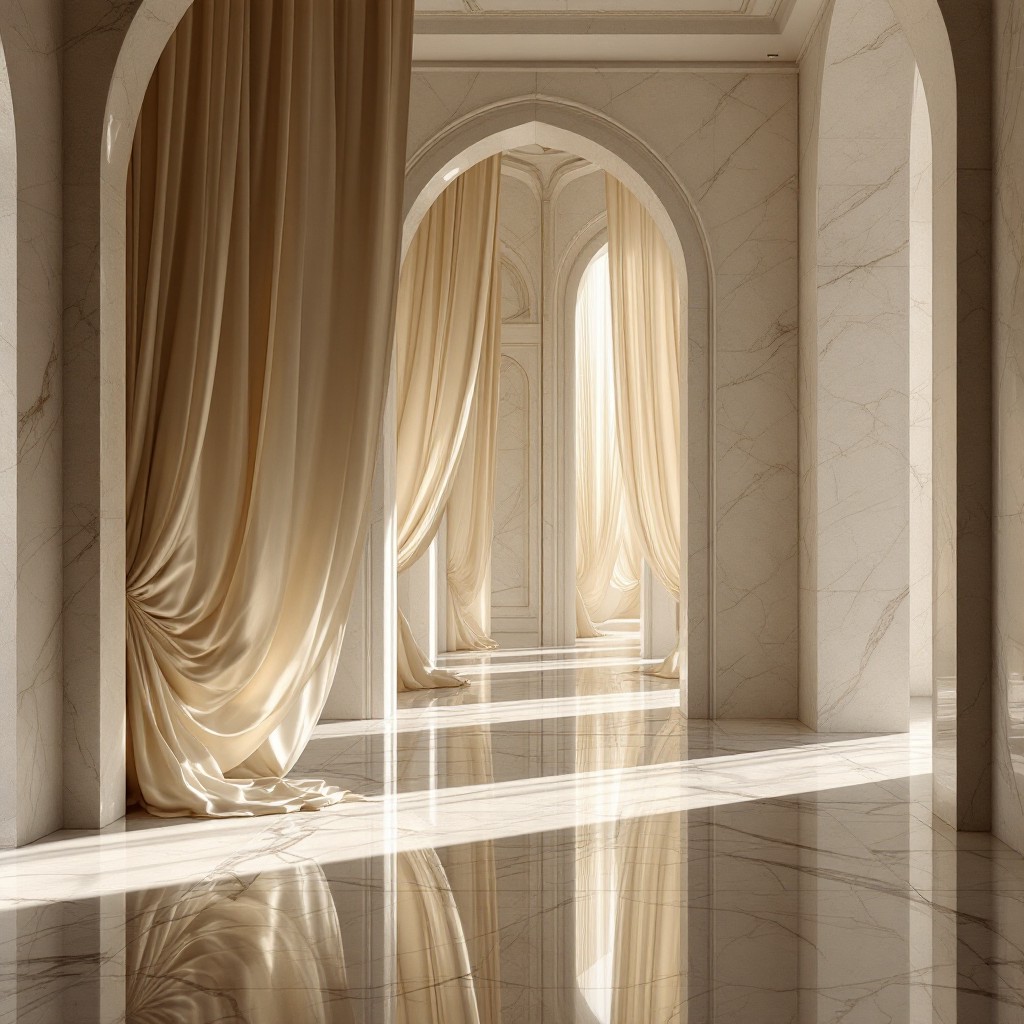
Image: Peaceful corridor with marble arches, gentle lighting, and silk curtains, mixing classic charm with clean modern design.
Small Arch Ideas for Halls, Kitchens, and Dining Areas
How to Add a Small Arch Between Your Hall and Kitchen
How to Add Depth, Warmth, and Shape Without Overdoing It
Quick Summary:
Arches don’t have to be grand. Even small, well-placed curves can completely shift how a hallway feels, how your kitchen connects to the rest of your home, and how light flows through a dining space.
We’re not here to copy Pinterest trends. Nope. That’s not what we do. We’re all about real, practical design that works—the kind that actually makes sense in your space and budget.
We teach the stuff real designers and architects use every day. And yeah, it’s easier than you think—once you learn the basics.
Take this for example: using form, proportion, and materials the right way can completely transform a space—no need to blow your budget or cram things in just to look stylish.
Down below, we’ll show you exactly how to make it work—and feel confident doing it.
The Ultimate Guide to Small Arch Designs for Halls, Kitchens, and Dining Areas
Why Small Arches Actually Work (Even in Tight Homes)
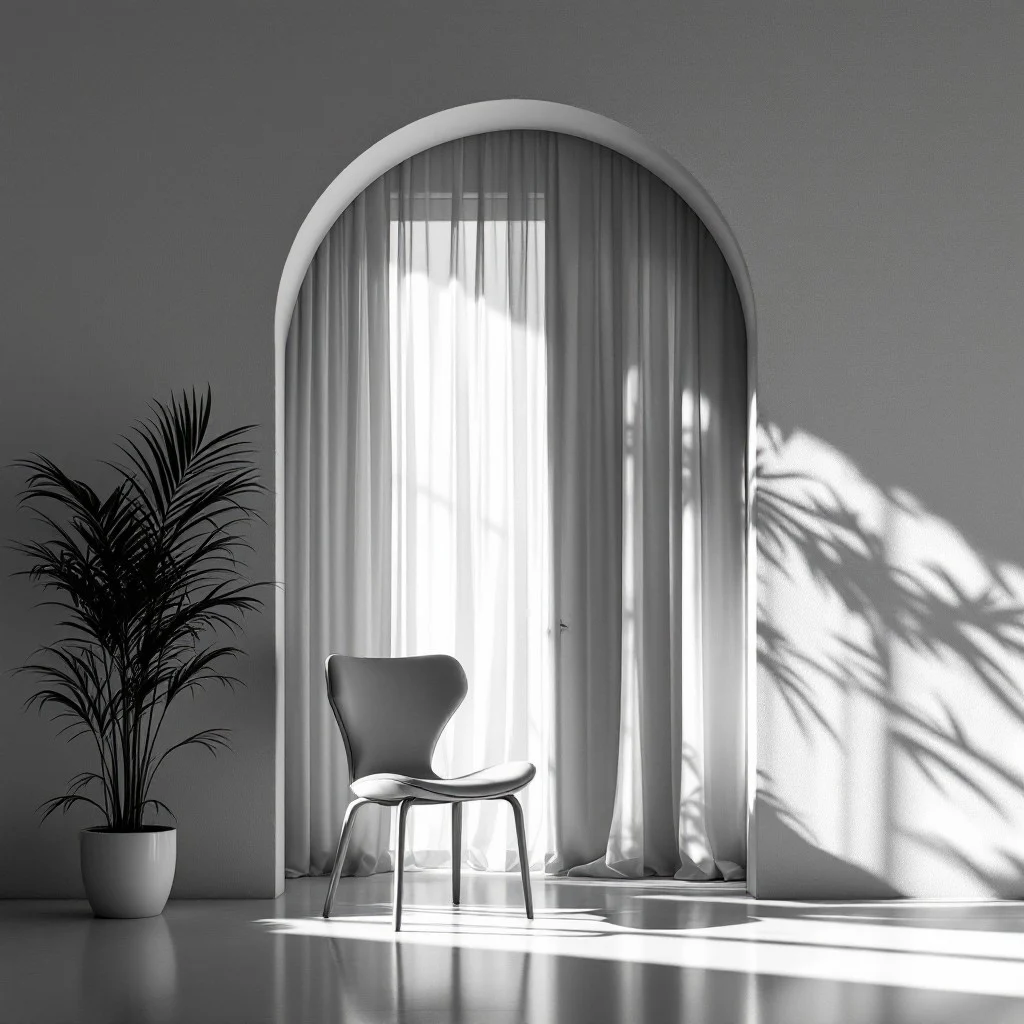
Image: Minimalist scene featuring an arched doorway with sheer curtains and natural light.
We’ve used arches in some of the smallest, most awkward spaces — especially L-shaped halls and tight Toronto-style kitchens — and here’s the truth:
They create the feeling of flow without actually needing to knock down more walls.
They break the boxy layout without forcing you to go full Mediterranean.
They let you highlight transitions between spaces (without closing them off).
Let’s break down how to use them the right way — with real examples, mistakes to avoid, and options if you can’t build a true arch at all.
Simple Arch Designs That Enhance Compact Spaces
Transform Your Hallway with These Small Arch Concepts
L-Shaped Hallway: Where Small Arches Shine Most
L-halls are tricky. You want connection between spaces, but you also want to define each zone a little. That’s where a small arch comes in — right at the turn.
What Works Best:
▪ Low Segmental Arches — Just enough curve to feel intentional, not overpowering.
▪ Soft Drywall Rounds — Simple to frame and finish. Looks built-in even in modern homes.
▪ Wood-Trimmed Mini Arches — Great for older homes with character. Paint them the same color as the walls or contrast for drama.
Real Scenario:
We once added a tiny arch between a narrow coat closet area and the living space in a small 1960s home. It did nothing structurally — but visually? It changed how the whole hallway felt. The curve pulled your eye through the space.
Small Arch Design for Kitchens: Break the Hard Lines
Kitchens are full of rectangles — cabinets, counters, doorways. A small arch softens all of that.
Where to Add Arches in Kitchens:
▪ Above the pass-through or breakfast bar → You don’t need to go full Spanish villa. A 10" soft arch above a cut-out is enough.
▪ Arched niche for spices or a coffee nook → Looks intentional, not trendy.
▪ Framed walk-through between kitchen and dining → This one’s great for older homes being opened up — gives you separation without a hard edge.
Pro Tip:
Match your arch to cabinet corners. Sharp cabinet angles with a soft arch can feel disconnected. Try softened edges or shaker-style fronts to balance the curve.
Dining Hall Arches: Quiet Drama (Without Overstaging It)
Dining spaces work best when they feel centered and calm. A small arch here can create that mood.
Try These Ideas:
▪ A single arch framing the dining room entrance — Especially good if it opens from the kitchen or hall.
▪ Arched window frame (or even faux-arch trim) — Instant softness.
▪ Wall niche with arch top + lighting — Good for displaying ceramics or art.
What to Avoid:
✖ Don’t go too thick on the arch face — in tight homes, that eats visual space.
✖ Avoid mismatch between arch and ceiling shape — flat ceilings need gentle curves.
What Not to Arch
Yep, this matters. Not every space wants an arch—even if it looks cool on paper.
Skip arches in these cases:
▪ Extremely low ceilings → They’ll make the space feel squashed, not airy.
▪ Tight hallways with multiple doors → Adds clutter, not charm.
▪ Overly modern homes with clean lines → It can feel forced unless you know how to contrast it intentionally.
▪ Overdone open-concept layouts → If everything’s open already, an arch can just be decorative noise.
✅ Pro tip: Arches shine when they mark a transition or frame a moment—not when they’re everywhere.
“The Invisible Arch” — How to Fake One with Just Light and Color
No materials, no demolition—just illusion.
Try this in smaller spaces:
▪ Paint a subtle arch outline over an entryway in a softer or deeper tone.
▪ Use sconces or wall washers to direct light in an arc shape.
▪ Frame a hallway or pass-through with trim or wallpaper cut in an arch silhouette.
→ Works great for renters or anyone on a tight budget. Still gives that curved softness without doing construction.
Cultural Arches: What to Borrow Without Going Overboard
Want something with more depth than generic drywall curves?
Look at these arch styles and how to adapt them:
▪ Moorish Horseshoe Arch – Use it in interior niches, not full room dividers, unless your home can carry it.
▪ Persian Pointed Arch – Looks amazing as a focal window or built-in shelf.
▪ Roman Round Arch – Perfect for modern-classic blends—think clean stucco walls with a round arch leading into the dining room.
✔ Keep proportions right. Don’t mix three types in one hallway unless you know what you’re doing.
The "Furniture Arch" Trick
You don’t always need a structural arch. Sometimes, furniture and styling can do the job.
Here’s how:
▪ Place a rounded cabinet, curved console, or barrel-back chair in a tight area. It brings arch-like softness without construction.
▪ Use arched mirrors or artwork to anchor one side of the room.
▪ Go for arched headboards or open shelving in bedrooms and kitchens.
➡ You get that curved visual balance without committing to walls.
Worst Arch Mistakes We’ve Seen (and How to Fix Them)
We’ve seen some wild ones. Arches that flatten the ceiling. Arches that lead to nowhere. Arches so thick they block more space than they shape.
Here’s what not to do — and how to fix it if you already have:
● Too Low and Too Wide → This makes the ceiling feel lower and the room feel cramped.
Fix it: Keep proportions tight. A good rule? The arch should never drop below doorframe height unless you're intentionally creating a cozy, tucked-in feel — like in a breakfast nook.
● Overdecorated Trim → Faux plaster, chunky wood moulding, or unnecessary layering around a tiny arch just makes it feel fake.
Fix it: Simplify. Let the curve be the feature. Stick to clean lines or subtle accents. One small molding is enough.
● Arches That Don’t Match the House → A super-smooth, Mediterranean-style arch in a cold modern concrete house? Doesn’t land.
Fix it: Let your architecture guide your curve. Match the material and vibe. A brick arch belongs in a warm-toned space. A razor-thin steel arch? Better in minimal or industrial setups.
● Poor Transition → Sharp wall corners that clash with the arch? Visual chaos.
Fix it: Blend the transition. Use subtle base trim and wall paint techniques to fade the hard line and let the curve shine.
Checklist: Should You Arch This Wall?
Thinking of adding an arch but not sure if it fits? Here’s your no-nonsense gut-check:
☐ Does the wall connect two important spaces (like kitchen to dining)?
☐ Is there at least 8ft of ceiling height?
☐ Will the arch make the space feel more open, not less?
☐ Are you working with drywall, brick, or plaster (not heavy stone)?
☐ Does the rest of your space already have curves or soft elements?
☐ Do you actually like the way arches feel, not just how they look?
If you’ve got 4+ boxes checked, you’re good to go. Fewer than that? Think about visual alternatives—like mirrors or built-ins that mimic the curve without committing to structure.
Materials to Avoid When Building Small Indoor Arches
Some materials just don’t behave well when you’re working with curves. They either fight the shape, bulk up the frame, or look awkward in small spaces.
Avoid these for clean indoor arches:
✖ Thick MDF trim: Too heavy, too clunky, and often warps at curves.
✖ Vinyl or plastic molding: Looks cheap up close and doesn’t age well.
✖ Sharp-edged stone veneer: Makes the curve look forced and can chip at the seams.
✖ Unsealed drywall compound: It’ll crack in months unless properly sealed and supported.
Instead, use:
✔ Plywood frames for smooth curves
✔ Drywall with flexible backing
✔ Plaster for high-end finishes (especially in older homes)
✔ Brick for rustic or bold interiors—but only if you’ve got the space
Arches + Lighting = Magic (How to Do It Right)
A well-lit arch hits different. It doesn’t just sit there — it glows, it frames, it guides your eye.
Here’s how to make that combo shine:
● Recessed Lighting at the Base → Soft LEDs installed right where the arch meets the wall base? Chef’s kiss. It uplights the curve without overwhelming it.
● Hidden LED Strips in the Curve → For plaster arches or drywalled recesses, tuck a dimmable strip inside the arch frame. Adds ambient glow and pulls focus subtly.
● Pendant or Downlight Just Behind → If the arch leads into a space, place a pendant or spotlight a few feet past the threshold. It draws you in and adds dimension.
● Use Warm Light → Arches are soft by nature. Keep it cozy. Warm white bulbs (2700K–3000K) work best. Cool light kills the vibe.
And don’t forget: paint finish matters. Matte absorbs light, gloss bounces it. Want glow? Go satin or eggshell inside the arch.
In Focus: Why Arches Feel So Good
It’s not just a trend—it’s science and instinct.
▪ Arches mirror natural curves (like tree branches, cave openings, and human silhouettes).
▪ They soften transitions, calming the eye.
▪ Psychologically, we associate them with shelter and flow, not confrontation or barriers.
That’s why arches feel right, even when you don’t consciously notice them.
What to Learn from the Masters: Islamic Arches That Still Hold Up
We’ve borrowed arch inspiration from everywhere — but few cultures did it with as much intention and subtlety as Islamic builders.
Why It Works So Well:
▪ Proportional harmony: Everything from doorways to ceilings was based on repeating patterns — not just "what looks good," but what felt balanced.
▪ Height control: Tall vertical arches in narrow corridors made everything feel bigger without needing big space.
▪ Layered depth: Repeating arches created rhythm, not just decoration.
What You Can Learn (Even in Modern Homes):
▪ Use repetition → 2–3 mini arches in a hallway = soft flow
▪ Control your height → Don’t go too low. Try keeping the arch peak at 7' or higher.
▪ Shape matters → Horseshoe or pointed arches (even simplified) add uniqueness
Practical Build Tip:
We often mimic Islamic shapes by starting with a simple semicircle, then softening the base corners. Gives that subtle traditional feel without feeling theme-y.
In Focus: Don’t Forget the Finish
Most people obsess over the shape of an arch... but ignore what surrounds it. The finish is what makes or breaks it.
What Actually Matters:
▪ Same paint color as wall = seamless and modern
▪ Contrast trim = strong definition for traditional spaces
▪ Textured finish (like limewash) = adds warmth without clutter
Lighting It Right:
We did an arch in a loft where a small sconce was placed just beside the curve — the shadows it threw made the arch feel sculpted, not flat.
No Arch? No Problem. Use Mirrors and Illusions
You don’t need to physically build an arch to get the effect of one.
Here’s what we’ve done for clients who couldn’t (or didn’t want to) go full reno:
Use these cheats:
▪ Mirror with arch top — great above bathroom sinks or hallway consoles
▪ Wallpaper with printed arches — surprisingly effective if you frame them
▪ Custom millwork paneling — shape your wall treatment into curves
▪ Arched curtain rod or canopy frame — instant shape in a bedroom
Best Places to Fake It:
▪ Bathrooms (mirror or alcove)
▪ Kitchen shelves (add trim above open shelves)
▪ Entry areas (arched mirror = entry point with presence)
✅ Why Use These Alternatives?
Because you still get all the visual flow and softness of an arch — without worrying about cutting drywall, redoing framing, or hiring a mason.
Plus, it’s renter-friendly and reversible.
Do & Don’t List for Arches in Small Spaces
This is where things often go sideways. We've seen it too many times: a good idea gets lost in bad proportions, wrong materials, or someone trying to turn their 800 sq ft condo into the Alhambra.
Here’s what actually works — and what doesn’t.
✅ Do:
▪ Keep proportions tight — Short hallway? Go for a low segmental arch, not a full half-circle.
▪ Blend with your baseboards — Arches shouldn’t feel slapped on. Keep your trim consistent and flowing.
▪ Match the curve to nearby furniture — If everything is sharp-edged, your arch will stick out unless you soften other elements.
▪ Use lighting to highlight the arch — Recessed LEDs or a subtle sconce can make a curve glow.
▪ Stick to one arch style per sightline — Consistency beats confusion.
🚫 Don’t:
✖ Overdo thickness — A 12-inch-deep arch in a 4-foot-wide hall? Feels like a tunnel, not a design detail.
✖ Mix too many arch types — A horseshoe next to a Gothic point next to a Roman round? No thanks.
✖ Ignore ceiling height — If you’re working under 8 feet, go segmental or keep it visual (painted or trimmed).
✖ Use clashing finishes — Bright white trim around a beige arch opening? Unless it’s intentional contrast, it just looks off.
Big Mistakes We’ve Seen (and Fixed)
We’ve cleaned up a few disasters in our time. Here's what not to do—and how to save it if you already did:
● Mistake: Built a giant full-circle arch in a low-ceiling hallway.
→ Fix: Flatten the curve into a segmental shape, repaint to match the wall, and trim it with subtle molding.
● Mistake: Used brick veneer inside a tight kitchen pass-through.
→ Fix: Strip the veneer, go with smooth drywall and add warmth through lighting and color.
● Mistake: Clashing styles — a smooth plaster arch in an ultra-industrial metal-and-glass home.
→ Fix: Shift to a thin metal frame arch instead — like powder-coated steel in matte black.
● Mistake: Too many arches in one small open-concept room.
→ Fix: Keep one focal arch. Turn the others into squared or softly rounded openings.
How to Teach This to Students (or Clients)
Explaining arches is one of those things that feels simple—until the sketch hits the wall.
Here’s how we do it in real-world projects and design school:
For Clients:
▪ Show visual scenarios — one wall with and without an arch.
▪ Use painter’s tape on-site to mock up the arch curve.
▪ Ask them what mood they want — soft? Grand? Transitional? Then explain what curve and material matches that.
▪ Give clear rules — like, “This arch won’t work because the ceiling is too low. But here’s how we can fake it.”
For Students:
▪ Start with sketches → straight lines, then add curves.
▪ Get them to model both structural and illusion-based arches.
▪ Assign projects where arches are used intentionally, not just for style points.
▪ Use real spaces — like “Fix this hallway using one arch and no new construction.”
One trick that always works? Get them to sketch 3 options:
-
Classic semicircle
-
Segmental
-
Pointed (Gothic or Persian)
Then have them pair each one with a modern kitchen, a traditional dining room, and a hallway with 7' ceilings. They’ll instantly see what works and what feels off.
Frequently Asked Questions (FAQ)
Q: Can I add an arch in a rental apartment?
✔ Yes — and you don’t have to touch the drywall. Try arched mirrors, painted illusions, or even an IKEA hack with bookshelves and peel-and-stick wallpaper. Zero damage. Big visual payoff.
Q: What’s the cheapest way to build a real arch between rooms?
✔ Use drywall and a plywood frame. Keep the arch shallow and use flexible drywall strips. Skip fancy trim and keep the curve soft — it’ll blend better and cost less.
Q: Do arches work in modern homes, or do they feel too “traditional”?
✔ Arches can work — but go minimal. Thin profiles, soft curves, and clean edges keep it from feeling out of place. Don’t force Mediterranean curves into a raw concrete loft.
Q: I have low ceilings. Can I still use arches?
🚫 Probably not for room transitions. Arches need height to breathe. Instead, use arched mirrors, niches, or wall paint to give the effect without lowering the visual ceiling.
Q: Where do arches look best indoors?
✔ Transitional spots. Think hallway-to-living, kitchen-to-dining, or around breakfast nooks. These places benefit from flow and shape without needing new square footage.
Q: Can I light an arch without looking tacky?
✔ Yes — and you should. Try recessed lighting at the base, LED strips tucked inside the curve, or wall sconces beside the arch. Keep it warm (2700K–3000K), soft, and dimmable if possible.
Q: Are there arch shapes I should not mix together?
✔ Definitely. Don’t mix Moorish horseshoes, Roman rounds, and Gothic points in the same hallway. Pick one family and keep the proportions consistent.
Best Design Books on Arches, Form & Space
Here are real books (no fluff, all value) that cover arch-based interiors, spatial design, and visual flow. These are especially useful for architects, interior designers, or DIYers who want to go deeper:
Best Seller Recommendation
“The Architecture of Happiness” by Alain de Botton – Philosophy meets practicality. It explains why curves, proportions, and subtle design choices affect how we feel in a space.
(Available in paperback and Kindle)
Why It’s a Favorite:
-
Deep but readable
-
Helps you see why design matters
-
Great for explaining things to clients
Other Must-Reads for Arch-Inspired Design
✔ “Form, Space, and Order” by Francis D.K. Ching
A visual bible for understanding architectural form and flow. Tons of drawings and clear breakdowns.
✔ “A Pattern Language” by Christopher Alexander
Shows why some spaces just feel right — with real design patterns you can apply anywhere, including arches.
✔ “The Islamic Design Workbook” by Eric Broug
Great resource for understanding Islamic arches, geometry, and decorative proportion. Includes practical exercises too.
✔ “The Interior Design Handbook” by Frida Ramstedt
Plain-language guide to materials, finishes, flow, and structure. Useful if you’re integrating arches into real-world interiors.
✔ “Architectural Digest at 100” by AD Editors
Not technical — but packed with inspiration from real-world interiors, including modern arch use across cultures.
Related Guides You’ll Actually Use
Need more ideas, hacks, or deeper details? These guides cover what we didn’t squeeze in above — but trust us, they’re worth checking out:
▪ Arches in Bathrooms → When they work, when they don’t, and how to fake one without ripping out tile.
▪ Seasonal Arch Styling → Swap out fabrics, lighting, or colors to make arches feel fresh all year (yes, even that small one by the pantry).
▪ Do Arches Change Acoustics? → A look at how curves impact sound in open-plan layouts and narrow hall-to-kitchen spaces.
▪ When NOT to Arch → Brutalist, ultra-modern, and clean Scandinavian interiors where arches clash instead of complement.
▪ Ceiling Arches in Small Homes → Soft barrel vaults, curved ceilings, or just a visual lift—without needing cathedral height.
▪ Arches and Space Psychology → Why some curves feel comforting… and others feel like design overkill. (A mini breakdown, no jargon.)
▪ The IKEA Arch Hack → No drywall? No problem. Here’s how to mimic arches with bookcases, panels, and renter-friendly tools.
▪ Designing an Arch-Centric Room → What happens when you lean all the way in on curves—how to do it without overdoing it.
▪ Vaulted Ceilings + Arches → Can you use both? Should you? And how to stop them from fighting for attention.
▪ Arches That Age Well (vs. Ones You’ll Regret) → A lot of hindsight. What looks timeless, and what you’ll want to rip out in 3 years
Resources & Tools
● International Code Council (ICC) – Check ceiling height, framing, and structural safety if you’re building an arch yourself.
● NAHB (National Association of Home Builders) – Insight into construction material standards, indoor design trends, and best practices.
● Houzz Arch Design Gallery – Visual examples and real projects with small arches across all room types.
● Fine Homebuilding Magazine – Practical arch framing tips, trim guides, and how-tos for builders and designers.
● BuildingGreen – If you’re looking to build arches sustainably, this is where you find the vetted materials and ethical sourcing info.