
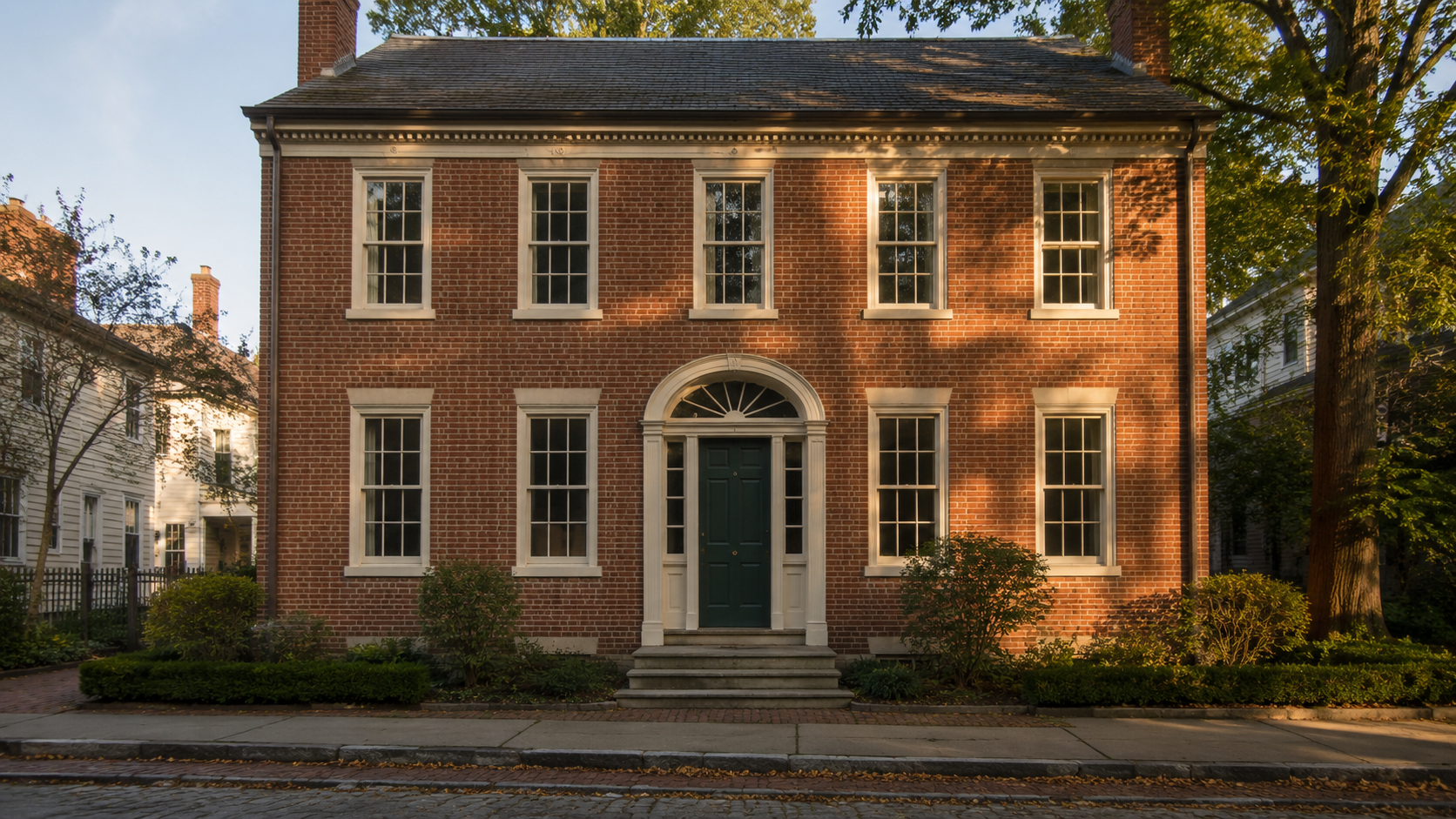
A Federal house is easy to ruin.
One thick replacement window. One oversized porch. One heavy entry surround. Suddenly the whole facade loses the calm, light balance that made it Federal in the first place.
This style does not depend on grand ornament. It depends on restraint. That is why people misread it. A Federal house can look simple at first, but the simplicity is doing careful work.
Federal Style sits in the broader classical family, but it reads differently from heavier Georgian work. If you want the historical side of the cluster, read Federal Style architecture history. If you want that wider map first, start with architecture styles. For the classical background behind the style, classical architecture and neoclassical architecture are the better next reads.
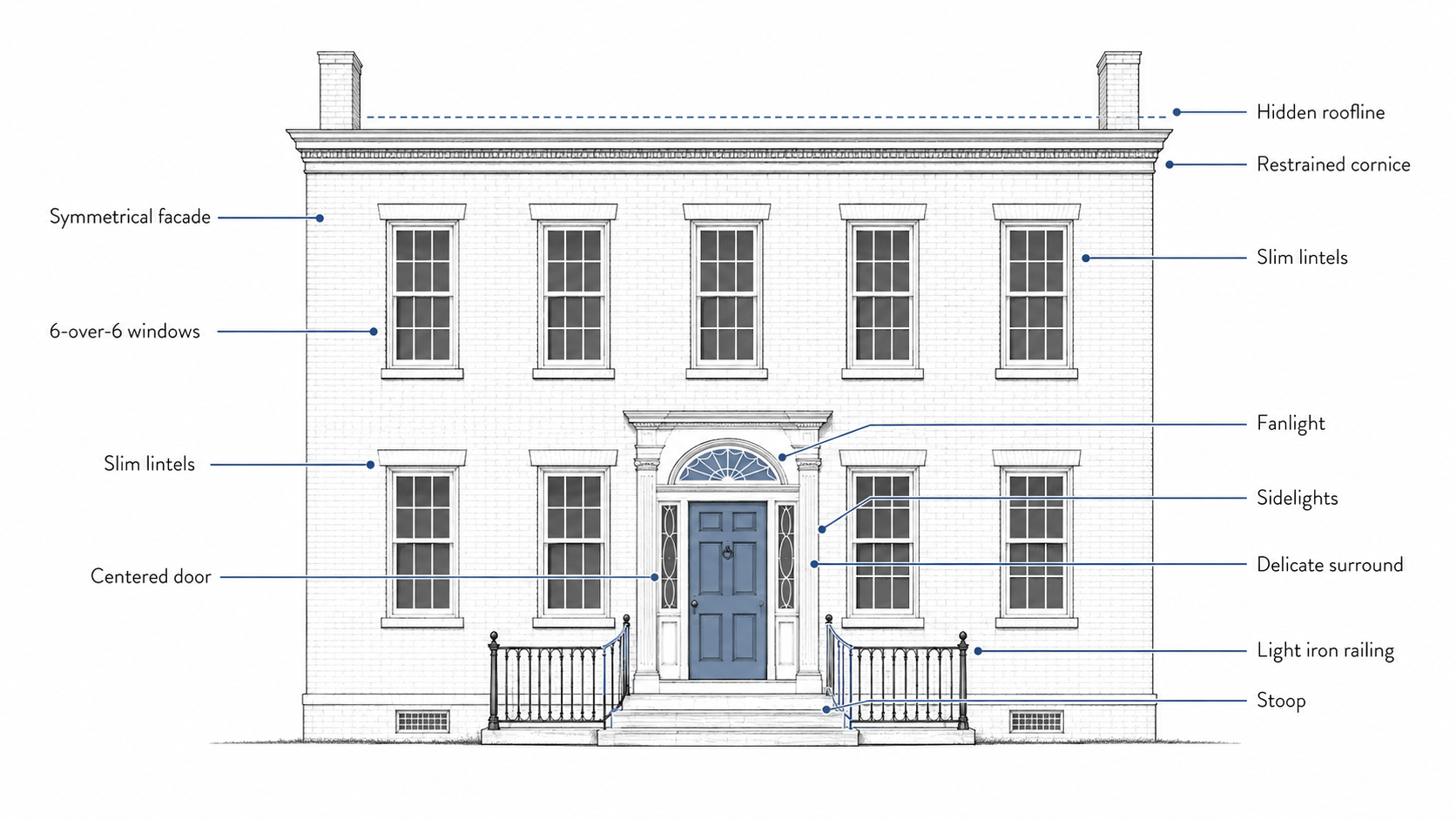
What makes a house read as Federal
Federal Style took the heavier Georgian house and made it lighter. The facade stayed balanced, but the detailing got slimmer and more refined. The door became more graceful. The windows felt taller. The whole house stopped pushing so hard.
The fast read is this: centered entry, strong symmetry, tall narrow windows, delicate trim, and an entry composition built around a fanlight, sidelights, or both.

| Feature | What to look for | What usually goes wrong |
|---|---|---|
| Facade balance | Even window rhythm and centered entry | Additions or window changes break the calm |
| Entry | Fanlight, sidelights, slim surround | Bulky storm doors and thick trim flatten it |
| Windows | Tall, narrow sash windows, often 6-over-6 | Wide replacements make the house feel generic |
| Roofline | Low-pitched, restrained, often quiet from the street | Showy dormers or dramatic roof add-ons change the whole read |
| Overall feel | Refined, light, measured | Heavy columns and thick detailing push it out of style |
Why it feels lighter than Georgian
Georgian houses usually feel more solid and more muscular. Federal houses still respect symmetry, but they soften the weight.
The openings get finer. Ornament gets thinner. The entry gains more grace. The facade still looks formal, but it no longer feels blunt.
That shift matters because people often see “old symmetrical house” and stop there. That is how Federal houses get updated with details that belong to something heavier.
If you want the design principle behind that difference, symmetrical balance in architecture helps here. Federal symmetry is real, but it is not supposed to feel thick or stiff.
How to spot one from the street
Start with the door, then step back to the whole front.
A true Federal entry often carries more elegance than weight. Fanlight above. Sidelights at the sides. A narrow classical surround. Sometimes a shallow porch or delicate ironwork, but not a deep, chunky front porch trying to dominate the house.
Then check the windows. They should support the vertical rhythm of the facade, not fight it. If the house has wide replacement units, thick fake grids, or uneven openings, the original reading may already be damaged.
Brick is common, especially in townhouses and urban houses, but the material alone does not make the style. Proportion does.

The plan matters more than the trim
Federal Style was never only a street-facing costume. The plan usually carried the same ideas as the facade: order, hierarchy, and a clear sense of entry.
That often means a central hall, balanced room placement, and a front door that leads into a house with readable sequence. You know where you are. You know where the formal room is. You know what the house thinks is important.
That is one reason the style still feels useful now. The rooms may not be huge, but they usually know their job.
If you want the interior side of that logic, Federal Style interior design covers the room-level decisions more directly.
The update trap nobody prices first
This is the part most broad style pages skip.
Federal houses are easy to cheapen because the style depends on thinness, proportion, and quiet control. That means “simple updates” can do more damage than people expect.
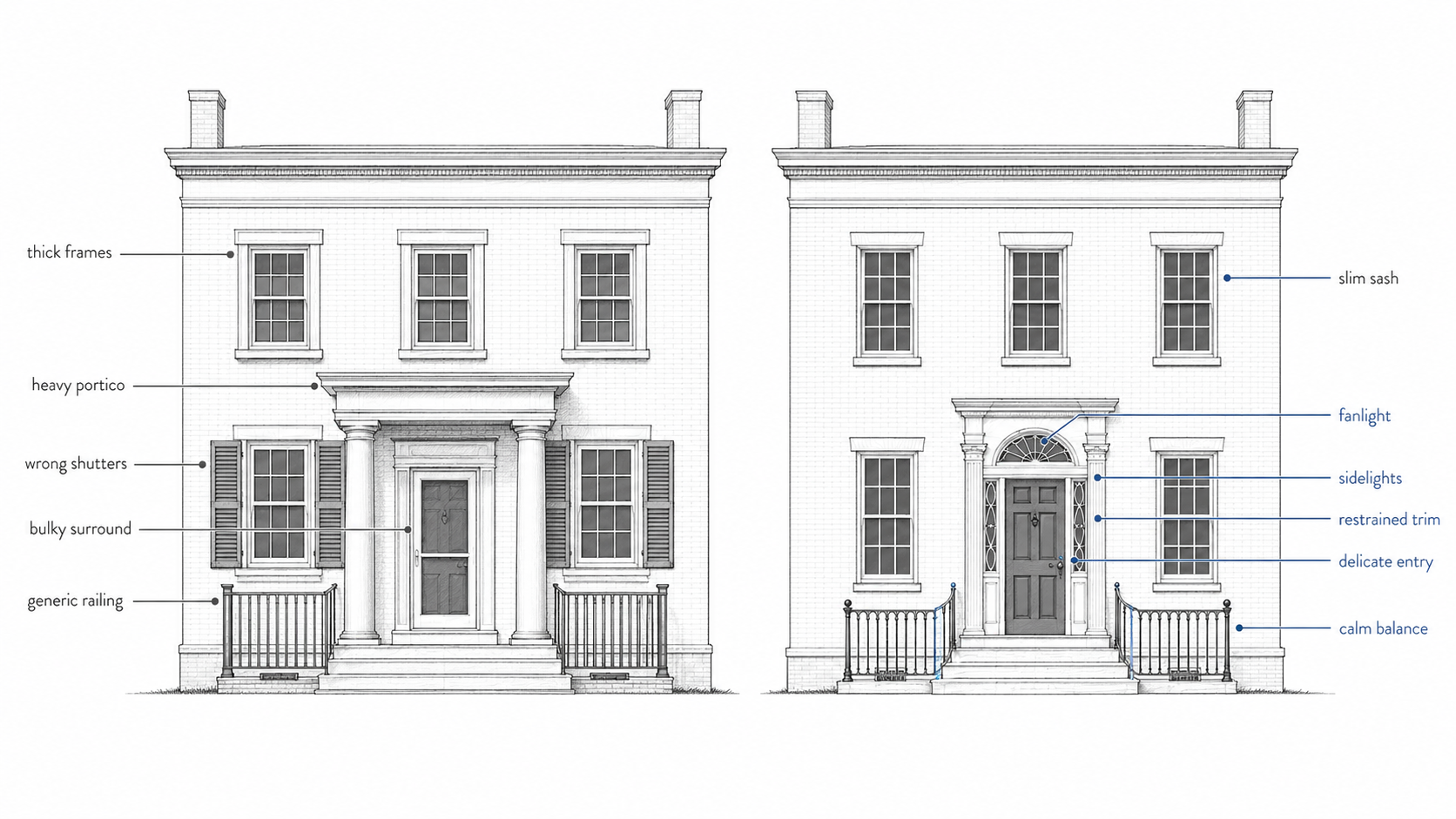
Replacement windows get thicker. The muntin pattern changes. The casing grows. The entry door loses the fanlight or gets buried behind a storm door. Somebody adds an oversized portico because they think the house needs more presence. The facade gets louder and worse at the same time.
The damage is not only visual. Entry light often gets weaker. The front composition loses clarity. Once the window sizes and trim thickness change, fixing the look later costs more because the house has already been pushed out of proportion.
The expensive move is spending on “curb appeal” before checking what the style can actually tolerate.
What deserves protection first
If the house still has its original entry composition, protect that first.
If the original windows are gone, keep the replacements as close as possible to the old proportions. Slimmer is better here. Quiet is better. The goal is not fake age. The goal is to stop widening the house visually.
Protect the cornice line. Protect the facade rhythm. Protect the stoop or railing if it still fits the house. Federal houses do not need heroic gestures. They need disciplined ones.
The part people miss after the window quote
This is the other thing most articles skip. Federal houses do not only suffer from the wrong product. They suffer from the wrong thickness.
A replacement window can be technically decent and still hurt the facade because the frame got heavier, the glass area got smaller, or the muntin pattern lost the original rhythm. The same thing happens with trim packs and stock railings. The installer calls it an upgrade. The house reads it as drag.
That is why Federal updates need mockups and proportion checks more than trend boards. If the new part makes the facade visually thicker, it is probably moving in the wrong direction.
How to borrow Federal ideas in a newer house
You do not need to build a museum copy.
The parts worth borrowing are the ones that still work well: a centered entry, balanced openings, restrained trim, tall windows, a calmer roofline, and a facade that reads in one clean move from the street.
That usually works better than copying an old fanlight onto a house whose massing has nothing Federal about it.
Borrow the logic, not the costume.

Federal vs Colonial, fast
| Question | Colonial | Federal |
|---|---|---|
| Overall feel | Heavier and plainer | Lighter and more refined |
| Entry | More direct, less delicate | Fanlights and slimmer classical detail |
| Trim | More solid and blunt | Thinner and more controlled |
| Facade read | Order with weight | Order with grace |
Why the style still holds up
Federal houses still feel good because calm proportion still feels good.
The style does not need spectacle. It does not depend on giant glass, giant porches, or giant trim packages. It depends on getting the front of the house right.
That makes it a useful style to study even if you never live in one. It teaches how much visual control can come from a few disciplined moves.
FAQ
What years are Federal Style houses from?
Most date from the late 1700s through the early 1800s, especially the 1780s through the 1830s.
What is the fastest way to identify a Federal house?
Look for a symmetrical facade, a refined centered entry, tall narrow windows, and fanlight or sidelight detailing that feels lighter than Georgian work.
What ruins a Federal facade fastest?
Thick replacement windows, heavy porch additions, oversized columns, fake shutters, and entry trim that adds weight instead of grace.
Can a new house use Federal ideas without looking fake?
Yes, if it borrows proportion, balance, and restraint instead of pasting historic details onto the wrong massing.
Read Next
For the historical side of the cluster, read Federal Style architecture history.
For the interior side, go to Federal Style interior design.
For the classical roots behind the style, read neoclassical architecture and classical architecture.
If you want the wider map before drilling into one style, use architecture styles.