
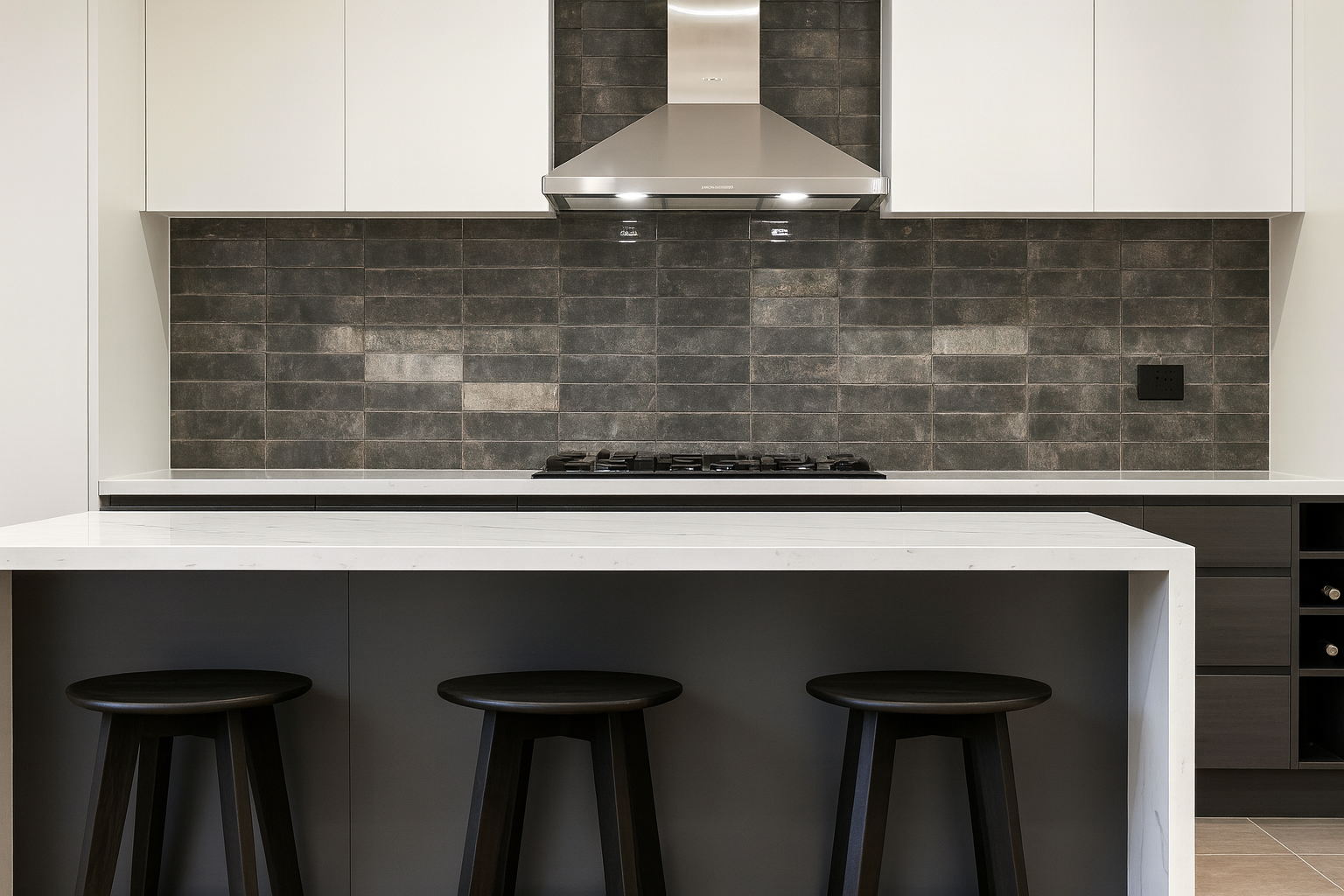
What Are Engineered Stone Benchtops?
Not faux marble. Engineered stone is quartz aggregates bound with resin and pigment. Think: rock shards, not rock slabs. You lose the veins and cracks that give real stone character, but you gain control, uniformity, and fewer surprises.
Flat, dense, consistent. When the slab arrives, it feels heavier and smoother than natural stone. No hidden fissures, no weak pockets. The resin fills what natural stone can’t hide. But toughness trades off: resin can discolor, degrade with UV, and soften at high heat. Never drop a searing pot straight onto it.
20 mm is the workhorse. I’ve handled 12 mm, 20 mm, and 30 mm slabs. The 20 mm thickness is most common in kitchens—solid without needing extreme reinforcement. Large formats (≈ 3040 × 1440 mm) mean fewer seams in long runs or islands. For real pricing detail, see Stone Benchtops Prices: What You Need to Know Before Buying.
Strength shifts with age. Resin continues to cure, so flexural strength adjusts slightly over time. That’s why edge detail and substrate rigidity matter more than people expect. If you’re weighing engineered against other options, compare it with Natural Stone Benchtops: What You Need to Know.
Color is a blessing and curse. Two slabs from the same batch can look identical indoors, then betray seam lines in daylight. Always check slabs under natural light before sign-off. If they only match in showroom LEDs, you’ll notice the mismatch at home.
Engineered Stone Benchtops: Full Guide to Prices, Brands, and Design
Engineered Stone in Kitchens
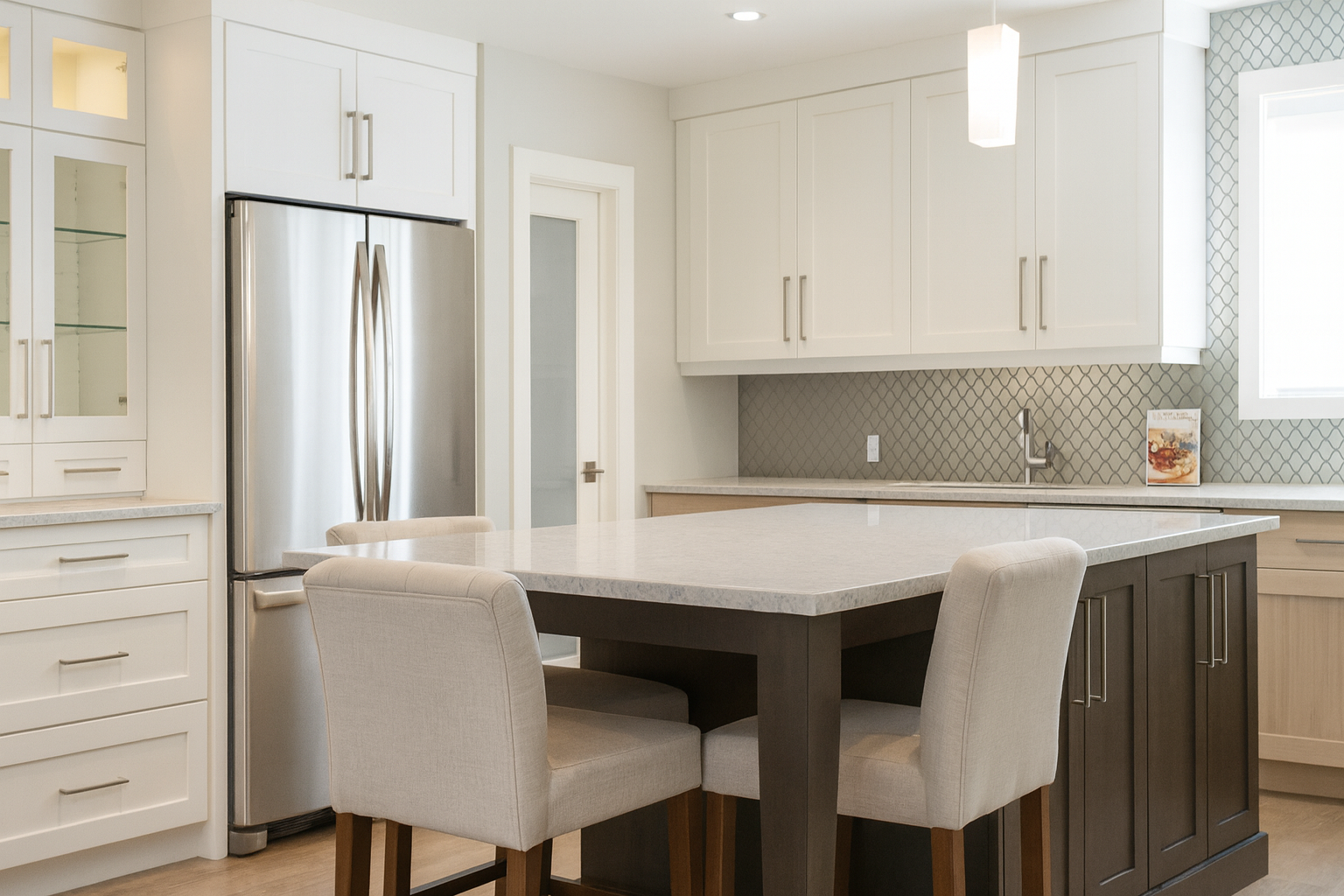
Built for kitchens. Engineered stone kitchen benchtops hold up well under daily prep. Dense surface, low porosity, fewer worries about staining compared with natural marble. Still, turmeric, red wine, and coffee can ghost if not wiped quick.
Cleaning is simple, not bulletproof. Warm water and mild detergent cover 90% of spills. Avoid harsh chemicals or abrasive pads. Resin surfaces can dull if scrubbed the wrong way. For more whole-home durability tips, see Natural Stone for Architecture: Types, Benefits, and Design Insights.
Scratches happen. Quartz aggregate resists knife cuts better than laminate, but it’s not invincible. Always use a chopping board. Resin can mark under serrated edges. Once gouged, repairs rarely look perfect.
Splashbacks match seamlessly. Using the same slab for the splashback creates a clean, continuous look. Engineered stone splashbacks are easier to wipe down than tiled grout lines. Heat from cooktops is the risk point—keep clearance or specify tempered glass insets if burners sit too close.
Man made stone, real trade-offs. Engineered stone is practical for open-plan kitchens where consistency matters. Unlike natural slabs, you can match benchtop and splashback from the same batch. The cost runs higher than laminate but lower than premium marble. For budget notes, compare with Cheapest Engineered Stone Benchtops: Finding Quality Without Breaking the Bank.
Engineered Stone Benchtops Price & Costs
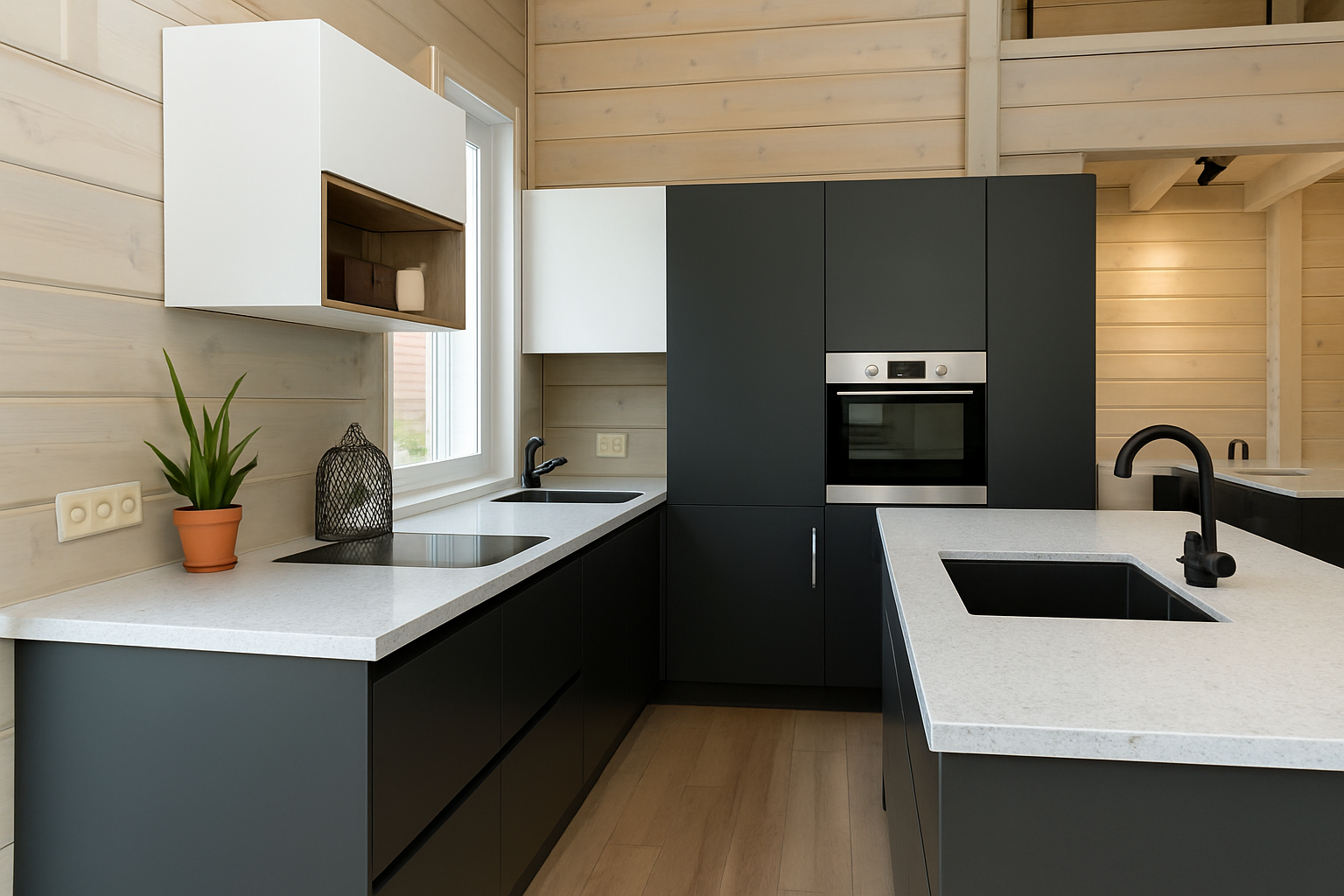
What drives the cost. Price isn’t just the slab. Thickness, edge detail, brand, and installer markup set the final figure. A simple straight polish edge costs far less than a waterfall return. Transport and cutting fees jump in regional jobs.
Engineered vs natural stone. On average, engineered stone benchtop cost per metre comes in below premium granite or marble. You pay for uniformity and color control, not rarity. Natural slabs can spike if you want exotic veins. Engineered prices stay more predictable.
Per metre ranges. Engineered stone benchtops price runs roughly $450–$750 per linear metre in Australia, depending on brand and finish. Cheapest engineered stone benchtops may dip lower if you settle for offcuts or clearance batches. Reconstituted stone benchtops follow similar pricing, often sold under different names.
Essastone and Quantum Quartz pricing. Entry Essastone price per metre often sits around $500–$700 installed. Premium Essastone Carrara or Essastone Calcite jump higher. Quantum Quartz benchtop prices range broadly — Tornado or Natural Concrete near the lower mid-tier, Galaxy Black or Statuario at the premium end.
How to read cost tables. Suppliers rarely show full installed price. Always confirm if “supply only” or “supply and install.” Offcuts can be bargains if your kitchen design allows small runs. For wider cost context, compare with Stone Benchtops Prices: What You Need to Know Before Buying.
Thickness & Finishes
20 mm is the workhorse. A 20mm engineered stone benchtop balances strength and cost. It’s thick enough to look solid and span short runs without reinforcement, but lighter than 30mm, which hikes price and weight.
Brand thickness norms. 20mm Essastone benchtop is the market standard. Quantum Quartz also sells in 20mm, with some ranges extending to 30mm for heavy island slabs. Ultra-thin 12mm options exist but usually need under-support or steel frames.
Surface finishes shift perception. Polished is classic: glossy, reflective, reads like marble. Matte is gaining ground for softer kitchens and industrial palettes. “Concrete” finishes mimic raw cement, but resin binders mean they still wipe easier than true concrete.
Edge profiles cost more than you think. Square arris edges are cheapest. Bullnose, sharknose, or mitred waterfall edges demand more labor and lift the quote. Always check what’s included in a “standard” install. For material performance under each finish, see Natural Stone Benchtops: What You Need to Know.
Engineered Stone Brands
Essastone. Known for consistent Carrara-look slabs. Lines include Essastone Calcite, Chalkstone, Carrara, and Lava Black. Reliable for mid-market kitchens. Pricing varies by pattern intensity — subtle veining usually costs less than bold marble replicas.
Quantum Quartz. One of the broadest ranges. Tornado and Ash Grey at the entry tier. Everest and Natural Concrete mid-tier. Statuario, Michelangelo, and Galaxy Black at the top end. Quantum Quartz splashbacks and porcelain variants cover vertical applications.
Caesarstone vs Quantum Quartz. Caesarstone has brand recognition and showroom presence, often priced higher. Quantum Quartz competes with wider patterns and competitive supply. Side by side, differences are more about marketing and style range than performance.
Smartstone. Targeted at the affordable premium bracket. Smartstone benchtops cover kitchen bench tops with European-inspired looks. Good warranty support, competitive against Essastone in the same segment.
Uniquartz and Trendstone. Smaller names but gaining traction in cost-sensitive markets. Uniquartz stone and Trendstone benchtops appeal for budget renos and investor-grade kitchens where price trumps branding.
Choosing by project. For everyday kitchens, Essastone or Smartstone hold value. For statement islands, Quantum Quartz and Caesarstone lead. For low-cost rentals, Uniquartz or Trendstone keep budgets in check without chasing prestige.
Where to Find Engineered Stone
How Location Affects the Price
Why supply chains matter. Engineered stone is heavy, cut-to-size, and not something you casually freight across the country. Local availability sets both cost and choice. Some ranges are stocked regionally, others need weeks of lead time.
Gold Coast installs. Engineered stone benchtops Gold Coast are tied to local fabricators who handle cutting and install. Price variation often comes less from the slab and more from how busy the shops are. In tourist-heavy cycles, install slots book months ahead.
Bunnings and DIY outlets. Engineered stone benchtops Bunnings appeal for budget renos. These are often thinner pre-cut slabs or kits, not custom island spans. They suit laundries and secondary spaces, but kitchens still demand a pro install.
Marble, Granite, Quartz, and Terrazzo Options
Special Types of Engineered Stone
Quartz engineered stone. The base product most people know: crushed quartz bound with resin. Durable, uniform, kitchen-friendly.
Engineered marble. Made with marble chips and resin. Softer, less stain-resistant than quartz blends. Suits bathrooms more than high-use kitchens.
Composite granite. Coarser aggregate mix gives a more “grainy” surface. Good for outdoor kitchens where a marble-look isn’t the goal.
Terrazzo engineered stone. Terrazzo engineered stone tops combine recycled chips with resin for a bold speckled look. Heavier visual, suits statement islands.
White finishes. White engineered stone benchtop is still the most demanded look, but beware: seams show more easily, and stains stand out. Sealers help but don’t make it bulletproof.
What People Learn the Hard Way
Hidden Problems With Engineered Stone
Practical Challenges
Cutting dust and tools. Cutting engineered stone benchtops is not like trimming laminate. It creates respirable silica dust, which is a serious health hazard. Only wet-cutting with extraction and PPE is acceptable. Many regions now require certified workshops.
Silica standards. Essastone silica content can be as high as 90 percent. Regulations are tightening worldwide. If your installer shrugs off safety, find another. Clients should insist on proof of compliance.
Offcuts aren’t waste. Engineered stone offcuts make perfect laundry tops, shelves, or small vanities. Ask to keep them — you already paid for the slab.
Resin wear and UV. Outdoors, resin binders can discolor under UV. Indoors, hot pans can leave burn marks. Both are common mistakes from assuming “stone” means indestructible.
How to Choose the Best Engineered Stone Benchtop
Balance durability, design, and budget. Cheap slabs can chip and stain faster. Premium lines don’t just look better, they often carry longer warranties and tighter quality control.
Category picks. Best engineered stone benchtops depend on the project:
- Everyday kitchens → mid-range Essastone or Smartstone.
- Showpiece islands → Quantum Quartz Statuario or Caesarstone marble-look ranges.
- Budget rentals → Uniquartz or Trendstone.
Cheap vs premium choices. Cheap engineered stone benchtops do the job for secondary spaces, but surface polish and edge details give away the grade fast. If resale is part of the plan, invest in mid to premium.
For wider material trade-offs, see Natural Stone for Architecture: Types, Benefits, and Design Insights.
Beyond the Kitchen
How Stone Tops Fit Into a Whole-Home Plan
Kitchens first, but not the only spot. Engineered kitchen benchtops dominate the market, but the same slabs cut down work in bathrooms, laundries, and even home bars.
Sustainability and resale. Buyers read “stone benchtop” as premium. Engineered versions still raise property value, but green design critics point to high silica and resin use. Some brands now mix recycled aggregates to soften the footprint.
Bathrooms and laundry. Engineered stone in bathrooms and laundry offers clean surfaces, but watch for soap scum and mold around joins. Unlike kitchens, high humidity is the main enemy, so sealing and ventilation matter more than cutting boards.
For sustainable system-wide upgrades, connect this choice with Stone in Interior Design: How to Incorporate Stone Throughout Your Home.
Natural Stone vs Engineered Stone Benchtops
What makes them different
Natural stone is cut straight from the quarry. Every slab has veins, fissures, and color shifts that can make a kitchen unique, or cause headaches at install. Engineered stone is ground quartz mixed with resin and pigment. It’s uniform, predictable, and easier to detail around joins.
Cost and supply
Granite and marble vary wildly in price depending on quarry and shipping. Imported marble can double in cost once freight and wastage are factored. Engineered slabs are cheaper to source consistently. A 20mm engineered stone benchtop often comes in under the price of mid-tier marble while giving a similar look.
Durability in use
Natural stone handles heat better. A granite top can take a hot pot without leaving a ring. Engineered stone resins soften with direct heat. But engineered stone resists stains more reliably. Oil, wine, or turmeric can sink into marble within minutes if it isn’t sealed. Most engineered slabs shrug it off if cleaned promptly.
Maintenance load
Natural stone needs sealing every 1–2 years. Skip it, and you’ll pay later in stains and etching. Engineered stone is almost maintenance-free. Wipe, clean, and avoid direct heat. For busy kitchens, that simplicity often wins the argument.
Design flexibility
Engineered stone offers consistent color lots — useful when you need multiple slabs to match. Natural stone shines when you want one-of-a-kind character. The bookmatched vein of a marble island waterfall is something engineered slabs rarely pull off convincingly.
Resale and perception
Buyers still put a premium on “real stone.” Marble or granite has status value. Engineered stone appeals to buyers who want durability and modern finishes. Both can lift a property if detailed well, but they speak to slightly different markets.
Bottom line
Choose natural stone if you’re chasing uniqueness and can live with upkeep. Choose engineered stone if you want predictable performance, uniformity, and fewer maintenance calls. Most modern projects mix both — engineered in the hard-working kitchen, natural stone in the bathroom or fireplace feature wall.
For cost planning on stone options, see Stone Benchtops Prices: What You Need to Know Before Buying. For engineered options on a budget, check Cheapest Engineered Stone Benchtops.
FAQ
Questions Clients Always Ask
How much do engineered stone benchtops cost?
Expect $450–$750 per linear metre in Australia. Premium brands and edge details push higher.
What’s the standard thickness?
20mm is most common. 30mm reads heavier but costs more. 12mm exists for wall panels and light applications.
Can you DIY install from Bunnings?
Bunnings benchtops are pre-cut for simple installs, but full kitchen slabs demand pro tools and safety controls.
Is engineered stone safe?
Yes in use. Cutting is the danger because of silica dust. Always confirm your installer uses wet-cutting and certified methods.
Which brands are best?
Essastone for consistency. Quantum Quartz for range. Caesarstone for recognition. Smartstone for mid-market. Uniquartz and Trendstone for budget.
How do you stop stains?
Seal edges, wipe spills quickly, and avoid hot pans direct on the surface. Matte finishes hide smudges better than polished.