
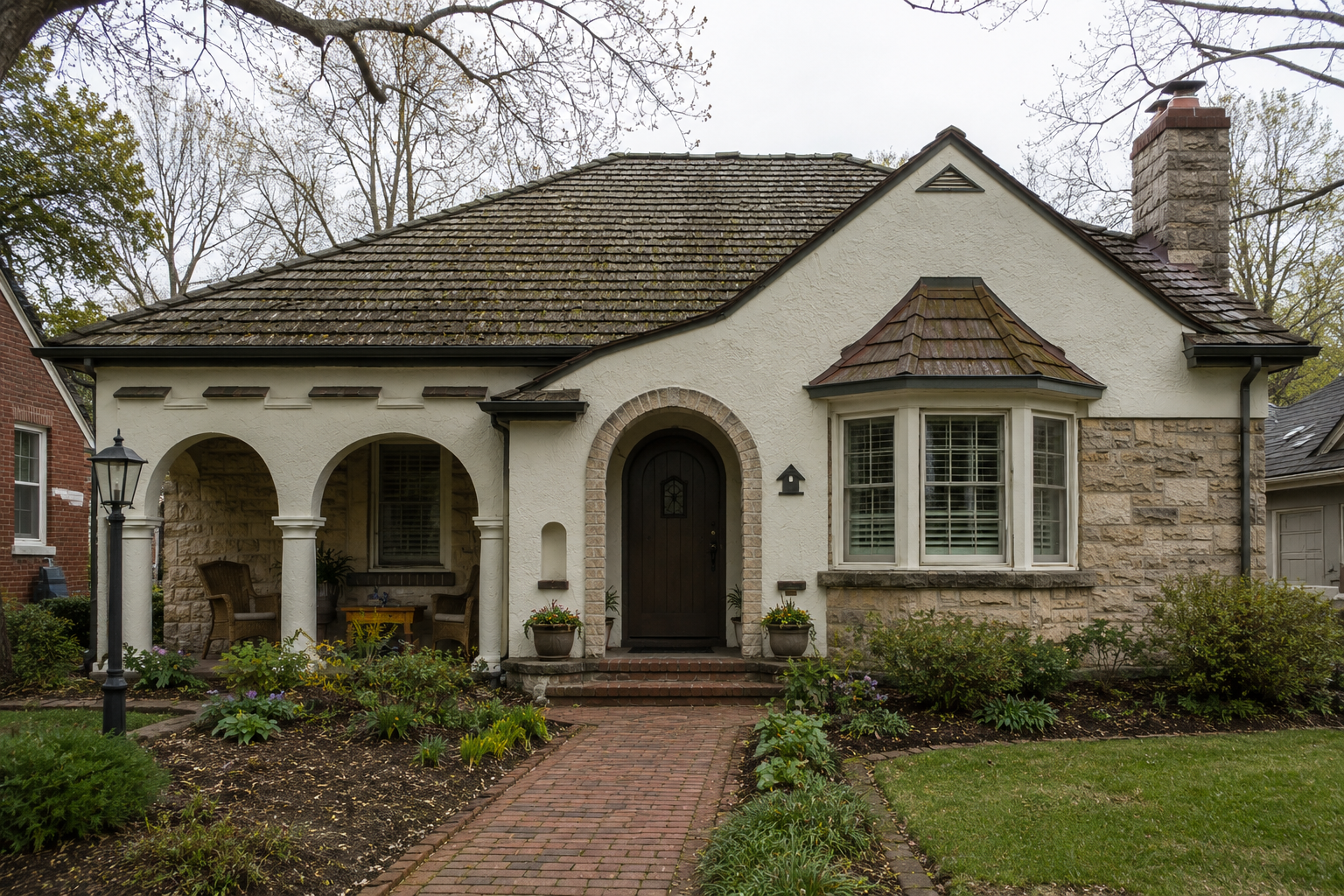
1940s houses were shaped by shortage, rationing, and a rush to build after the war.
That is why so many of them are small, plain, and smarter than they look. The good ones still work because the plans were tight, the rooflines were simple, and the rooms were sized for daily life instead of show.
The weak parts are also easy to spot. Small closets. One bathroom. Thin insulation. Old wiring. Drafty windows. Those are the issues that matter more than the style label.
This decade sits between two different moods. A lot of early 1940s houses still look close to the 1930s. By the late 1940s, the cleaner, lower, more casual ideas that fed the 1950s were already showing up. If you want the wider family tree first, start with house styles.
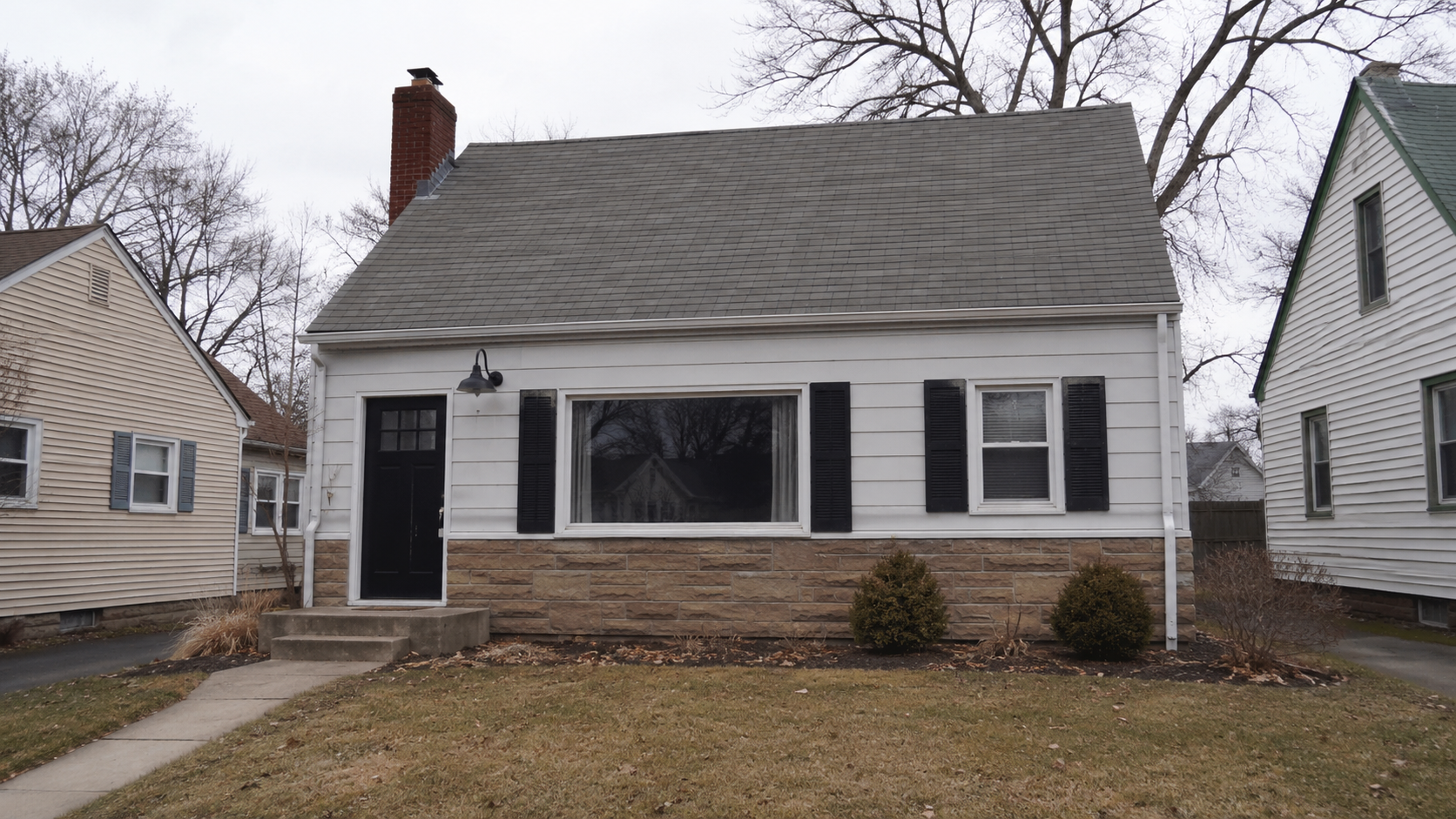
Image by ArchitectureCourses.org. A modest 1940s house can lose its quiet proportions when oversized windows, fake stone, black shutters, and trend-heavy details fight the original scale.
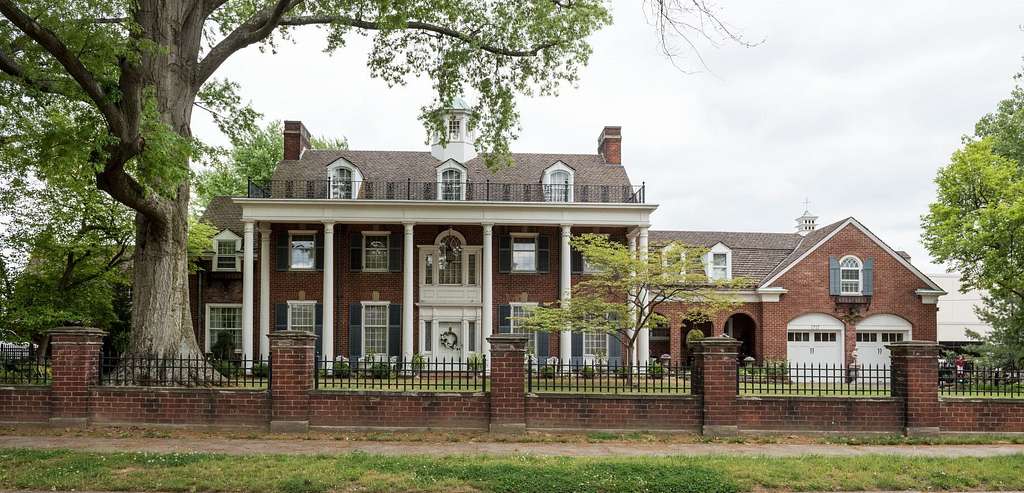
One of the reasons 1940s houses still hold up is that they did not waste much. The plans were modest, the materials were plain, and most of the design effort went into making a small house work.
What Changed in the 1940s

Early in the decade, wartime limits pushed builders toward simpler forms and cheaper materials. Late in the decade, returning veterans, FHA-backed lending, and fast suburban growth pushed the market toward practical starter houses.
That is why the decade is full of houses that feel stripped down but not careless. A 1940s house is rarely trying to impress you. It is trying to stay buildable, affordable, and easy to live in.
If a house feels more formal, more decorative, or more boxed-in, it may still belong more to the 1930s world. If it feels lower, calmer, and more open to the yard, it is already leaning toward the 1950s. That transition matters when you renovate. The wrong update often comes from reading the house as the wrong decade.
The Main 1940s House Types
| Type | What You See | Why It Worked | What To Watch |
|---|---|---|---|
| Minimal Traditional | Low roof, little ornament, small porch, compact rooms | Cheap to build, easy to repeat, good fit for small lots | Can feel flat if the entry, windows, or siding were badly updated |
| Cape Cod Revival | Steep roof, centered entry, dormers, simple symmetry | Easy to heat, easy to frame, attic could become useful space | Replacement windows and oversized additions can throw off the front fast |
| Early Ranch | Low one-story form, long plan, big yard connection | Fit postwar family life and casual living better than older boxy plans | Many of the best examples are late-1940s, not early in the decade |
| Simplified Colonial or Tudor carryover | Older revival shapes with less trim and less craft detail | Builders kept familiar styles but cut cost and fuss | Cheap replacements make these houses look confused, not simpler |
| Stripped Deco or Streamline urban holdout | Curved corners, glass block, smooth walls, flat roof | Still looked modern in city neighborhoods and small infill work | Flat-roof upkeep, steel windows, and odd repairs can cost more than buyers expect |

Illustration by ArchitectureCourses.org. Cape Cod homes usually read as compact, vertical houses with a central core, while ranch houses spread the living spaces across one level with easier indoor-outdoor flow.
A Cape Cod and an early ranch can both be “1940s,” but they solve different problems. One is compact and upright. The other is lower, longer, and already moving toward postwar suburban living.
Cape Cod Was One of the Safe Bets
Cape Cod revival houses, closely tied to Cape Cod architecture, made sense in the 1940s because they were simple, compact, and easy to build. They also handled cold climates well and gave small families a house that felt stable without feeling fancy.
The best ones still look right because the front is balanced, the roof is strong, and the dormers are small enough to belong there. The worst remodels usually go wrong in one of three places: oversized front additions, sloppy replacement windows, or a roofline that gets broken by a second-story move that is too tall for the original house.
If your house still reads this way, keep the front calm. These houses do not need big gestures. They need proportion.
Minimal Traditional Was the Workhorse
This is one of the most common 1940s house types, and it often gets ignored because it looks so plain.
But plain is part of the point. These houses were built to be affordable. Small footprint, little ornament, straightforward framing, short hallways, and just enough porch or entry cover to do the job.
The problem is that many of them have already been “improved” once or twice. Fake stone, awkward shutters, cheap vinyl, heavy gables, and oversized picture windows often do more damage than the original simplicity ever did.
When one of these houses still looks quiet and balanced, leave it alone. Clean siding, better windows with the right proportion, a better front light, and a clearer entry usually help more than a full style makeover.
Early Ranch Started Showing the Next Decade

Not every 1940s house is a ranch, but the late 1940s matter because the ranch was already starting to change the way houses worked.
The shift was not just visual. It was about how people lived. Lower rooflines. Longer plans. Easier yard access. More casual dining. Less formal separation between rooms.
That is why a lot of late-1940s houses feel more modern than people expect. They are already leaning toward the 1950s. If your house has that lower, longer, indoor-outdoor logic, the better comparison is often 1950s house styles, not an older revival house.
Art Deco Did Not Fully Disappear

Image by ArchitectureCourses.org. Late Art Deco and Streamline Moderne details still appeared in some 1940s houses, especially smooth stucco walls, curved glass, flat rooflines, black trim, and horizontal bands.
By the 1940s, residential Art Deco was not the main story anymore. But it did not vanish overnight.
You still see late Deco and Streamline holdovers in some urban houses, duplexes, and apartment buildings: curved walls, glass block, smooth stucco, flat roofs, and stripped-down geometric trim.
These buildings can still look sharp, but they ask for discipline. Flat roofs need better maintenance. Old steel windows are often cold and drafty. Bad repairs stand out fast because the forms are so clean. If your house still carries that language, it is better to study Art Deco architecture than to force it into a generic “mid-century” bucket.
Modernism Was There, But Not in Most 1940s Houses

Modernism mattered in the 1940s, but mostly as a design direction, not as the dominant look of ordinary suburban housing.
Architect-designed houses were already moving toward cleaner plans, less ornament, more glass, and a stronger link between indoor and outdoor space. The average small house was slower to change.
That is worth remembering because many bad remodels mix these two worlds. A modest 1940s starter house is not improved just because you give it flat black fixtures, huge glass, and a white-box interior. The house still needs to read as itself.
What 1940s Houses Still Get Right
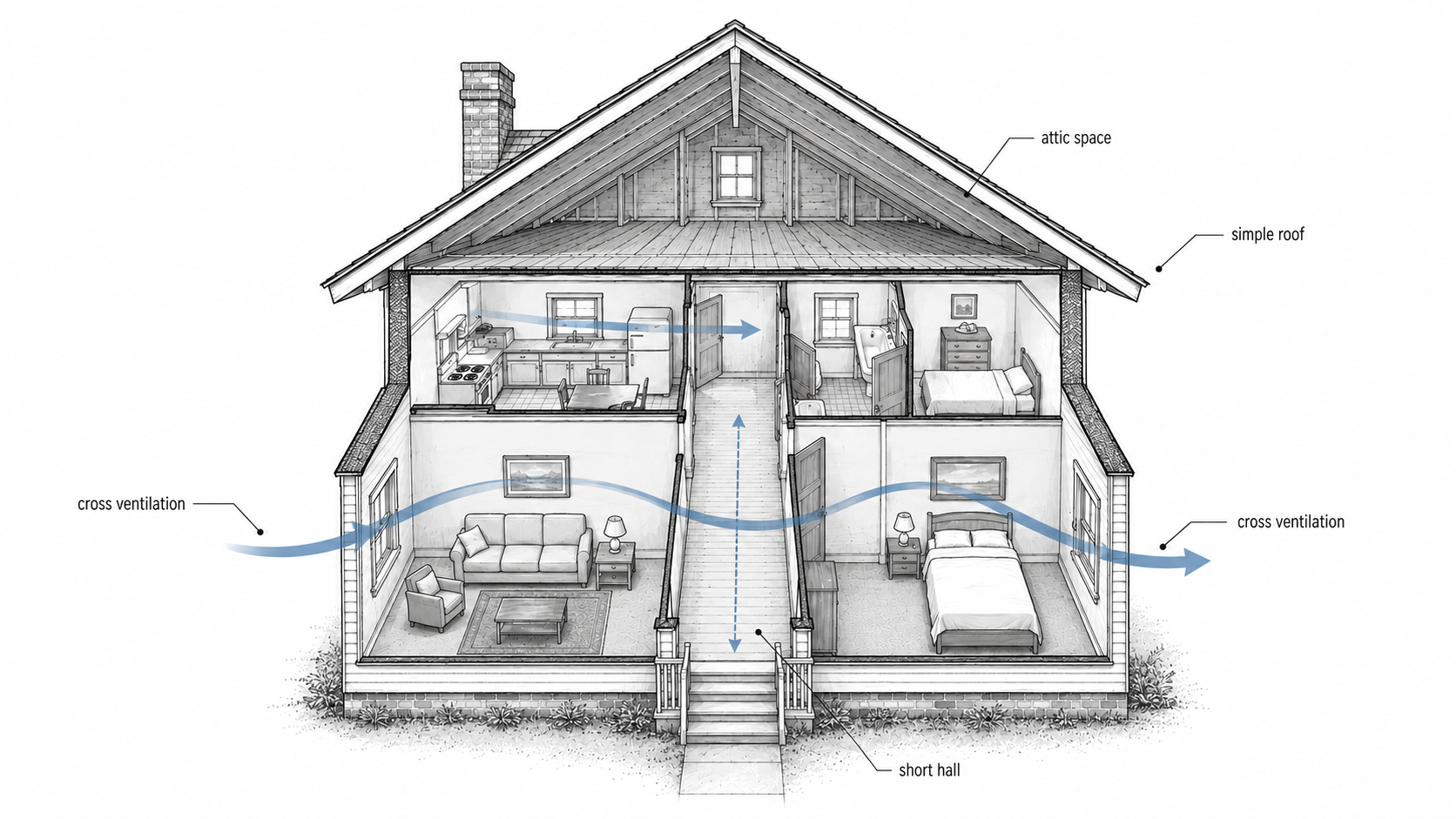
Illustration by ArchitectureCourses.org. A modest 1940s house often worked through simple planning: compact rooms, a short hall, cross ventilation, a plain roof, and attic space that could stay unfinished or be used later.

The best 1940s houses still do a few things very well.
- They keep the footprint under control.
- They use simple rooflines that are cheaper to maintain.
- They make small rooms feel usable instead of oversized and empty.
- They waste less wall space and circulation than many later houses.
The exteriors are usually strongest when they stay restrained. Wood siding, brick veneer, stucco in the right climate, and small windows placed for ventilation all made sense then and still make sense now.
These houses also age better than many people expect because they do not depend on one big trick. They depend on proportion, decent materials, and plans that are easy to understand.
Inside the House

Most 1940s interiors were not big, but they were efficient. That is their strength. You can feel when a room still works because the furniture fits, the windows land where they should, and the walls are doing clear jobs.
Living Room

Living rooms were often built around a fireplace or the main front window. The plan was usually direct. No odd angles. No decorative dead space.
That still works. What usually fails is scale. Big sectionals, giant media walls, and too many ceiling cans can make a small 1940s living room feel worse, not better.
Kitchen and Dining
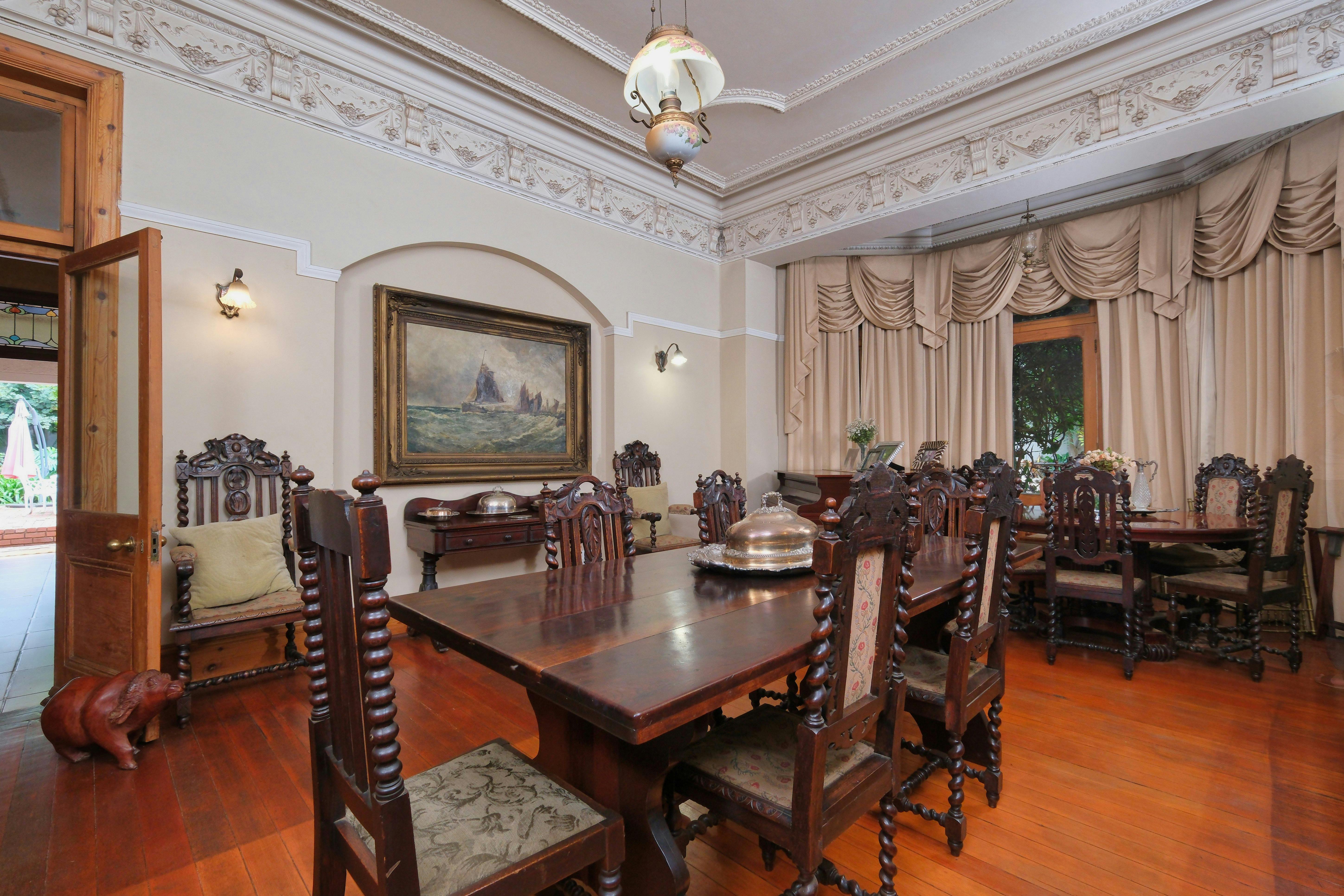
Kitchens were compact, often galley or L-shaped, and built to keep the work close. Breakfast nooks, corner windows, and built-in cabinets did more with less floor area.
The smartest updates improve storage, power, and light without trying to turn the room into a giant open showroom kitchen that fights the scale of the rest of the house.
Bedrooms
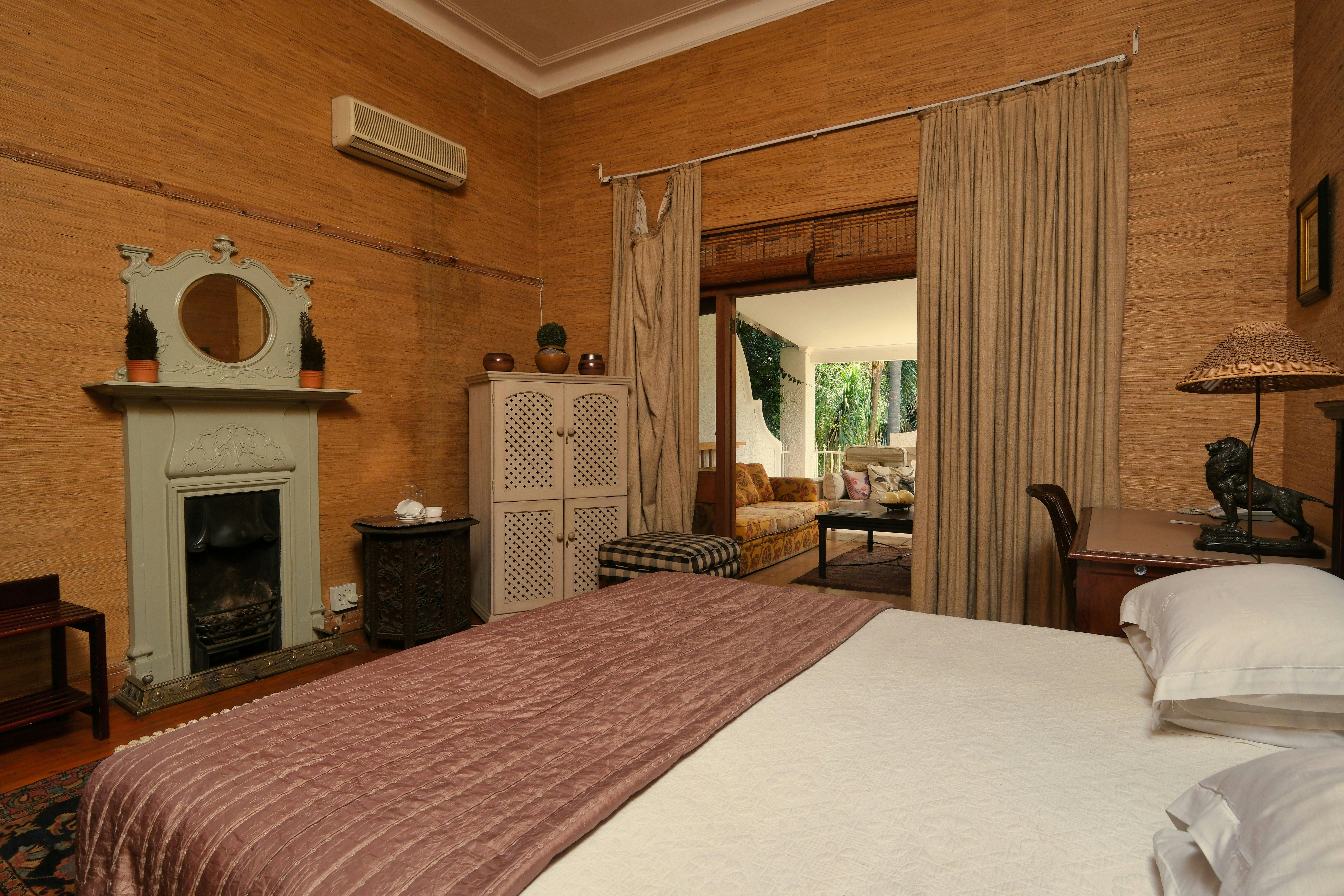
Bedrooms were modest, and closets were often tiny. That part is still true. The fix is usually better storage planning, not pretending the room is bigger than it is.
Basements and Attics
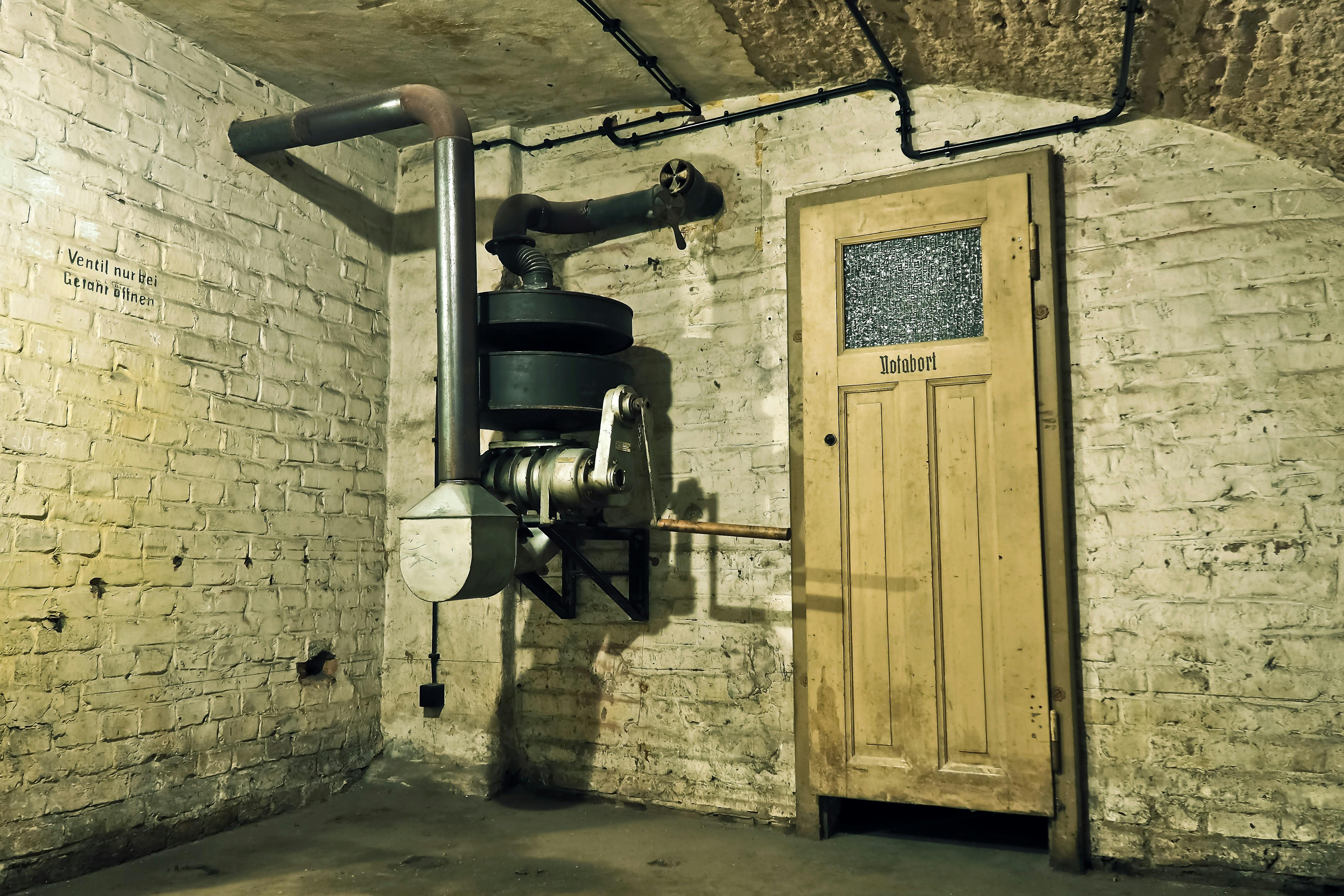
Many 1940s houses have unfinished basements and small attics that were treated as utility space first. That can be useful today, but only if you solve moisture, wiring, insulation, and headroom issues before you start finishing anything.
What Starts Costing Money Once You Open the Walls
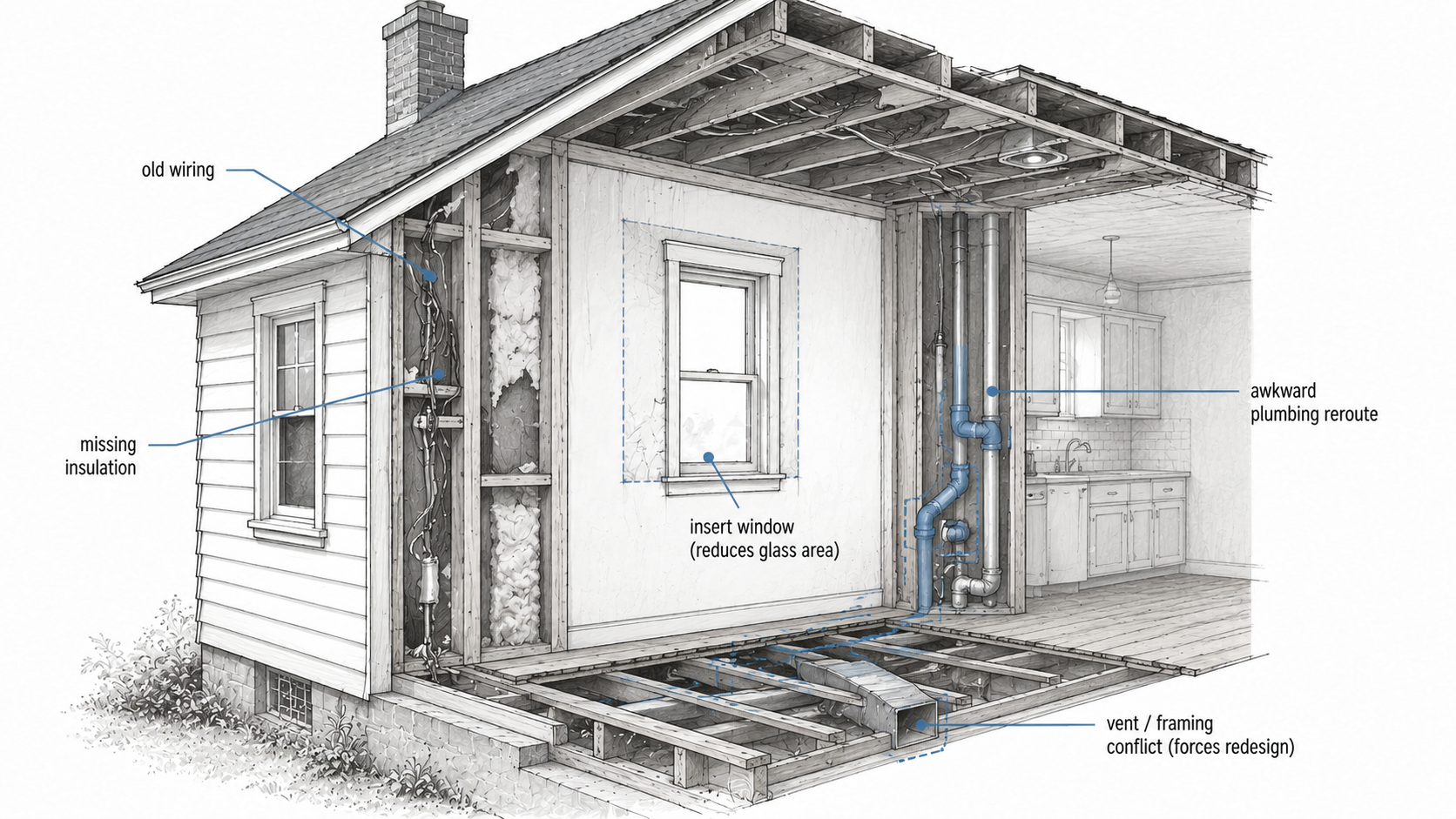
Illustration by ArchitectureCourses.org. A simple 1940s house update can become expensive once the wall is opened and old wiring, missing insulation, window changes, plumbing reroutes, and framing conflicts appear.
This is the part buyers and first-time renovators often find out late.
A 1940s house can look like a simple finish job from the outside. Paint the kitchen. Replace the windows. Move one wall. Update the bath. Then the walls open and the scope changes. You find old wiring, weak insulation, odd plumbing changes, patched framing, or a venting problem that turns one room update into a bigger system job.
Window work is one of the quiet money traps. A lot of replacement windows go in as inserts, which means the new frame sits inside the old opening. The job sounds simple, but the glass area shrinks, the trim proportions change, and the room gets less daylight than people expected from the quote.
Permits can widen the job too. Once you touch wiring, baths, kitchen exhaust, or a wall that might be structural, you are not just doing a cosmetic update anymore. The protective move is to price a few boring checks before you sign off on finishes: panel inspection, sewer scope where needed, attic and basement moisture check, and one small exploratory opening in the area you plan to change. That money is usually cheaper than finding the truth mid-demo.
Renovating a 1940s House Without Flattening It

Illustration by ArchitectureCourses.org. Before changing the exterior of a 1940s house, inspect the roof drainage, original windows, siding condition, foundation edge, and entry proportions first. Most expensive mistakes start when cosmetic upgrades ignore the house’s basic envelope and scale.
You do not need to gut most of these houses to make them better. The smarter move is to keep what still works and spend on the parts that quietly drag the house down.
Keep
- good hardwood floors
- simple trim that still fits the house
- masonry fireplaces if they are sound
- decent room proportions and clear circulation
Upgrade
- electrical service and old branch wiring where needed
- attic insulation and air sealing
- bath and kitchen ventilation
- windows only when the existing ones are beyond sensible repair
Skip
- oversized islands in small kitchens
- big roofline changes unless the house truly needs them
- cheap surface updates that fight the scale of the rooms
- white-on-white flattening that erases the quiet character
A lot of these houses improve more from better planning than from expensive finish moves. Better storage, better lighting, better insulation, and better doors often do more than a trend-heavy remodel.
Knowing the style is only the first step. If you are planning real work, go to renovating a 1940s house without flattening it for the part that matters next: what to fix first, what widens the budget, and where old-house renovations start going wrong.
Common Trouble Spots
These houses are old enough now that the same weak points show up again and again.
- Tiny closets: plan built-ins or shared storage before you steal space from the room.
- Old electrical: kitchens, baths, and laundry areas usually tell the truth first.
- Drafty windows: storm windows or careful full-frame replacement can make more sense than cheap inserts.
- Low ceilings: the room has to work with proportion, not fake grandeur.
- Basement moisture: fix drainage and water first, then finish.
None of this is unusual. The mistake is thinking the fix is mostly cosmetic.
Why These Houses Still Hold Up

1940s houses still have a case for them because they are modest without being disposable.
They are easier to understand than many later houses. Easier to heat when tightened up. Easier to repair when the work is honest. Easier to live in when you stop fighting the scale and work with it.
That does not mean every 1940s house is a hidden gem. Some were built cheaply. Some were altered badly. Some are now expensive to correct. But when the bones are clear and the plan still makes sense, these houses often reward careful work better than people expect.
What To Do Next
If your house still feels more formal and compact than postwar suburban, compare it with 1930s house style before you start calling it mid-century.
If it already has the lower, longer, more open logic of the next decade, 1950s house styles will probably be the more useful next read.
If the house has curved corners, glass block, or a stripped urban look, Art Deco architecture is the better reference point than a generic ranch or Cape page.
The short version is simple. Read the house for what it is first. Then update the weak parts without bullying it into another decade.
References and Further Reading
Useful background for this topic includes National Park Service preservation briefs, Library of Congress Historic American Buildings Survey material, and postwar housing resources from HUD and related archives. They are more useful here than generic “mid-century look” roundups because they explain how these houses were built and why they changed.