

What It Is, Where It Goes, and Why Crews Get Burned by It
A row of trusses can look steady long before it is steady. That is where lateral bracing matters.
The trouble usually starts during erection, not after the roof is finished. The trusses are standing. A few braces are on. Everyone wants to move faster. The line feels stable enough, so somebody treats the bracing like temporary clutter instead of part of the job. That is the point where things start going wrong.
Truss lateral bracing helps keep the truss line and the restrained member lines from rolling, drifting, or buckling sideways while the roof is still vulnerable and after the permanent restraint system is in place. It is not scrap lumber nailed on wherever it fits. It is part of whether the roof goes together cleanly at all.
What truss lateral bracing is

Lateral bracing is there to stop sideways movement that the truss was never meant to take on by itself.
A roof truss is strong in the direction it was designed to carry load. It is much less forgiving when members start rolling, when the line leans during erection, or when restraint is assumed instead of actually installed.
In roof work, lateral bracing usually shows up in three connected ways:
- temporary restraint during erection, while the trusses are still exposed and unstable
- continuous lateral restraint, where specific member lines need to be held from buckling sideways
- diagonal bracing, which ties those restrained lines back into a part of the roof that can actually stabilize them
If you want the broader cluster around this topic, the next pages are truss bracing and roof support systems, types of truss bracing, and introduction to roof structures.
Temporary restraint, CLR, and diagonal bracing are different jobs
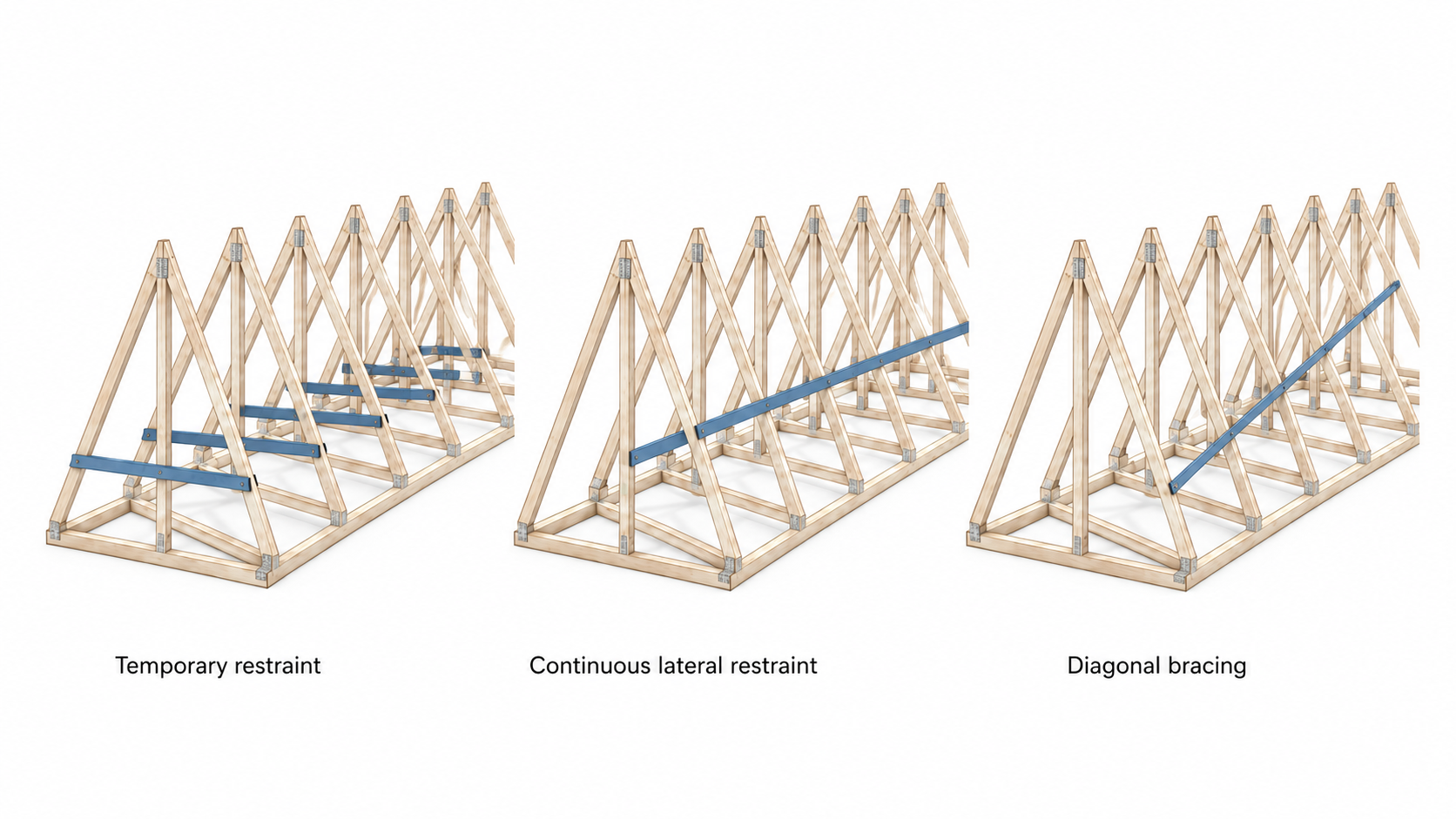
Illustration by ArchitectureCourses.org.Temporary restraint, continuous lateral restraint, and diagonal bracing do different jobs; the mistake is treating every brace like the same piece of lumber.
| Part of the job | What it is doing | What crews get wrong |
|---|---|---|
| Temporary restraint | Keeps the truss line stable while erection is still in progress | Treating it like optional setup lumber |
| Continuous lateral restraint (CLR) | Restrains specific members from buckling sideways | Thinking the restraint line alone solves the whole problem |
| Diagonal bracing | Ties restrained lines back into a more stable part of the roof system | Leaving the restrained line with no real tie-back logic |
That distinction matters. Temporary bracing is about surviving erection. Permanent restraint belongs to the finished structural system. CLR may restrain a member line, but it still needs diagonal bracing if the whole line can move together.
If that part is the real question, go next to permanent truss bracing requirements and diagonal truss bracing.
Where jobs start going sideways
Braces come off too soon. The line looks fine. Wind feels light. Somebody wants access. That is enough to make a bad decision.

Illustration by ArchitectureCourses.org. Early trusses need temporary restraint and stable brace points before the roof line is treated as safe or self-supporting.
The sheathing gets expected to save the sequence. Roof sheathing can stiffen the roof once enough of it is actually installed and fastened correctly. Before that, it is not a substitute for a real bracing sequence.
CLR gets installed without the diagonal bracing that makes it work. A restrained line still needs to be tied back into something stronger than itself.
The brace lands on the convenient place instead of the right place. Bracing has to connect to the correct member line, in the correct direction, for the correct reason.
Nobody really checks the truss documents. The site starts running on memory and habit instead of the actual truss package.
Installation sequence that keeps the truss line stable
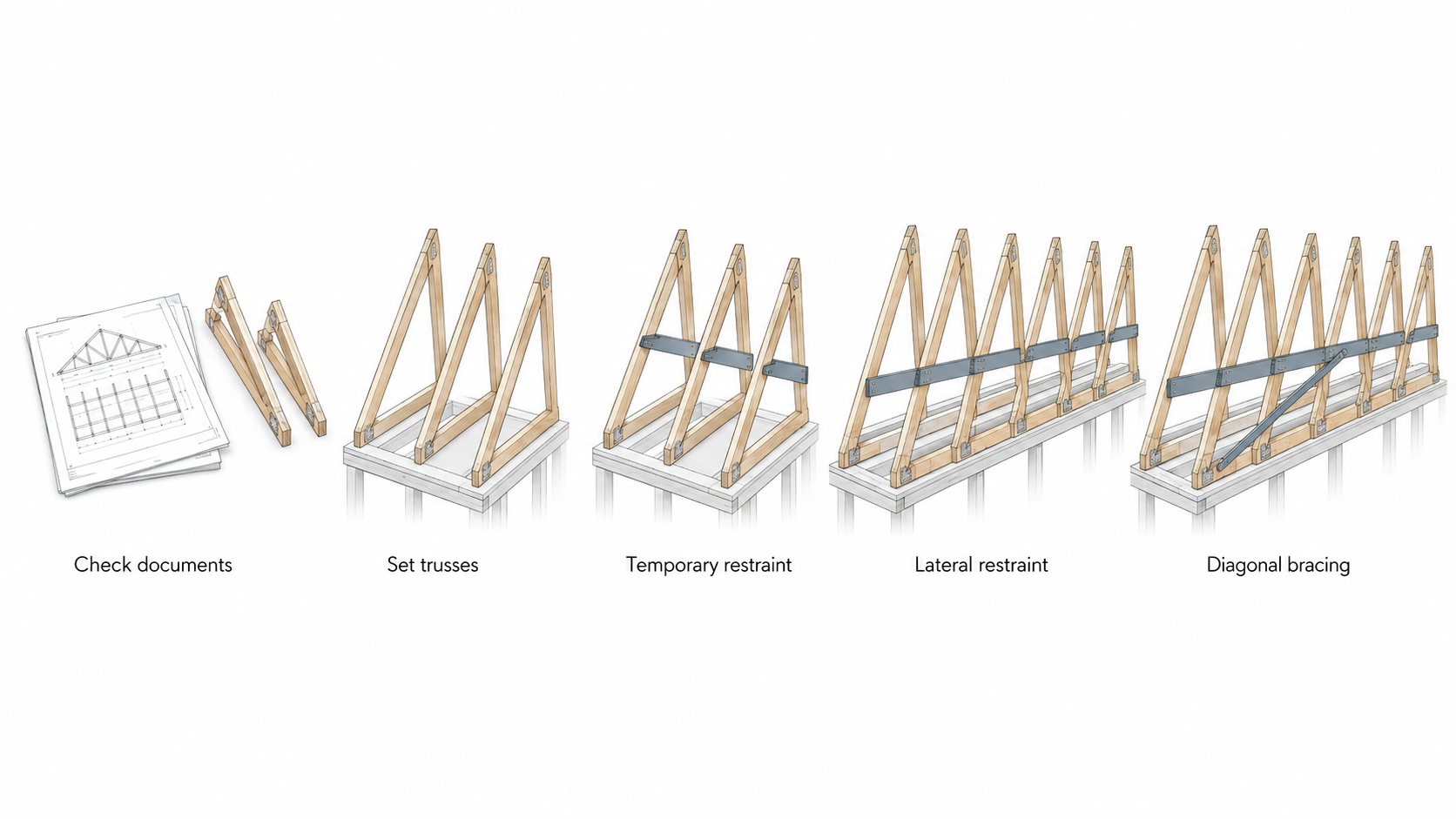
Illustration by ArchitectureCourses.org. A stable truss line depends on sequence: check the truss documents, set the first trusses, add temporary restraint, install lateral restraint, and finish with diagonal bracing before the roof is treated as stable.
1. Read the truss package before the first brace goes on
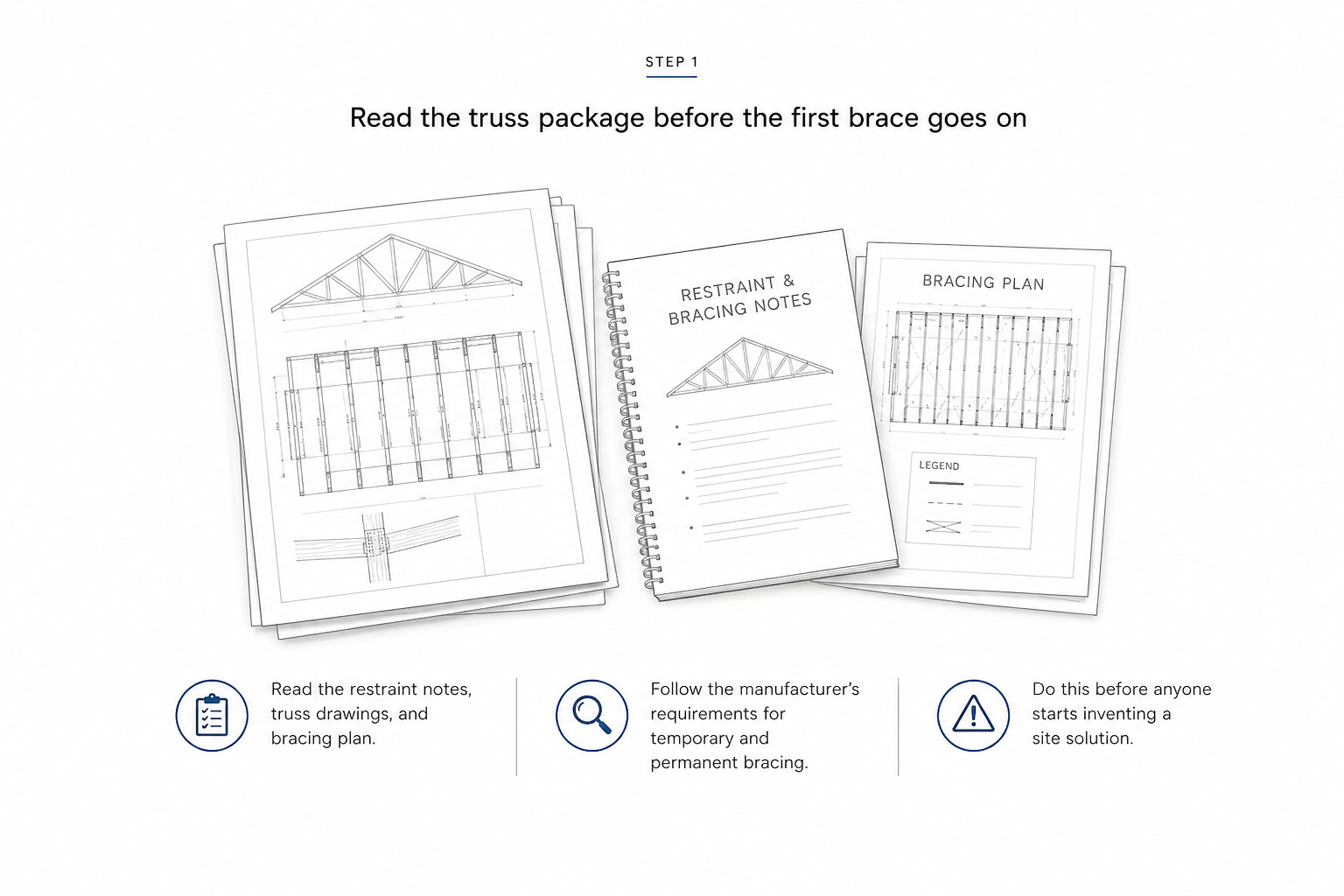
Illustration by ArchitectureCourses.org. The truss package should be checked before the first brace goes on so restraint notes, truss drawings, and bracing requirements guide the work.
Do this before anyone starts inventing a site solution. The restraint notes, truss drawings, and permanent bracing requirements should be driving the layout, not a guess from another roof.
MUST READ
BCSI Guide to Good Practice for Handling, Installing, Restraining & Bracing of Metal Plate Connected Wood Trusses
This is the useful field reference here because it deals with the part crews usually rush: handling, erection sequence, restraint, and bracing while the roof is still vulnerable.
2. Set the first trusses and brace them immediately
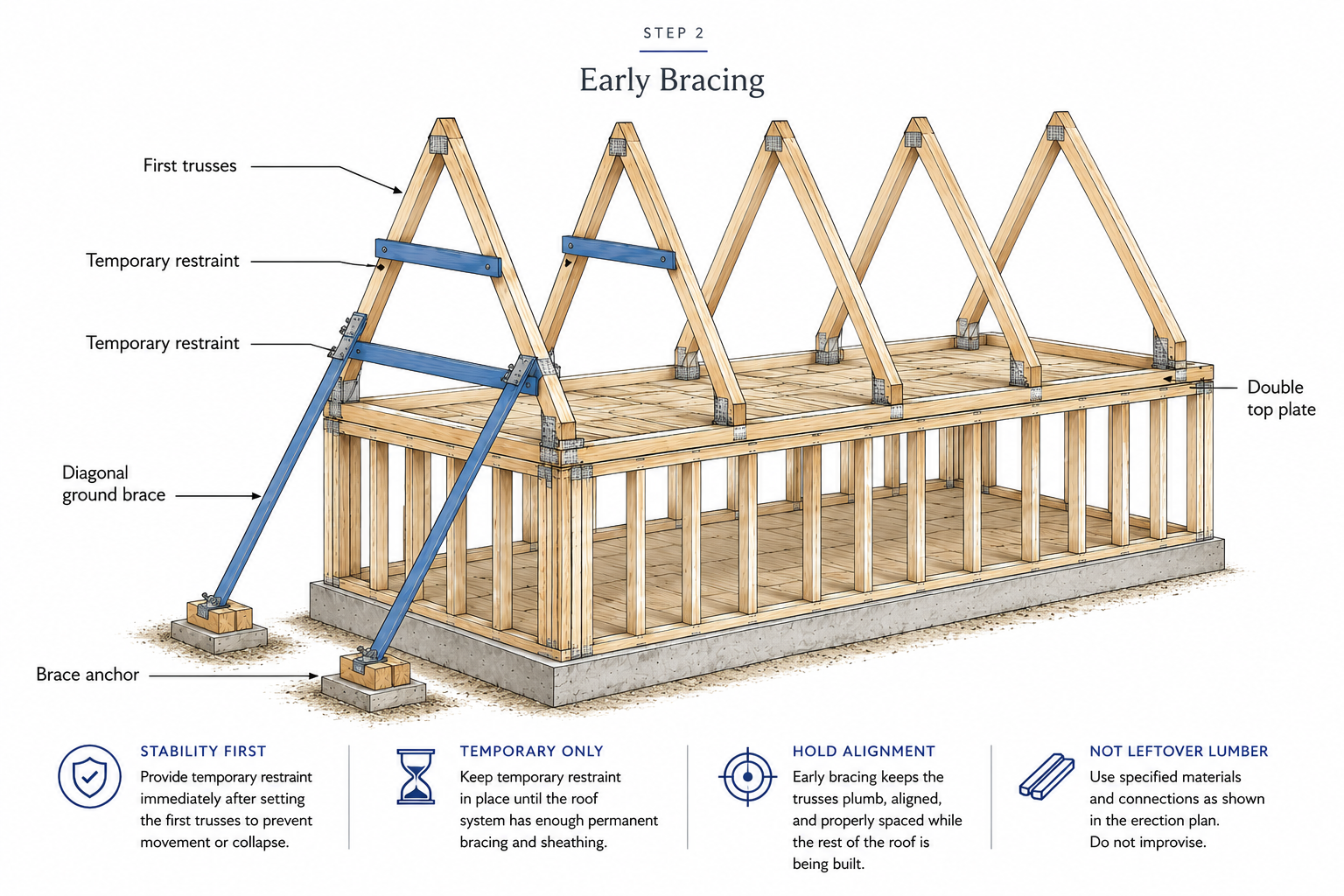
Illustration by ArchitectureCourses.org. The first roof trusses need temporary restraint and diagonal ground bracing before the truss line becomes stable.
Early braces are there to hold alignment and buy time while the rest of the roof is still exposed.
The first trusses are where the line either starts behaving or starts drifting. Brace them right away. Do not wait until several more are up.
- install temporary restraint as soon as the first trusses are set and aligned
- keep those braces in place until the roof has enough permanent restraint and stability to do without them
- treat the early braces like part of the erection plan, not like leftover lumber
3. Install CLR where the truss documents call for it

CLR is there because certain member lines need restraint. It is not there to make the roof look tidy.
Now the restrained member lines start getting the restraint they were designed to need. This is where crews get too casual and start substituting memory for the actual bracing notes.
- install CLR at the designated member lines, not just where it feels sensible
- follow the truss package for placement and fastening requirements
- do not treat one generic spacing rule as a substitute for the actual design
If the spacing question is the real one, use truss lateral bracing span as the next page instead of forcing that whole subject into this article.
4. Tie restrained lines back with diagonal bracing

Illustration by ArchitectureCourses.org. The diagonal brace ties the restrained truss line back to a stable end bay so the whole line cannot sway together.
Diagonal bracing is what stops the restrained line from moving with the rest of the roof.
This is the part that gets reduced to a lazy sentence on weak pages. It should not.
A member line may be restrained by CLR, but that restrained line still needs to be tied back into something that will not move with it. Otherwise the whole restrained line can lean together.
- run diagonal bracing so the restrained line ties back into a more stable part of the roof system
- do not assume a piece of lumber crossing a few trusses means the problem is solved
- connect diagonal bracing where it is actually doing structural work, not just where it is easy to nail
This is where diagonal truss bracing becomes the more useful follow-up.
5. Brace the outer trusses and gable areas before the roof starts feeling finished

The vulnerable edges of the roof usually need more attention, not less.
Gable ends and outer trusses can get into trouble earlier than the middle of the run. They are more exposed, often less forgiving, and easy to under-brace because the roof already looks close to done.
- do not leave the ends weak just because the center of the roof feels steadier
- treat gable-end stability as part of the bracing plan, not a cleanup task
- keep temporary restraint in place until the whole line is truly stable
What roof sheathing helps with and what it does not
Sheathing matters. It just gets credited too early.
Once enough roof sheathing is installed and fastened correctly, the roof diaphragm starts helping the system stiffen up. Before that, it is just hope nailed to a partial surface.
That is one of the most common bad assumptions on site. A few sheets go down and suddenly everybody acts like the roof has moved into the safe zone. Sometimes it has not. Sometimes the weakest part of the line is still exposed, and the bracing that looked annoying ten minutes ago is still doing the real work.
Fasteners and connectors are not the main story, but they still matter
Bad connections can undo decent bracing. The wrong screws, weak nails, random hardware substitutions, or sloppy fastening patterns can turn a good layout into a weak one.
That does not mean this article needs a giant shopping section. It means the connection requirements in the truss documents and bracing notes need to be followed instead of swapped out casually because something else was already on site.
ALSO USEFUL
Simplified Design of Building Trusses for Architects and Builders
This is the better second read if the question has moved from site sequence into member behavior, truss layout, and how the design side connects to what the crew is building.
What lateral bracing does not solve by itself
Lateral bracing does not fix a bad truss layout.
It does not replace the truss design.
It does not let a crew ignore the package notes.
And it does not turn guesswork into engineering.
If the roof is pushing beyond straightforward site practice, the safer move is to stop pretending the answer will appear from field habit. That is where the engineer, truss supplier, and bracing documents have to lead.
Common mistakes that keep showing up
- Removing temporary bracing too early because the line looks stable enough
- Using CLR without proper diagonal tie-back and calling the job done
- Letting partial sheathing drive the decision instead of the actual erection sequence
- Bracing from habit instead of the truss package
- Substituting convenient fasteners or hardware where the documents call for something else
Most of those are not big dramatic errors. They are small site decisions made too casually. That is why they keep happening.
FAQ
What is truss lateral bracing?
It is bracing used to help keep trusses or specific truss member lines from moving sideways out of position.
Is lateral bracing the same as temporary bracing?
No. Temporary bracing is part of the erection sequence. Permanent restraint and bracing belong to the finished roof system.
Does roof sheathing replace early bracing?
No. Not during erection. Sheathing helps once enough of the roof diaphragm is actually installed and fastened correctly, but it does not replace a real bracing sequence while the line is still vulnerable.
Where does lateral bracing usually go?
At the member lines and locations identified in the truss design and bracing documents. In ordinary roof work, that often means along truss runs, restrained member lines, and areas that need diagonal tie-back bracing.
Can the crew decide the whole layout in the field?
They still have to install it in the field, but the layout should not be invented casually. The truss package and bracing notes should drive the decision.
What usually causes failure?
Removing temporary bracing too early, assuming one restraint line solves the whole roof, relying on partial sheathing too soon, or skipping the actual truss documents.
Do small residential roofs still need this much attention?
Yes. Smaller roofs are still vulnerable during erection. Small does not mean forgiving.