

A roof tie beam comes into play when the roof wants to push outward and the structure needs something to hold that thrust in check.
It ties opposite sides of the frame together so walls or supports do not spread under load. Trouble starts when that member is missing, too weak, or confused with a rafter tie, collar tie, or ridge beam.
What a Roof Tie Beam Does

Image by ArchitectureCourses.org. Roof tie beam placement in a structural roof system.
A roof tie beam is a horizontal structural member that connects opposite walls, columns, or roof supports to help control outward movement and hold the roof geometry together.
Its job is not the same as a ridge beam carrying vertical roof load at the peak. It is also not the same as a collar tie working high near the ridge. A roof tie beam works lower in the system and belongs to the thrust-control side of roof behavior.
- It helps stop wall spread.
- It helps keep the roof geometry stable.
- It helps opposite sides of the structure act together.
- It matters most when the roof wants to push outward under load.
When Roof Tie Beams Matter Most
| Roof condition | Why the tie beam matters | What to watch |
|---|---|---|
| Simple gable roofs with outward thrust | Keeps opposite sides tied together low in the system | Do not confuse it with a high collar tie |
| Longer spans | Movement and thrust become less forgiving | The beam and its connections may need to be stronger than expected |
| Heavy roof coverings | Load increases and poor tying shows up faster | Check the full load path, not just the beam size |
| Masonry or stiffer wall systems | Outward movement can damage the wall system sooner | Cracks often show before obvious roof failure |
| Traditional timber or exposed-beam roofs | The tie beam may be part of both structure and appearance | Visual simplicity does not reduce structural demand |
These are the conditions where a roof tie beam earns its place. The member is there because the roof wants to spread, and something has to resist that force honestly.
Roof Tie Beam, Rafter Tie, Collar Tie, Ridge Beam: Not the Same Thing

Image by ArchitectureCourses.org. Roof tie beams work in a different part of the structural system than collar ties and ridge beams.
| Member | Main job | Typical position |
|---|---|---|
| Roof tie beam | Resists outward thrust and ties opposite sides together | Low in the roof or at the support line |
| Rafter tie | Resists outward thrust between rafters | Lower third of opposing rafters |
| Collar tie | Helps resist separation near the ridge under uplift-related forces | Upper third of opposing rafters |
| Ridge beam | Carries vertical roof load at the ridge | At the roof peak, with real support below |
A roof tie beam overlaps more with the logic of a lower rafter tie than with a collar tie or ridge beam. But the names still should not be used loosely. The safest way to read the roof is by force path, not by a familiar word.
What a Roof Tie Beam Does Not Replace
A roof tie beam is not a generic fix for every roof problem.
- It does not replace a ridge beam when the roof needs vertical support at the peak.
- It does not replace collar ties where the real issue is uplift-related separation near the ridge.
- It does not replace bracing when the problem is roof-plane stability.
- It does not fix a broken load path below if the walls, posts, or supports are wrong.
This is where open ceilings get expensive. Once the lower tie strategy is removed to clean up the room, the roof may stop behaving like a tied-rafter system and start needing a different structural answer altogether.
Materials and Structural Systems
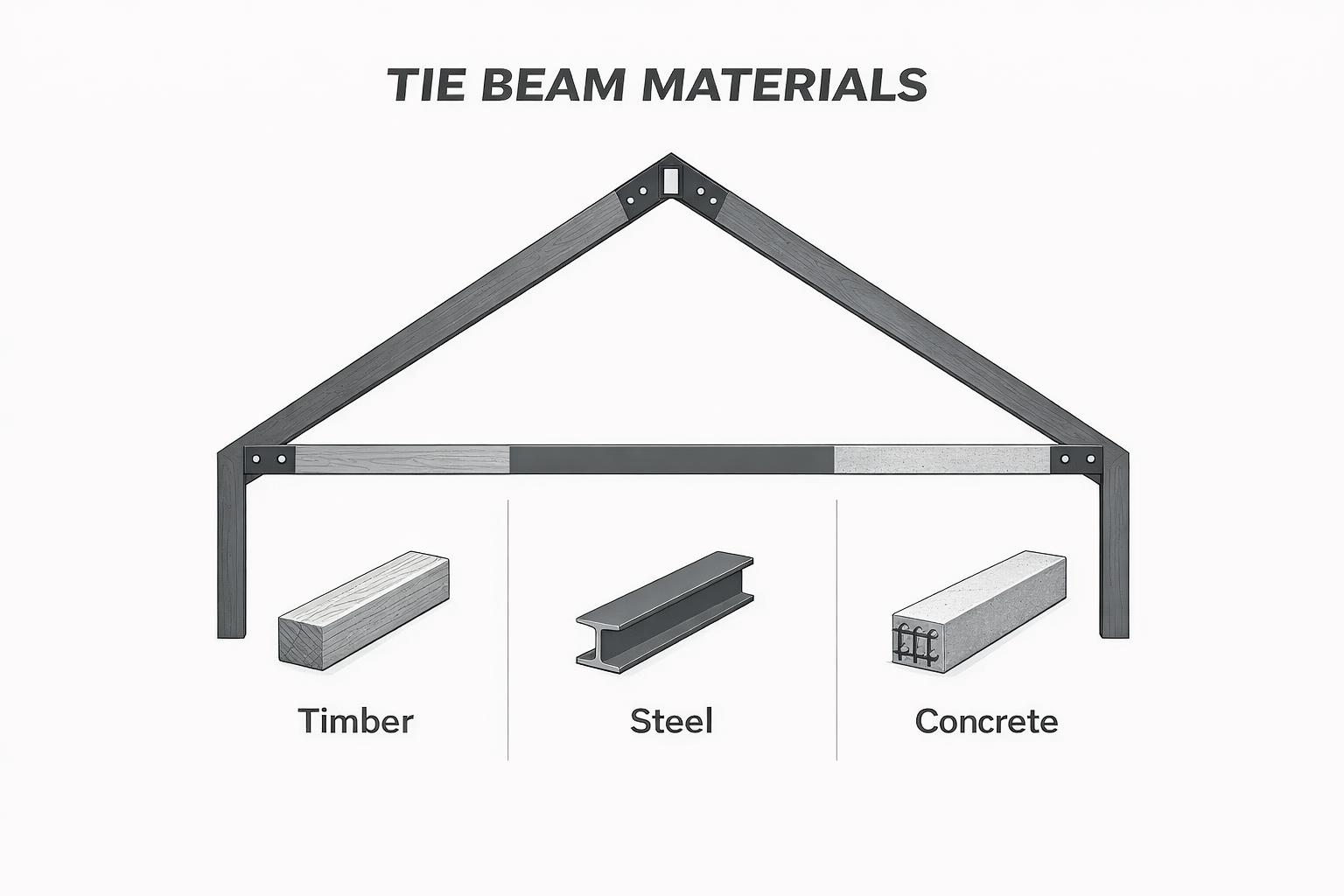
Image by ArchitectureCourses.org. Roof tie beams can be timber, steel, concrete, or masonry depending on the roof system and building type.
Timber
Common in traditional roof framing, exposed-beam work, and houses where the tie beam is part of the visible structure. Timber works well when spans, moisture exposure, and connections stay within what the system can handle.
Steel
Useful where lighter weight, longer spans, or slimmer sections matter. Steel can solve problems cleanly, but corrosion protection and connection detailing matter as much as the member itself.
Concrete and Masonry
More common where the roof tie beam is part of a broader reinforced or masonry structural belt. In that case the roof member is often working as part of a larger continuity strategy rather than as a simple exposed roof element.
Placement and Connection Decide Whether It Works
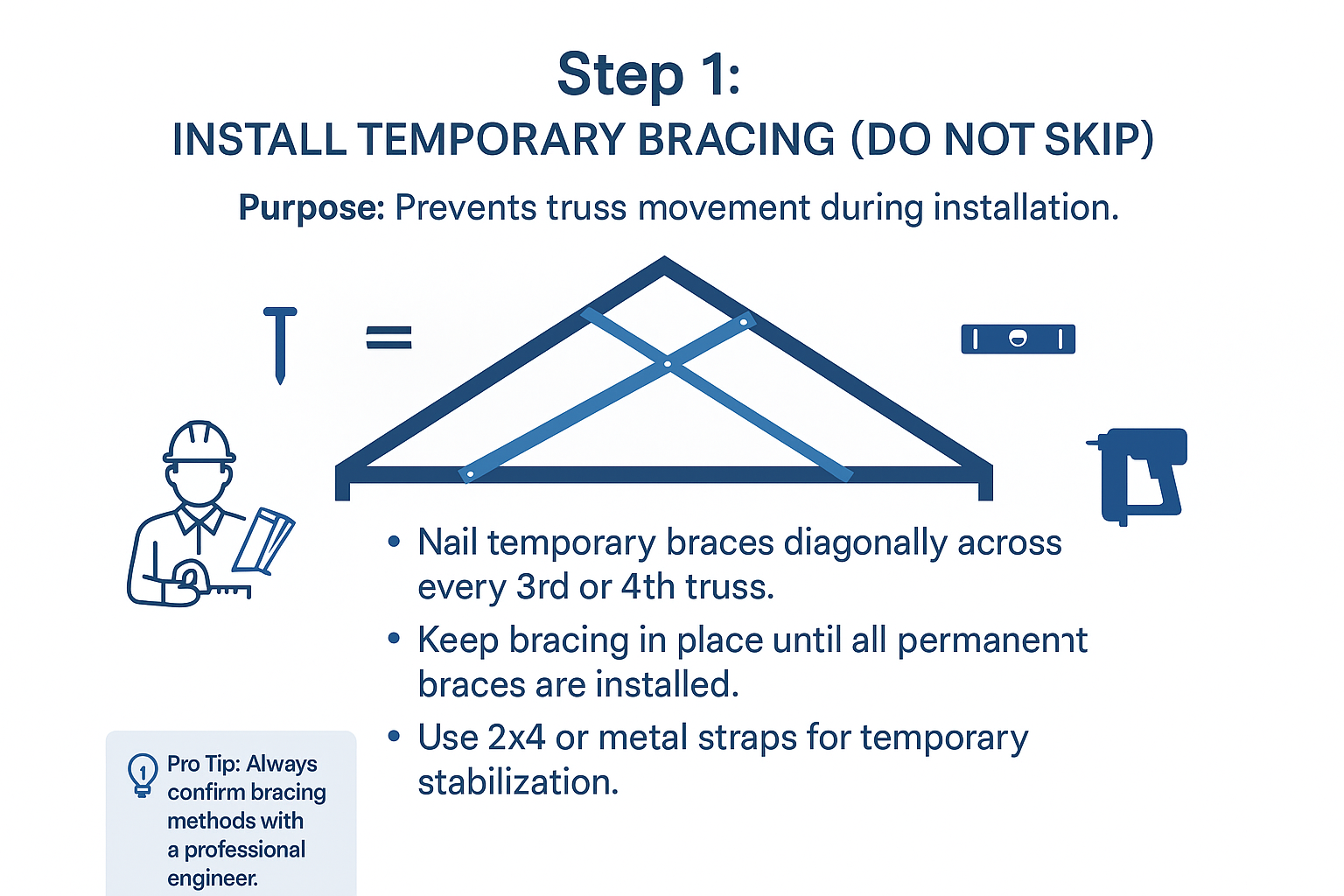
Image by ArchitectureCourses.org. Roof tie beam placement should follow span, support conditions, and the actual force path in the roof.
A roof tie beam does not work just because a beam has been placed between two sides of a room.
- It has to be low enough in the system to do the thrust-control job intended.
- It has to connect into the supports properly.
- It has to be sized for the real force path.
- It has to work with the rafters, walls, and ridge strategy around it.
That is why clean-looking open ceilings often hide expensive mistakes. The beam may look convincing while the connection logic is still wrong.
FIELD PICK
Simpson LPC6Z
Useful as a hardware reference when timber roof members need a cleaner, better-defined connection detail.
Installation Basics
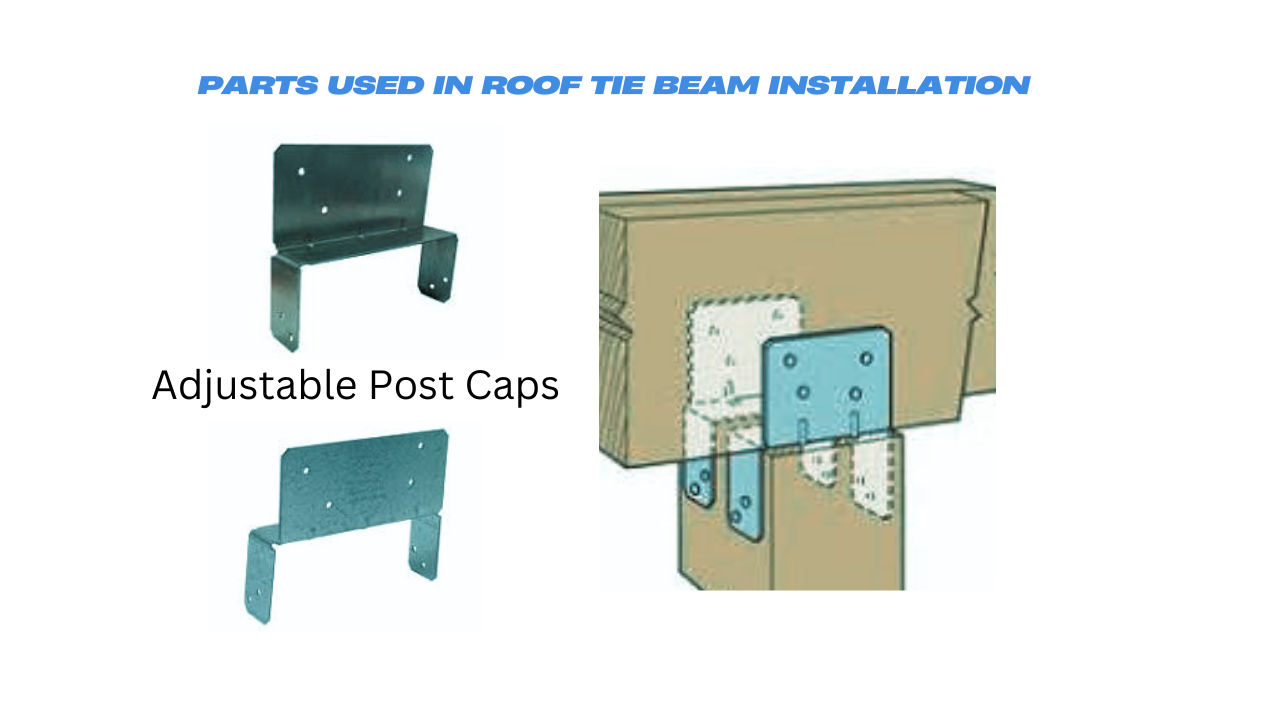
Image by ArchitectureCourses.org. Installation quality depends on alignment, anchorage, member selection, and connection detail.
Good installation starts before the beam arrives.
- Confirm the span and support conditions first.
- Lay out the beam to match the actual roof geometry.
- Use the correct anchors, fasteners, brackets, or reinforcement detail for the system.
- Check alignment before the roof closes up.
- Do not assume finishes will hide movement later.
Once the roof depends heavily on custom steel, reinforced-concrete tying, long spans, or unusual geometry, the job moves out of generic installation advice and into engineered detailing.
When a Roof Tie Beam Is Not the Right Answer
Some roofs need a different move altogether.
If the roof has been opened up so far that it no longer behaves like a tied-rafter system, the real answer may be a structural ridge beam with a proper support path below. If the problem is roof-plane stability, the answer may be bracing. If the issue is a missing load path through walls, posts, or foundations, adding one beam in the roof does not solve the deeper problem.
A roof tie beam is the right answer when opposite sides of the roof or structure need to be tied together to resist spreading. It is the wrong answer when the roof has changed into a different structural type and needs a different structural strategy.
Common Mistakes
- Using a collar tie where a lower tie-beam or rafter-tie strategy is needed.
- Thinking a ridge beam and a roof tie beam do the same thing.
- Using too few tie members for the span and roof form.
- Ignoring end connections and focusing only on the beam itself.
- Opening the room below without changing the structural logic of the roof.
- Assuming any horizontal member automatically fixes outward thrust.
These are the roofs that look fine early, then start opening up, sagging, or cracking where the frame should have stayed locked together.
What Problems Show Up First
- Cracks at wall corners or around openings
- Subtle spreading at the wall line
- Ridge sag or roofline movement
- Trim joints opening or finishes cracking repeatedly
- Visible separation where the roof and wall system should be staying tight
Those signs do not prove the roof tie beam is the only problem, but they usually point to a larger issue in the tying, support, or load-path strategy.
FAQ
Can a roof tie beam replace a ridge beam?
No. A ridge beam carries vertical roof load at the peak. A roof tie beam works lower in the system to resist spreading.
Is a roof tie beam the same as a rafter tie?
Not always in naming, but they overlap in structural logic more than a roof tie beam overlaps with a collar tie or ridge beam.
Do all houses need roof tie beams?
No. It depends on the roof type, support strategy, spans, and whether another structural system is already doing that job.
Can steel be used instead of timber?
Yes, when the design, span, and connection logic support it.
How do I know if the roof has a spreading problem?
Common signs include wall movement, drywall cracking, trim opening at corners, ridge sag, or roof geometry slowly changing over time.