
A floor can look level again and still have the same failed support system underneath. That is the danger with weak pier and beam foundation repair. The repair is not the lift. The repair is the load path.
In a pier and beam house, weight moves from the floor framing into beams, then into posts, piers, or pillars, then into a footing or pad, and finally into soil. When one part of that chain fails, the floor may sag, doors may stick, trim may crack, and a crawl space may show leaning piers, crushed shims, wet beams, weak pads, or temporary jack posts left in place too long.
Good repair starts with diagnosis. Bad repair starts with a jack.
What pier and beam foundation repair has to fix
Pier and beam foundation repair should answer one basic question: where did the load path break down?
Sometimes the visible problem is a low floor. The real problem may be a rotted beam, a weak footing pad, a pier sitting on soft soil, bad shims, a drainage problem, or a support post added without enough bearing below it. Raising the floor without fixing the cause can make the house look better for a short time while the same failure continues underneath.
| What you see | What may be failing | Why it matters |
|---|---|---|
| Sagging or sloping floors | Beam, joist, pier, footing, soil, or shims | The floor is only the symptom. The support path below it has to be checked. |
| Leaning piers | Pier base, footing, soil, lateral movement, or poor installation | Straightening or stacking material around the pier does not fix weak bearing below. |
| Crushed wood shims | Point loading, settlement, moisture damage, or poor repair work | Shims can hide movement until the floor drops again. |
| Soft or bouncy floors | Joists, subfloor, beam spacing, rot, or loose bearing | Adding a post in the wrong spot can move stress into another weak part of the frame. |
| Water in the crawl space | Drainage, grading, plumbing leak, vapor barrier, or ventilation problem | Moisture can keep damaging wood even after the house is leveled. |
If you are still trying to understand the symptoms, start with pier and beam foundation problems. This page is about repair decisions after the house shows signs that the support system may need work.
Diagnosis comes before jacking
Jacking a pier and beam house is not the first step. It is one possible step after the framing, supports, soil, and moisture conditions are understood.
A serious inspection looks at the whole support system:
- floor joists and subfloor condition
- main beams and girder lines
- wood rot, termite damage, mold, and staining
- pier spacing and alignment
- footing or pad size below each support
- soil movement or erosion below pads
- temporary jack posts or adjustable columns
- stacked shims, loose wedges, brick scraps, blocks, or crushed wood
- standing water, poor drainage, plumbing leaks, and missing vapor control
- door, window, wall, and floor movement inside the house
Before crawling under the house, use caution. Crawl spaces can contain electrical hazards, pests, mold, contaminated water, sharp debris, low oxygen areas, and tight exits. Structural repairs inside a crawl space are contractor work, not casual weekend work.
The load path matters more than the visible pier
A pier is only one part of the repair. The full path matters:
floor joist → beam → post, pier, or pillar → footing or pad → soil
If a contractor only talks about the visible pier, the quote may be too narrow. A new support can still fail if the pad below is undersized, the soil is wet, the beam above is rotted, or the floor was lifted without correcting the cause of movement.
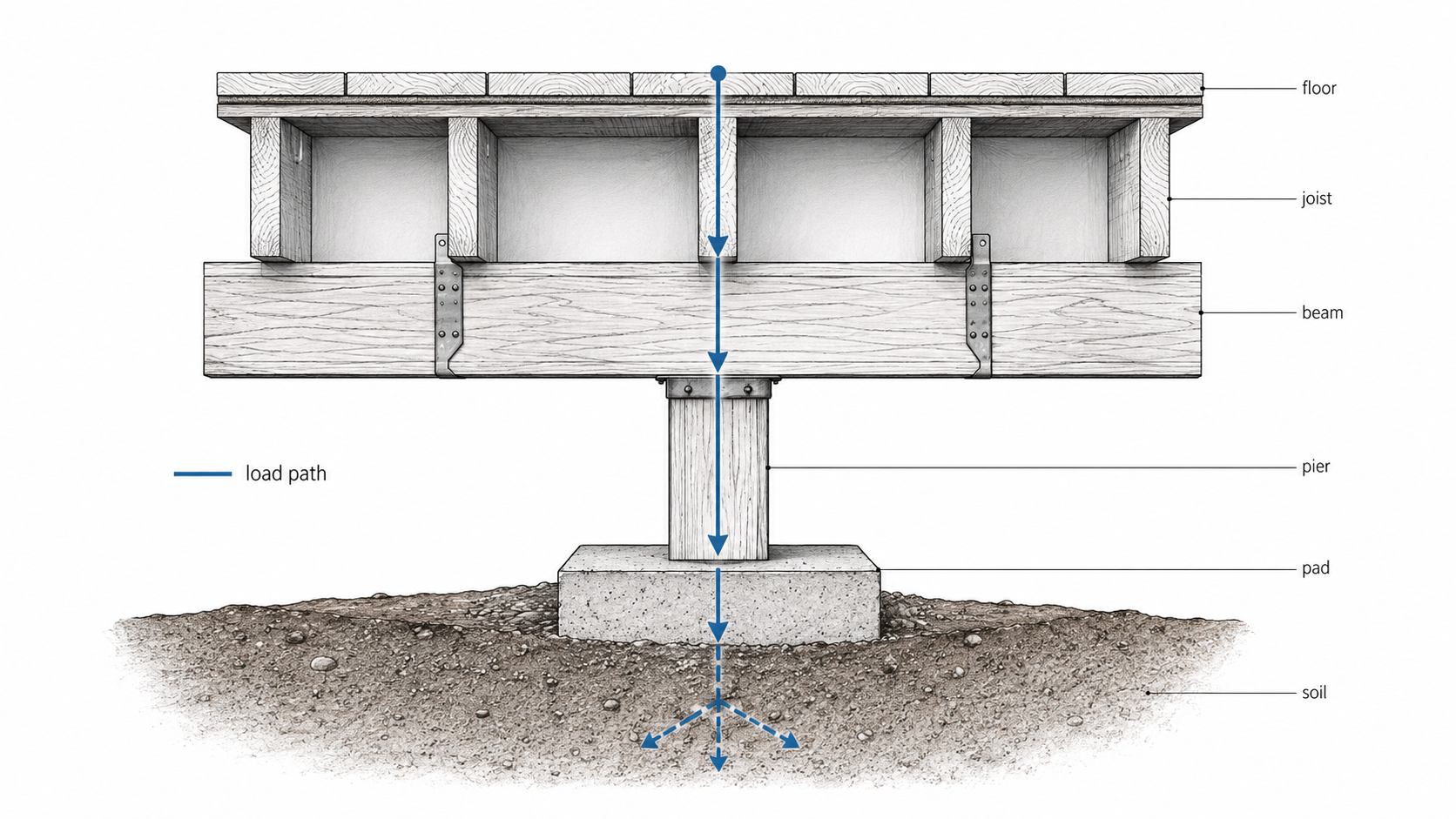
The same load-path thinking applies to new and repaired supports. For the construction side of that system, see foundation pillar construction. For a broader comparison of foundation systems, see types of house foundations.
Common pier and beam foundation repairs
Repair methods vary because pier and beam problems do not all come from the same failure. A low floor caused by weak shims is different from a floor sagging over a rotten beam. A leaning brick pier is different from a concrete pier sitting on wet, unstable soil.
| Repair method | What it can fix | What it may not fix |
|---|---|---|
| Replacing failed shims | Loose or crushed bearing between beam and support | Rotten beams, weak pads, bad spacing, or wet soil |
| Adding or replacing piers | Missing, leaning, cracked, or undersized supports | Moisture damage, joist failure, or poor drainage |
| Replacing support beams | Rotten, split, crushed, or overloaded beams | Settlement below the piers or drainage problems around the crawl space |
| Leveling low floor areas | Height differences caused by settlement or support movement | The original reason the support moved |
| Improving drainage and crawl-space moisture control | Wet soil, damp framing, mold risk, and wood decay conditions | Broken, cracked, or undersized structural members already damaged |
| Underpinning or deeper support work | More serious soil, footing, or load-transfer problems | Cosmetic interior cracking by itself |
When the problem is larger than a few weak supports, the repair may connect to foundation underpinning or house lifting and foundation raising. Those are bigger structural decisions, not simple add-on repairs.
Bad repairs that make pier and beam houses worse
Bad repair work often looks busy. More posts, more blocks, more shims, and more jacks can make the crawl space look “supported.” That does not mean the load is moving safely into the ground.
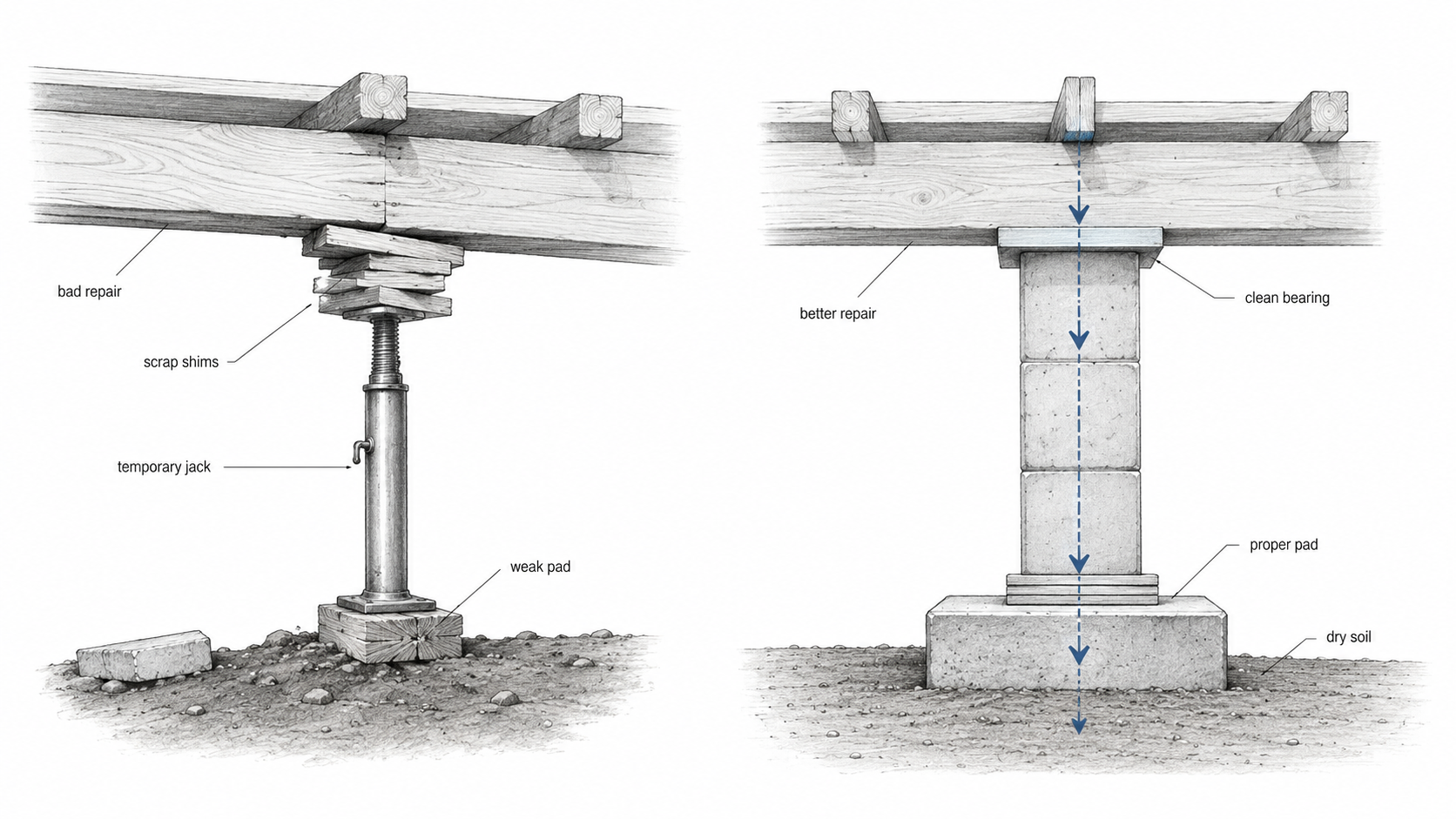
Temporary jack posts left as permanent support
Temporary jacks are often used while work is being done. The problem starts when a temporary post becomes the repair. If it does not have a proper bearing point below, a stable connection above, and enough capacity for the load, it can settle, tilt, punch into weak soil, or crush material above it.
Stacked scraps and bad shimming
Thin wood scraps, loose wedges, brick pieces, and random stacked material are warning signs. Shims should not be a pile of leftovers trying to make up for poor height, bad bearing, or a missing support plan.
Posts sitting on weak pads
A new post can still fail if it sits on a small patio block, loose soil, wet clay, or an undersized pad. The bearing below the support matters as much as the post itself.
Repairing the pier while ignoring the beam
A pier can be replaced under a beam that is already soft, split, crushed, or rotten. That makes the repair look complete from the ground while the actual framing above still needs work.
Leveling the floor too fast
Fast lifting can crack plaster, jam doors, stress plumbing, damage brittle finishes, and shift loads into framing that was not ready for the movement. Some older houses need staged correction, not one aggressive lift.
Moisture is part of the repair, not a separate issue
Water under a pier and beam house changes the repair. Damp soil can weaken bearing. High crawl-space humidity can keep beams and joists wet. Plumbing leaks can damage wood from above while drainage problems attack from below.
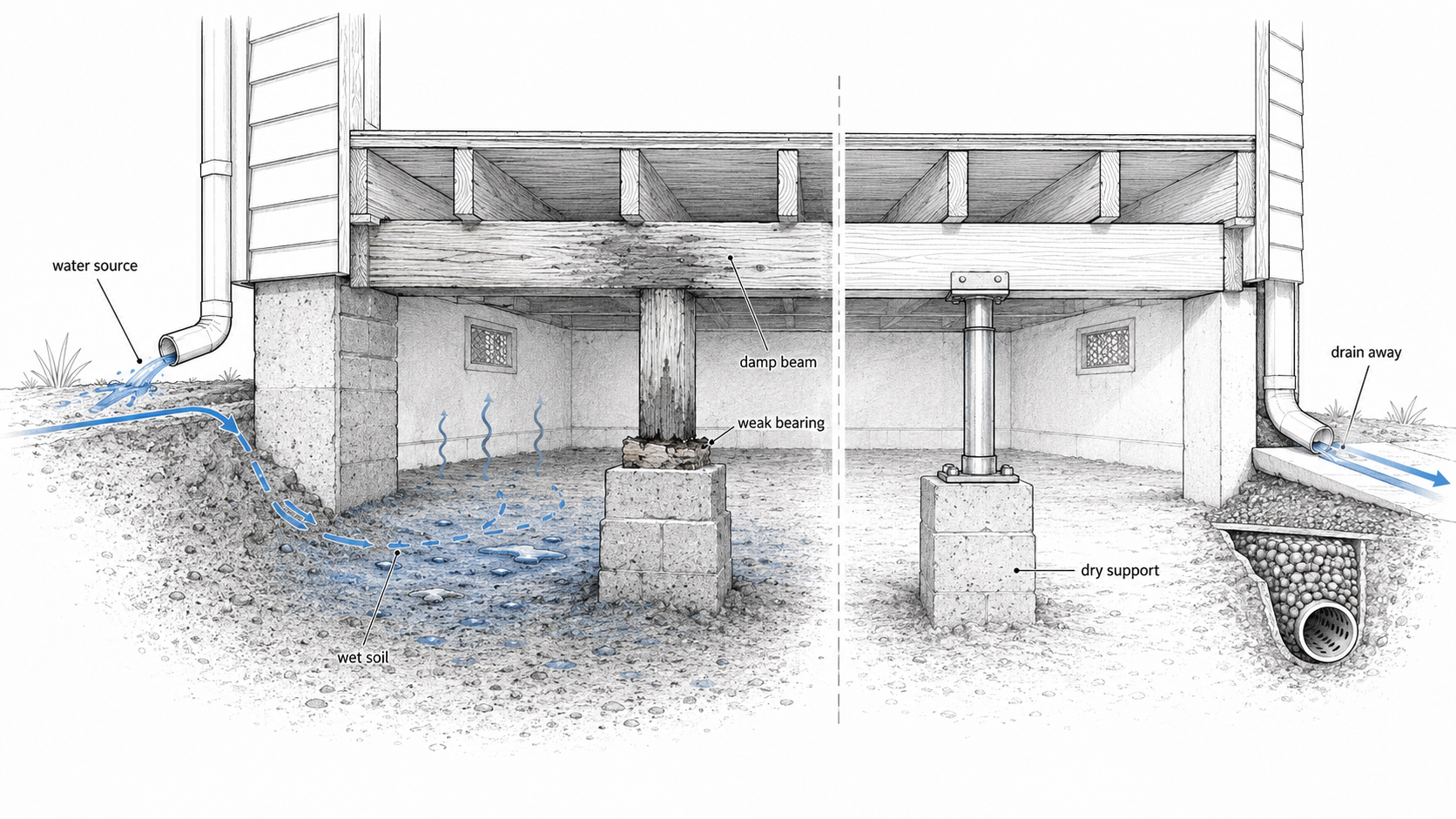
Moisture problems should be addressed before the repair is treated as finished. That may include grading, downspout discharge, crawl-space drainage, vapor control, plumbing repair, ventilation review, or other site-specific work. For a broader crawl-space structural page, use crawl space foundation repair. If the problem appears after rain, see water in a crawl space after rain.
The main point is simple: if the crawl space stays wet, wood support problems can come back.
When leveling is part of the repair
Leveling can be necessary when a pier and beam house has settled, but leveling is not the same as repairing the cause. A contractor may lift a low beam line, replace damaged support points, correct shims, add proper bearing, and then address drainage or framing damage. That is different from jacking the floor until it looks flat and leaving weak conditions in place.
The repair should explain what moved, why it moved, how much lifting is planned, and what will keep the same movement from returning. A low beam line caused by rotted wood is not the same as a low beam line caused by a weak pad or wet soil.
For slab and concrete movement problems, see concrete foundation leveling. Pier and beam leveling is different because the floor frame, supports, beams, shims, pads, and crawl-space conditions are all exposed in a different way.
What a serious repair quote should include
A weak quote only says “level house” or “repair foundation.” A better quote explains what will be inspected, what will be replaced, what will be lifted, what will be supported, and what will be excluded.
| Quote item | What to ask |
|---|---|
| Number and location of piers | Which supports are being replaced, added, reset, or left alone? |
| Beam condition | Are any beams rotten, split, crushed, or undersized? |
| Footing or pad work | What will each support bear on, and is the soil below stable? |
| Jacking and leveling plan | How much movement is planned, and will it happen in stages? |
| Moisture and drainage | Will the cause of crawl-space moisture be corrected or excluded? |
| Temporary support | What temporary supports are used during work, and what remains after work is complete? |
| Photos and documentation | Will the contractor provide before, during, and after photos of crawl-space work? |
| Warranty limits | Does the warranty exclude drainage, wood rot, plumbing leaks, or soil movement? |
The cheapest quote may only lift the visible low spot. That can be a poor deal if the beam is wet, the crawl space is draining badly, or the support pads are still undersized.
What fails after the floor looks level
This is the part many repair pages skip.
A floor can look better after jacking, but the repair can still fail later if the crawl space conditions do not change. Watch for these delayed problems:
- doors that start sticking again after a few months
- new drywall or plaster cracks near lifted areas
- fresh gaps between baseboards and flooring
- new squeaks or soft spots in the floor
- moisture returning under the same beam line
- shims crushing or slipping after the repair
- temporary-looking supports left behind
- contractor photos that do not show the footing or pad below the support
A good repair should leave the crawl space easier to understand, not more confusing.
When this is not a DIY repair
Do not treat sagging floors, leaning piers, cracked supports, temporary jack posts, or load-bearing crawl-space repairs as casual DIY work.
Small observations are reasonable. You can photograph visible damage, write down floor symptoms, note water stains, check downspouts, and document where floors feel soft. But jacking beams, replacing piers, cutting out rotted structural members, changing support spacing, or adding load-bearing posts can damage the house or injure someone if done wrong.
Call a qualified foundation contractor, structural engineer, or both when you see:
- leaning, cracked, sinking, or missing supports
- temporary jack posts carrying permanent loads
- rotted beams or joists
- large floor slopes or sudden movement
- standing water in the crawl space
- termite or pest damage near structural framing
- plumbing, gas, or electrical systems near the repair area
- seller repairs that are undocumented or hidden
How to think about the repair sequence
A sensible pier and beam repair usually follows this order:
- Document the symptoms inside the house.
- Inspect the crawl space safely.
- Identify moisture, drainage, and plumbing problems.
- Check beams, joists, subfloor, piers, shims, pads, and soil.
- Decide what needs temporary support during work.
- Repair or replace damaged structural members.
- Reset, replace, or add supports only where the load path requires it.
- Level carefully when leveling is part of the scope.
- Correct moisture conditions so the repair does not start failing again.
- Photograph the finished work and keep the repair documents.
That sequence protects the homeowner from a common mistake: paying for visible leveling while the crawl-space failure continues.
Repair documents matter later
Keep the estimate, contract, photos, engineering notes, permits if required, warranty terms, and moisture or drainage recommendations. These records matter when selling, refinancing, making an insurance claim, or calling another contractor later.
Photos are especially useful. A finished floor does not show what happened under the house. Crawl-space photos can show whether the repair used proper bearing, clean connections, stable supports, and corrected moisture conditions.
What to read next
Start with pier and beam foundation problems if you are still trying to identify the symptom before repair.
Use foundation pillar construction if you want the load-path basics before comparing repair quotes.
Use crawl space foundation repair when the main problem is happening under the floor system and moisture, access, beams, or crawl-space supports are part of the scope.
Read foundation excavation depth before work that involves new footings, pads, or deeper support below existing foundation elements.
Use house lifting and foundation raising only when the repair has moved beyond ordinary pier, beam, or crawl-space support work.
References
Sources used for this article
- International Code Council: 2024 International Residential Code, Chapter 4 Foundations
- U.S. Environmental Protection Agency: A Brief Guide to Mold, Moisture and Your Home
- U.S. Environmental Protection Agency: Mold Cleanup in Your Home
- Occupational Safety and Health Administration: Confined Spaces in Construction
- OSHA: Confined Spaces in Residential Construction