

Prefab tiny homes look cheaper when the site is missing from the price.
The factory unit may be the clean number. The finished project is the messy one. Delivery, crane access, foundation, utility hookups, permits, decks, stairs, skirting, drainage, inspections, and legal placement can add money before anyone moves in.
Factory building can reduce weather delays and improve quality control. It does not make land, zoning, septic, power, water, or inspection work disappear.
If you are new to the category, start with What Is a Tiny House?. For the bigger budget picture, read Tiny Home Cost Breakdown before you trust a prefab price tag.
The Factory Price Is Not the Installed Price
A prefab tiny home usually starts with the unit price. That may include the shell, windows, doors, insulation, interior finishes, kitchen, bathroom, fixtures, and basic mechanical systems. Or it may include only the shell.
The installed price is different. That is the number after the unit reaches the site, sits on a legal base, connects to approved utilities, passes inspections, and can actually be used.
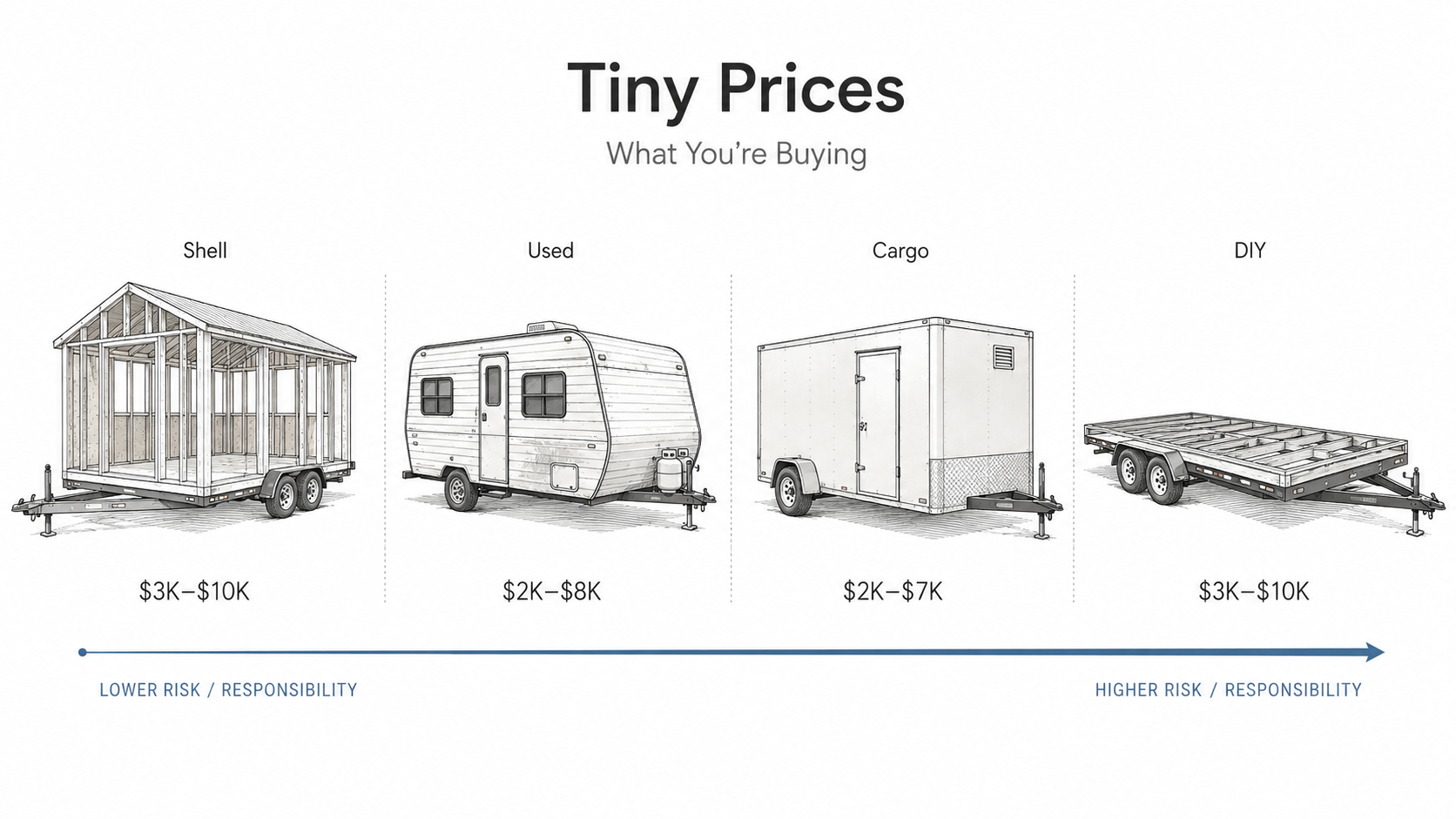
| Price you see | What it may include | What may still be missing |
|---|---|---|
| Factory shell | Frame, roof, windows, exterior skin, basic dried-in enclosure | Interior, plumbing, wiring, HVAC, appliances, foundation, utilities |
| Finished prefab unit | Interior finishes, kitchen, bathroom, fixtures, basic mechanical package | Delivery, crane, foundation, site work, utility connection, permits |
| Turnkey package | More complete unit, appliances, some setup support, vendor coordination | Local approvals, unusual site costs, decks, stairs, skirting, utility upgrades |
The cheapest prefab tiny home is not the one with the lowest factory price. It is the one with the fewest expensive surprises after delivery.
What Prefab Actually Saves
Prefab can save time and reduce some construction risk. The wall panels, roof assembly, windows, rough systems, and interior work may be built in a controlled setting instead of exposed to weather on a small site.
That can mean fewer delays, cleaner sequencing, tighter quality control, and a clearer scope. It can also help when local labor is expensive or hard to schedule.
But prefab saves money only when the factory scope is real and the site is ready. A well-built module sitting on a bad pad with poor drainage is still a problem. A finished unit with no approved sewer or septic path is still not ready to live in.
U.S. Planning Ranges
Use these as 2026 U.S. planning bands, not quotes. Prefab tiny-home prices move with size, finish level, foundation, transportation distance, code path, utility distance, local labor, and site conditions.
| Prefab path | Typical 2026 U.S. planning range | What the number usually means | What to verify |
|---|---|---|---|
| Basic prefab shell | $40,000–$80,000 | Dried-in unit or simple factory shell | Who finishes plumbing, wiring, insulation upgrades, bath, kitchen, and inspections? |
| Finished prefab tiny home | $90,000–$170,000 | More complete factory-built unit with finishes and basic systems | Are delivery, crane, foundation, utilities, and permits included? |
| Prefab ADU or foundation-based unit | $130,000–$250,000+ | More house-like path with code review, inspections, and permanent services | Local ADU rules, utility distance, site access, foundation, and occupancy approval |
| High-spec custom prefab | $180,000–$300,000+ | Better envelope, larger glass, custom storage, premium finishes, off-grid or cold-climate systems | Whether the upgrades improve durability or only raise the finish bill |
The low number usually describes the unit. The higher number is often closer to what the owner spends before the tiny home is legal, connected, and usable.
The Site Still Charges You
Prefab changes where the home is built. It does not change where the home has to sit.
The site can add grading, driveway work, tree removal, drainage, a compacted pad, slab, piers, anchors, trenching, utility meters, septic, sewer, well work, and inspection fees. Tight sites can also require a crane, smaller equipment, traffic control, or extra labor.
| Site item | Why it matters | What to price before ordering |
|---|---|---|
| Delivery access | The truck, trailer, or crane needs room to enter, turn, lift, and leave | Driveway width, slope, trees, overhead lines, turning radius, crane reach |
| Foundation or base | The prefab unit still needs stable support and often inspection | Slab, piers, frost depth, anchors, drainage, engineered details |
| Water and sewer | A complete bathroom and kitchen need legal waste and water connections | Tap fees, sewer location, septic design, well depth, health approval |
| Power | Distance changes trenching, conduit, meter, panel, and utility coordination | Meter location, panel size, trench route, service upgrade, backup plan |
| Drainage | Small buildings still rot when water runs toward them | Grade, downspout paths, splash protection, swales, soil type |
A cheap lot can become expensive when the home arrives and the site is not ready. Price the ground first.
Prefab on Wheels Is a Different Product
A prefab tiny home on wheels is not the same decision as a prefab unit on a foundation.
Wheels can help with mobility and may reduce some foundation work. They also add trailer cost, road limits, width limits, height pressure, weight control, registration, insurance complications, parking rules, and legal-use problems.
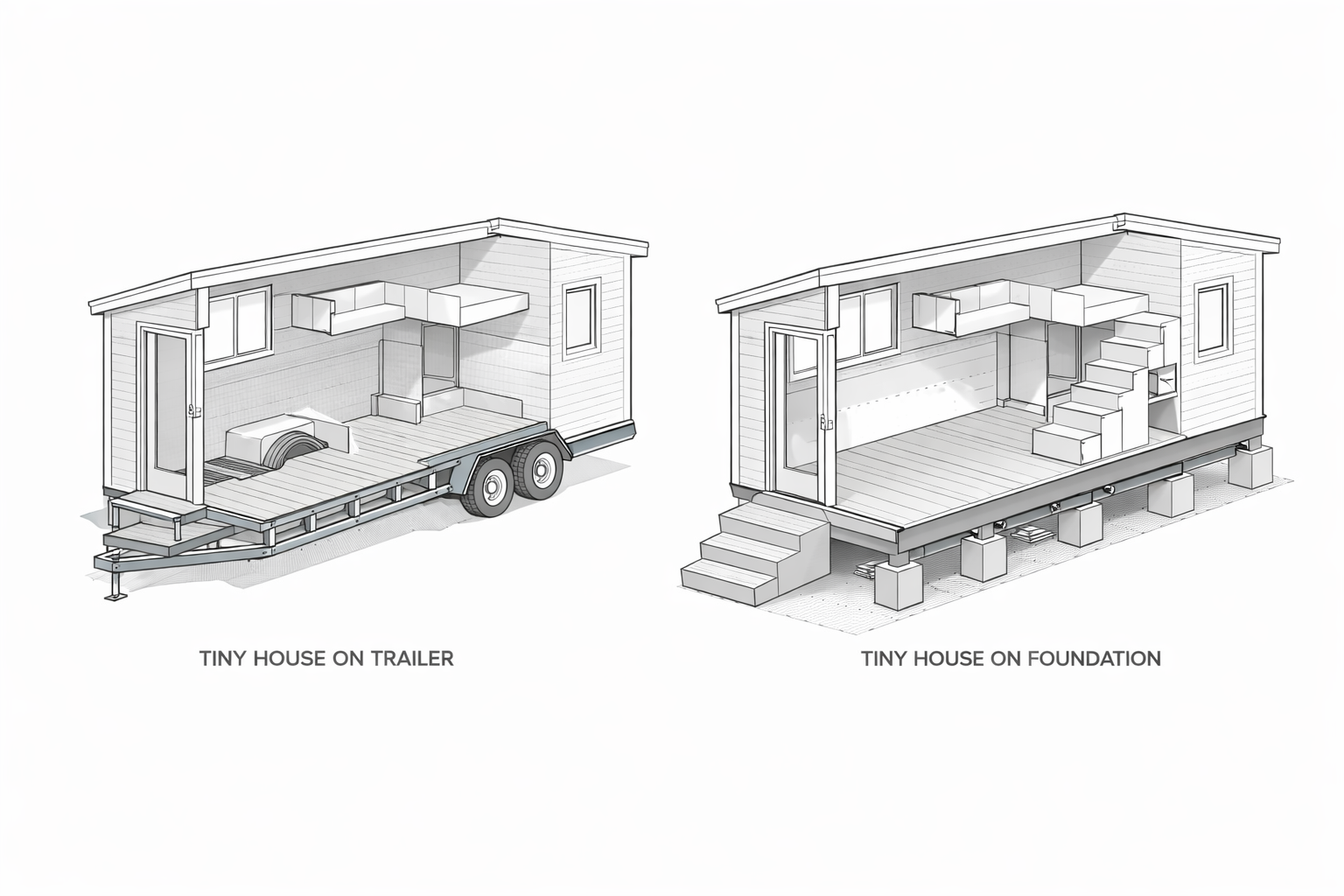
If the unit is towable, do not let the word prefab distract from the THOW problem. Road legality, parking, utility connection, and full-time occupancy are separate approvals. Read Regulations for Tiny Houses on Wheels before you pay for a mobile unit.
The Legal Category Comes Before the Floor Plan
A prefab tiny home can be treated as an ADU, small dwelling, modular unit, manufactured home, park model, RV, or temporary structure depending on where it sits and how it is built.
That category changes permits, inspections, utility connections, financing, insurance, resale, and whether full-time living is allowed. A factory brochure cannot settle that question. Your local office does.
Before the deposit, ask the building or planning department which path applies on the exact parcel. Then ask the prefab company what drawings, labels, inspections, certifications, and engineering documents they provide for that path.
For the broader legal split, use Tiny Homes Regulations and Building Codes.
Warranty Problems Start at the Handoff
This is the section prefab buyers usually discover too late.
The factory may warranty the unit. The installer may warranty the set. The foundation contractor may warranty the base. The plumber and electrician may warranty their parts. The site contractor may warranty drainage or grading. When water shows up near the threshold or a crack appears at a connection point, each party may point at the other.
The trouble spot is the handoff: where the factory unit meets the site, foundation, utilities, stairs, decks, skirting, weather exposure, and local inspection process.
| Handoff point | What can go wrong | What to get in writing |
|---|---|---|
| Foundation to unit | Uneven bearing, poor anchoring, movement, blocked ventilation | Who designs, installs, inspects, and signs off the base? |
| Door and deck connection | Water entry, bad step height, weak flashing, snow or splashback damage | Who handles landing, stairs, guardrails, flashing, and drainage? |
| Utility hookup | Frozen lines, inaccessible shutoffs, undersized service, rejected inspection | Exact connection responsibilities and access requirements |
| Delivery damage | Cracks, window leaks, racked doors, siding damage, roof edge damage | Inspection checklist before signing delivery acceptance |
A clean prefab contract should say where the factory warranty ends and where site responsibility begins. If that line is vague, the owner becomes the referee.
Utilities Decide Daily Comfort
A tiny home has less room to hide bad systems.
Weak bath exhaust, poor kitchen ventilation, undersized heating, bad water pressure, inaccessible shutoffs, temporary hoses, and poor sewer planning become daily problems fast. A tight prefab shell still needs planned fresh air and moisture control.
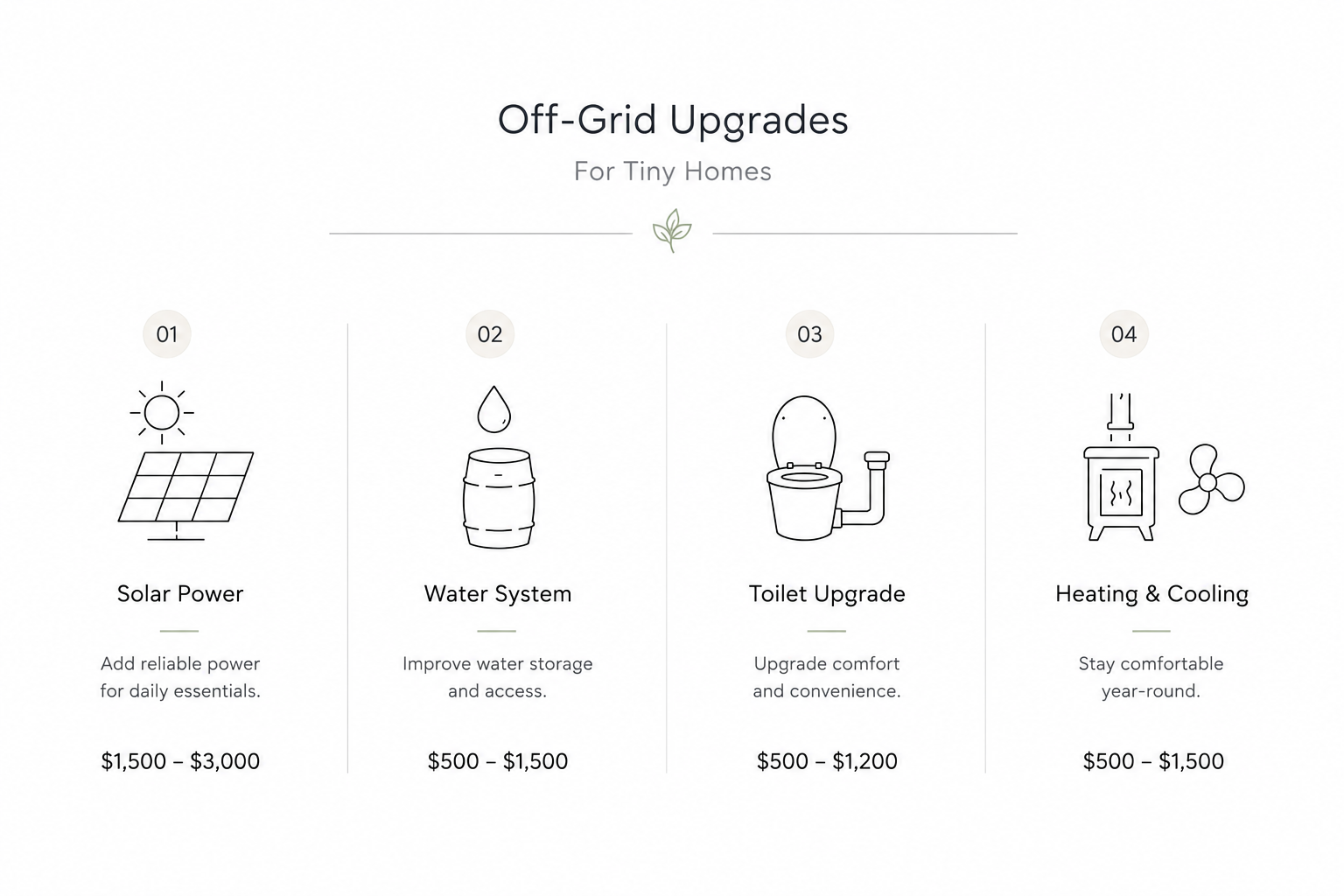
Off-grid packages need extra caution. Solar is easier to sell than sewage. Batteries are easier to photograph than winter plumbing. Composting toilets, graywater, wells, septic, tanks, and rainwater systems all depend on local health rules.
Prefab does not remove that approval path. It only changes who builds the box.
Layout Still Matters
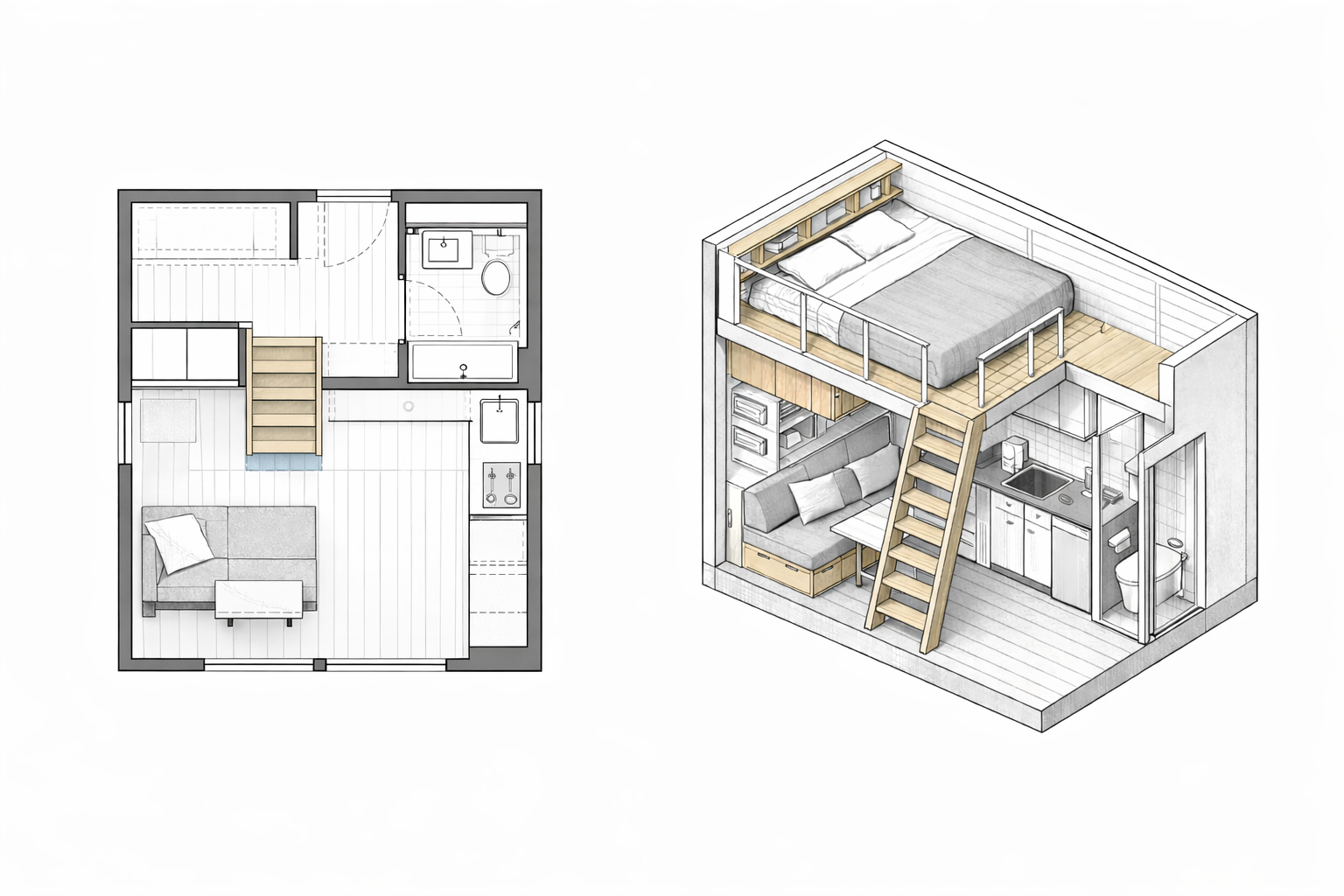
A prefab plan is not good just because it is efficient to manufacture.
Some factory layouts save production time but create daily friction: ladders used as stairs, no real coat storage, tiny counters, buried mechanical access, poor bathroom ventilation, beds under low headroom, and windows placed for the brochure instead of the site.
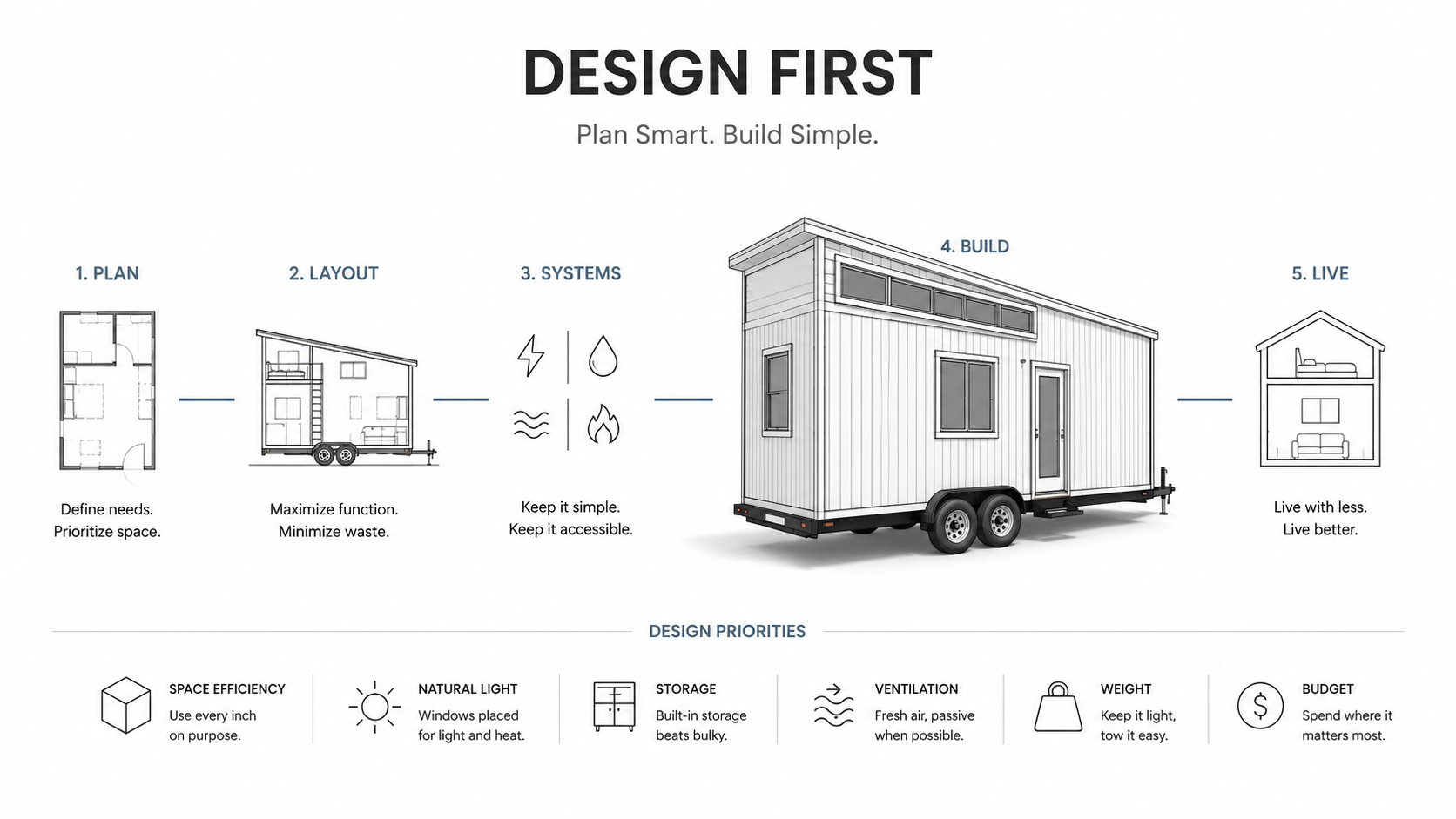
A strong prefab layout keeps circulation clear, puts plumbing close together, protects service access, leaves real storage, and makes at least one daily-use zone feel calm. If the plan is still unsettled, read Design Your Own Tiny House and Tiny House Design That Actually Works before you sign off on the layout.
Where Prefab Saves Money
Prefab usually saves money when it controls repetition and reduces mistakes.
- Factory sequencing: trades work in a cleaner order with less weather damage.
- Standardized details: repeated wall, roof, and cabinet details reduce custom labor.
- Shorter site time: less time exposed to weather, theft, delays, and scheduling gaps.
- Cleaner scope: a defined package makes it easier to compare vendors.
The savings disappear when every option becomes custom. Bigger glass, one-off cabinets, unusual cladding, complicated roof forms, and scattered systems push a prefab tiny home back toward custom pricing.
Where Prefab Wastes Money

Prefab gets expensive when the buyer tries to customize away the advantage.
- Too many openings: extra doors and glass raise cost, heat loss, glare, privacy problems, and flashing risk.
- Complicated roof shapes: small roofs still leak when valleys, penetrations, and edges are poorly handled.
- Custom built-ins everywhere: storage matters, but over-customizing before systems are locked wastes money.
- Ignoring site access: a tight lot can turn delivery and setting into a separate construction project.
- Buying before approval: the unit may be finished before the site is legally ready.
The boring version often wins: simple form, good roof, compact wet wall, standard windows, strong envelope, and clean access to systems.
Prefab, Custom, or DIY
Prefab is not automatically the cheapest option. It is often the option with the clearest process.
| Path | Best fit | Main risk |
|---|---|---|
| Prefab | Owner wants speed, controlled shell quality, and a defined package | Installed cost is misunderstood |
| Custom builder | Unusual site, specific accessibility needs, cold climate, or long-term full-time living | Change orders and premium labor |
| DIY or owner-finished shell | Skilled owner with time, tools, and realistic expectations | Slow schedule, bad sequence, hidden rework |
| Used prefab or used THOW | Buyer can inspect moisture, structure, title, and systems carefully | Hidden leaks, unclear paperwork, outdated systems |
If the budget is very low, compare the trade-offs with Under $10K: Tiny Houses on Wheels You Can Actually Buy. Cheap units usually come with unfinished work, repair risk, or placement problems.
Five-Year Cost Beats the Brochure Price
The first price matters. The five-year cost matters more.
A prefab tiny home with weak ventilation, poor flashing, bad access, unclear warranty terms, or a questionable legal path can cost more over time than a better unit that looked expensive at purchase.
| Five-year cost | Why it shows up later | How to reduce it |
|---|---|---|
| Moisture repairs | Small tight homes collect moisture fast, especially near baths, lofts, windows, and cold corners | Demand real ventilation, flashing details, and service access |
| Relocation or rejected placement | The unit was bought before zoning, ADU, THOW, or utility rules were confirmed | Get site approval before ordering |
| Warranty gaps | Factory, delivery, foundation, and site contractors blame each other | Define responsibility for every handoff point |
| Utility upgrades | Temporary hookups, undersized panels, weak batteries, or poor winter protection fail in use | Price systems for daily living, not brochure photos |
| Storage creep | The plan has pretty shelves but no place for real objects | Build one honest storage zone into the layout |
A prefab tiny home is only a bargain if it stays legal, dry, comfortable, serviceable, and insurable.
Questions to Ask Before the Deposit
Ask these before the factory slot is reserved.
- Is the quoted price for the unit only, or the installed project?
- Who handles delivery, crane or set, stairs, decks, skirting, and final site work?
- What foundation or base does the manufacturer require?
- Will this unit qualify as an ADU, dwelling, THOW, park model, or something else on this exact parcel?
- Which drawings, engineering documents, labels, inspections, and warranties are included?
- Where are shutoffs, panels, water heater, pumps, drains, and mechanical parts located?
- Who is responsible if the unit fails local inspection after delivery?
If the answer is “that depends,” good. It probably does. Get the dependency in writing.
FAQ
Are prefab tiny homes cheaper than site-built tiny homes?
Sometimes. Prefab can reduce labor chaos and weather delays, but delivery, foundation, utilities, permits, and site work can erase part of the savings.
What is usually missing from a prefab tiny home price?
Delivery, crane or setting, foundation, utility connections, permits, decks, stairs, skirting, drainage, and local inspection work are often outside the factory price.
Can a prefab tiny home be used as an ADU?
Only where local rules allow it and the unit meets the required code path. ADU approval usually depends on zoning, setbacks, utilities, permits, and inspections.
Is a prefab tiny home on wheels easier?
Not always. Wheels can help with mobility, but they add road limits, trailer ratings, insurance issues, parking rules, and full-time occupancy problems.
What is the biggest prefab tiny home mistake?
Buying the unit before the site is ready. A finished unit does not help if the property cannot legally accept it or the utilities are not approved.
What should I spend money on first?
Spend on the roof, windows, flashing, air sealing, ventilation, service access, legal placement, and utility plan before cosmetic upgrades.
Read This Next
For the full cost structure, Tiny Home Cost Breakdown explains why the unit price is only one part of the project.
For the legal path, Tiny Homes Regulations and Building Codes explains why zoning, code, utilities, and occupancy approval must come before purchase.
If the prefab unit is towable, Regulations for Tiny Houses on Wheels explains why road legality, parking, utility connection, and full-time living are separate permissions.
References and Resources
- ICC Appendix Q Tiny Houses for model-code tiny-house provisions many jurisdictions reference.
- HUD manufactured housing resources if a seller claims the unit is a manufactured home.
- U.S. Department of Energy whole-house ventilation for why tight small dwellings still need planned ventilation.
- EPA septic system maintenance and replacement cost guidance for why wastewater planning cannot be treated as an afterthought.