
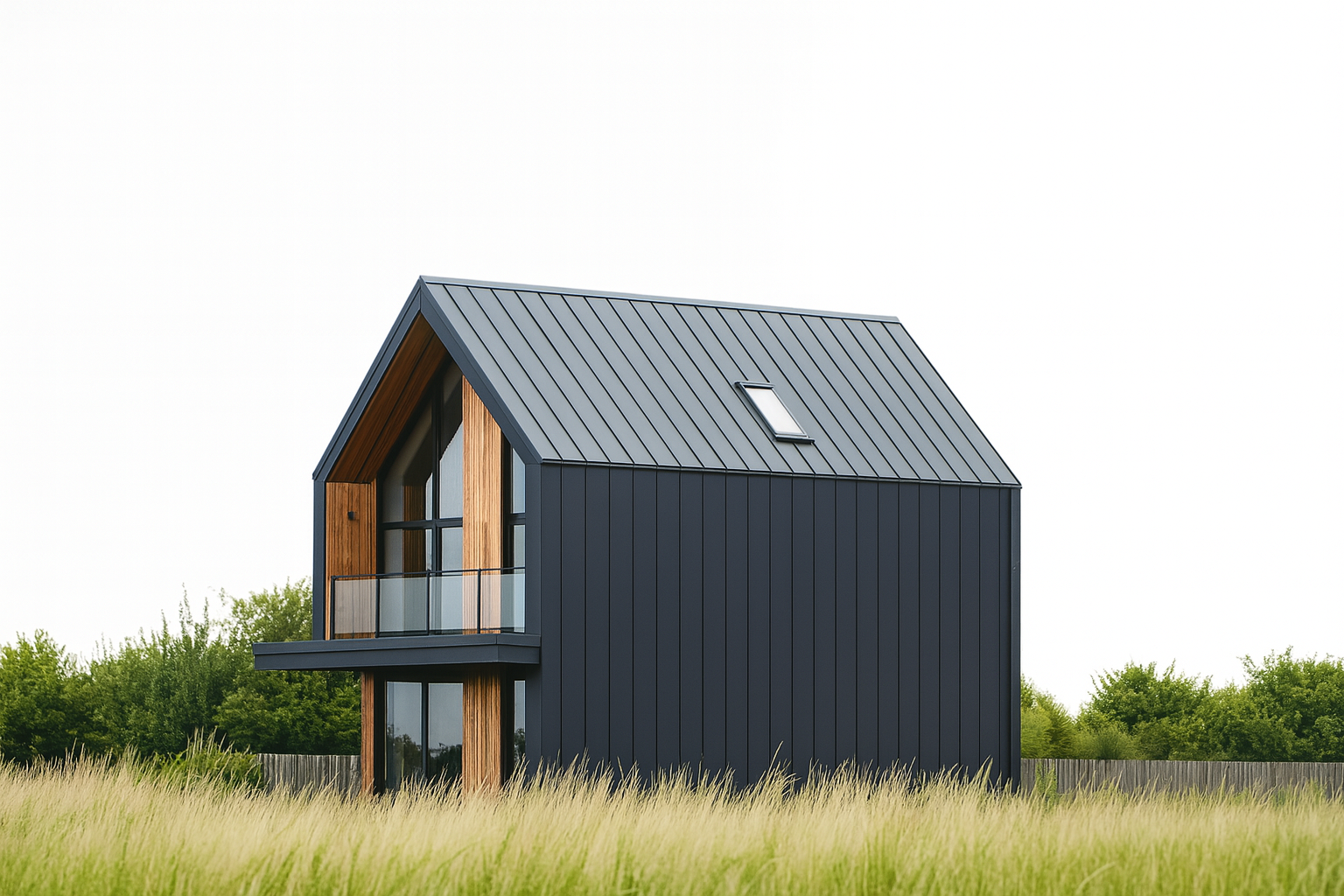
Designing your own tiny house does not start with a cute floor plan.
It starts with the boring parts that decide whether the house works after move-in: where it can legally sit, how water leaves the site, where the bathroom goes, how the bed is reached, where the coats go, how the air moves, and what can be repaired without tearing the place apart.
A tiny house punishes vague design faster than a normal house. One bad door swing can block a kitchen. One missing storage zone can turn the living room into a pile of boxes. One hidden water heater can make a small repair expensive. One loft that looks fine online can feel miserable every night.
If you are still sorting out the basic category, start with What Is a Tiny House?. If money is the main question, read Tiny Home Cost Breakdown before you fall in love with a plan.
Start With the Site, Not the Shape
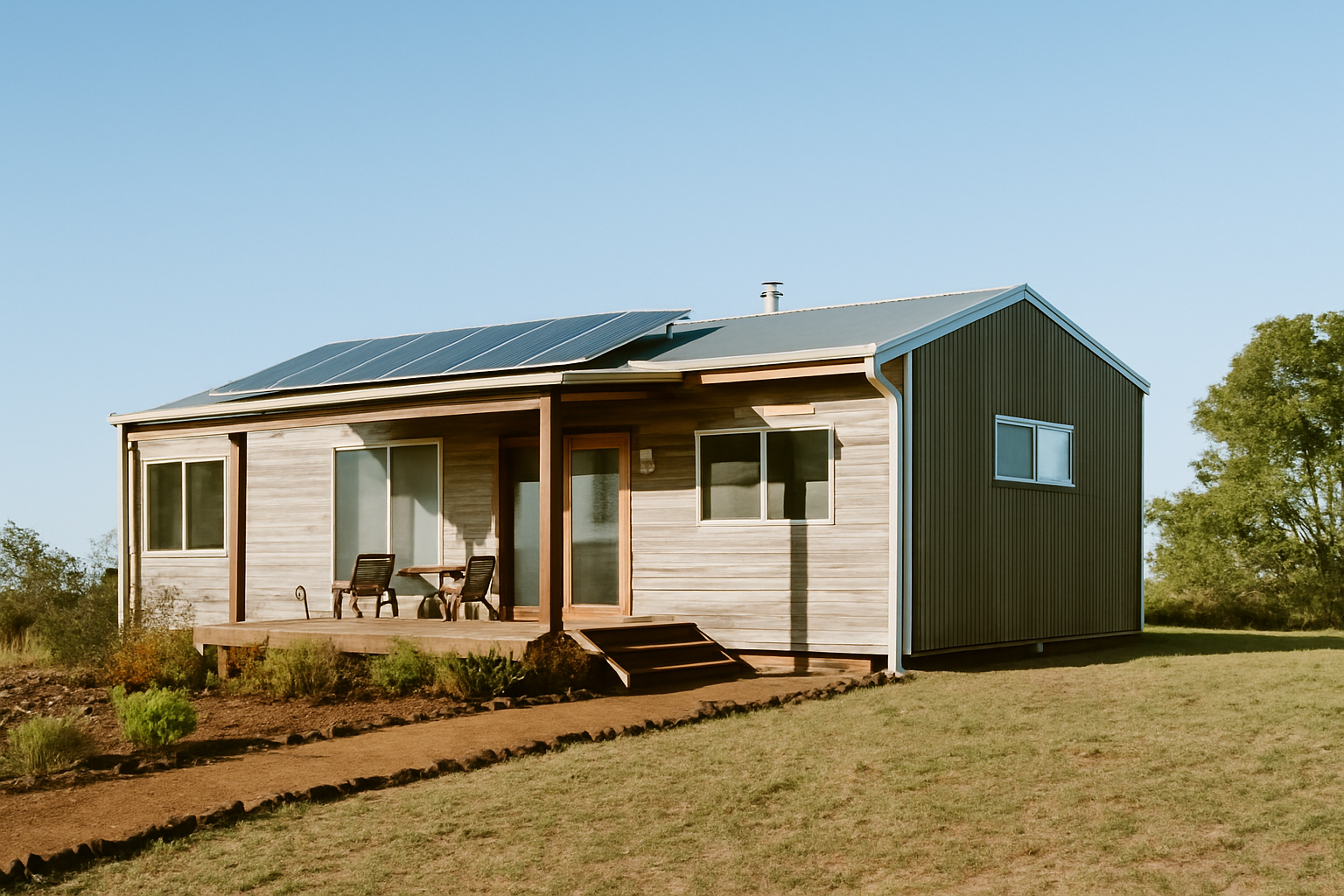
The site tells the tiny house what it can be.
Before you draw the kitchen, check the ground. Setbacks may decide the footprint. Drainage may decide the entry. Utility distance may decide the budget. Sun exposure may decide window placement. Trailer access or delivery access may decide whether the design can even reach the site.
| Site issue | What it changes | What to check early |
|---|---|---|
| Setbacks | Footprint, porch, deck, ADU placement, privacy | Front, side, rear, easements, fire separation |
| Slope | Foundation, stairs, drainage, delivery, cost | Grade, water path, retaining walls, driveway slope |
| Sun and heat | Windows, shade, cooling load, glare, comfort | West exposure, south light, tree shade, overhangs |
| Utilities | Kitchen, bath, mechanical space, trenching, inspections | Power, water, sewer, septic, well, graywater rules |
| Access | Delivery, trailer movement, crane set, service work | Driveway width, turning radius, trees, wires, grade |
Do this before choosing a prefab unit, trailer length, roof shape, or loft. A tiny house that does not fit the site is not a design problem anymore. It is a money problem.
The Legal Path Comes Before the Floor Plan
A tiny house can be a backyard ADU, small permanent dwelling, prefab unit, manufactured home, park model, RV-style unit, or tiny house on wheels. Those categories are not interchangeable.
The legal path changes permits, inspections, utility hookups, financing, insurance, resale, and whether full-time living is allowed. A plan that works as a weekend trailer may fail as a backyard dwelling. A beautiful prefab unit may still need ADU approval. A towable tiny house may be legal to tow and still illegal to live in on the lot.
Before you design the rooms, confirm the category with the local office. Use Tiny Homes Regulations and Building Codes for the broad legal split. If the unit is towable, read Regulations for Tiny Houses on Wheels.
Draw the Daily Route First
A tiny house fails when the route through the space gets treated like leftover area.
Draw the path from entry to kitchen, bathroom, bed, storage, and outdoor space before you draw furniture. Then test it with real moments: carrying groceries, drying off after a shower, getting dressed, taking out trash, opening the fridge, changing sheets, and moving around another person.
The path should not depend on folding everything away first. If the table, ladder, bed, or cabinet door has to move every time someone walks through, the design is not efficient. It is fragile.
Use Bubble Diagrams Before Walls
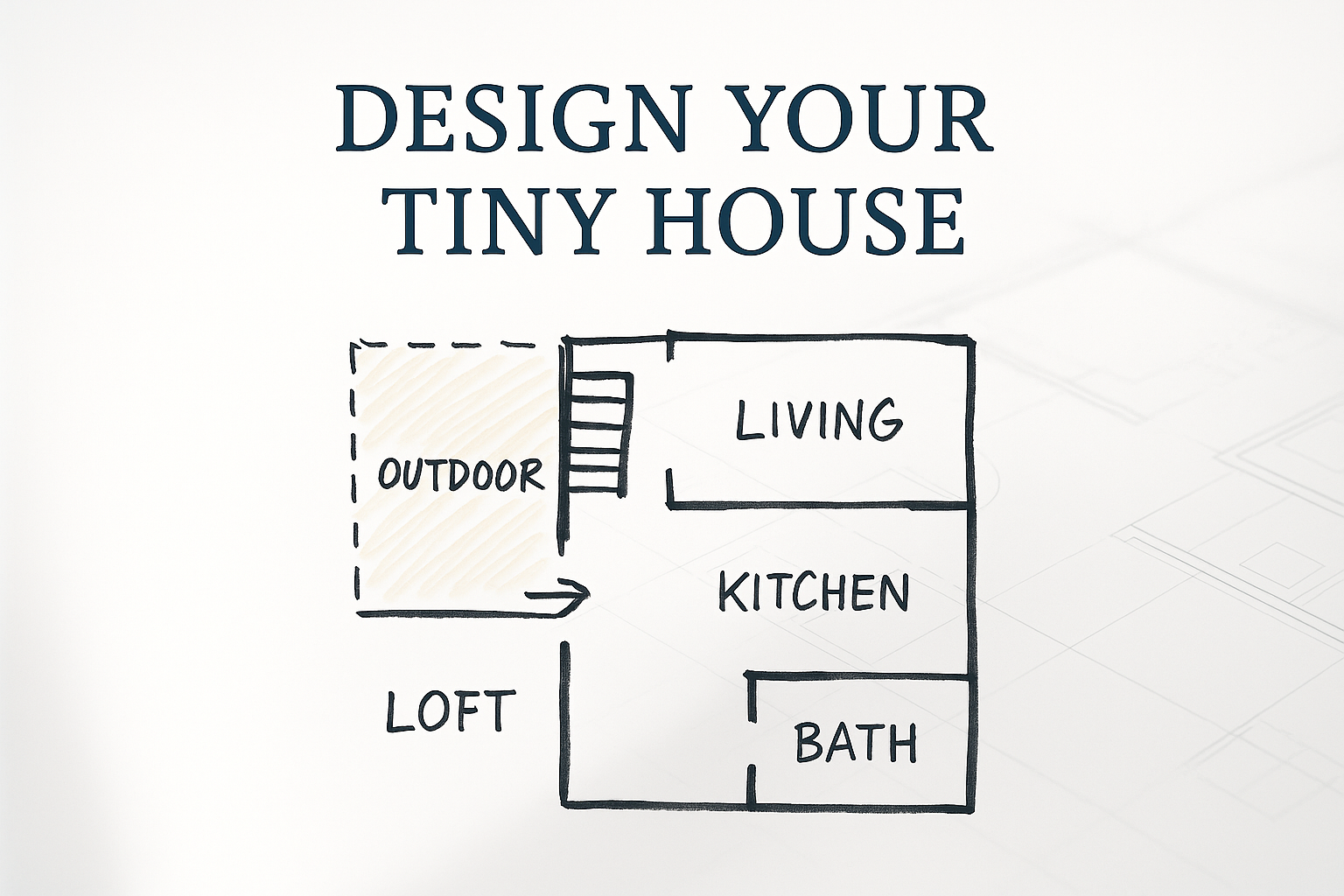
Bubble diagrams look simple because they are supposed to.
Draw one circle for each job: sleep, cook, eat, sit, bathe, store, enter, work, and service. Make the most important circles larger. Put connected zones near each other. Keep noisy, wet, or private zones away from places where they cause daily friction.
- Kitchen near bath: shorter plumbing runs and fewer service problems.
- Entry near storage: shoes, coats, tools, and wet items do not invade the whole house.
- Sleep away from the door: better privacy and less noise.
- Mechanical access near service side: easier repairs without tearing apart built-ins.
If the bubbles do not work, the floor plan will not save them.
The Plan That Works Empty May Fail With Normal Stuff
This is where tiny-house plans become honest.
An empty tiny house always looks cleaner than a lived-in one. The real test is not whether the plan fits a bed, sink, shower, and sofa. The test is whether it has a place for the ugly things people actually own.
| Real item | Where bad plans put it | Better design move |
|---|---|---|
| Coats and shoes | Beside the door, under a chair, or across the walkway | Entry bench, hooks, boot tray, narrow closet |
| Vacuum and cleaning supplies | Bathroom corner or kitchen cabinet | Tall utility slot with outlet nearby |
| Laundry | Bed, sofa, or bathroom floor | Closed hamper zone near bath or sleeping area |
| Tools and outdoor gear | Under the bed until it becomes unusable | Exterior storage hatch or service-side cabinet |
| Food storage | Open shelves that become visual clutter | Real pantry depth, not decorative shelving only |
| Mechanical parts | Behind fixed furniture or buried in a cabinet | Service panel with clear access |
If the plan has no place for boring objects, the house will feel smaller every week.
Plan the Wet Wall Early
The wet wall is where cost and maintenance start to show up.
Keep the kitchen, bath, water heater, shutoffs, pumps, and drains close enough to make sense. Long plumbing runs add cost, freeze risk, leaks, noise, and repair problems. Scattered fixtures can make a tiny house feel designed on paper instead of designed for construction.
A compact wet wall does not mean every room has to feel cramped. It means the expensive service work is controlled before cabinets and finishes make it hard to reach.
Layer Systems Before You Decorate
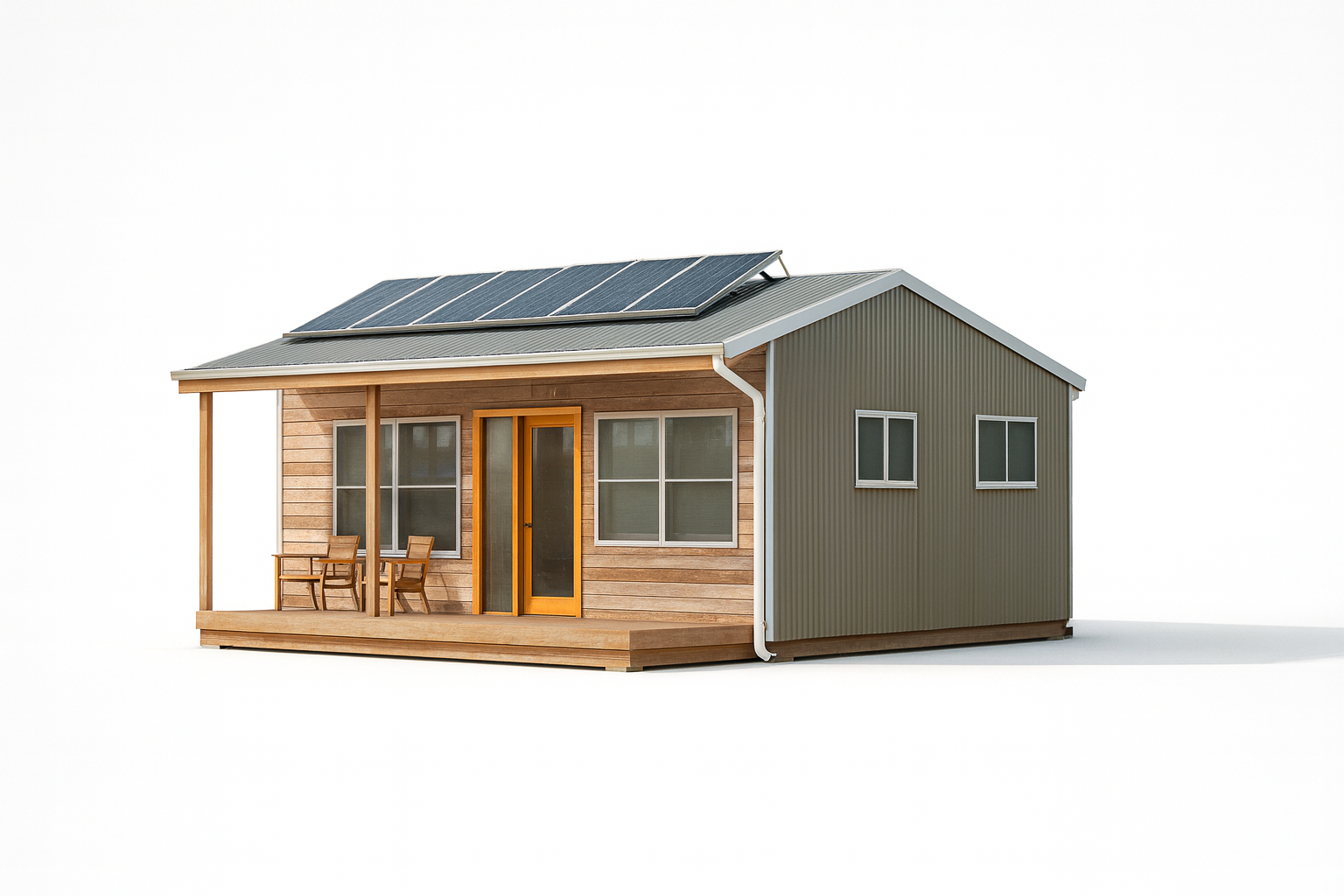
Electrical, plumbing, heating, cooling, and ventilation are not late-stage details in a tiny house. They shape the plan.
Switches need to land where hands actually reach. Outlets need to match how the space is used. The electrical panel needs safe clearance. The bath fan needs a real duct path. The water heater needs service access. A mini-split needs air movement, not just a convenient wall.
Small homes expose bad systems quickly. One weak exhaust fan can turn the bath into a moisture problem. One buried shutoff can make a leak worse. One bad panel location can force ugly changes after the interior is finished.
Layout Can Save Money or Burn It
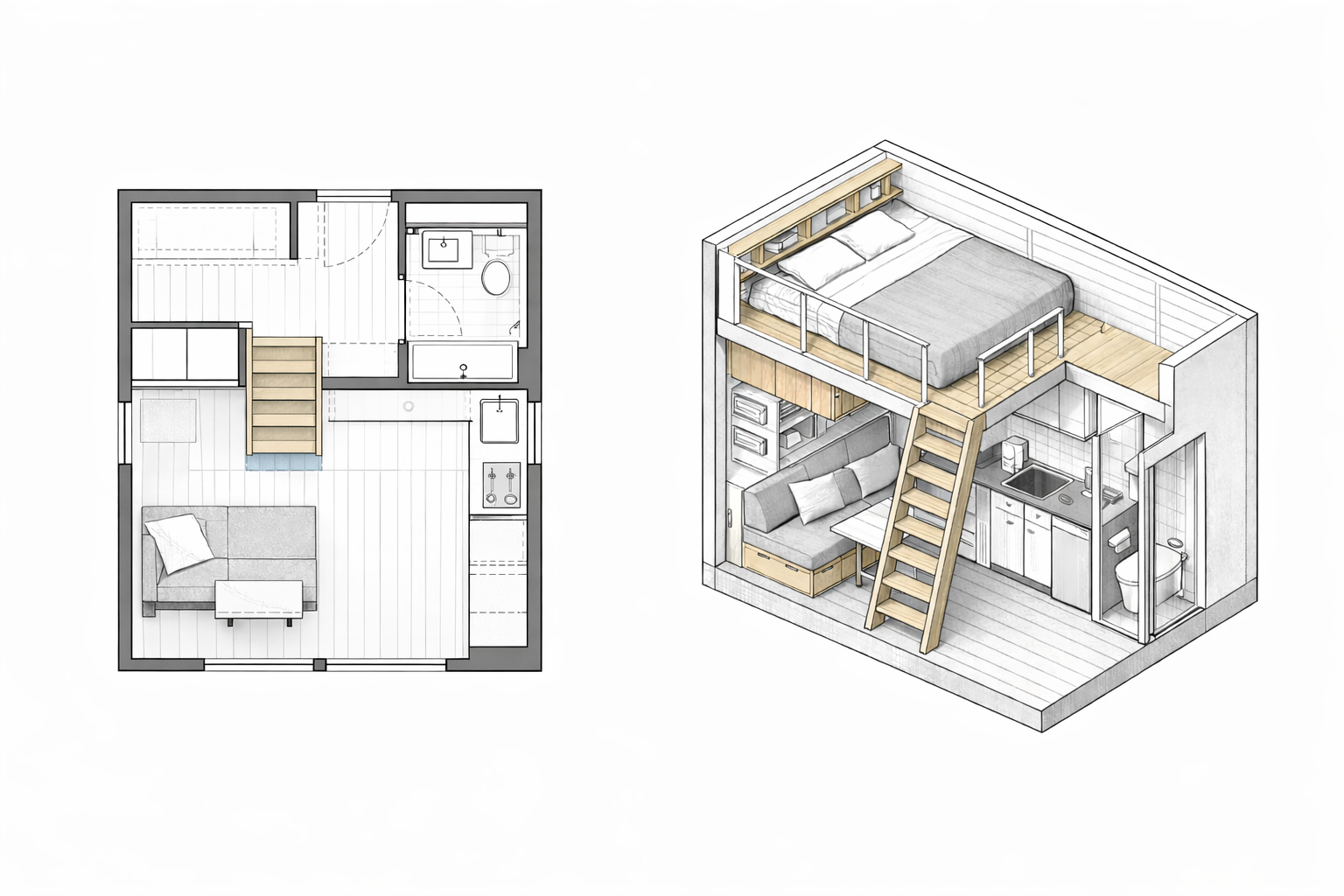
A tiny layout is cheap only when it keeps systems close and movement clear.
The expensive plans usually spread plumbing across the footprint, add too much glass, bury service access behind built-ins, or use custom furniture to hide a bad plan. A smart plan keeps the wet wall compact, uses standard windows, puts mechanical parts where they can be reached, and leaves one honest storage zone for real life.
For deeper layout work, use Tiny House Design That Actually Works.
Lofts Are Not Free Bedrooms
Lofts are useful when they solve a real problem. They are miserable when they only make the plan look larger.
A loft needs safe access, air movement, enough headroom, a way to make the bed, and a way to climb down at night without turning the whole house into an obstacle course. A ladder saves floor area, but it is not always a good daily solution. A stair is safer and more useful for storage, but it takes real space.
Before adding a loft, decide whether it is a main sleeping area, guest bed, storage zone, or occasional retreat. Those are different designs.
Use Built-Ins Only Where They Earn It
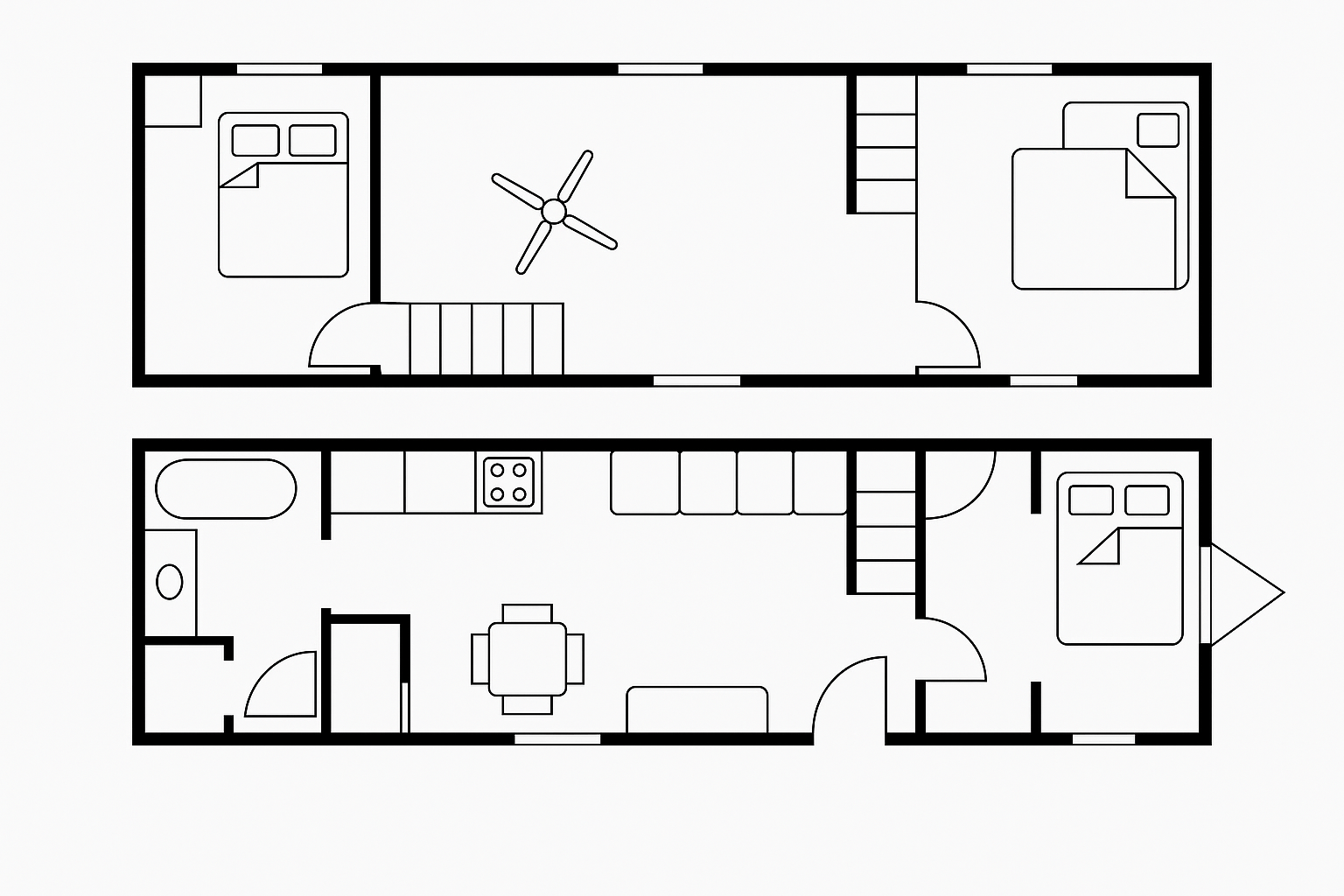
Built-ins can make a tiny house work. They can also trap the design too early.
A stair with drawers, a bench with storage, a wall bed, a fold-down desk, or a pantry wall can earn its cost when it solves a daily problem. Custom millwork gets wasteful when it hides poor circulation, blocks service access, or gets designed before the systems are settled.
Use built-ins for repeated needs: sleeping, storage, eating, working, and entry gear. Keep loose furniture where flexibility matters.
Windows Need a Job
Do not add windows only because the plan looks dark.
A good window brings light, view, ventilation, privacy, or orientation control. A bad window adds heat gain, heat loss, glare, wall loss, and cost. In tiny homes, every window competes with storage and furniture.
Use bigger glass where there is a real view. Use high windows where privacy matters. Be careful with west-facing glass in hot climates. Leave at least one solid wall for storage or seating.
Ventilation Is Part of the Layout
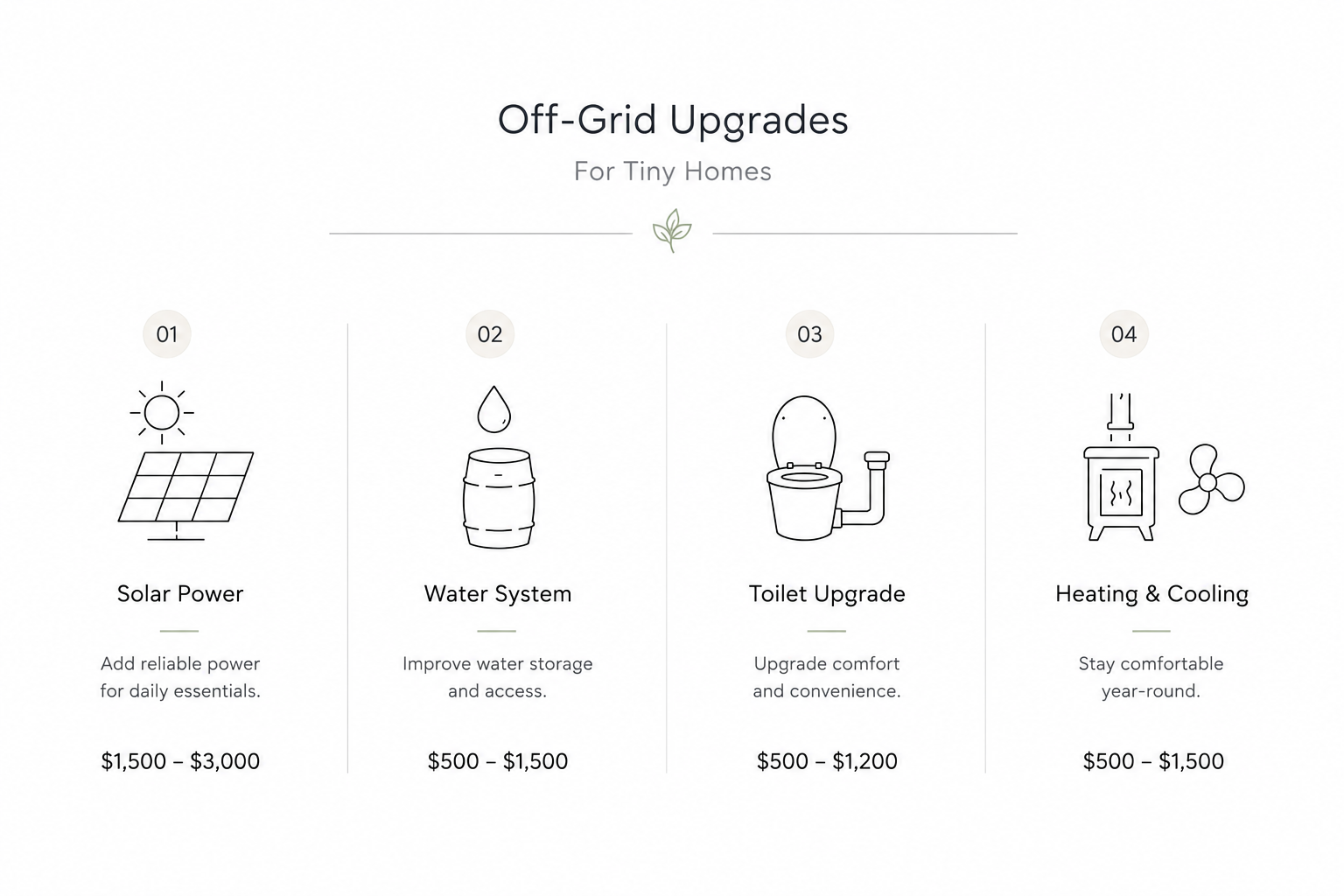
Tiny homes get humid fast.
Cooking, showering, sleeping, wet towels, propane appliances, and tight envelopes all load a small volume of air with moisture. That moisture finds cold corners, window frames, bedding near exterior walls, and closed storage.
Plan bath exhaust, kitchen exhaust, fresh air, and cross-ventilation before the interior is finished. A quiet fan that gets used is better than a powerful fan everyone turns off.
What to Draw Before You Call a Builder
You do not need a perfect permit set before the first builder conversation. You do need enough clarity to avoid wasting everyone’s time.
| Drawing | What it should show | Why it matters |
|---|---|---|
| Site sketch | Setbacks, access, slope, utilities, sun, drainage | Shows whether the house belongs on the site |
| Bubble diagram | Relationships between entry, bath, kitchen, sleep, storage, service | Tests flow before walls get locked |
| Scaled floor plan | Walls, doors, windows, furniture, fixtures, storage | Shows whether daily life fits |
| Simple section | Loft height, roof slope, floor thickness, stair or ladder route | Reveals headroom and buildability problems |
| Systems sketch | Wet wall, panel, water heater, HVAC, exhaust, shutoffs | Prevents expensive late changes |
If you cannot draw where the ugly parts go, the design is not ready.
Tools That Are Safe to Use Early
Graph paper still works because it forces scale. A simple ruler, pencil, and furniture blocks can reveal more than a polished rendering.
Beginner apps can help test furniture and room sizes. Simple 3D tools can help you understand height and massing. AI layout tools can generate ideas. None of those replace local code review, builder pricing, structural design, utility planning, or zoning approval.
Use tools to think. Do not use them to pretend the design is finished.
Where DIY Design Usually Goes Wrong

Most mistakes are not artistic. They are practical.
- No real storage: open space looks clean until shoes, food, tools, bedding, and cleaning supplies arrive.
- Bad wet-wall planning: plumbing gets spread out because the plan was drawn room by room.
- Too much glass: the house looks bright but loses storage, privacy, and thermal comfort.
- Loft treated like a bedroom: access, headroom, heat, and night use get ignored.
- Mechanical space forgotten: panels, pumps, water heaters, and filters get buried.
- Door swings ignored: bathroom, cabinet, washer, and entry doors fight each other.
- Site work ignored: the house is designed before drainage, access, and utilities are priced.
Cost Check Before the Design Gets Fancy
Design choices are cost choices.
A simple rectangle usually costs less than a broken footprint. One compact wet wall usually costs less than scattered plumbing. Standard window sizes usually cost less than custom glass. A foundation-based tiny home costs differently from a tiny house on wheels. A prefab unit costs differently from a site-built one.
Before finishes, price these:
- legal path and permit requirements
- trailer, foundation, or base
- delivery or site access
- water, sewer, septic, or well
- power and panel location
- heating, cooling, and ventilation
- roof, windows, insulation, and flashing
For more detail, compare with How Much Does a 400 Sq Ft Tiny House Cost? and 2-Bedroom Tiny House Cost.
Prefab, Wheels, or Site-Built
Do not choose the construction path only by price.
Prefab can make sense when you want a faster factory package, but the installed cost still depends on delivery, foundation, utilities, and local approval. Wheels make sense when mobility matters, but road legality, parking, utility connection, and full-time living are separate problems. A foundation-based tiny house usually fits long-term living better, but the site work and permits cost more than people expect.
If prefab is on the table, read Prefab Tiny Homes. If wheels are on the table, read the THOW regulations page before you design around mobility.
Quick Start Checklist
- Confirm whether the project is an ADU, THOW, prefab unit, park model, or permanent dwelling.
- Sketch the site: setbacks, slope, sun, drainage, utilities, access.
- Draw bubble diagrams before walls.
- Mark the daily route from entry to kitchen, bath, bed, storage, and service areas.
- Place storage for normal stuff before choosing finishes.
- Keep the wet wall compact.
- Plan ventilation before the interior is finished.
- Draw furniture, door swings, and service panels at scale.
- Print the plan and walk it out with tape if possible.
- Get a builder, architect, designer, engineer, or local official to review the parts you cannot verify yourself.
FAQ
Can I design my own tiny house?
Yes, for planning and layout. You may still need a designer, engineer, architect, builder, or code official for permit drawings, structure, utilities, and local approval.
What should I design first?
Start with the site, legal category, daily route, wet wall, storage, and service access. The exterior style comes later.
Is a tiny house easier to design than a normal house?
It is smaller, but not always easier. Small spaces give you less room to hide mistakes. Storage, ventilation, plumbing, and circulation matter more.
Should I use a loft?
Only if the access, headroom, ventilation, and use make sense. A loft can save floor space, but it is not a free bedroom.
What is the biggest layout mistake?
Designing an empty-looking plan with no place for normal stuff. Coats, shoes, tools, laundry, trash, food, and mechanical parts need real space.
Can AI design my tiny house?
AI can help generate ideas, but it does not know your exact site, zoning, inspections, utilities, structure, or local code path. Treat it as a sketch tool, not final authority.
Read This Next
For the broader layout logic, Tiny House Design That Actually Works explains why storage, circulation, ventilation, and service access matter more than clever furniture.
For project cost, Tiny Home Cost Breakdown shows why the unit price is only one part of the budget.
For legal placement, Tiny Homes Regulations and Building Codes explains why category and site approval come before purchase.