
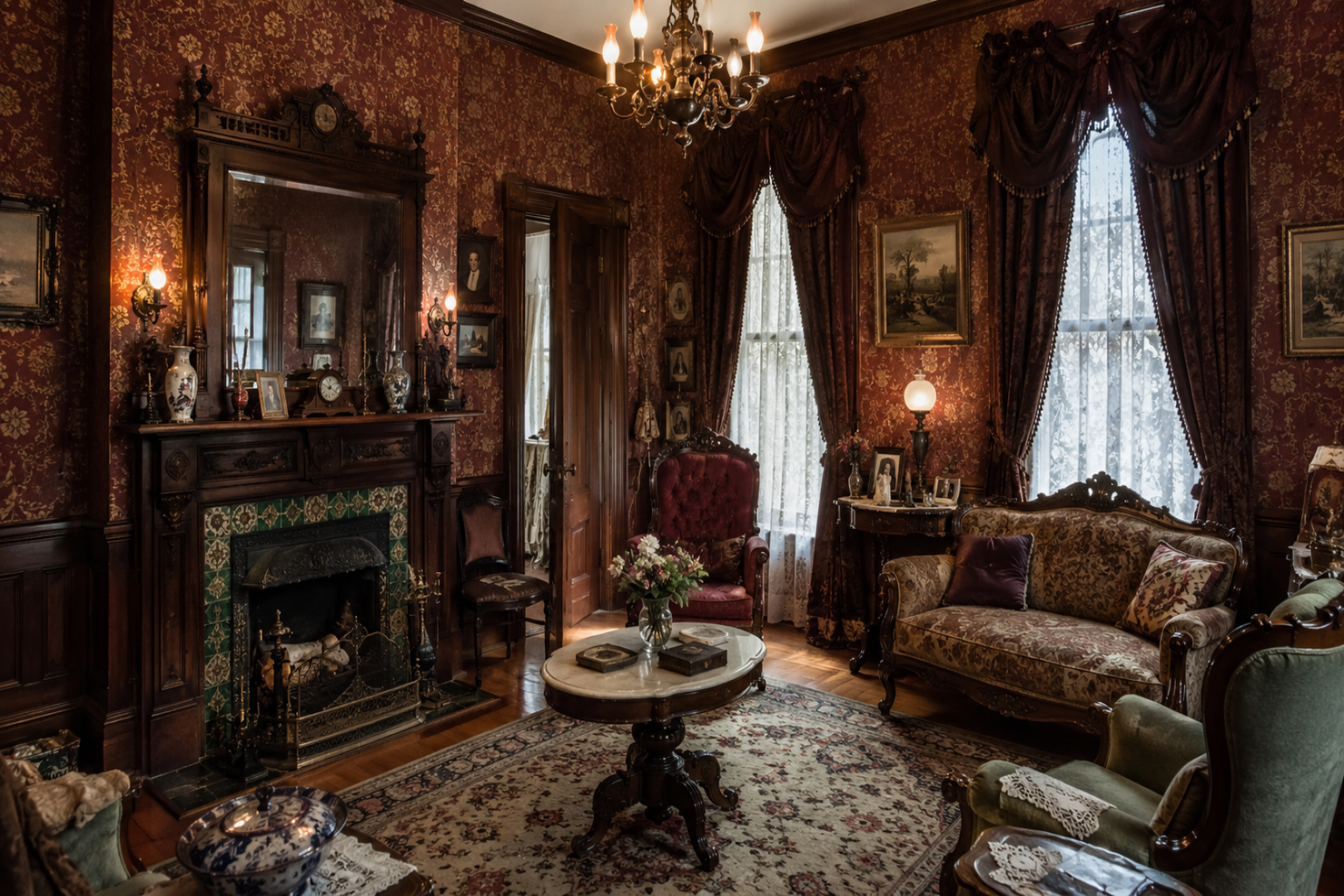
A building from 1820 and a building from 1920 can feel like they belong to different worlds.
The older one may be heavy, balanced, decorated, and tied to familiar historical styles. The newer one may have larger windows, a clearer structure, less ornament, and a stronger connection to machines, streets, offices, factories, trains, elevators, and modern city life.
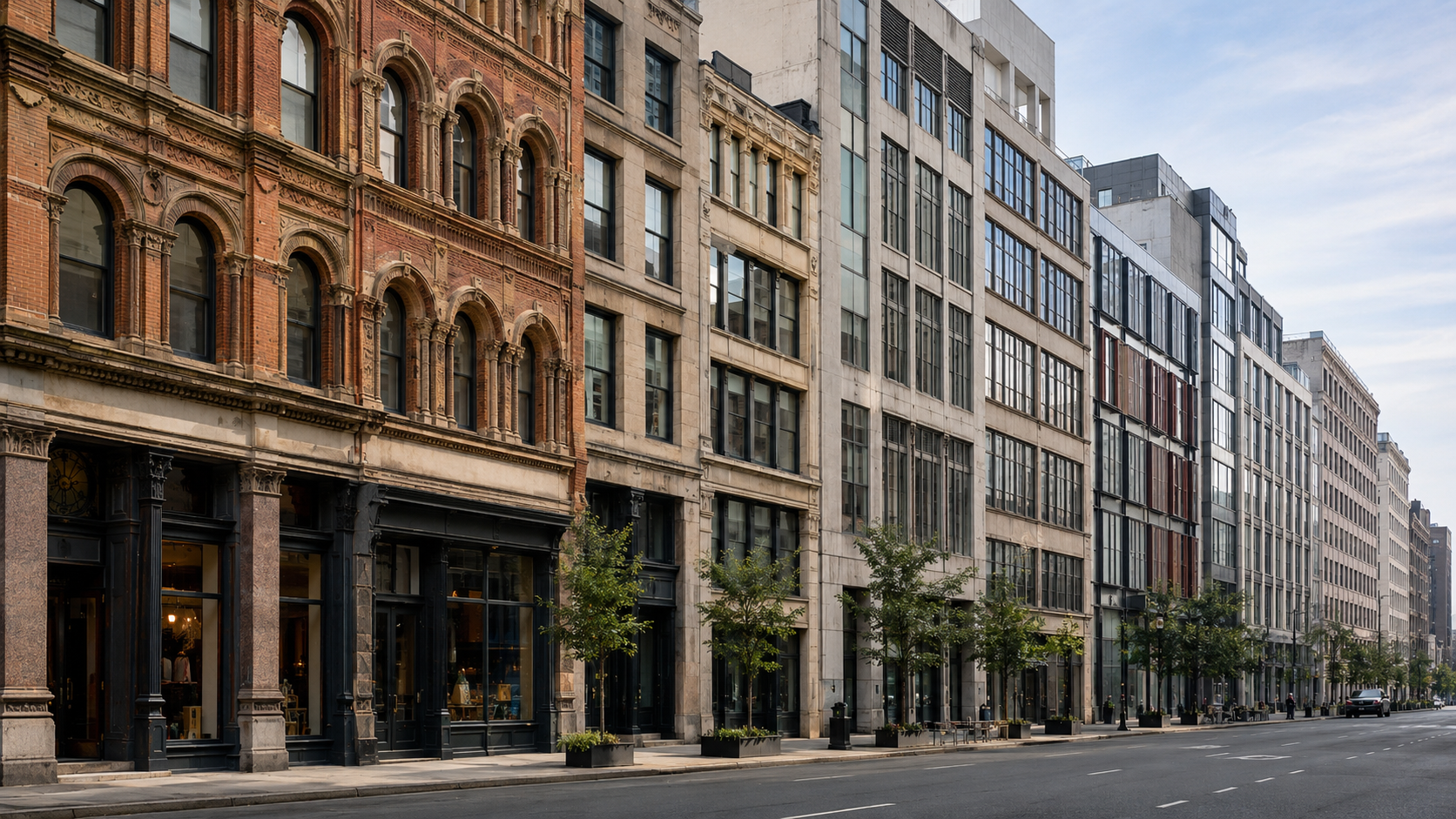
That is the real story of 19th and 20th century architecture. It was not a simple march from old to new. For a long time, architects kept borrowing from the past while the world around them changed faster than buildings could explain. Then steel, iron, concrete, glass, elevators, factories, railways, mass housing, and dense cities forced architecture to become something else.
The big shift was this: in the 1800s, architecture still dressed itself in historical styles. By the 1900s, more architects were asking what a building should look like when its structure, materials, and purpose were modern.
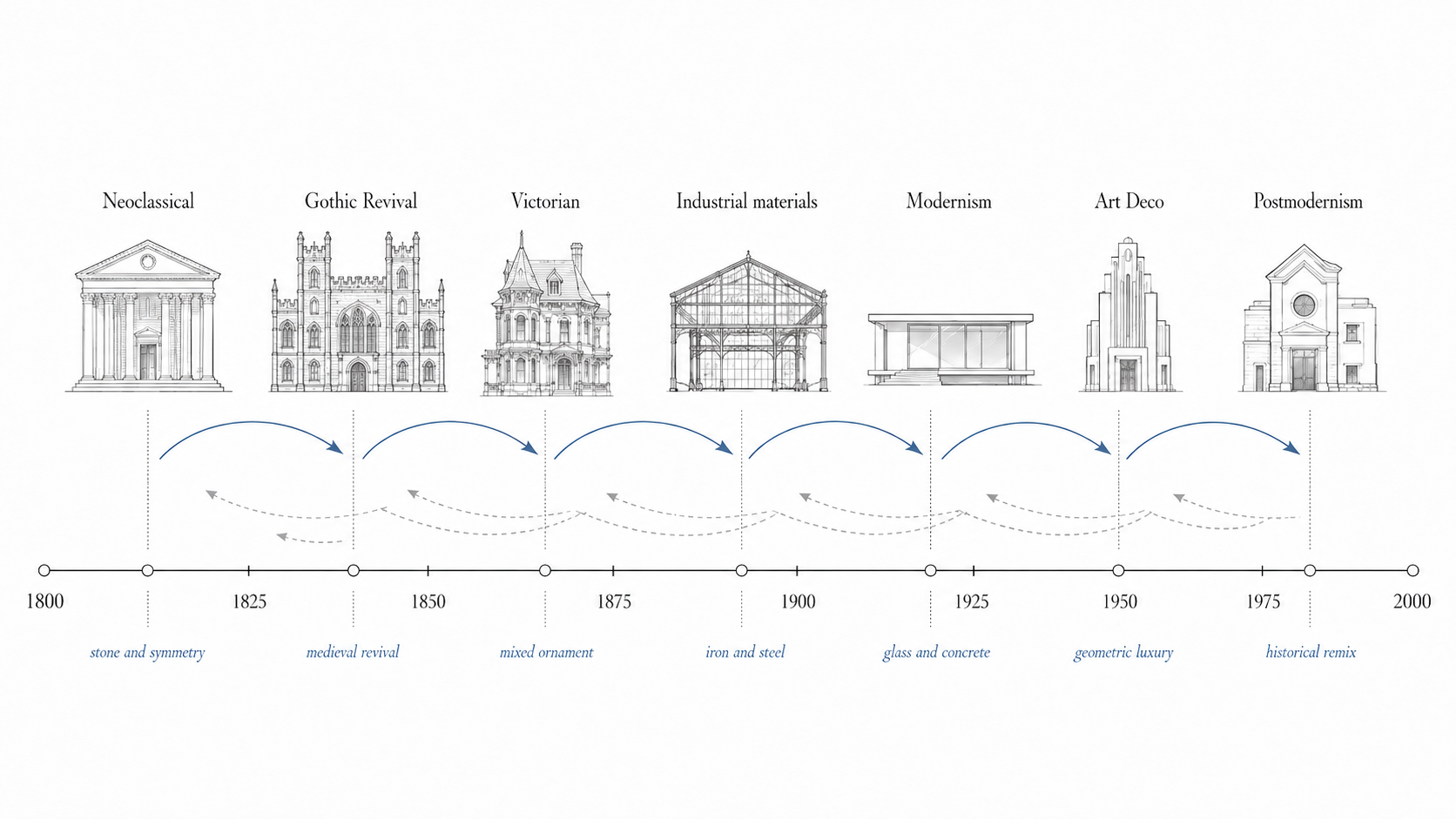
Why the 1800s and 1900s changed architecture so much
The 19th and 20th centuries changed architecture because they changed the job of buildings.
Earlier architecture often had to express power, taste, wealth, civic pride, or family status through recognizable forms. Columns, cornices, arches, towers, stone facades, patterned brickwork, and decorative trim all helped a building speak in a familiar language. That older language still shows up across many architecture styles, but in the 1800s and 1900s it started to collide with new pressures.
Cities grew. Land became more expensive. Workers moved into crowded districts. Railways cut through urban centers. Department stores needed open floors. Offices needed daylight and height. Factories needed spans, ventilation, and fire resistance. Apartments had to fit more people on smaller lots. New building types appeared faster than old styles could comfortably handle.
The outside of architecture changed because the inside of life changed.
The 19th century: history on the outside, industry underneath
The 1800s are often remembered for revival styles: Neoclassical architecture, Gothic Revival architecture, Italianate architecture, Second Empire architecture, Queen Anne architecture, and many forms of Victorian architecture. That is true, but it misses the deeper tension.
A 19th-century building could look traditional while being shaped by very modern forces. A city block might use brick, stone trim, arches, and cornices, but behind that familiar face were industrial materials, standard parts, rail delivery, mass-produced details, new plumbing, gas lighting, wider streets, and more complicated urban services.
This is why 19th-century architecture can feel contradictory. It often looked backward for style while moving forward in construction, transportation, real estate, and city planning.
Neoclassical architecture gave cities order
Neoclassical architecture stayed important because it looked controlled. It used symmetry, columns, pediments, proportion, and clear front-facing facades. It worked well for government buildings, museums, banks, libraries, and public institutions because it made buildings feel stable and serious.
The style was useful because it gave fast-growing cities a visual language of order. When streets were crowded and urban life felt unstable, a balanced stone or masonry facade could make a building feel permanent.
The weakness was also clear. Neoclassical design could look impressive, but it did not always answer the new problems of the industrial city. It could give a building authority without solving crowding, daylight, ventilation, structural span, or new forms of work.
Gothic Revival brought drama, craft, and verticality
Gothic Revival was one of the 19th century’s strongest reactions against plain classical order. It used pointed arches, steep rooflines, vertical emphasis, textured surfaces, tracery, and a sense of handcrafted detail.
On houses, campuses, civic buildings, and public structures, it gave architecture a more emotional and picturesque character. It did not feel as calm as Neoclassicism. It felt taller, sharper, more layered, and more atmospheric.
The important point is not that Gothic Revival copied the past perfectly. It used older forms to give new buildings a sense of memory and identity at a time when cities were becoming louder, faster, and more industrial.
Victorian architecture turned the city into a mixture
Victorian architecture was not one clean style. That is why it is easy to misunderstand.
It was a period of mixture: Italianate brackets, Second Empire roofs, Queen Anne porches, patterned brickwork, bay windows, carved trim, decorative shingles, towers, ironwork, colored glass, and asymmetrical facades. Some buildings were restrained. Others were overloaded. Many sat somewhere in between.
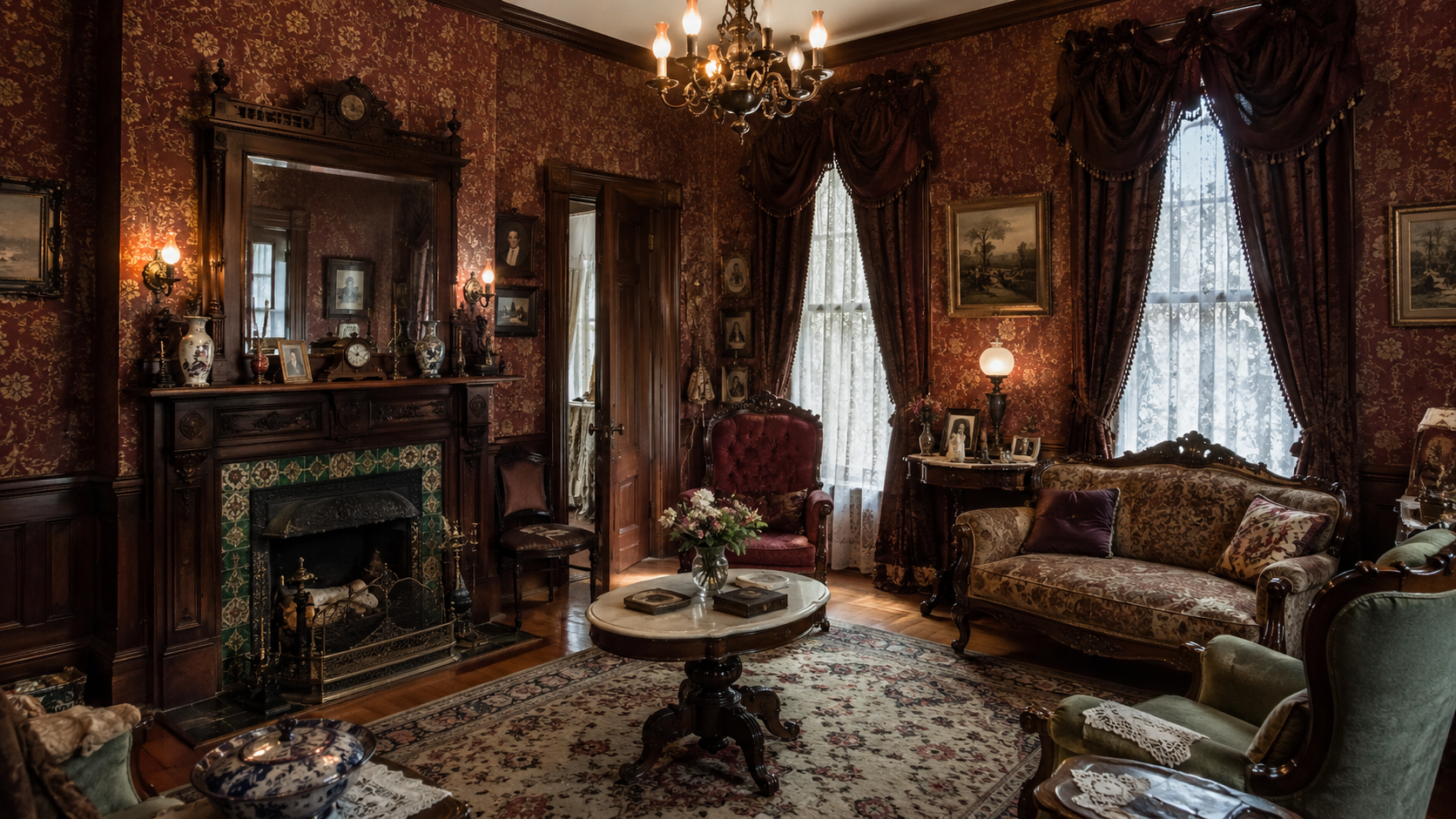
This mixture made sense in the 19th century. Builders had access to more manufactured parts. Pattern books spread ideas quickly. Railways moved materials. Growing middle-class neighborhoods wanted houses that looked individual, respectable, and fashionable.
Victorian architecture can look decorative on the surface, but it also tells a practical story about mass production. The details were often easier to repeat because industry made them available.
The hidden shift: materials changed before style caught up
One of the most important changes in 19th and 20th century architecture happened quietly: buildings stopped depending only on thick walls and traditional masonry logic.
Iron, steel, reinforced concrete, plate glass, elevators, mechanical systems, and new fireproofing methods changed what buildings could do. Wider spans became possible. Taller buildings became practical. Larger windows made more sense. Open commercial floors became valuable. Structure could become a frame instead of a heavy wall.
This is where architecture began to break away from the old facade. A building no longer had to look heavy just because older buildings were heavy. It could be tall, thin, open, bright, or repetitive because its structure worked differently. That is why industrial architecture, architectural technology, and changing materials matter as much as style names.
The 20th century: architecture stops pretending to be old
The 20th century did not erase historical styles overnight. Plenty of traditional-looking buildings were still built. Many cities kept using masonry, ornament, symmetry, and familiar street fronts.
But the center of architectural debate moved. The big question became harder: should a modern building still wear historical decoration, or should it show the logic of its own time?
Modern architecture grew from that question. It connects directly to the broader story of modern architecture history and the earlier experiments covered in early modern architecture history.
Early modern architecture simplified the building
Modernism rejected the idea that a building needed applied historical decoration to be serious. Instead, modern architects focused on function, structure, volume, light, efficiency, and new materials.
Flat roofs, open plans, white walls, ribbon windows, exposed structure, pilotis, glass curtain walls, concrete frames, and simple geometric forms became part of the modern vocabulary. The point was not only to remove decoration. The point was to make the building’s form feel connected to its structure and use.
This was a major break from the 19th century. A Victorian facade might hide a mixture of structure, services, and room arrangements behind a lively surface. A modernist building tried to make the whole thing feel more direct.
Modernism had problems. It could become cold, repetitive, or too confident in its own rules. But it changed architecture because it asked a serious question that still matters: what should a building look like when it no longer needs to imitate the past?
Art Deco made modern life feel glamorous
Art Deco architecture is one of the most useful bridges between old and modern architecture.
It did not reject ornament completely. It changed the kind of ornament. Instead of older historical decoration, Art Deco used geometric patterns, vertical lines, stepped forms, metallic surfaces, stylized reliefs, rich materials, and a strong sense of speed and luxury.
This made it perfect for the early 20th century. It suited cinemas, hotels, offices, apartment buildings, department stores, and towers. It could feel modern without feeling plain.
Art Deco matters because it shows that modern architecture was not only about minimal white boxes. Some modern buildings were bold, decorative, commercial, and theatrical. They belonged to a world of electricity, elevators, advertising, nightlife, mass entertainment, and vertical city skylines. For the deeper period story, use Art Deco history as the support page.
Modern design entered ordinary rooms too
The 20th century shift was not limited to famous public buildings or office towers. It also changed ordinary interiors.
Living rooms became less formal. Furniture got lower. Built-ins became common. Large windows mattered more. Wood paneling, open shelving, simple textiles, and cleaner room layouts replaced some of the heavier decoration associated with older interiors.

This matters because architecture history is not only about exterior style. It also changed how people lived inside buildings: how rooms were arranged, how daylight entered, how furniture sat in space, and how modern materials made homes feel less formal.
The International Style made modernism look global
By the middle of the 20th century, modern architecture became more standardized. Glass, steel, concrete, open plans, flat roofs, and clean rectangular forms appeared in cities across the world.
This style worked well for office towers, universities, airports, housing blocks, and institutional buildings. It looked efficient, neutral, and modern. It also travelled easily because it was less tied to local ornament or regional traditions.
That was also the criticism. Many modern buildings began to look interchangeable. A glass tower could appear in one city and feel almost the same in another. The style that once felt radical became the default language of corporate and institutional architecture.
19th century vs 20th century architecture
The easiest way to compare the two centuries is to look at what each one trusted.
The 19th century often trusted historical reference. It used style to give buildings identity. A bank, house, hotel, library, or public building could borrow from older architectural languages to appear stable, refined, picturesque, or important.
The 20th century increasingly trusted systems. Structure, planning, material performance, mechanical services, speed of construction, standardization, and new ways of living became more important. Architects still cared about beauty, but beauty was often tied to proportion, light, volume, surface, and construction logic rather than applied ornament.
| Issue | 19th century tendency | 20th century tendency |
|---|---|---|
| Style | Revival, eclectic, decorative, historically familiar | Simplified, abstract, functional, experimental |
| Structure | Masonry walls, iron additions, traditional massing | Steel frames, reinforced concrete, curtain walls |
| Windows | Smaller openings, punched windows, decorative surrounds | Larger glass areas, ribbon windows, curtain walls |
| City role | Street blocks, civic buildings, row houses, stations, warehouses | Towers, housing blocks, airports, campuses, highways, suburbs |
| Ornament | Often applied and style-based | Reduced, geometric, structural, or rejected |
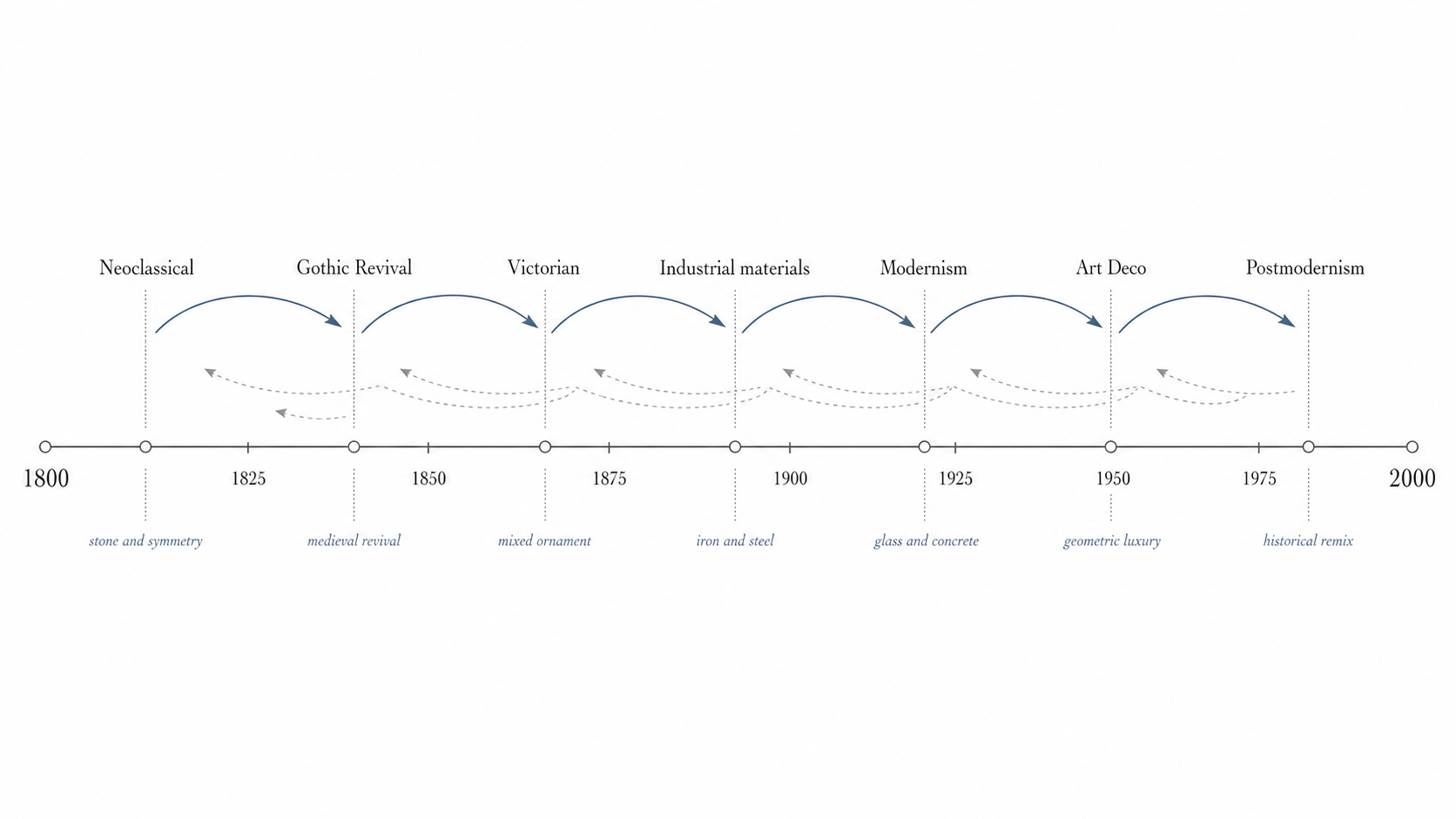
Postmodernism: the reaction against cold modern rules
By the late 20th century, many architects and critics were tired of strict modernism. Too many buildings looked blank, corporate, repetitive, or detached from the people who used them.
Postmodernism pushed back. It brought back color, symbolism, historical reference, humor, exaggerated shapes, broken rules, and visual play. A postmodern building might use a classical shape in a strange way, make a facade feel like a sign, or mix references that a strict modernist would have rejected.
Postmodernism can be messy, but its criticism was serious. It asked whether modern architecture had become too rigid. It questioned whether buildings should communicate more directly with the public. It also reopened the argument about memory, ornament, and meaning.
In that sense, postmodernism did not simply reverse modernism. It exposed a problem that had been building for decades: architecture had gained technical power, but sometimes lost warmth, local identity, and human scale.
What people usually miss about this period
The biggest mistake is treating 19th and 20th century architecture as a style parade.
Neoclassical. Gothic Revival. Victorian. Art Deco. Modernism. Postmodernism. That list is useful, but it can make the history feel cleaner than it was. Real cities did not change one style at a time. They layered buildings, demolished others, reused facades, added floors, widened streets, inserted transit lines, built factories, created suburbs, and replaced older neighborhoods with new development.
A city could have a 19th-century brick warehouse, an Art Deco apartment building, a glass office tower, a concrete parking garage, and a postmodern public building within a few blocks. That mix is not a mistake. It is the physical record of economic pressure, changing technology, shifting taste, and different ideas about what modern life should look like.
This is why older city streets are often more interesting than textbook timelines. They show overlap. They show argument. They show buildings from different moments still working beside each other.
How to read a 19th or 20th century building
Start with the facade, but do not stop there.
Look at the windows. Small punched openings usually suggest heavier wall logic. Larger glass areas often point toward newer structural systems or commercial needs. Look at the roofline. Cornices, mansards, towers, parapets, and flat roofs all tell you something about style and period.
Then look at the plan. Is the building narrow and deep? Is it made for a street wall? Does it have open floors? Does it depend on elevators? Does it look like it was designed for offices, apartments, retail, transport, manufacturing, or public use?
Finally, look at what the building is trying to say. A 19th-century building may be trying to look established, respectable, picturesque, or grand. A 20th-century building may be trying to look efficient, modern, luxurious, experimental, corporate, democratic, or futuristic.
Once you read buildings this way, the period becomes easier to understand. Style is only the surface. The deeper story is use, structure, money, land, materials, and the kind of city people were trying to build.
The big legacy
The 19th century gave modern cities their dense streets, industrial buildings, railway architecture, decorated neighborhoods, public institutions, and eclectic urban character.
The 20th century gave those cities towers, highways, airports, glass offices, concrete housing, modern campuses, large-scale planning, suburban expansion, and a new idea of architecture as a technical and social instrument. Later movements such as Brutalist architecture and contemporary architecture continued the argument rather than ending it.
Neither century was simple. The 1800s were not only decorative. The 1900s were not only modern. Both centuries were full of overlap, contradiction, ambition, and failure.
Together, they explain why architecture today looks the way it does. We still live with the argument they created: should buildings carry memory, show technology, serve the city quietly, stand out as objects, or somehow do all of that at once?
FAQs
What is 19th century architecture known for?
19th century architecture is known for revival styles, decorative urban buildings, industrial-era construction, railway-related buildings, public institutions, row houses, apartments, and the early use of iron and steel in larger structures.
What is 20th century architecture known for?
20th century architecture is known for Modernism, Art Deco, International Style buildings, concrete structures, glass towers, open plans, large housing projects, airports, campuses, and postmodern reactions against strict modern design.
What was the biggest change between 19th and 20th century architecture?
The biggest change was the move from historical surface styles toward architecture shaped by structure, materials, technology, and modern building use. Steel, reinforced concrete, elevators, large glass, mechanical systems, and dense cities changed what buildings could be.
Was Victorian architecture the same as 19th century architecture?
No. Victorian architecture was a major part of the 19th century, especially in Britain and places influenced by British design, but the century also included Neoclassical, Gothic Revival, Italianate, Second Empire, industrial, commercial, and early modern developments.
Did modern architecture completely replace older styles?
No. Older styles continued to be built and reused. Many 20th-century cities mixed traditional masonry buildings, Art Deco towers, modernist offices, postmodern landmarks, and older residential blocks. The change was gradual and uneven.
Why did ornament disappear from many modern buildings?
Ornament did not disappear everywhere, but many modern architects rejected applied decoration because they wanted buildings to express function, structure, materials, and space more directly. Cost, speed, standardization, and industrial production also made simpler surfaces more common.
Is Art Deco modern or traditional?
Art Deco sits between the two. It used modern materials, vertical forms, geometric patterns, and machine-age imagery, but it still loved decoration and visual drama. That is why it works well as a bridge between historic ornament and modern design.