
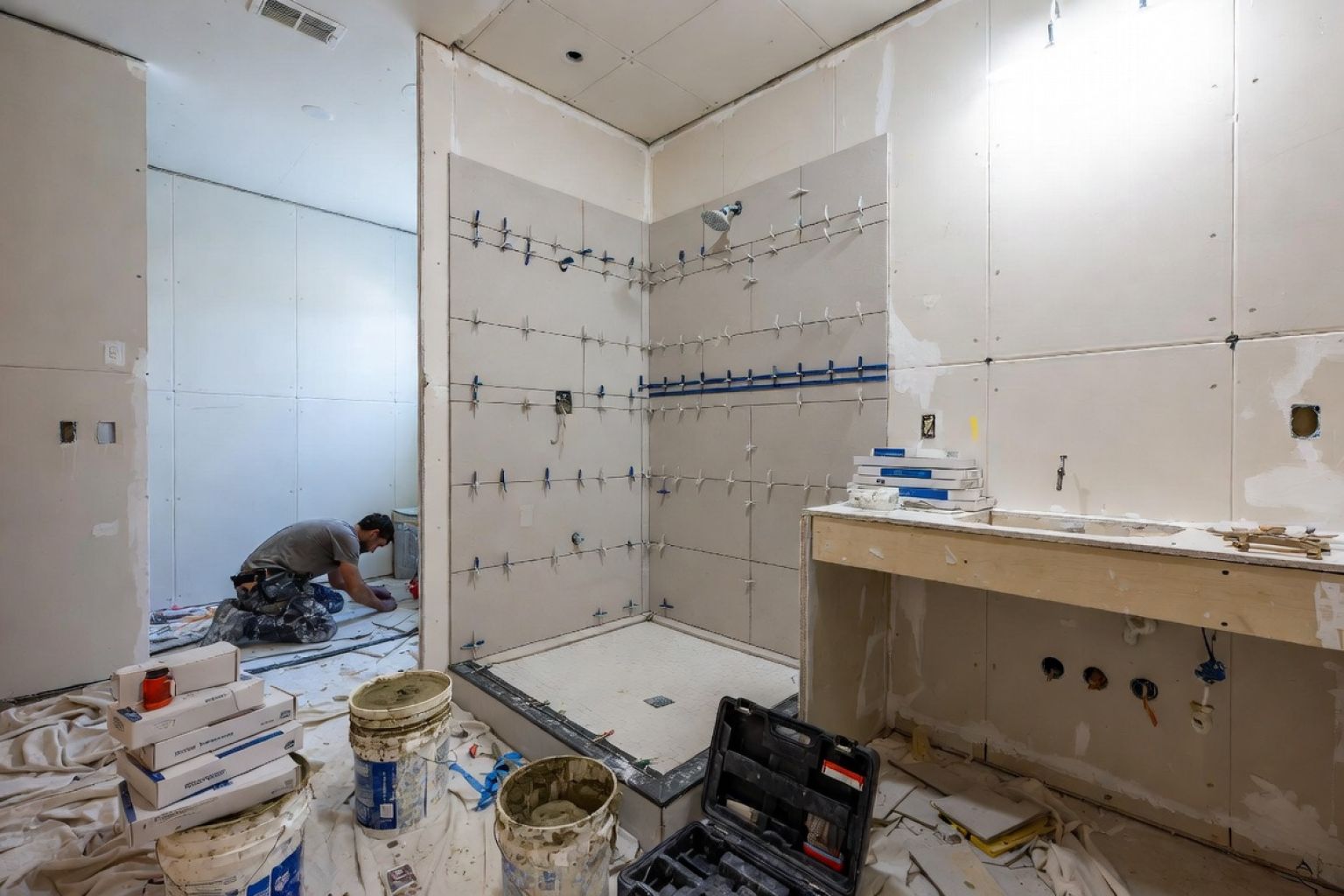
Bathrooms fail behind the tile.
That is the part most contractor lists skip. They show star ratings, service areas, and nice finished photos. They do not show whether the shower was waterproofed right, whether the fan vents outside, whether the floor was repaired, or whether the contractor came back when something leaked six months later.
A bathroom is a small room with a lot of risk packed inside it. Plumbing, wiring, tile, waterproofing, ventilation, carpentry, glass, paint, and fixtures all meet in one wet space.
The right bathroom contractor does not make the job sound easy. The right contractor can explain what might go wrong, what is included, what is excluded, and who fixes problems when the room is open.
Quick Answer
Hire the bathroom contractor who can explain the job in writing before work starts.
The written scope should cover demolition, disposal, plumbing, electrical, ventilation, waterproofing, tile prep, fixtures, inspections, change orders, allowances, warranty, and payment milestones.
Do not choose from finished photos alone. Ask to see older work. Verify license and insurance yourself. Make the contractor explain how the shower or tub area will be waterproofed before tile goes in.
| What to check | Good sign | Bad sign |
|---|---|---|
| Proposal | Line items, exclusions, allowances, and change-order rules are clear. | One vague number with “bathroom remodel” as the scope. |
| Waterproofing | The board, membrane, pan, curb, corners, and penetrations are named. | “We waterproof everything” with no system or detail. |
| Ventilation | Fan size, duct route, and outdoor termination are discussed. | The fan is treated like a cheap finish item. |
| Site visit | They check floor, walls, access, plumbing, fan route, and hidden-risk areas. | They talk mostly about tile, vanity, and paint. |
| Payment | Draws follow finished work and inspections. | Large front payment before serious work starts. |
What Separates a Good Bathroom Contractor
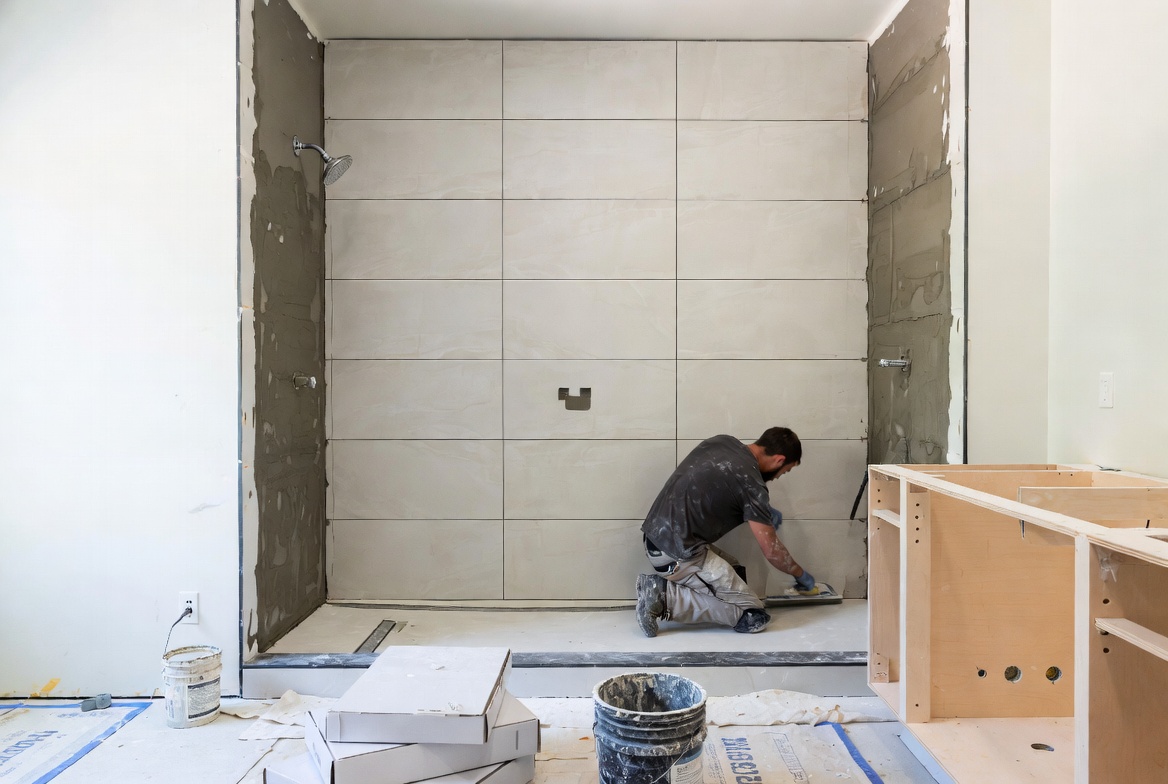
A good bathroom contractor looks past the pretty layer.
They ask how the room is used. They ask about old leaks. They check the fan. They ask what is below the bathroom. They look at the toilet base, the tub edge, the floor, the vanity, and the walls around the wet area.
They do not price the dream before checking the room.
Strong bathroom contractors do five things well:
- They define the scope. Demo, disposal, rough plumbing, electrical, floor repair, waterproofing, tile layout, fixtures, glass, paint, and punch-list work should be clear.
- They explain the order. Bathroom work has a sequence: demo, framing repair, plumbing, electrical, fan ducting, substrate prep, waterproofing, tile, finishes, glass, and final punch list.
- They talk about wet details. Bathrooms fail at seams, corners, curbs, drains, tub edges, toilet flanges, fan ducts, soft floors, and pipe penetrations.
- They can show older work. A new shower can look good for a few weeks. A one-year-old shower tells you more.
- They can be checked. License status, insurance, references, permits, and complaints should be verified outside their own paperwork.
If you are still deciding between a refresh, partial remodel, or full rebuild, start with the scope questions in our 1990s bathroom remodel guide. The same moisture and layout logic applies to many older bathrooms, even if your house is not from the 1990s.
The First Visit Should Feel Like an Inspection
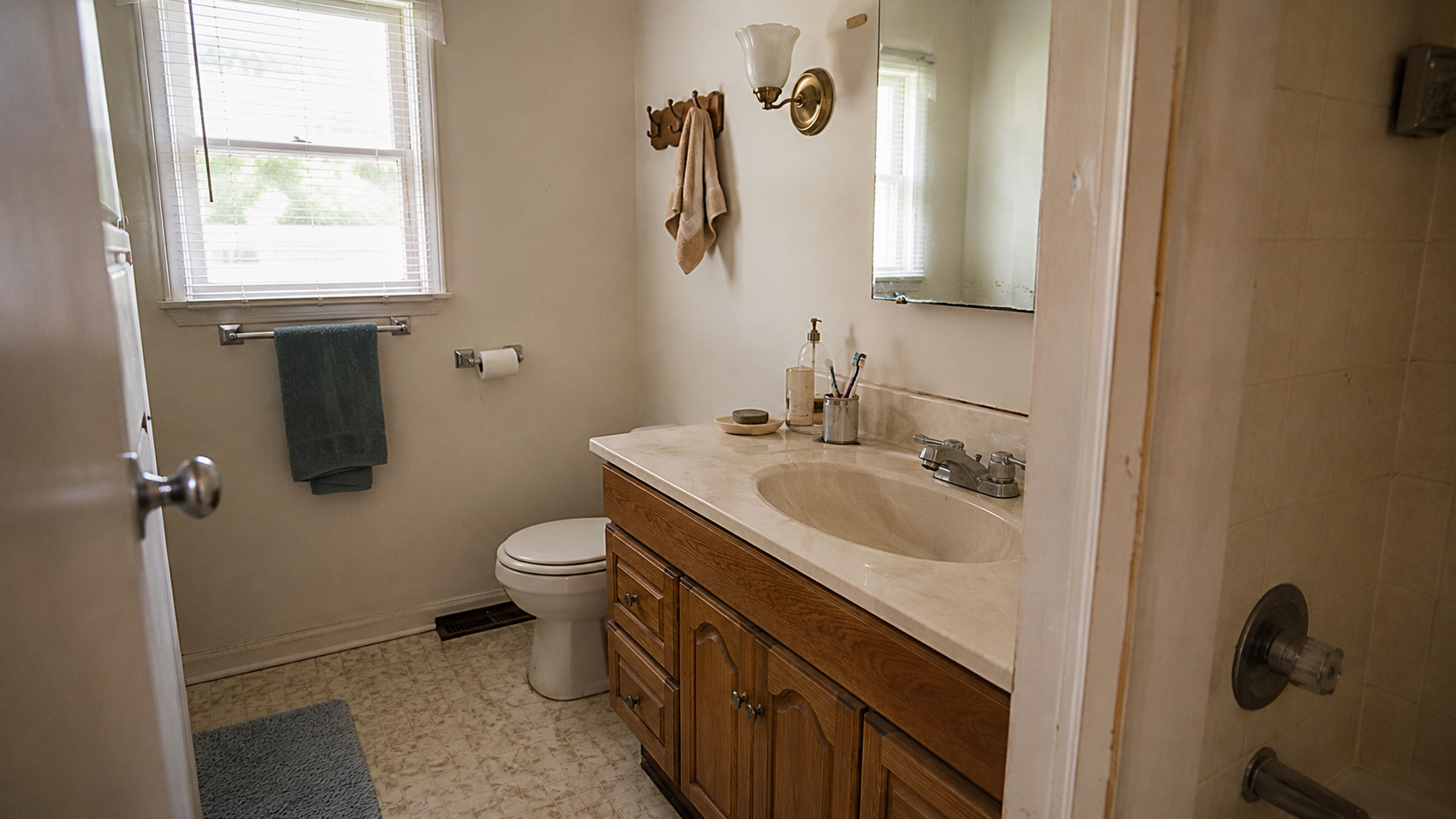
A weak visit feels like a sales call.
A better visit feels like someone is trying to understand the room before selling you the room.
The contractor should measure, open vanity doors, look near the toilet, ask about leaks, check for stains below the bathroom, talk about fan ducting, and explain what might change after demolition.
Watch what they notice. A contractor who ignores the fan, floor, access, and waterproofing may be giving you a bid that skips the work that protects the room.
Ask these during the visit
- What can stay in this bathroom?
- What should not be covered up?
- Where do you expect hidden damage?
- Will the toilet, shower, tub, vanity, or walls move?
- Does the fan exhaust outdoors?
- What happens before tile goes in?
- What would make this bid go up after demolition?
Small bathrooms can be misleading. The finished room looks simple, but the real limits are often plumbing location, door swing, window position, headroom, and fan routing.
That is why a small Cape Cod bathroom remodel can become expensive even when the room is not large.
The Waterproofing Conversation Is the Main Test
Tile is not waterproofing.
Grout is not waterproofing.
Nice photos are not waterproofing.
The contractor should explain the water-control system before the shower or tub surround is closed.
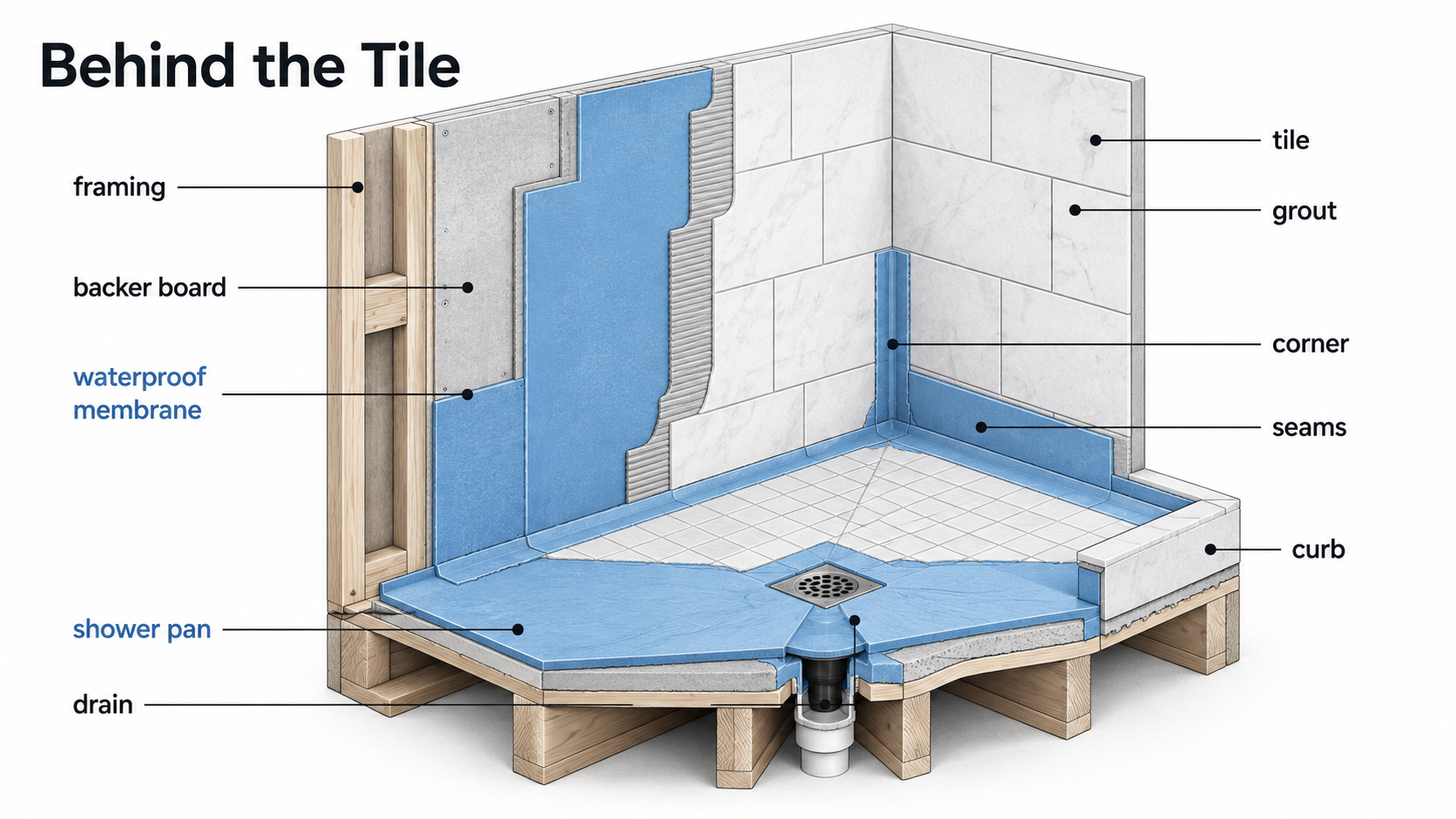
Ask the contractor to walk through the system in plain language. You are not trying to become a tile setter. You are checking whether they have a real method.
The answer should cover:
- wall board or backer material
- waterproof membrane or waterproof board system
- inside corners
- curb or tub edge
- shower pan or receptor
- drain connection
- valve and pipe penetrations
- niches, benches, shelves, and glass attachment points
- flood test or pan test when needed
The product can vary. The method cannot be vague.
The contractor should name the system, install it the same way every time, and put the key details in the written scope.
The One-Year Bathroom Test
Fresh bathroom photos do not prove much.
New tile looks clean. New glass shines. New grout looks sharp. That is not the test.
Ask about bathrooms finished at least one year ago. A used bathroom tells you more than a fresh photo ever will.
Older work shows whether the shower corners stayed clean, whether grout cracked, whether caulk failed, whether the fan kept up, whether the vanity base swelled, and whether the contractor answered warranty calls.
Ask for one older reference, not only the best new gallery image.
How to Read the Proposal Before You Sign
The number matters. The scope matters more.
Two bids can both say “bathroom remodel” and mean completely different jobs.
Look for these line items:
- Demolition and disposal: what comes out, how debris leaves, and whether dust protection is included.
- Protection: floor covering, dust barriers, daily cleanup, and access path through the house.
- Framing and substrate repair: what happens if the floor is soft, out of plane, water-damaged, or not ready for tile.
- Plumbing: drain work, supply lines, valve upgrades, shutoffs, toilet flange, tub or shower connection, and fixture installation.
- Electrical: GFCI protection, lighting, fan wiring, heated floor wiring, and whether an electrician is included.
- Ventilation: fan size, control, duct material, duct route, and outdoor termination.
- Waterproofing: exact system, areas covered, penetrations, curb, pan, tub edge, and test requirements.
- Tile prep: leveling, flatness correction, layout, trim, grout type, movement joints, and changes of plane.
- Allowances: tile, vanity, counter, faucet, toilet, shower trim, glass, lights, fan, hardware, and accessories.
- Change orders: written approval before extra work starts.
- Warranty: labor warranty, product warranties, and who handles warranty calls.
A cheap bid with missing work is not cheap. It is unfinished math.
Do not ask only, “Why are you cheaper?” Ask, “What is missing from this scope?”
The Missing-Scope Mirror
Here is a simple way to compare bids.
Make a list of the work that protects the bathroom: fan ducting, floor repair, waterproofing, plumbing updates, electrical, tile prep, glass, paint, permits, and cleanup.
Put each bid beside that list.
The cheapest bid often looks different once you mark what is missing.
| Scope item | Why it matters | What to ask |
|---|---|---|
| Fan ducting | A weak fan can damage new paint, trim, and cabinets. | Where does the fan vent? |
| Tile prep | Flat walls and floors make tile last and look right. | What prep is included before tile? |
| Waterproofing | This protects the wall and floor behind the finish. | What system are you using? |
| Floor repair | Toilets and tubs often hide soft subfloor damage. | How is hidden damage priced? |
| Allowances | Low allowances make the starting price look better. | What happens if my fixture costs more? |
This is not fancy. It works because it forces each contractor to show the same room on paper.
Red Flags Worth Walking Away From
- “You do not need permits.” Cosmetic work may not need one. Plumbing, electrical, ventilation, layout, and structural work often need local approval. Confirm with your local building department.
- No waterproofing method named. A bathroom contractor should not get vague here.
- Very low bid with thin scope. Missing waterproofing, fan ducting, floor repair, electrical, painting, or glass can make the cheap bid expensive later.
- Large cash deposit pressure. Payments should follow contract terms and visible progress, not fear or urgency.
- No written change-order process. Hidden damage is common in bathrooms. The process for pricing it should be clear before demolition starts.
- Only fresh portfolio photos. You want to know how the work looks after use, cleaning, steam, and seasonal movement.
- No daily site lead. Someone has to own the room when the plumber, electrician, tile setter, glass installer, and painter overlap.
Where Bathroom Budgets Blow Up
Bathroom budgets do not blow up because someone picked a nicer towel bar.
They blow up when hidden work was never priced.
- Rot at the toilet or tub edge: a soft subfloor can turn flooring work into carpentry and plumbing work.
- Old plumbing: corroded valves, weak shutoffs, old drains, and poor access add time quickly.
- Out-of-plane walls and floors: large tile, glass doors, curbless showers, and clean grout lines need flatter surfaces.
- Fan and duct problems: a noisy fan that does not exhaust outdoors can damage new finishes.
- Custom shower details: niches, benches, curbless entries, linear drains, slab pieces, miters, and oversized tile add labor.
- Permit corrections: electrical, plumbing, ventilation, and framing corrections can change the schedule.
A strong contractor talks about these early.
A weak contractor waits until demolition, then treats predictable problems like surprises.
Permits, Inspections, Dust, and Safety
Put permit responsibility in writing.
The contract should say who pulls permits, who schedules inspections, who meets the inspector, and who pays for corrections when work fails because it was not done properly.
Dust matters too. Bathroom demolition and tile cutting can involve old materials, cement board, mortar, grout, tile, plaster, drywall, and sometimes concrete.
The contractor should protect the path through the house, control dust, and use safer cutting and cleanup practices.
In older homes, ask whether lead paint, asbestos-containing materials, or old flooring adhesives need special handling before demolition.
This does not mean every bathroom becomes a hazmat project. It means the contractor should not treat dust as decoration.
Who Owns the Mistake?
This is the question most homeowners do not ask.
Ask it before signing.
Who owns a cracked tile? Who owns a leak at the shower valve? Who owns a failed inspection? Who owns a fan that vents into an attic? Who owns a vanity that does not fit because the plumbing was not checked?
The answer should not be a shrug.
A good contract explains warranty, corrections, change orders, exclusions, and who pays when the contractor’s own work causes the problem.
Hidden damage is different. A rotten subfloor found after demolition may be extra work. Bad waterproofing done during the remodel is not the same thing.
Separate hidden conditions from workmanship. That one distinction can save a lot of fighting later.
A Payment Schedule That Protects Both Sides
Exact payment rules vary by state, province, contractor, and scope.
The structure matters more than a perfect universal percentage.
A healthier schedule follows real milestones:
- deposit after a signed contract
- draw after demolition and site conditions are confirmed
- draw after rough plumbing, electrical, and framing corrections
- draw after required inspections
- draw after waterproofing and pan testing when included
- draw after tile and major fixture installation
- final payment after punch list, cleanup, manuals, warranty information, and lien waivers when applicable
Do not let the payment schedule get ahead of the work. That is when your leverage disappears.
Interview Questions That Separate Pros From Pretenders
- Walk me through your shower waterproofing system step by step.
- What will you check after demolition before closing the walls or floor?
- Who is on site each day?
- Who checks waterproofing and tile prep?
- How do you handle ventilation and fan ducting?
- Can I speak with someone whose bathroom you finished at least a year ago?
- What is excluded from this bid?
- What allowances could change the price?
- How are change orders approved?
- Who pulls permits and attends inspections?
- What does your labor warranty cover?
- What does your warranty not cover?
For a related screening approach on higher-risk repair work, read our guide to screening structural repair contractors. The trade is different, but the vetting logic is the same: scope, proof, paperwork, risk, and accountability.
What to Do Before You Hire
- Write down what must change and what can stay.
- Separate cosmetic wishes from moisture, plumbing, electrical, and ventilation needs.
- Choose two or three serious contractors, not eight random bidders.
- Compare scopes, not just totals.
- Verify license and insurance yourself.
- Ask for older bathroom references.
- Do not sign until exclusions, allowances, payment schedule, warranty, and change orders are clear.
The best bathroom contractor is not the one who makes the room sound easy.
It is the one who can explain where the job can go wrong and show how they prevent it.
FAQ
How many bathroom contractor bids should I get?
Two or three serious bids are enough for most homeowners. More bids can help when the first proposals are unclear, but too many can create noise. The goal is not to collect numbers. The goal is to compare scope, exclusions, process, and trust.
Do I need a permit for a bathroom remodel?
Maybe. Painting, a mirror swap, or simple finish work may not need one. Plumbing, electrical, ventilation, layout changes, shower rebuilding, structural work, or moving fixtures often can. Rules are local, so check with your city or county building department before work starts.
What is the biggest bathroom contractor red flag?
The biggest red flag is vague waterproofing. If the contractor cannot explain how the shower, tub surround, corners, curb, drain, and penetrations are waterproofed, do not let the pretty photos carry the decision.
Should I choose the cheapest bathroom remodeling bid?
Only when the scope is complete and comparable. A cheap bid that excludes fan work, waterproofing, tile prep, painting, glass, permits, electrical, or hidden repair is not really cheaper. It is incomplete.
What should be in a bathroom remodel contract?
The contract should identify the contractor, property, scope, materials, allowances, exclusions, permit responsibility, payment schedule, change-order process, warranty, start expectations, cleanup, and what happens if hidden damage is found.
How long does a standard bathroom remodel take?
A simple cosmetic update can be short. A full bathroom remodel with demolition, rough-in work, waterproofing, tile, inspections, glass, and punch-list work can take several weeks. Custom tile, special-order materials, permit timing, and hidden repairs can stretch the schedule.
Is a curbless shower worth it?
It can be, especially for accessibility and cleaner entry, but it is not a casual finish swap. It affects slope, waterproofing, drain location, floor height, glass, and sometimes framing. Ask the contractor to explain the full assembly before approving it.
Should the contractor supply fixtures or should I buy them?
Either can work, but responsibility must be clear. If you supply fixtures, confirm model numbers, delivery dates, compatibility, missing parts, warranty handling, and who pays for delays when something arrives wrong.
Read This Next
- 1990s Bathroom Remodel: What to Update First and What to Leave Alone
- Cape Cod Bathroom Remodel: Layout, Headroom, Plumbing, and Hidden Costs
- Structural Repair Contractors: How to Screen the Right Company
Sources used for this article
- Federal Trade Commission: How To Avoid a Home Improvement Scam
- USA.gov: Local Governments
- EPA: Remodeling Your Home and Indoor Air Quality
- EPA: A Brief Guide to Mold, Moisture and Your Home
- EPA WaterSense Products
- OSHA: Respirable Crystalline Silica in Construction
- Consumer Financial Protection Bureau