

Almost everyone who wants a wall gone is after the same thing: more light, one room instead of two, a kitchen that finally sees the rest of the house. The wall is just what is in the way.
So the picture in your head is demolition — a sledgehammer, a dumpster, a long weekend. And if the wall is load-bearing, the demolition really is the easy part. Often it is the cheapest part of the whole job.
The cost is in what replaces the wall. Something has to carry the load the wall was carrying: a beam, posts under that beam, solid bearing where the posts land, temporary support while the wall is out, the permit and inspection that come with structural work, and then the drywall, ceiling, flooring, lighting, and any wiring, plumbing, or ductwork that was living inside the wall.
That is why quick numbers deserve caution. You will see simple online ranges for removing a load-bearing wall, but those numbers usually describe the easiest version of the job. They are not the floor the new posts have to land on, the duct that has to find a new route, or the ceiling that has to be opened to hide the beam. A small opening in the right house can land near the low end of a simple planning range. A long flush-beam opening in the wrong house is a different project with a different budget — and the difference is almost never the wall itself. It is what the wall was holding up, and where that weight has to go once the wall is gone.
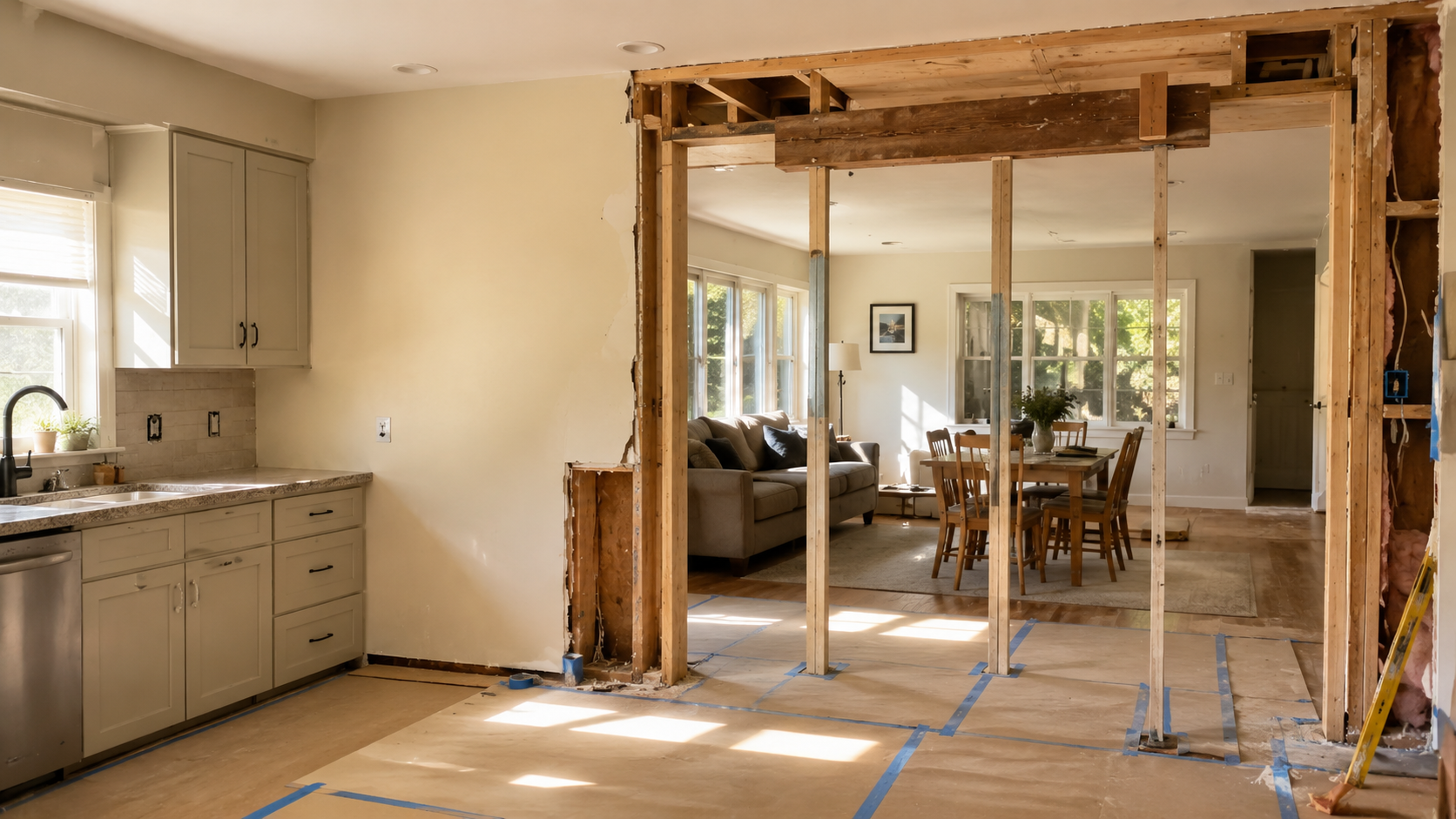
The Real Cost Is Not Just Removing the Wall
Pulling drywall off studs is cheap. Making the opening safe, inspected, and finished is where the money goes.
A load-bearing wall is one link in a load path. Roof weight, ceiling weight, floor weight, or some mix of the three is traveling down through that wall into framing, beams, posts, foundation walls, piers, or footings below. Take the wall out and that weight does not disappear. The path just has to be rebuilt somewhere else.
That is why two jobs that look identical from inside the kitchen can price nowhere near each other.
- One wall may only need a short exposed beam and some simple drywall repair.
- Another needs a longer beam, engineered posts, floor reinforcement underneath, electrical rerouting, ceiling repair, flooring patches, and an inspection.
- A third looks simple right up until someone finds a plumbing stack, a duct chase, patched-together old framing, or a beam with nowhere good to land.
The low number almost always belongs to the simplest structure. The high number belongs to whatever was hiding around the opening — and you do not find that out from the kitchen side.
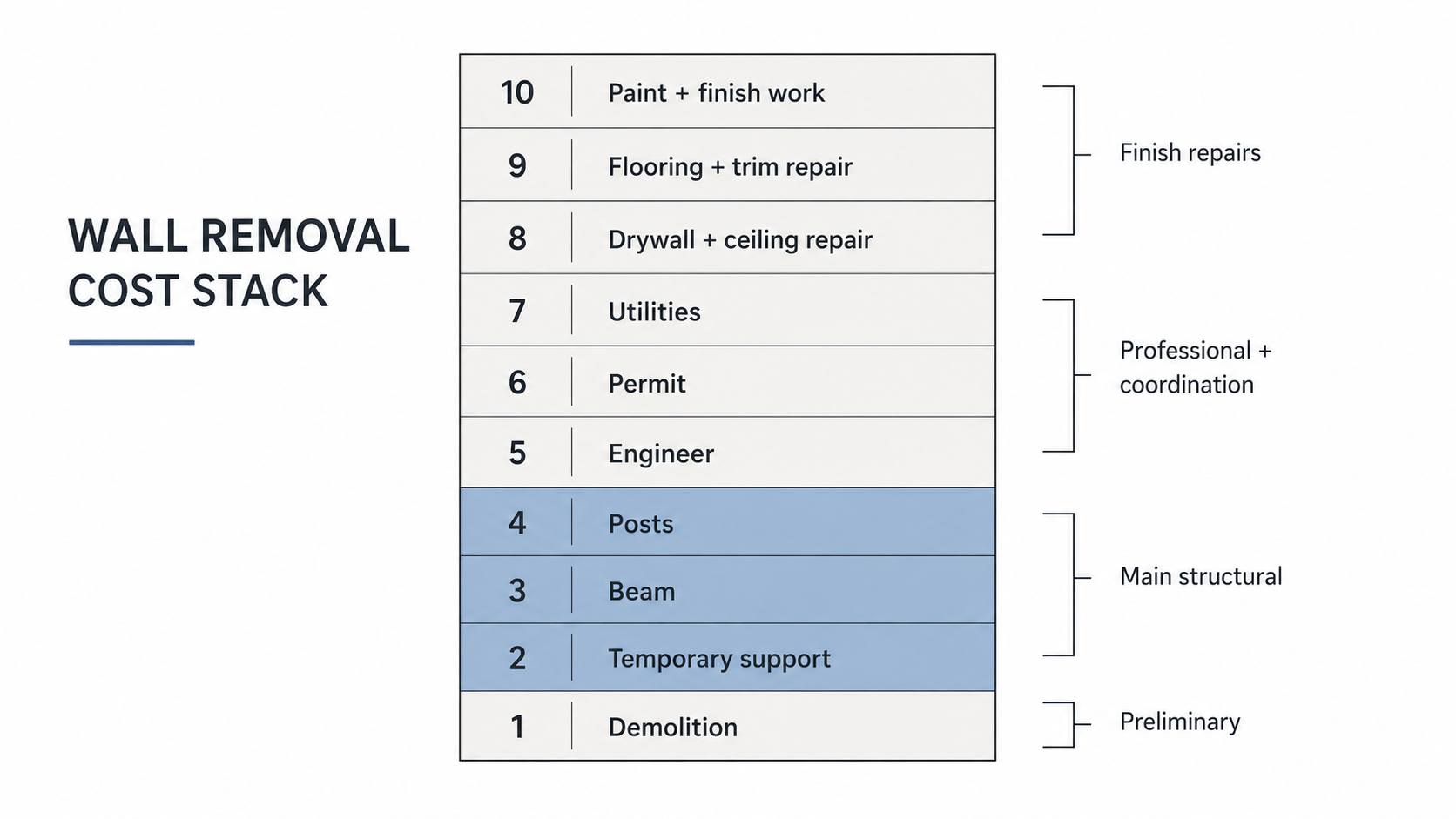
Typical Load-Bearing Wall Removal Cost Patterns
Use these as planning bands, not quotes. Your house, the span, the access, your region, the finish level, and the permit requirements can all move the number fast.
| Project Type | Typical Cost Pattern | Why It Changes |
|---|---|---|
| Small opening in a simple one-story wall | Usually the lowest structural-wall scenario | Shorter span, simpler beam, less finish repair, fewer surprises. |
| Wide kitchen/dining or kitchen/living opening | Often mid-range to high-range | Longer beam, more ceiling repair, flooring gaps, lighting changes, and possible utility rerouting. |
| Full wall removal with a flush beam | Often higher than an exposed-beam opening | The beam may need to be recessed into the ceiling, which can mean more framing, joist work, hangers, drywall, texture, and paint. |
| Long span, two-story load, masonry, or complex roof condition | Can move into serious renovation territory | Heavier loads, larger beams, engineered details, stronger bearing points, temporary support, and more inspection risk. |
| Wall with plumbing, ductwork, or major electrical | Cost depends on rerouting difficulty | The structural work may be only one part of the job. Mechanical and finish repairs can become the budget problem. |
If someone hands you a price before looking at what is above the wall, what is below it, and what runs through it, treat that price as a guess.
What Changes the Price Fast
Load-bearing wall removal gets expensive when it stops being a simple opening and turns into a full structural coordination job. A few things push it across that line.
Span Length
A short opening may be solved with a smaller beam and simple bearing at each end. A long opening usually needs a stronger beam, better end support, more temporary shoring while the wall is out, and more finish repair afterward.
Long spans are where people get surprised. The room feels better with no posts in the middle, but the beam now has to do all of that work by itself, and beams that carry more cost more.
One-Story vs. Two-Story Load
A single-story house can still have load-bearing interior walls, because the roof load has to land somewhere. But a wall carrying a second floor is usually a bigger structural question than a wall carrying only ceiling and roof load.
If your house is single-story, start with the one-story load-path checks before you assume the wall is safe to take out: how to tell if a wall is load-bearing in a single-story house.
Roof Trusses, Vaulted Ceilings, and Special Roof Loads
Roof trusses can make an interior wall look unimportant, but that is not always safe. Some truss systems carry girder trusses, concentrated bearing points, or special supports. Vaulted and cathedral ceilings change how the load moves through the house too.
The simple rule people repeat — “the joists run parallel, so the wall is fine” — is not enough when the roof above is doing something out of the ordinary.
Utilities Inside the Wall
Electrical wiring in the wall is normal and usually manageable. Plumbing, gas lines, HVAC ducts, return air, and old chases are the ones that move the budget.
A wall can be structurally simple and still expensive, just because it happens to be carrying half the house’s services.
Exposed Beam vs. Flush Beam Cost
This is one of the biggest budget decisions in the whole project, and it is easy to treat it as a look when it is really a structural choice.
An exposed beam sits below the ceiling plane. It can still look clean — wrapped, painted, stained, or built into a cased opening — and it usually disturbs less ceiling framing, which keeps the cost down.
A flush beam is recessed up into the ceiling so the ceiling stays flat. It often looks cleaner, and it usually costs more, because the work moves up into the framing: cutting or modifying joists, adding hangers, opening more ceiling drywall, matching texture, and repainting a bigger area.
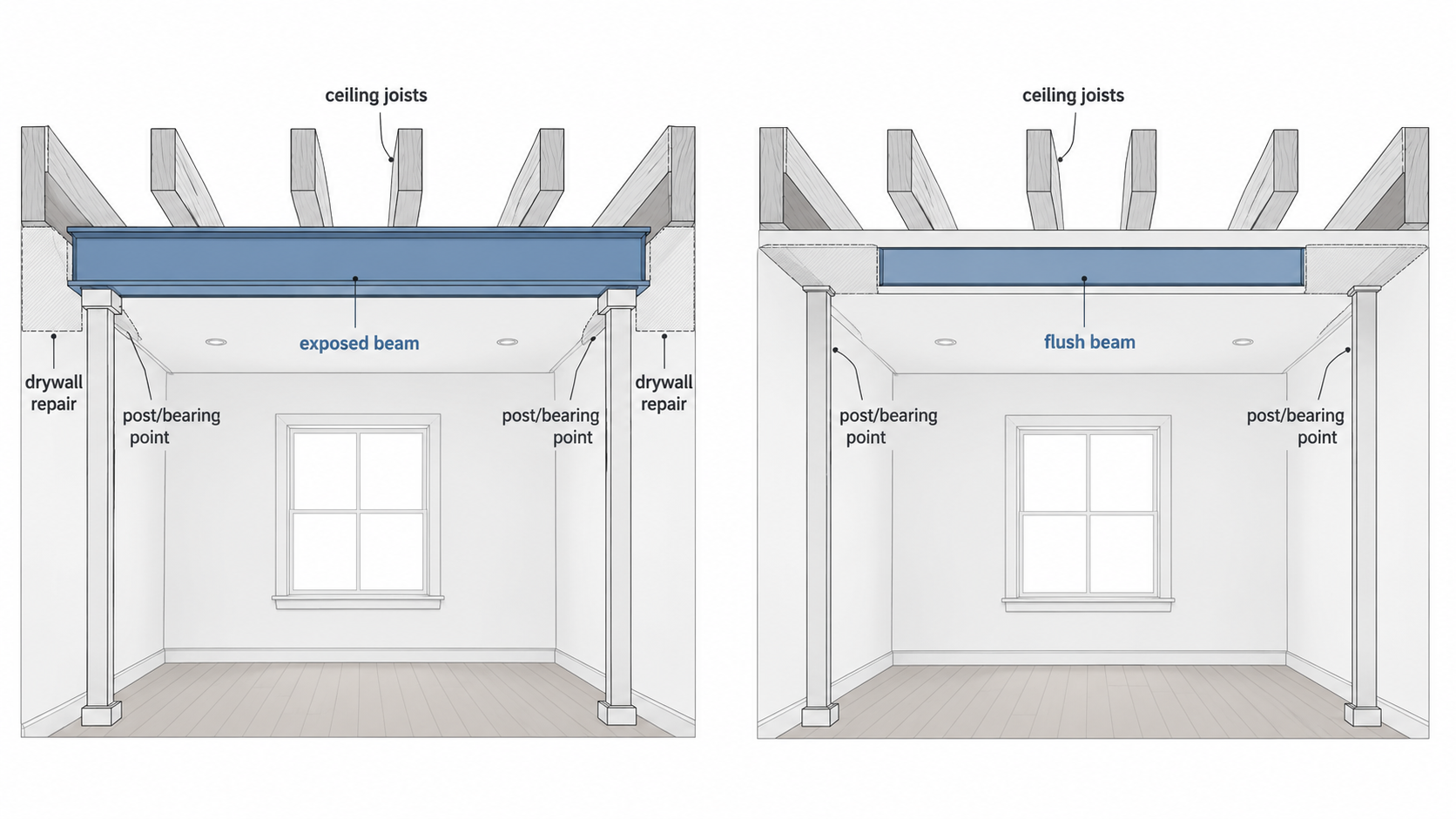
The cheaper option is not the worse one. In a lot of older houses, an exposed beam is the honest, cleaner, less destructive choice. The mistake is treating a flush beam as a finish preference, when it can be a different structural and drywall job with a different price.
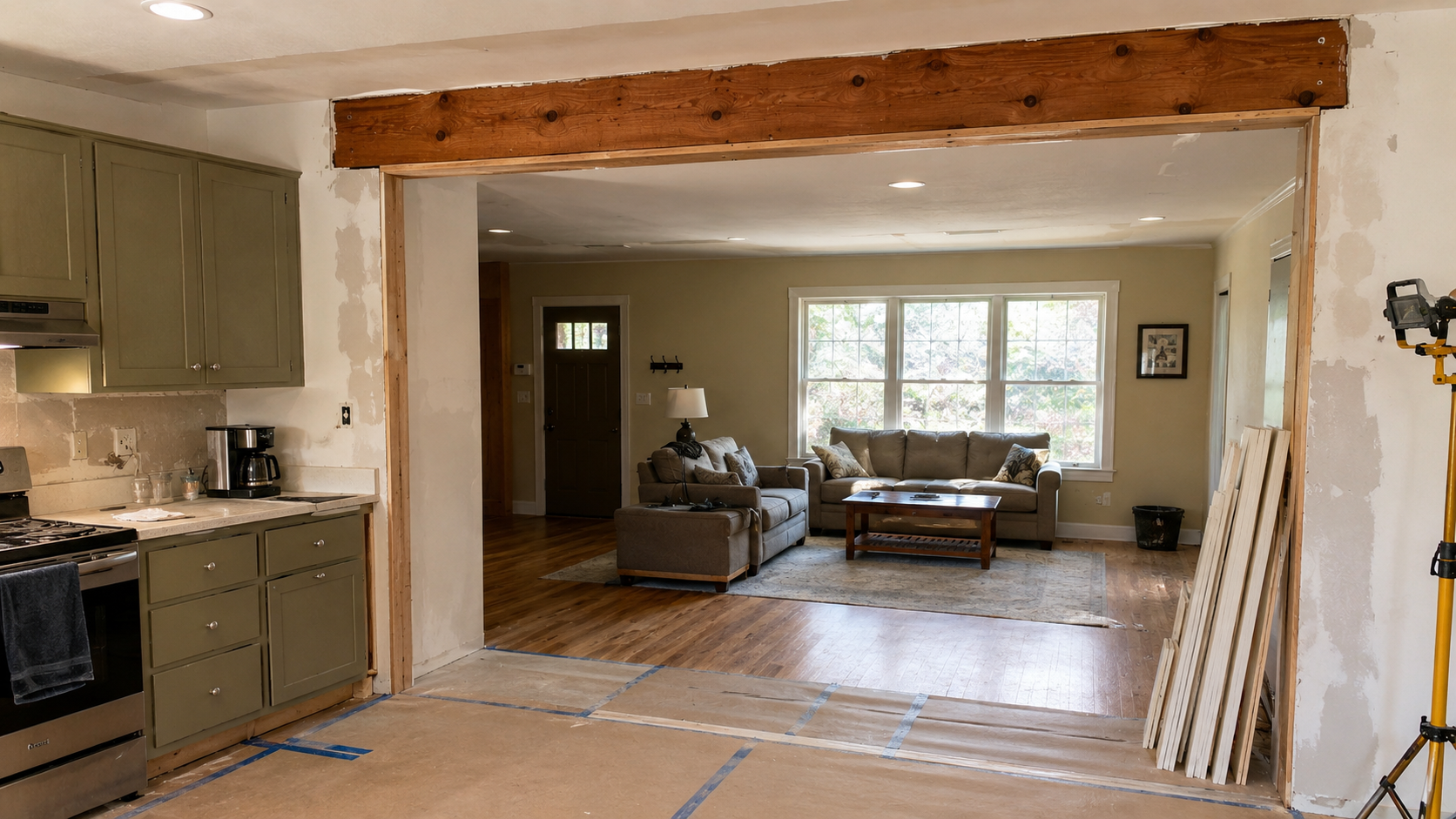
Posts, Bearing Points, and Why “No Post” Costs More
Homeowners ask for “no post” because they want a clean, open room, and that is fair. But a post is not just something interrupting the view. It is the bottom of the load path.
When the wall comes out, the beam is only half the answer. The load it collects still has to travel down through posts and land on framing or foundation support below that can actually carry it.
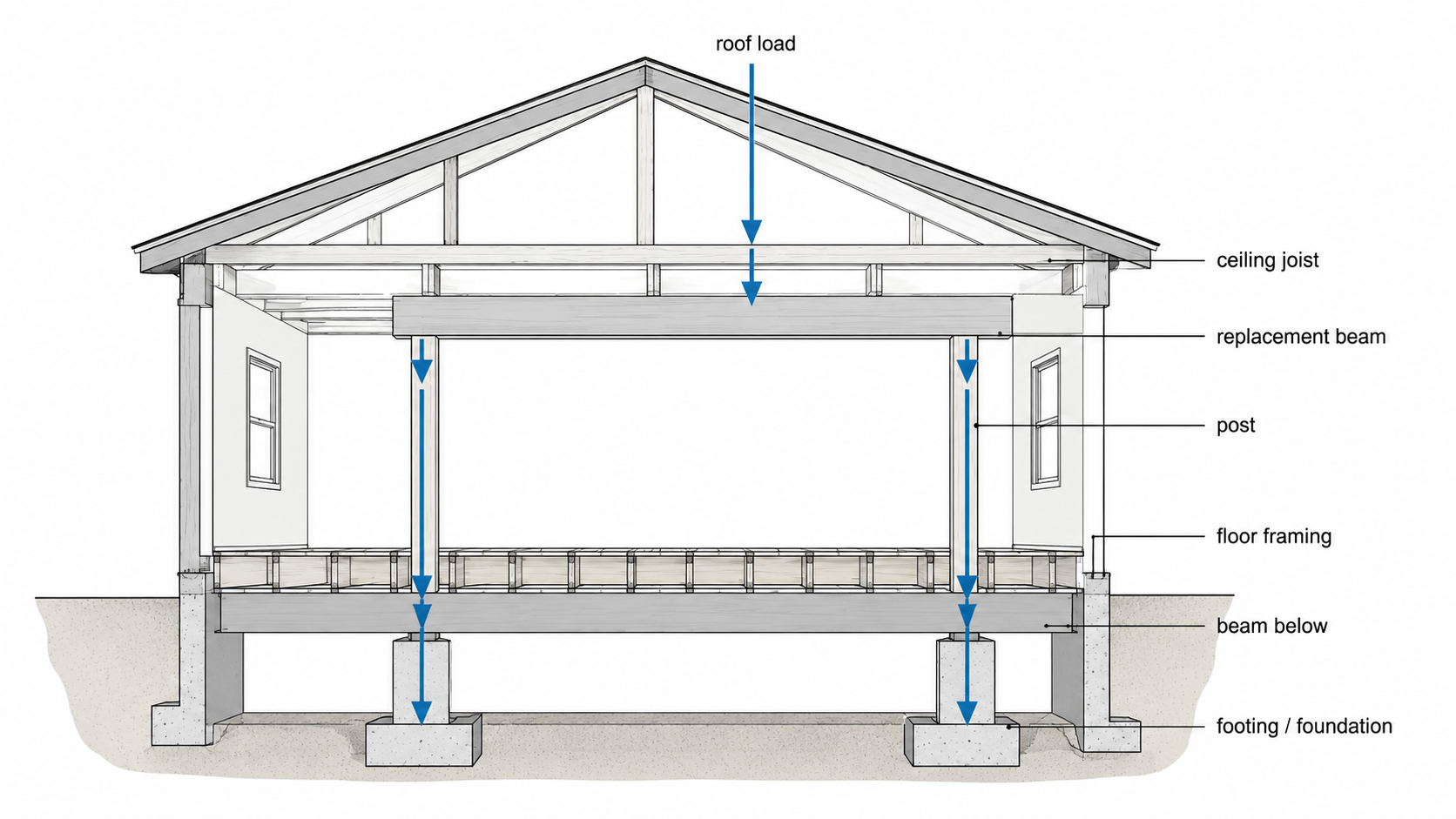
If a post lands over a basement beam, a foundation wall, a pier, or properly supported floor framing, the solution can be straightforward. If it lands in the middle of an unsupported floor span, the project grows downward, into the floor and sometimes the foundation.
This is where the price jumps in a way nobody expects. The opening upstairs looks clean and simple. The real problem is under the floor, out of sight.
Engineer, Permit, and Inspection Costs
Most load-bearing projects need more than a contractor’s opinion. Depending on the job, that can mean a structural engineer, permit drawings, beam sizing, an inspection, and sign-off from the local building department.
What exactly is required depends on your location, the house, and the scope. But the working rule is simple: if the wall is structural, assume someone qualified has to verify how the load gets carried after it is gone.
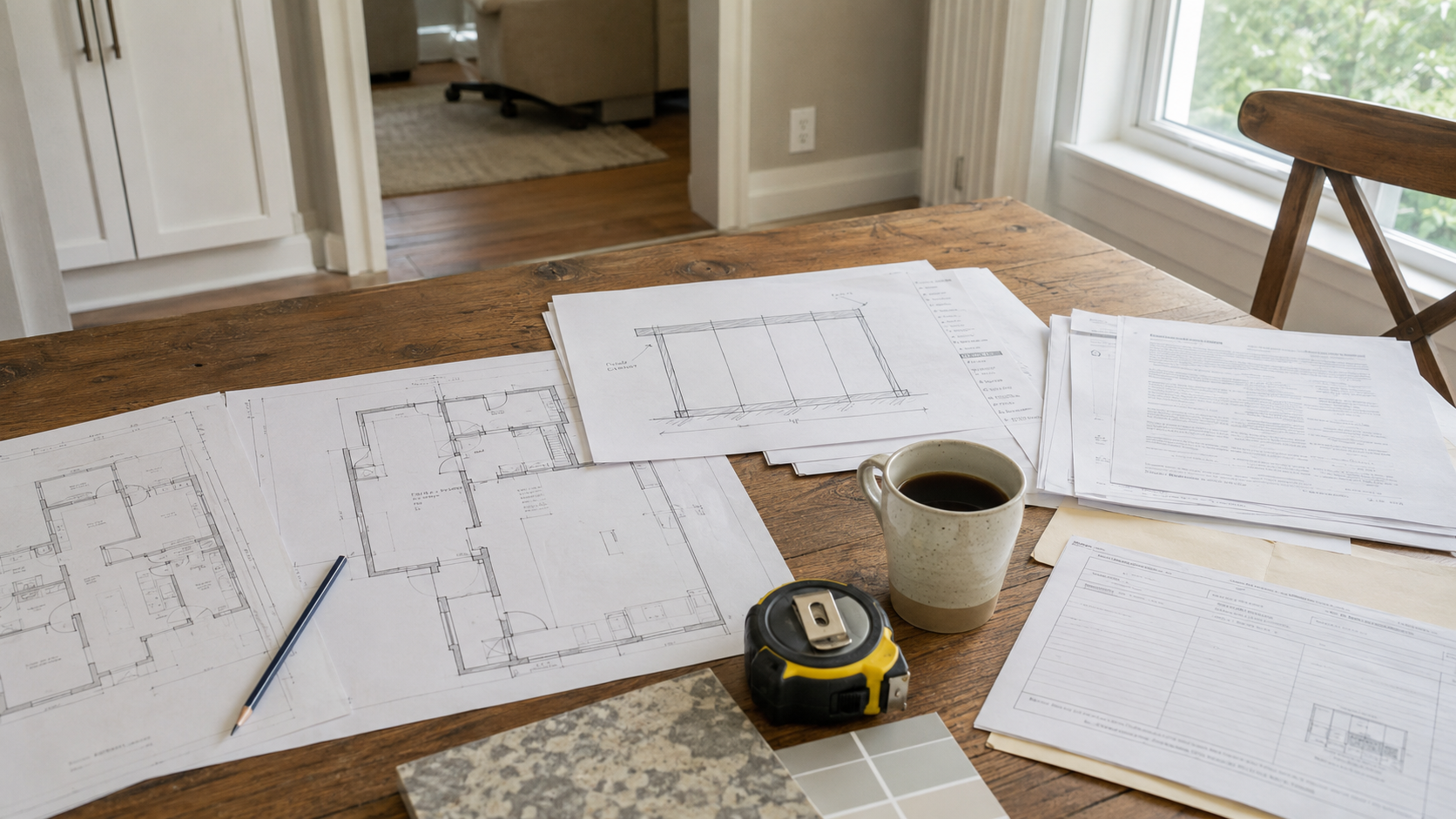
That money is not wasted. It buys the one thing that prevents the most expensive mistake there is — pulling the support first and trying to solve the structure after the house has already started to move. At a minimum, the professional side of the job should answer:
- What is the wall carrying?
- What beam or header is required?
- Are posts needed?
- Where do the posts land?
- Is the floor or foundation below adequate?
- Is temporary support required during demolition?
- Does the work need inspection before close-up?
Kitchen and Dining Room Wall Removal Cost
Kitchen and dining walls are the popular ones to remove, because they promise more light, better flow, and a more current room. They also stack on extra cost the structure does not.
In a kitchen, the wall touches cabinets, switches, outlets, lighting, flooring, ceiling texture, baseboards, air returns, and the island layout. The structural work might be done in a few days. The room will not feel done until every one of those edges is solved.
The most expensive kitchen wall removals are usually the ones where someone wanted the opening to look like the wall was never there at all. That means:
- no beam showing,
- no post interrupting the island,
- no flooring patch line,
- no ceiling texture mismatch,
- no awkward lighting left over from the old room layout.
That clean result is possible in plenty of houses. It is just rarely the cheapest version of the job.
Before you open a kitchen, read the common layout traps in open-concept kitchen mistakes. Taking the wall down only helps if the new room actually works better than the two old ones did.
Ranch House Wall Removal Cost
Ranch houses are tempting because they are usually single-story, so people assume the interior walls come out easily. Sometimes they do. Sometimes they do not.
A ranch often uses an interior bearing line to break up the roof or ceiling span. A wall near the middle of the house can be doing more than it looks, especially under older stick-framed roofs, long roof spans, or attic framing where the ceiling joists lap over that wall line.
So the real question in a ranch is not “is it one story?” It is:
- What is above the wall?
- What is below the wall?
- Does the wall line up with a beam, a post line, crawlspace support, a basement beam, or a foundation wall?
- Is the roof framed with trusses or stick framing?
- Are you removing the wall completely, or just opening it up?
For the ranch-specific layout side, tie this to open floor plans in ranch houses. The best ranch remodels usually use a few selective openings, not wall removal everywhere.
Hidden Costs People Miss
A wall can come out perfectly and still leave a mess behind it. These are the repairs that do not sound structural, so they are easy to leave out of the budget — and they still cost money.
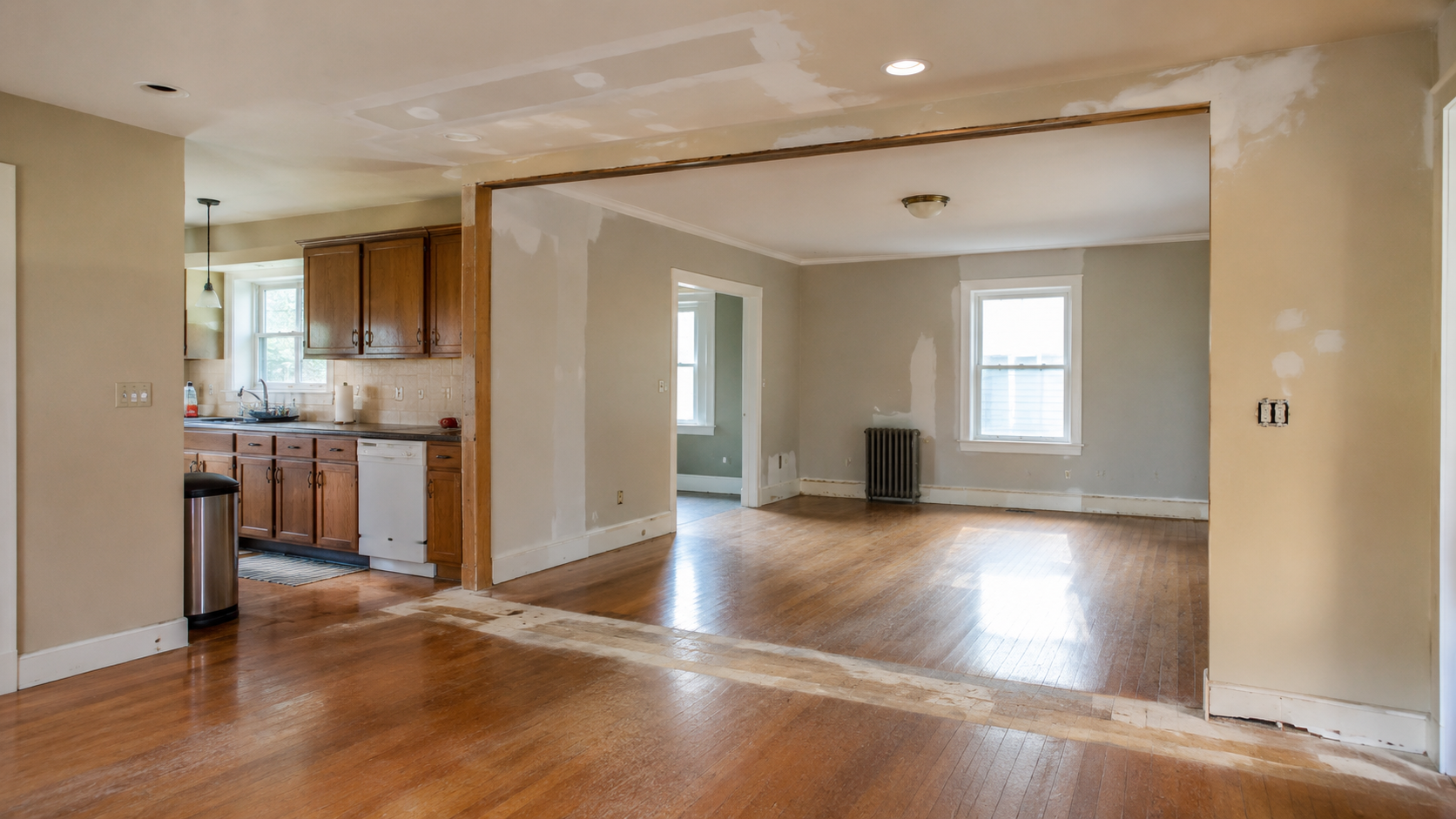
Flooring Patch Lines
When the wall comes out, the floor underneath it shows up as a strip of missing, mismatched, or unfinished flooring. Matching old hardwood, tile, vinyl, or laminate is often harder and pricier than people expect.
Ceiling Texture and Paint
A flush beam or a wide opening can disturb a big patch of ceiling, and matching old texture is tricky. Sometimes the realistic fix is refinishing or repainting more ceiling than you planned to touch.
Electrical and Lighting
Switches, outlets, old junctions, and lighting circuits may need rerouting. And once the wall is gone, the old lighting plan often feels wrong on its own, because the two rooms now read as one.
HVAC and Plumbing
Ducts, returns, plumbing vents, drains, and supply lines hide in walls that look ordinary from the room. Rerouting them is what moves the budget quickly.
Old-House Surprises
Older houses come with patched framing, plaster, obsolete wiring, leftover work from past remodels, and materials that need extra caution. The older the house, the less a clean-looking wall surface tells you.
When a Simple Wall Removal Becomes a Structural Project
Some conditions should slow the job down before anyone swings a hammer:
- The wall supports a second floor.
- The opening is long and you want no post.
- The ceiling is vaulted or cathedral-style.
- The roof has girder trusses or unusual framing.
- There are cracks, sagging, floor bounce, or doors already rubbing.
- The wall lines up with a basement beam, a crawlspace post line, or foundation support.
- The wall contains plumbing, gas, HVAC, or major electrical.
- There is no attic, basement, crawlspace, or plan access to confirm the load path.
None of these is an automatic deal-breaker. They are just reasons to stop guessing.
If you are still in the identification stage, start with load-bearing vs. non-load-bearing walls, then check the attic workflow in how to tell if a wall is load-bearing from the attic.
Cost Checklist Before You Call a Contractor
You do not need to know the beam size before the first visit. You do need to know what has to be checked, so you can ask better questions:
- Is the wall confirmed load-bearing, or only suspected?
- What is above the wall: roof, attic framing, another floor, or trusses?
- What is below the wall: slab, crawlspace, basement beam, post line, or foundation?
- Do you want a full removal, a wide opening, a pass-through, or a partial opening?
- Are you willing to keep an exposed beam?
- Are posts acceptable, or are you trying to avoid them?
- Are there switches, outlets, plumbing, ducts, or returns in the wall?
- Will the flooring need patching or replacement?
- Will the ceiling texture match after repair?
- Will the project need an engineer, a permit, or an inspection?
A contractor who slows down to work through these is usually worth more to you than one who fires back a low number on the spot.
The Cheap Version vs. the Right Version
The cheapest version of wall removal accepts something visible: an exposed beam, a post, a partial opening, a flooring transition, a cased opening. The cleanest version costs more because it tries to hide the structure and erase the wall completely.
Neither is wrong. The mistake is pricing the clean version while quietly planning for the cheap one. Before the wall comes out, decide what actually matters most to you:
- lowest cost,
- cleanest ceiling,
- no visible posts,
- fastest construction,
- least damage to flooring and ceiling,
- safest permit and inspection path.
A real wall-removal budget is not a demolition number. It is a structure, finish, and risk number.
Bottom Line
Removing a load-bearing wall can absolutely be worth it when it truly improves light, flow, and layout. But the cost is rarely the wall.
Price the beam. Price the posts. Price the engineer and the permit. Price the drywall, ceiling, floor, trim, paint, lighting, and the utilities hiding inside. Then look at the whole number and decide whether full removal is still the best move — or whether a wider opening, an exposed beam, a partial wall, or just a better lighting plan gets you most of the benefit with a lot less structural risk.
FAQ
Why does load-bearing wall removal cost so much?
The wall is not the expensive part by itself. The cost comes from replacing the load path with a beam, posts, bearing points, temporary support, permits, inspections, and finish repairs.
Is an exposed beam cheaper than a flush beam?
Often, yes. An exposed beam usually disturbs less ceiling framing. A flush beam can cost more because it may require joist modification, hangers, larger ceiling repair, texture matching, and repainting.
Can I remove a load-bearing wall without an engineer?
Do not guess. Some projects can be handled through a qualified contractor and the local permit process, but many structural wall removals need an engineer, beam sizing, drawings, or inspection. Requirements depend on your jurisdiction and scope.
Why do posts matter when removing a wall?
The beam carries the load, but the posts have to deliver that load to something below that can carry it. If a post lands on weak or unsupported framing, the project gets bigger.
Is removing a wall in a ranch house easier?
Sometimes, but not always. A ranch can still have interior bearing walls that carry roof or ceiling loads. The roof framing, attic layout, span, and the support below the wall matter more than the fact that the house is one story.
What hidden costs should I expect?
Common ones include electrical rerouting, duct or plumbing changes, flooring gaps, ceiling texture repair, drywall patches, trim work, paint, and support work below the new posts.
Read This Next
- How to Tell if a Wall Is Load-Bearing in a Single-Story House
- Load-Bearing vs. Non-Load-Bearing Walls
- How to Tell if a Wall Is Load-Bearing from the Attic
- How to Tell if a Wall Is Load-Bearing Without Removing Drywall
- How to Tell if a Wall Is Load-Bearing in a Two-Story House
- King Studs and Jack Studs
- Open Floor Plan Ranch House
- Open-Concept Kitchen Mistakes