
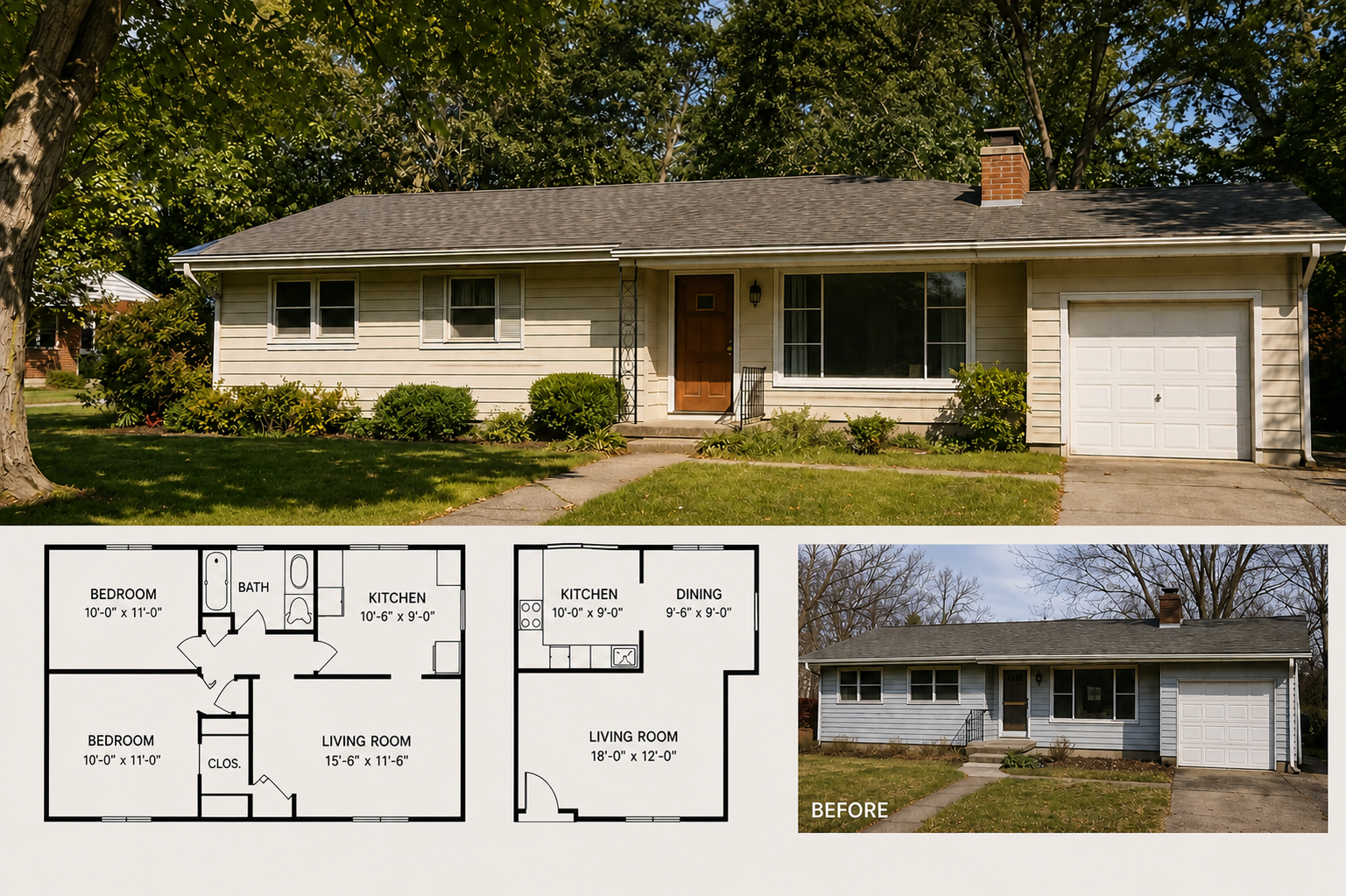
1950s ranch houses were built fast, simple, and cheap.
That sounds like a problem. It is also why many of them are worth remodeling.
The good ones still have three things going for them: a clear one-story plan, a low quiet roofline, and a strong link to the yard. If you keep those parts working, a ranch can feel far better than a bigger house with a messier plan.
If you want the broader style background first, read 1950s house styles. If your house still has strong midcentury character inside, inside 1950s midcentury homes is a useful side read too.
What to Keep Before You Start Demo
A lot of bad ranch remodels start with the wrong target.
The problem is not that the house is too plain. The problem is that the weak parts were never fixed properly. Dark middle rooms. Tight kitchens. Bad storage. Weak lighting. Awkward entries. Those are the issues.
What is often worth keeping:
- the low horizontal shape
- the simple roof
- good brick or wood siding
- old hardwood that can still be saved
- the basic living-room-to-yard relationship
If the house has brick, do not start patching mortar blindly. Wrong repointing can do damage. Check how to tell if your brick mortar is failing before you touch it.
Also do not skip hazard checks. Many 1950s houses still hide old materials and outdated systems. This is the right moment to check asbestos in 1950s houses before the work gets bigger.
The One Move That Helps Most Ranch Houses
If you only make one big design move, improve the connection between the kitchen, the main living space, and the yard.
That one change fixes more than most people expect. It improves light. It improves movement. It makes the house feel wider. It also makes a small ranch feel less cut up without turning it into a blank open box.
That does not mean remove every wall. It means open the right wall, keep enough structure and storage, and make the plan read better.
Kitchen Fixes That Help Without Killing the House
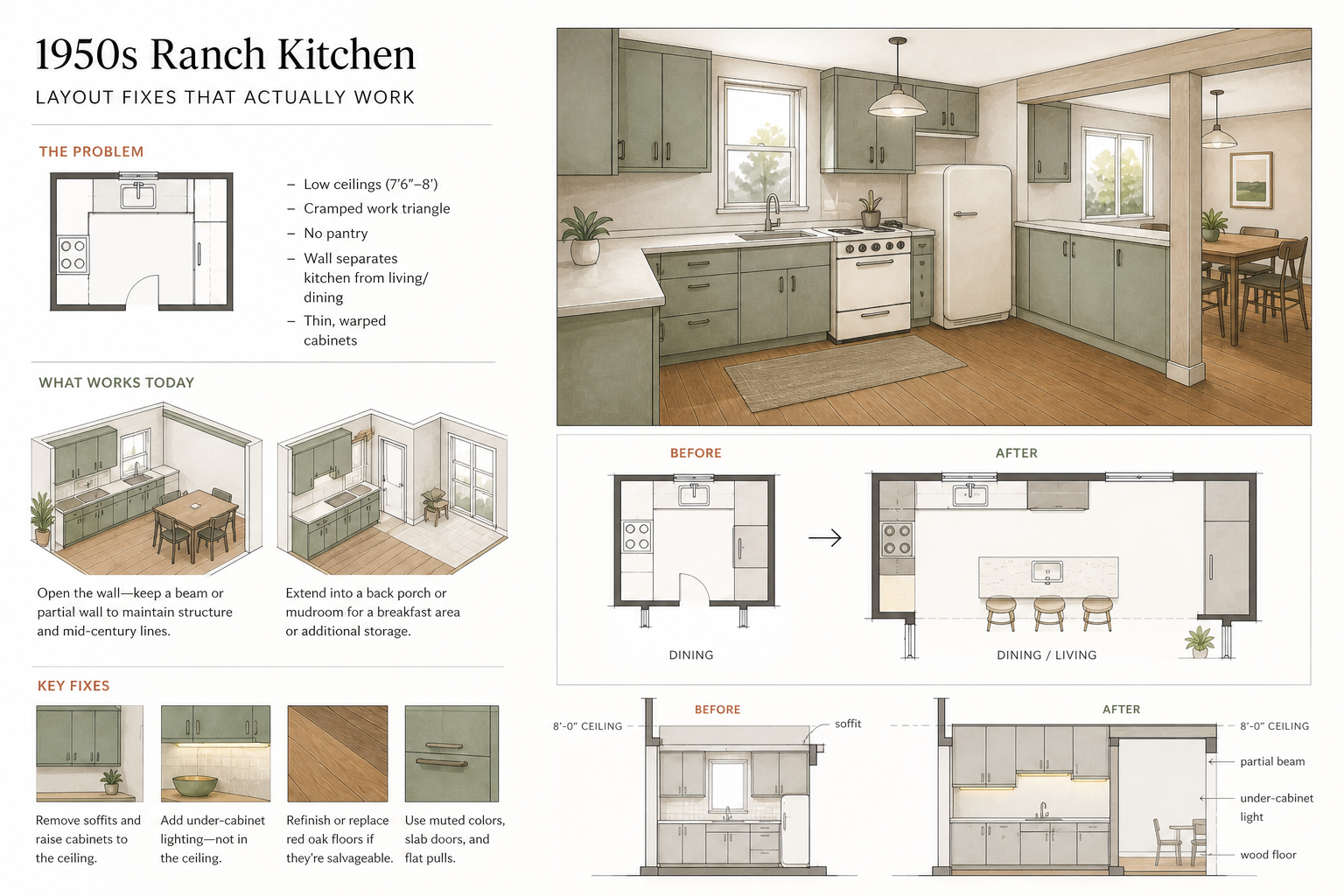
Many 1950s ranch kitchens are small, boxed in, and cut off from the rest of the house.
The wrong fix is to gut everything and drop in a cold glossy showroom kitchen that could be in any flip.
The better fix is to improve the layout first.
Open the wall that matters
Open the kitchen toward dining or living where it improves movement and light. Keep a beam or partial wall where it helps the span, the storage, or the room edge.
Use the outside wall better
Many ranch kitchens sit against an exterior wall. That gives you a chance to add a better window, a door to the yard, or a cleaner sink run with more daylight.
Raise the cabinets, not the drama
Removing soffits and running cabinets higher often helps more than adding trendy finishes. Storage goes up. The room gets cleaner. The kitchen feels less chopped up.
Stay warm with materials
Flat-front wood cabinets, quiet hardware, and simple counters fit a 1950s ranch better than shiny gray slabs and heavy veining trying too hard to look expensive.
If your kitchen is turning into a larger remodel question, how much it costs to renovate a 1950s midcentury kitchen is a more relevant next read than a generic kitchen trends page.
Living Room Fixes That Add More Than Paint
The living room in a 1950s ranch often has decent width but weak focus. One big front window. A fireplace that takes over the wall. Not enough good lighting. Poor connection to dining or kitchen.
Do not waste the budget on surface fixes first.
Fix the opening before the finishes
If the living room dies at a wall between it and the dining room, opening that connection often changes the whole house faster than a new sofa, paint color, or feature wall.
Calm the fireplace down
A bulky brick fireplace does not need to disappear, but it may need to be simplified. A better mantel, cleaner hearth, and better built-ins can make it feel intentional again.
Light it in layers
Many ranch living rooms still depend on one switched outlet and a ceiling fixture that does almost nothing. Use lamps, wall lighting, and a few well-placed fixtures instead of turning the ceiling into a grid of cans.
Bathroom Updates That Do Not Feel Like a Flip
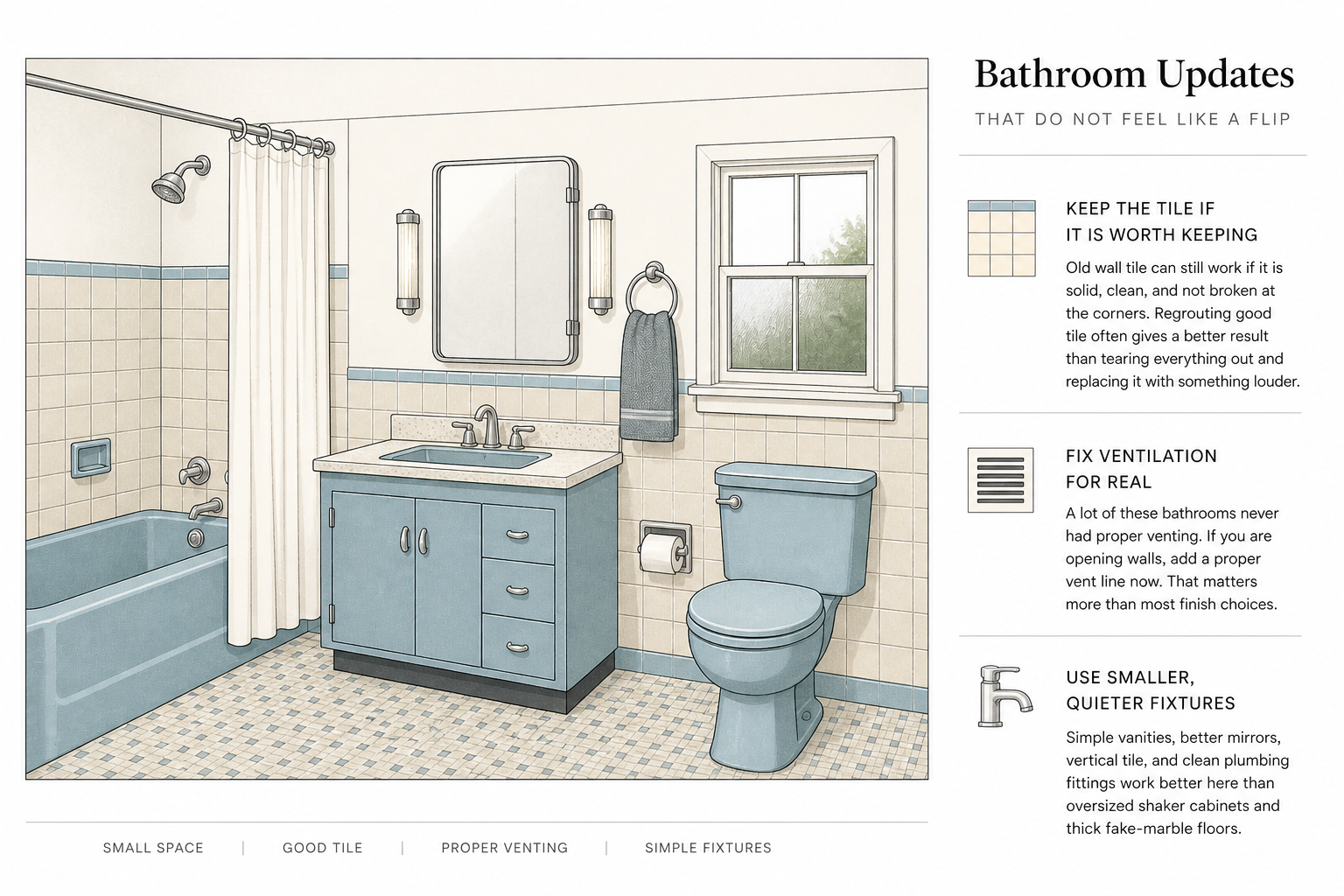
Most 1950s ranch bathrooms are small. That part is not new.
The mistake is treating them like luxury hotel projects. That rarely fits the house.
Keep the tile if it is worth keeping
Old wall tile can still work if it is solid, clean, and not broken at the corners. Regrouting good tile often gives a better result than tearing everything out and replacing it with something louder.
Fix ventilation for real
A lot of these bathrooms never had proper venting. If you are opening walls, add a proper vent line now. That matters more than most finish choices.
Use smaller, quieter fixtures
Simple vanities, better mirrors, vertical tile, and clean plumbing fittings work better here than oversized shaker cabinets and thick fake-marble floors.
If the bathroom is becoming its own job, link out naturally to 1950s bathroom remodel.
Adding a Second Bathroom Without Ruining the Plan
One bathroom is one of the weakest parts of many 1950s ranch houses.
But adding a second one does not always mean an expensive addition.
The smarter moves are often smaller:
- take part of the primary bedroom and a hall closet
- use the back corner of a mudroom or laundry zone
- split one oversized bath into two tighter ones if the layout allows it
The goal is not just “fit another bath.” The goal is to add one without breaking the bedroom count or turning the hall into dead space.
Opening a Wall Without Creating a Bigger Problem
This is where remodels get expensive fast.
Many 1950s ranch houses have load-bearing walls in the middle of the plan. Some support roof framing. Some carry ceiling joists. Some line up with supports below.
So yes, you can open a wall. But not by guessing.
Check the structure first
Look at attic framing, crawlspace or basement supports, and where the loads go. If the wall is carrying roof or ceiling load, the opening needs a real beam and real support below.
Do not stop at the beam
The new load has to land somewhere. Posts, footings, and support below matter as much as the header itself.
This is one of the strongest internal handoffs on the site, so use it: load-bearing vs non-load-bearing walls.
Garage and Carport Conversions: Worth It Only If They Feel Attached
Old attached garages and carports are tempting because they look like easy square footage.
They are not easy.
The biggest problem is not drywall. It is that these spaces were not built like living space. Slabs may be thin. Walls may be uninsulated. Roofs may be weak. Drainage may slope the wrong way.
Garage conversion
A garage conversion works when the new room feels like part of the house, not like a patched-on box. That means fixing the floor, insulation, HVAC, and exterior wall where the garage door used to be.
Carport conversion
A carport is harder than many people think. The slab, roof, and framing often need more correction before the space can work well.
If you convert either one, tie the room back into the house plan properly. The worst result is new square footage that still feels separate from the rest of the home.
Slab, Basement, and Flat Roof Trouble Spots
These houses are simple, but they are not all built the same.
Slab-on-grade houses
Slab moisture ruins more remodels than people expect. Flooring, insulation, and finish choices need to match the slab condition. Do not guess. Test first.
Basement houses
If your ranch has a basement, the smartest upgrade is often not “finish the basement.” It is “fix the water and air issues first, then finish only what can stay dry.” For that, use basement groundwater leaks as a support page.
Low-slope and flat-roof houses
Some 1950s ranches, especially west-coast versions, look clean because the roof is so low. That can work well, but only if drainage and insulation are handled properly. Patch jobs and layered roof coatings tend to turn into bigger problems later.
Exterior Changes That Still Look Right
A ranch does not need many tricks outside.
It needs a few good decisions.
- keep the roofline low and calm
- respect the long horizontal lines
- improve the entry without making it theatrical
- use simple materials that age well
- make the yard side matter as much as the street side
That is where home exterior design fits better than random curb-appeal advice.
If the remodel needs more space, use a rear or side addition that lets the original front still read as one house. For that path, link to modern addition to a ranch house.
What to Skip
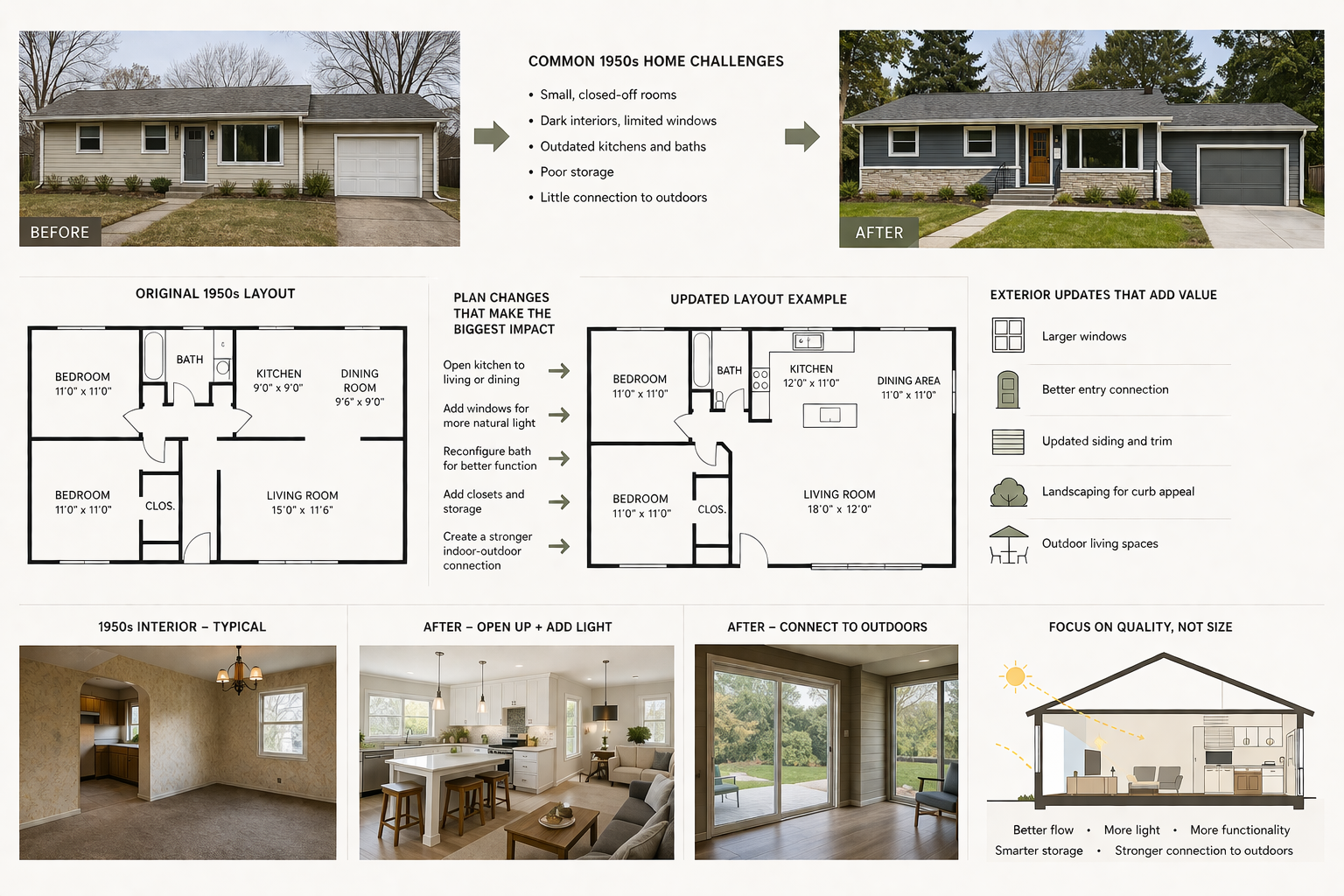
Illustration by ArchitectureCourses.org. Most 1950s remodels come down to a few plan moves: open the right wall, improve light, and connect living space to the yard.
This is where a lot of ranch remodels go bad.
- fake stone fronts that cover decent original materials
- raised roof drama that fights the low shape
- farmhouse garage doors on a midcentury house
- cold showroom kitchens with no relation to the house
- oversized trim and decorative shutters doing nothing
- surface upgrades before layout, moisture, and storage are fixed
If the remodel spends more energy trying to make the house look expensive than trying to make it work better, it is heading the wrong way.
What’s Next
If this house is still in the planning stage, go deeper in the places that matter most:
- 1950s house styles for the broader type and context
- 1950s bathroom remodel if the bath is one of the main problem areas
- modern addition to a ranch house if you need more space without wrecking the front
- asbestos in 1950s houses before demo gets bigger
- load-bearing vs non-load-bearing walls before opening the middle of the plan
The best 1950s ranch remodels do not try to turn the house into something louder. They fix the weak parts, keep the good parts, and make the whole thing easier to live in.