
Most rooms don’t fail because you picked the “wrong color.” They fail because the sofa pills in month 3, the rug won’t stop shedding, the dining chairs stain if you look at them, and the curtains hang weird.
This is a practical guide. The stuff that shows up after the honeymoon.
What This Covers
- How to pick fabrics that survive pets, kids, and real living
- The common “looks good, lives bad” traps (bouclé, velvet, linen, cheap polyester)
- Rugs: shedding, staining, slipping, and what fixes it
- Window fabrics: glare, privacy, heat, and why panels look awkward
- Cleaning reality: what people ruin by accident
The Big Misunderstanding
“Textile choice” isn’t a styling step at the end.
It’s performance. It decides comfort, maintenance, and how fast your place looks tired.
Start With Real Use
Pick one room and get honest about it.
High-Touch Areas
Couch arms. Seat cushions. Dining chairs. The rug path from the door to the kitchen. That’s where fabric lies get exposed.
Dirty Inputs
Shoes. Dog paws. Kids snacks. Sunlight. If you don’t name the inputs, you’ll buy a “pretty” fabric that can’t handle them.
Fabric Picks That Hold Up
This is where people get stuck: “natural” sounds better, but “better” depends on what you’re doing to it every day.
Performance Fabrics
If you have pets or kids, performance fabric isn’t a trend. It’s a maintenance strategy.
- Why people like it: stains wipe off, less panic, less “special care.”
- Where it goes wrong: some pills, some feels plasticky, some traps odor if you never clean it.
Leather And Faux Leather
Leather can be a workhorse, but it’s not magic.
- Leather: wipes clean, ages well if it’s decent quality. Scratches happen. They’re part of the deal.
- PU faux leather: looks great at first, then starts peeling or cracking on high-wear edges. The failure timing is often 2–5 years, sometimes faster in sun.
Linen And Linen Blends
Linen looks relaxed because it is relaxed. It wrinkles. It creases. That’s the aesthetic.
- Good for: low-stress living rooms, slipcovers you can wash, curtains.
- Bad for: “I need it to look crisp forever” people, or seats that get daily friction.
Velvet And “Soft Luxury”
Velvet reads expensive. It also shows life. Some velvets crush, mark, and shift color with the nap. That’s normal.
- Best use: lower-traffic chairs, headboards, or a sofa if you accept visible wear patterns.
- Pets note: claws can snag certain weaves. Some pet owners love velvet because hair brushes off. Others hate it because snags show.
If you want more on how texture reads (and why some rooms feel “busy” fast), see texture and pattern basics.
The Stuff People Regret
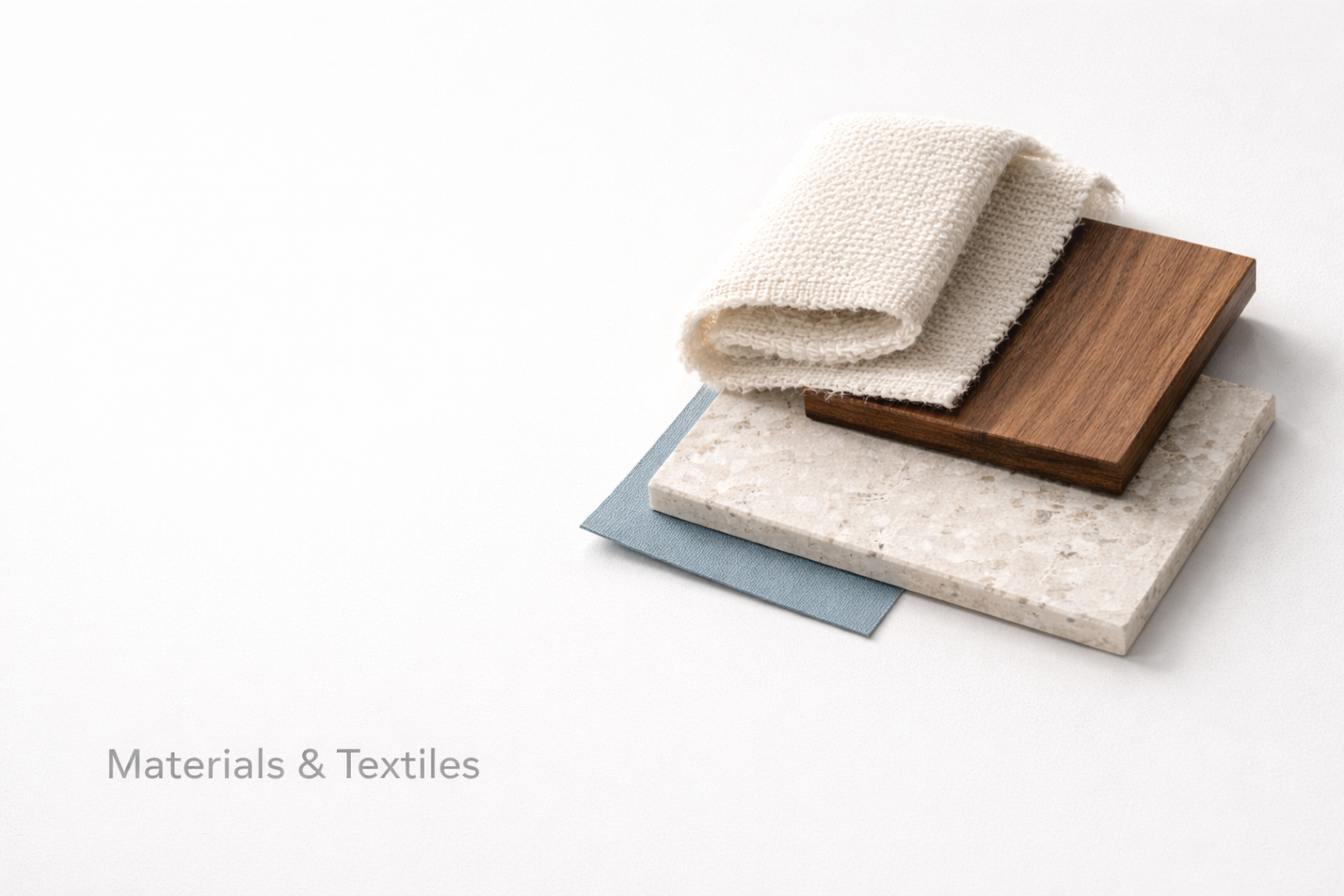
These are the repeat problems. Same story, different house.
Bouclé In Real Life
Bouclé is famous for two things: looking good in photos and pilling when it’s abused.
- Failure mode: fuzzing and pilling on the arms and seat edges from friction.
- Pet issue: loops can catch claws (even if the cat isn’t “scratching”).
- Fix: choose a tighter weave boucle, or go for a nubby texture that isn’t looped. Better yet: get a swatch and rub it hard for a week. Not once. A week.
Cheap “Looks Like Linen” Polyester
It often shines weird under light, pills early, and holds odor. The pain shows up fast because the surface breaks down under friction.
White Rugs With No Plan
White can work. But it needs a cleaning plan and the right fiber. Otherwise it becomes a stain diary.
Rugs: The Hidden Budget Sink
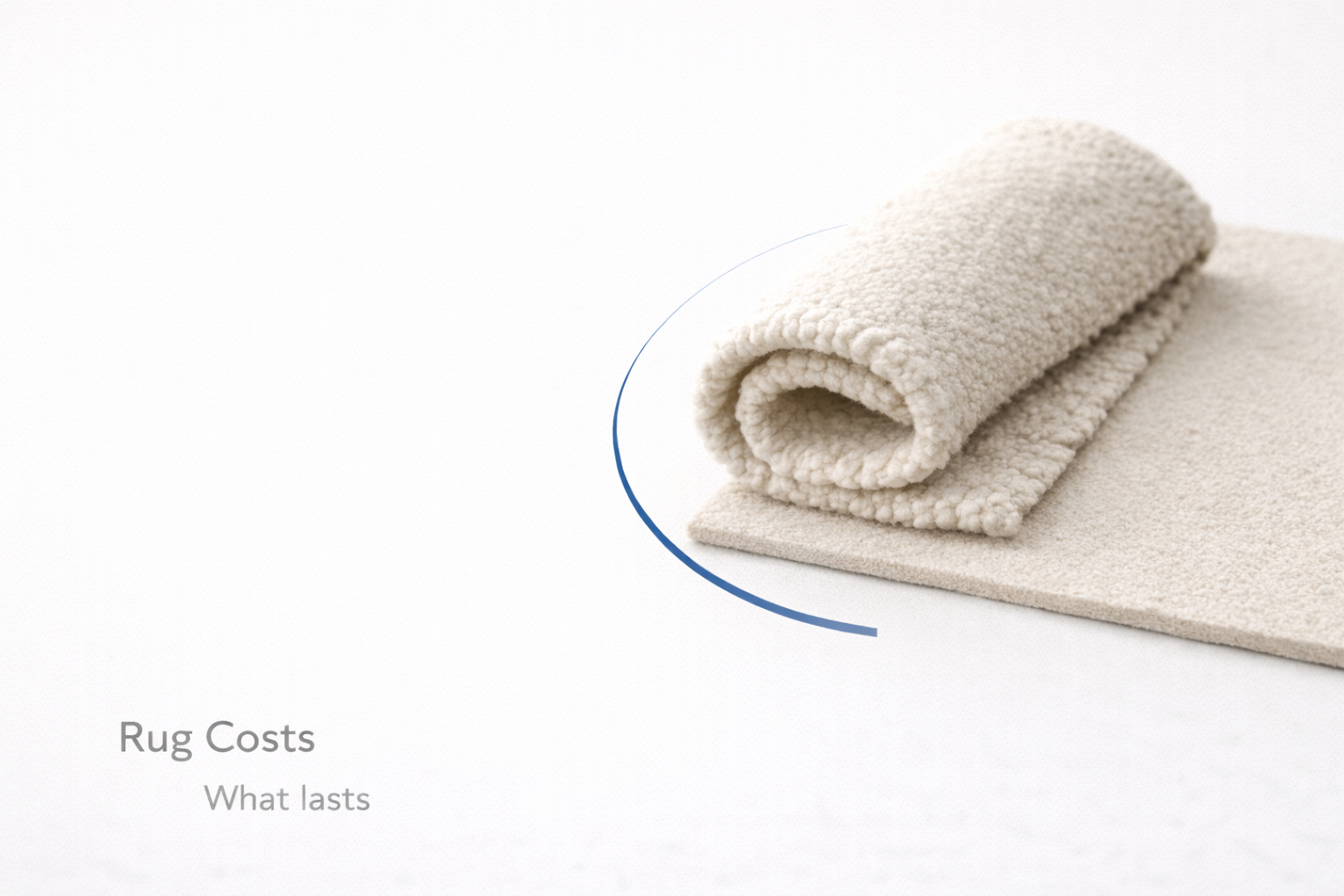
Rugs are where people spend twice. First on the pretty rug. Then on replacing it, or paying for cleaning that doesn’t fix the core issue.
Wool Shedding Reality
New wool rugs shed. Some shed a lot. The usual timeline people report: heavy shedding early, then it settles after weeks to a few months depending on pile, construction, and vacuum habits.
- What makes it worse: high pile, loose twist, aggressive vacuums with beater bars, dragging furniture across it.
- What helps: gentle vacuuming, patience, and a real pad so the rug isn’t grinding itself into the floor.
Washable Rugs
Washable rugs solve one problem (stains) and introduce another (texture, curling edges, “always looks slightly tired”). Still worth it in kitchens, kids rooms, and rental life.
Rug Pads
Skip the pad and you get sliding, rippling, and faster wear. It’s boring. It matters.
If you want the sensory side of materials (why some rooms feel harsh even when they look nice), see materials and sensory design.
Choosing Window Fabrics
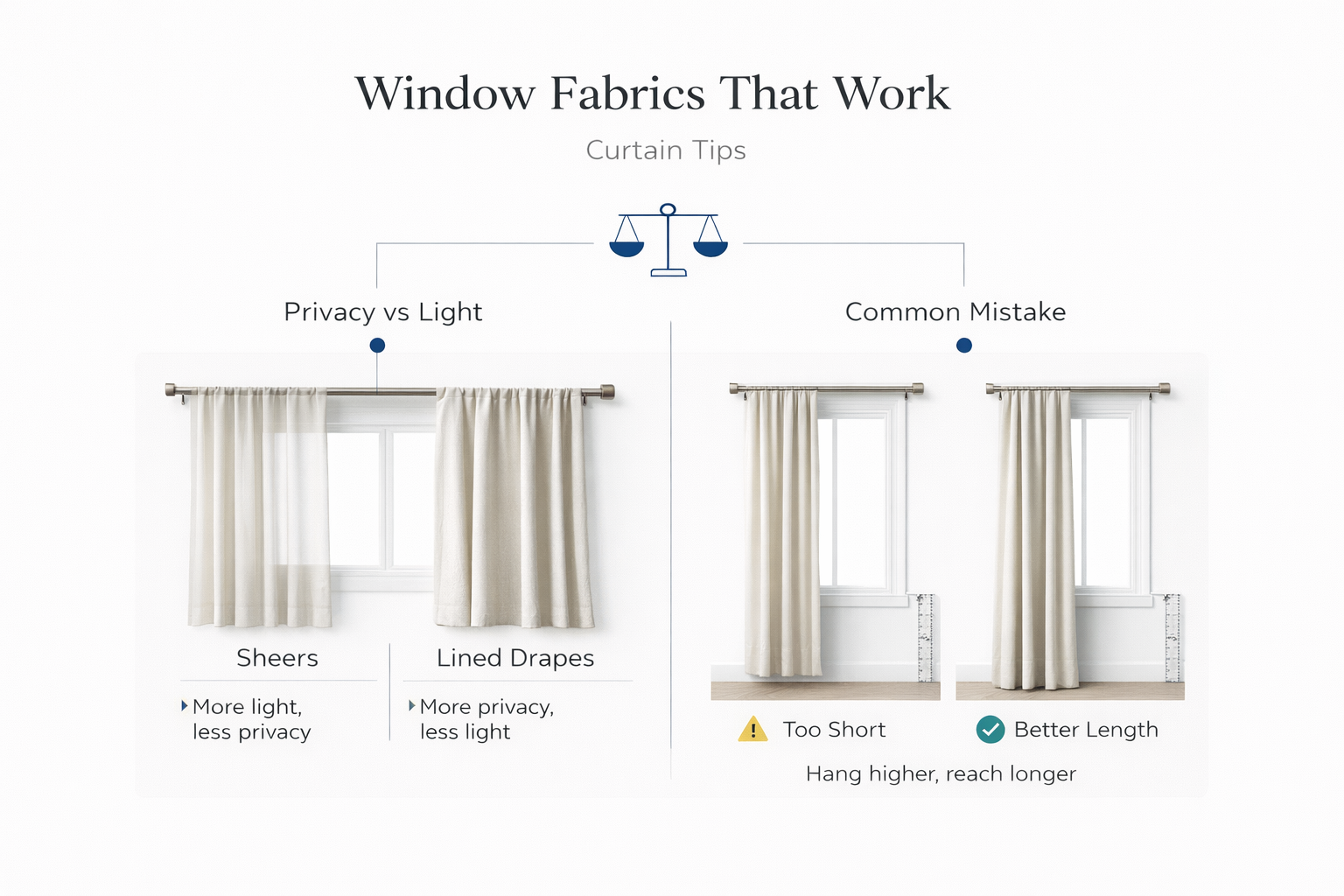
Curtains aren’t just decoration. They control glare, privacy, and heat. And they’re a “scale” tell—bad curtain sizing makes a room feel off.
Privacy Vs Light
- Sheers: nice daylight, weak privacy at night with interior lights on.
- Lined drapes: better privacy, better insulation feel, more weight and hang.
Common Mistake
Panels that are too short or too skinny. They look like an afterthought. If you don’t want to deal with custom, at least pick a length that looks intentional and hang higher than the window trim when possible.
Cleaning: What Ruins Fabric
Most damage is “good intentions.”
Over-Wetting Upholstery
People saturate cushions, then the smell shows up. Or water rings. Or mildew risk if it never dries fast.
Wrong Cleaner
Bleach-y cleaners on colored fabric. Strong solvent on finishes. You get fading, tackiness, or a weird hard spot.
Scrubbing Pilling
Scrubbing pills makes it worse. Use a fabric shaver carefully, then fix the friction source (throw blanket, rough jeans, bad weave).
When you’re trying to separate real advice from influencer noise, keep this nearby: how to spot faulty design tips.
The One Detail People Miss
They shop by “fabric type” and ignore the test numbers and failure modes.
Ask for the basics: abrasion rating (Wyzenbeek or Martindale), pilling, and colorfastness. Then match it to the room.
A high abrasion number doesn’t guarantee happiness if the fabric pills, snags, or shows stains. It just means it survives rubbing.
This one move prevents the classic mistake: buying a “pretty” fabric for the one seat that gets abused daily.
Common Traps
Matching Everything
Perfectly matched fabric sets look “done” on day one and boring on day thirty. Mix textures instead. One hero fabric, one quiet support fabric, one durable “background” material.
Ignoring Sunlight
South- and west-facing rooms will fade things. Especially cheap dyes, dark colors, and anything right in the beam. If you can’t change the sun, at least protect the textiles.
Buying Without Swatches
Online photos lie. Lighting lies. Order swatches. Put them in morning light and at night. Touch them. Spill a drop of water. Rub them with a rough towel. That’s the real test.
Checklist
- List the top 3 abuse points (kids, pets, food, sun, traffic)
- Pick fabrics based on failure mode (pilling, snagging, staining, fading)
- Get swatches and test them for a few days
- Confirm cleaning method before you buy (water-based, solvent-based, professional only)
- Choose rug fiber based on your cleaning reality, not your fantasy
- Use a rug pad
- Plan curtains for privacy at night, not just daytime photos
- Accept trade-offs: soft often means delicate, textured often means lint
FAQ
What Fabric Holds Up Best With Pets?
Tight weaves usually win. Performance fabrics can be great. Avoid loose loops if claws are in the house. If you’re set on texture, test for snagging with a rough fabric scrape on the swatch first.
Why Is My New Sofa Pilling Already?
Usually friction + a fabric that pills. Throws, rough clothing, and constant seat-edge rubbing make it show up fast. Shave it gently, then reduce friction and stop buying fabrics that pill for high-use seating.
Is Bouclé Worth It?
Only if you accept maintenance and wear. In a low-use chair? Sure. In a daily family sofa? That’s where regret stories come from.
How Long Do Wool Rugs Shed?
Many settle down after a few weeks to a few months. If it’s still extreme after that, it may be the construction, not “normal shedding.” Vacuum gently and avoid aggressive beater bars early on.
Do Performance Fabrics Feel Plastic?
Some do. Some don’t. You won’t know from photos. Get a swatch. The better ones feel like normal fabric but clean easier.
Why Do My Curtains Look Wrong?
Usually length and fullness. Too short, too narrow, or hung too low makes them look like a rental quick-fix. Treat curtains like architecture scale, not decor.
What’s The Easiest Upholstery To Clean?
Good leather and many performance fabrics are the easiest day-to-day. But always check the care code and cleaning method before you commit.
Should I Mix Patterns Or Keep It Simple?
Mix, but control it. One pattern, one texture, one solid is a safe formula. If you want the logic behind why some mixes feel “right,” see how hierarchy works in design.
Final Notes
Textiles are where a room becomes livable or annoying. Don’t shop by vibe. Shop by failure mode. Then make it look good after it survives the basics.