
Queen Anne Interior Design : Original Features to Keep or Update
How to Decorate a Queen Anne Victorian Interior Without Overdoing It
Forget the gingerbread trim for a second. Queen Anne interiors were bold, dark, dramatic—and anything but minimal. If you're imagining doilies and teacups, you're missing the real story.
MUST READ
"Creating the Vintage Look" by Judith Miller — For learning how to work with antiques without going full grandma.
RISE OF THE STYLE
Why Queen Anne Took Over Homes

It started in the late 1800s. The Industrial Revolution made ornate details cheaper to mass-produce. Suddenly, middle-class homes were packed with turned wood spindles, stained glass, and rich wallpapers.
The outside was asymmetrical and showy. The inside? A layered mix of Victorian influence, classical revival, and wild maximalism.
MUST READ
The Queen Anne House: America's Victorian Vernacular
INSIDE THE WALLS
What Defines a Queen Anne Interior
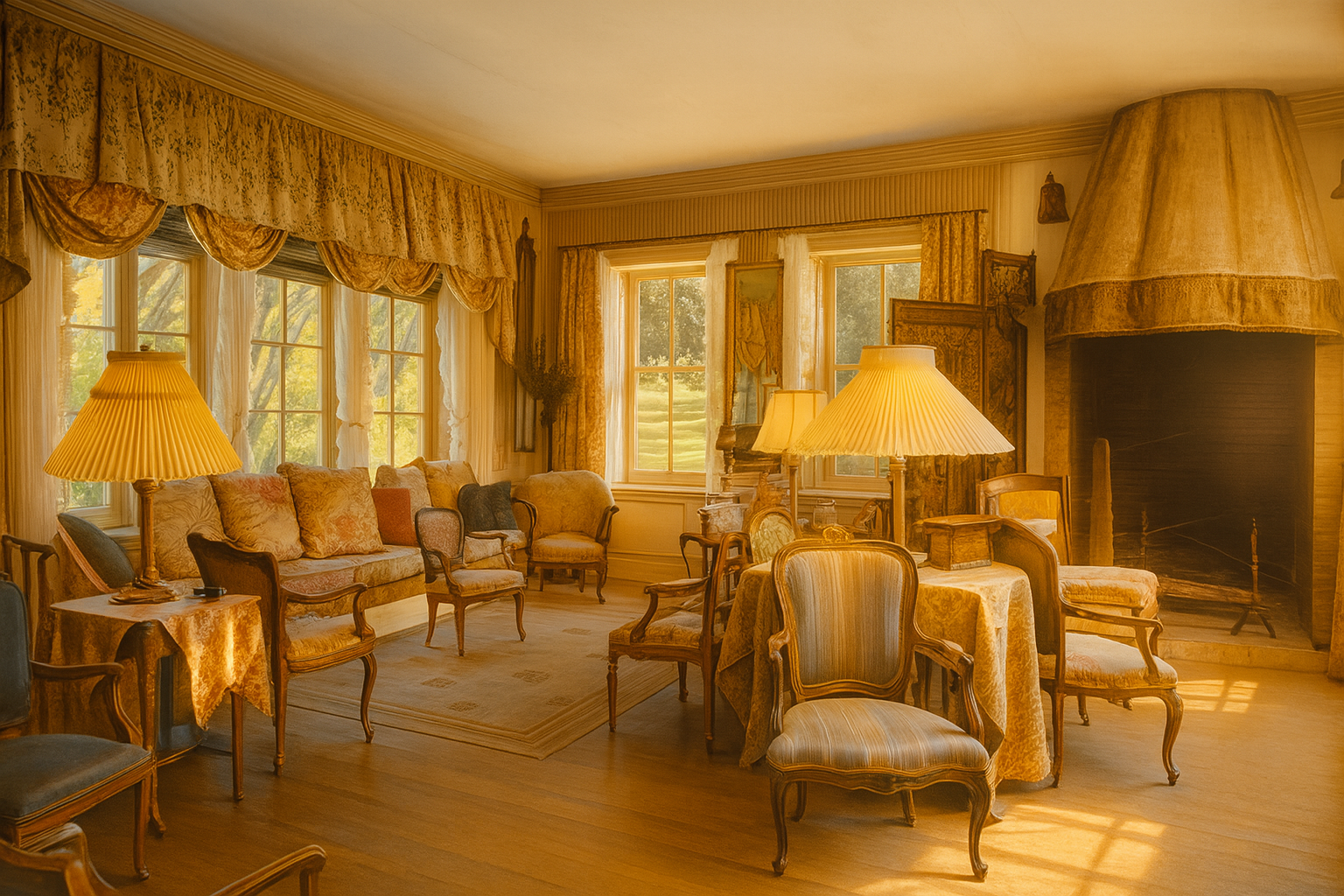
These homes weren’t open-concept. Every room had a purpose and a mood.
● Entry halls with carved staircases and heavy wood paneling
● Parlors with velvet chairs, marble fireplaces, and gilded mirrors
● Dining rooms with dark wood wainscoting and ornate built-ins
● Bay windows dressed in layered lace and brocade curtains
● Ceilings with medallions, sometimes painted or stenciled
Color palette? Think oxblood, forest green, gold, deep navy. Floors were hardwood and often covered with intricate Persian or Axminster rugs.
DECORATING DETAILS
Design Elements That Made the Look
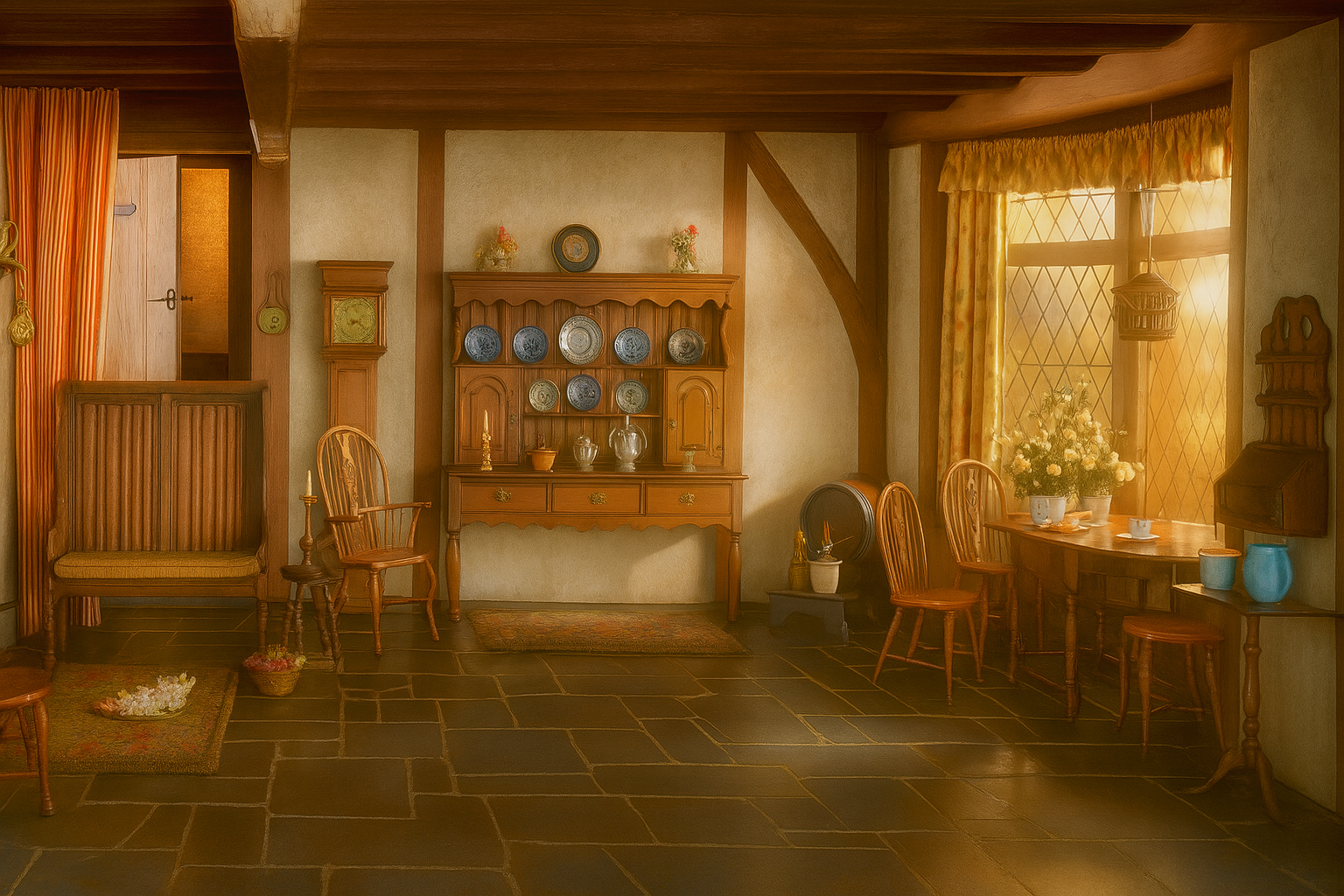
Everything had detail.
● Wallpaper: Floral, damask, or Japanese-inspired prints. Often metallic.
● Lighting: Gas or early electric fixtures with etched glass shades.
● Furniture: Curved legs, claw feet, carved wood, tufted velvet.
● Art: Romantic landscapes, hunting scenes, classical nudes.
● Clutter: Vases, clocks, glass domes, tassels, throws—you couldn’t have too much.
Mantels were often the focal point in main rooms, surrounded by tile or mirror. Built-ins weren’t just functional; they were decorative showpieces.
HOW IT FELT
Mood, Lighting, and Function
Rooms were dim, cozy, and full of texture. Candles or low-watt bulbs added to the shadowy glow. Drapes layered over lace let you block or filter light. Furniture was arranged in conversation circles or tight reading corners. These homes were designed to cocoon you.
MODERN ADAPTATIONS
Updating Queen Anne Interiors Today

Modern Queen Anne Interiors: What to Keep, What to Change
Want the feel without the heaviness?
● Keep the millwork but paint it softer colors (warm whites, sage, dusty rose)
● Swap wallpaper for tone-on-tone stenciling or murals
● Use velvet and fringe in accent pieces only
● Mix antiques with simple modern forms to avoid the museum vibe
Some designers keep the stained glass and parquet floors but brighten up walls and open up key spaces. Others lean into the drama with updated jewel tones and matte black fixtures.
What Not to Do in Queen Anne Interiors
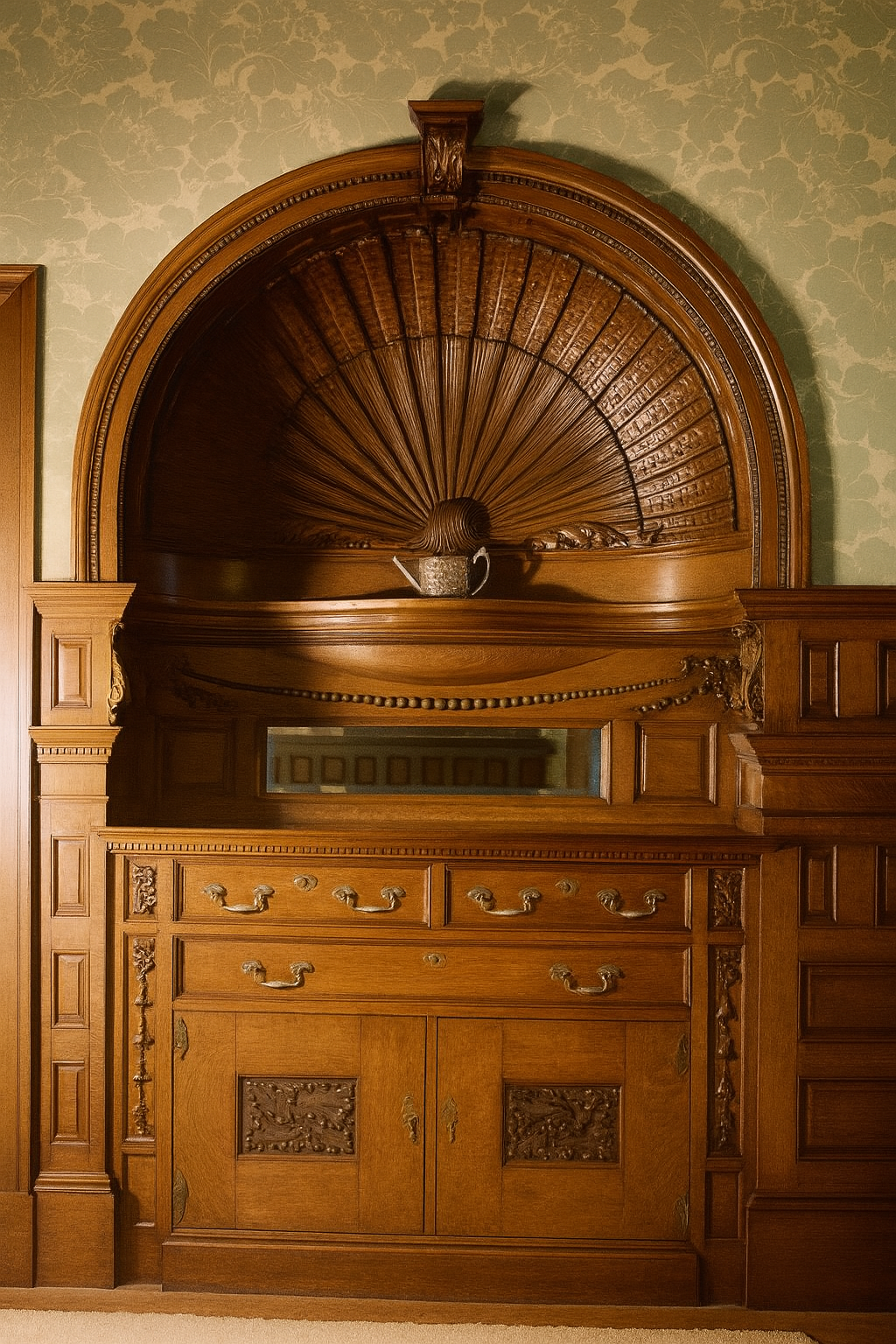
IMAGE: Restored Queen Anne–style sideboard with ornate wood carvings, arched fan niche, and soft floral wallpaper.
COMMON MISTAKES ✕
5 Mistakes People Make Restoring Queen Anne Interiors
● Ripping out original details to “modernize”
That carved wood trim, plaster medallion, or stained glass isn’t “old” — it’s the architecture. Lose that, and you’re left with a shell.
● Leaving rooms too dark or too brown
Queen Anne homes already use deep colors. Without smart lighting or some contrast, it starts to feel like a Victorian dungeon.
● Overloading the space with clutter
Just because the style loves layers doesn’t mean you should cram every shelf. Pick meaningful decor, not random junk.
● Using modern finishes that clash
Avoid fake wood laminate, glossy white trim, or sterile kitchen tiles. Use updated materials that still respect the original mood.
● Ignoring ceiling detail
The ceiling is part of the story — don’t leave it blank. Consider medallions, stencil work, or even a coffered paint treatment.
FIELD PICK
Victorian Decorative Accessories
✓ “Design Toscano Victorian Rococo Wall Mirror” — A standout vintage-style piece that works in Queen Anne foyers, powder rooms, or parlors. Heavy carved detail, fits the era, and blends easily with both restored and updated spaces.
🔗 View on Amazon (affiliate link)
WHAT TO LOOK FOR
✓ Checklist When Restoring or Designing
□ Are the moldings intact?
□ Does the home still have original wood floors?
□ Can the fireplace, staircase, or windows be restored instead of replaced?
□ Can modern lighting work with the vintage mood?
□ Are you preserving charm or just copying a theme?
EXPERT VOICE
What the Historians Say
“Queen Anne interiors weren’t random clutter—they were curated layers of story and status. Every object told you something about the owner.” — Sarah Blank, Interior Historian
COMPARISON GRID
Original vs. Modern Interpretation
From dark woodwork to layered decor: here’s how Queen Anne interiors still influence home design today.
| Feature | Original Queen Anne | Modern Adaptation |
|---|---|---|
| Walls | Patterned wallpaper | Painted paneling or mural |
| Floors | Hardwood + layered rugs | Exposed wood + modern runners |
| Lighting | Gas lamps or chandeliers | Edison bulbs or LED dimmers |
| Furniture | Ornate + overstuffed | Antique accents + clean silhouettes |
| Color | Jewel tones | Muted heritage tones |
CASE STUDY
Real Homes, Real Results
● A Seattle homeowner kept the original mahogany staircase but painted the parlor in pale green and replaced the heavy drapes with sheer linen.
→ Result: More light, same vintage charm.
● A Brooklyn couple opened a wall between kitchen and dining but kept all the millwork and stained glass.
→ Result: Function meets character.
QUEEN ANNE VS. VICTORIAN
What’s the Real Difference?
Let’s get it straight—Queen Anne is Victorian, but not all Victorian interiors are Queen Anne.
Victorian is the broader era (1837–1901), covering everything from Gothic Revival to Eastlake. Queen Anne landed late in the period, around 1880–1910, and brought a more playful, flamboyant edge.
● Victorian interiors lean formal, symmetrical, and often darker in tone
● Queen Anne adds asymmetry, lightness, and more eclectic, global influences
Victorian homes emphasized moral order and classical proportion. Queen Anne interiors broke the rules—curved towers, angled rooms, and layered textures everywhere.
Where Victorian might showcase a strict parlor layout, Queen Anne filled the space with contrasting materials, unexpected color combos, and storytelling objects.
Here’s a breakdown:
| Feature | Victorian Interiors | Queen Anne Interiors |
|---|---|---|
| Layout | Formal, symmetrical rooms | Angled rooms, turrets, asymmetrical flow |
| Woodwork | Carved, heavy, Gothic influence | Curvy, spindled, sometimes whimsical |
| Fabrics | Brocade, damask, velvet (rich tones) | Same, but mixed with exotic or lighter fabrics |
| Colors | Burgundy, forest green, deep brown | Jewel tones + more experimental mixes |
| Furniture Style | Stiff-backed, formal sets | Curved, decorative, layered groupings |
Queen Anne interiors let homeowners show off—not just wealth, but personality. If Victorian was about manners, Queen Anne was about taste.
→ Think of Queen Anne as Victorian with more flair, less restraint, and a little creative chaos.
FAQ
Q: Can Queen Anne interiors work in small spaces?
A: Yes, but scale matters. Use lighter fabrics and fewer dark colors.
Q: What’s the difference between Queen Anne and Victorian interiors?
A: Queen Anne is a subset—more playful, more asymmetrical, and heavier on mixed materials.
Q: Is it okay to paint the original woodwork?
A: If it's damaged or too dark, yes. Just prep properly and choose heritage-style paint colors.
Q: How do I modernize the layout without killing the charm?
A: Open one or two walls max. Keep the entry and staircase zones intact.
Q: What kind of lighting works best?
A: Low-warm LED bulbs in vintage fixtures or well-placed floor lamps.
WRAP-UP
Final Thoughts
Queen Anne interiors weren’t shy.
They layered detail on detail, turning even a hallway into a showcase.
If you want your home to whisper stories from 1890 while still feeling livable in 2025, the key is restraint.
Keep the history. Cut the clutter. Light it better. That’s how this style survives.
KEEP LEARNING
Why This Style Still Matters
Queen Anne interiors reward close attention and subtle restraint. When done right, they feel lived-in, layered, and alive. Keep your touch light, your eyes sharp, and the stories intact.
Affiliate note: This article contains references to recommended books or tools. As an Amazon Associate, we may earn from qualifying purchases.