

Masdar City: What Went Wrong With the World’s “Green Utopia”?
Masdar City was supposed to change everything. Here's a clear breakdown of what worked, what didn’t, and where it stands today.
Masdar City Sustainability: Smart Lessons (and Hard Truths)
Is Masdar City Still the Future? Real Insights You Need to Know
Masdar City: Why It Mattered, Where It Struggled, and What It Teaches Us
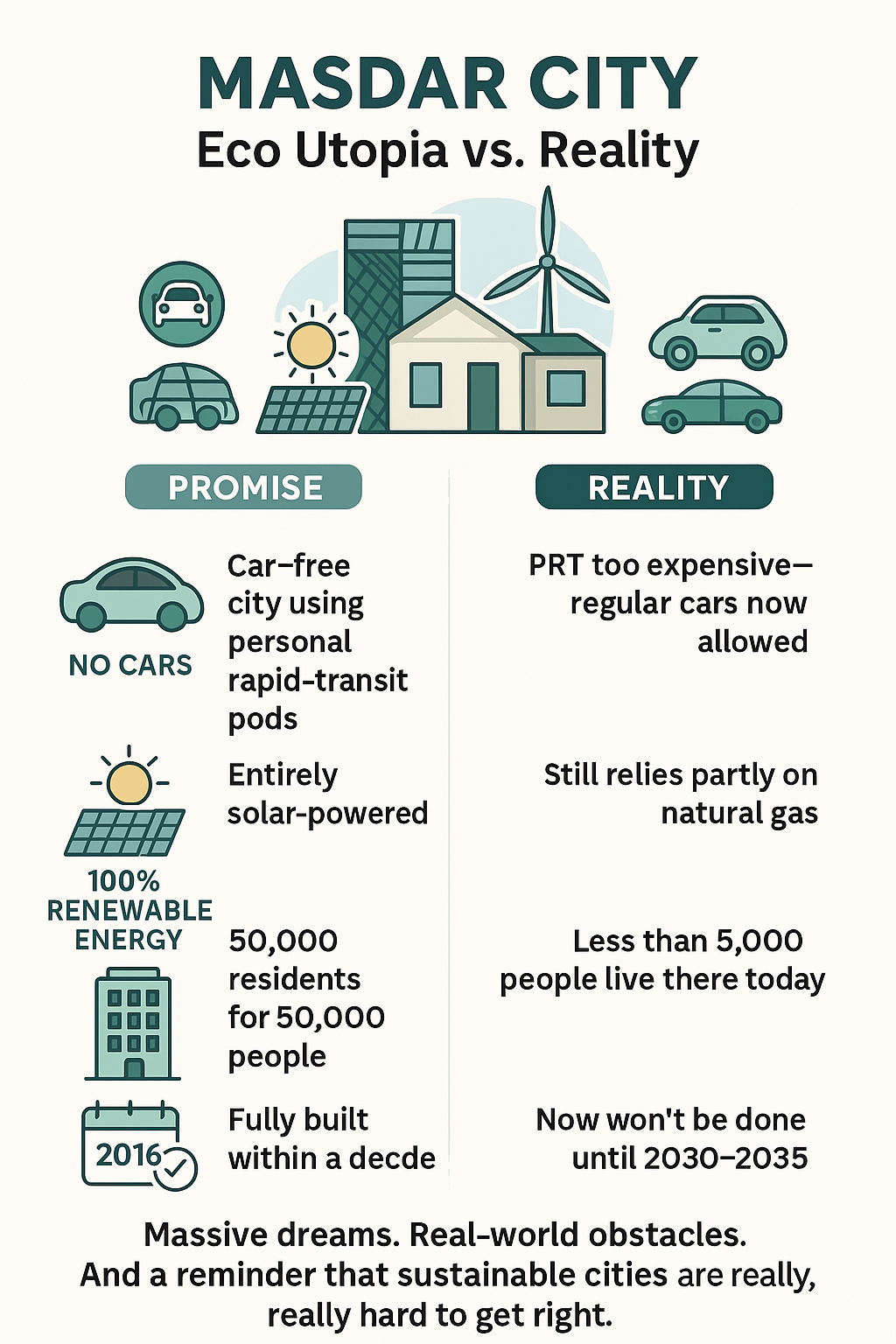
Back in 2006, Masdar City sounded like the future. A zero-carbon, zero-waste, fully sustainable city rising out of the desert in Abu Dhabi.
No cars. No emissions. Powered 100% by renewable energy. It had the world’s attention—and a billion-dollar backing to prove it.
Today?
Masdar is still there. But it’s not finished. It’s not entirely car-free. It’s not zero-carbon. And that makes it a lot more interesting than the perfect “eco utopia” headlines ever did.
Below, we'll break down:
-
What Masdar City aimed to be
-
What actually happened
-
What’s still special about it
-
Real lessons for future sustainable cities
-
Where things stand today (and where they might go)
Dig into Masdar City’s story: the wins, the failures, and practical lessons for building smarter, greener cities in the real world.
What Was the Original Plan for Masdar City?

When it launched in 2006:
-
Built by Masdar, a subsidiary of Mubadala Investment Company (owned by the Abu Dhabi government)
-
Designed by world-renowned architects at Foster + Partners
-
Goal: House 50,000 residents and 40,000 commuters in a fully sustainable, zero-carbon city
-
Features:
▪ Powered entirely by solar energy
▪ No cars — only personal rapid transit (PRT) pods underground
▪ Recycled water and zero-waste goals
▪ Naturally cooled buildings using ancient architectural techniques
Bottom Line?
It was supposed to be the world's first true “city of the future.” A working model for the planet to copy.
What Actually Happened?
Reality hit hard—and fast.
Here’s why:
-
Cost Overruns: Original budget projections were too optimistic. Costs ballooned quickly, especially for solar and infrastructure.
-
Tech Challenges: Some technologies weren’t ready yet. The PRT system was expensive and clunky.
-
Economic Crisis: The 2008 financial crash forced the project to slow down and rethink priorities.
-
Population Shortfalls: Today, less than 5,000 people live and work there—not the 90,000 originally planned.
-
Adaptations: Masdar had to allow regular cars and scale back the original plan. Full completion pushed back repeatedly.
✅ Key Fact: Masdar City was supposed to be done by 2016. Today, it’s still under construction and won’t be "finished" until at least 2030–2035.
What Makes Masdar City Special (and What Didn’t Work)
What Is Still Special About Masdar City?
Despite all the struggles, Masdar did a lot right.
It’s not a failure—it’s a real-world lab for sustainability.
-
Solar Innovation: Home to one of the largest rooftop solar arrays in the Middle East.
-
Smart Urban Design: Narrow streets, shaded walkways, wind towers—all cut cooling needs by up to 70%.
-
Energy Efficiency: Buildings are designed to use 40% less energy and water compared to regular Abu Dhabi buildings.
-
Research Hub: Masdar Institute (now part of Khalifa University) has led major research on renewables and sustainable tech.
-
Global Model: It forced real conversations globally about what "eco-cities" can and can’t do.
✅ Lesson: Even partial success in a place as extreme as the desert is worth paying attention to.
Masdar City: An Honest Case Study of Eco-City Dreams vs. Reality
In Focus: What Could Have Worked (and Why Thoughtful Planning Isn't Optional)
Let’s get real for a second:
Big “eco-cities” like Masdar didn't fail because the technology was wrong.
Solar panels work. Wind towers cool buildings. Electric transit makes sense.
The real problem?
They treated sustainability like a feature to advertise, not the actual foundation the city would be built on.
If they had flipped the thinking from day one, here’s what might’ve actually worked:
Build Around People, Not Just Tech
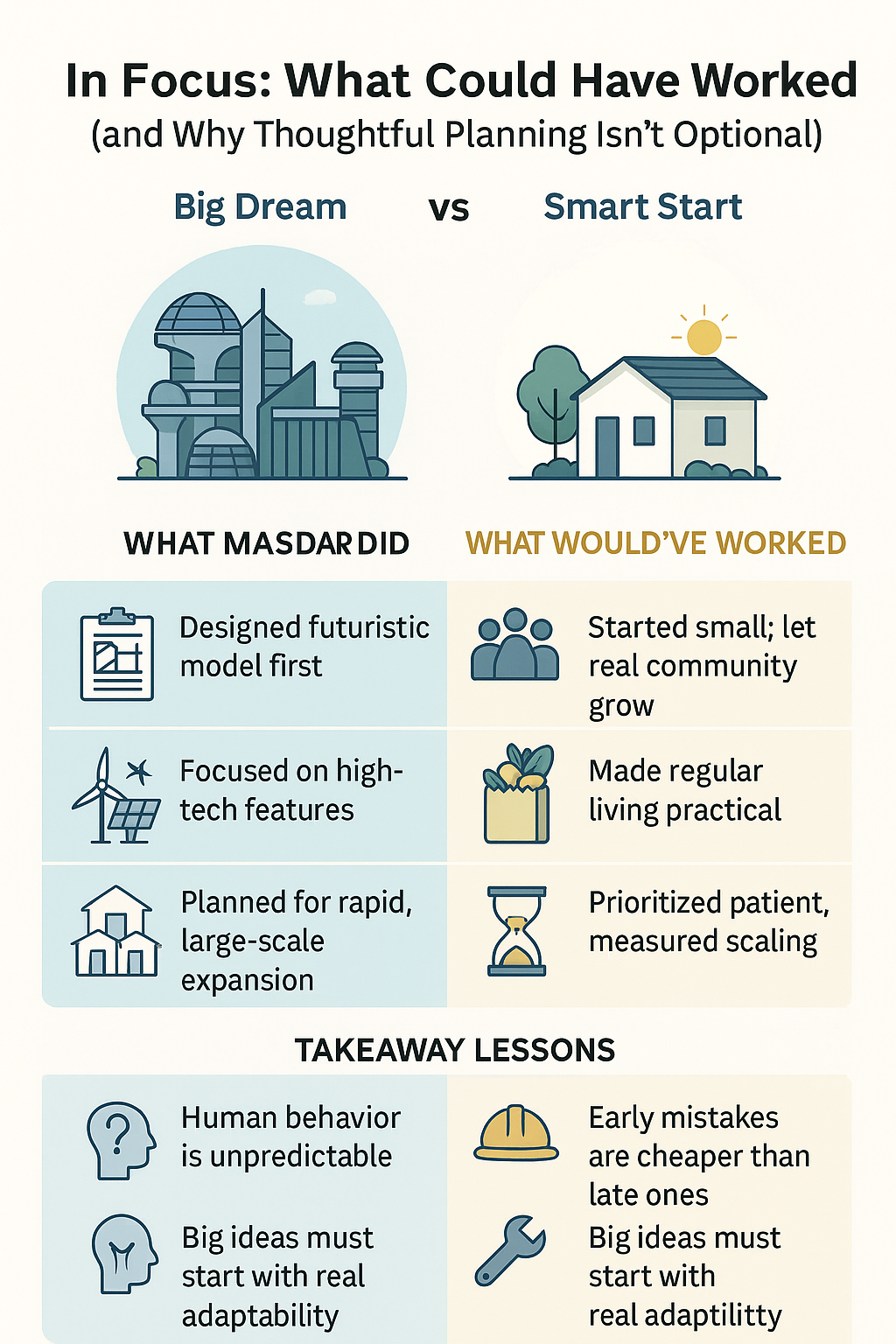
Instead of designing a perfect sci-fi-looking model and then asking people to move there, they could have:
-
Started smaller — a few compact, walkable blocks first.
-
Let real families, businesses, and workers live there early.
-
Watched what worked, what broke, what people loved or hated — and only then expanded.
Lesson:
You can't fake a city. Real communities grow. They don't get "rolled out" like a tech product launch.
Prioritize Real-World Use Over Shiny Brochures
Masdar looked great in early renderings — glossy glass pods, shaded streets, electric trams zipping around.
But daily life? Long walks in the desert heat. Hard-to-reach amenities. Work and shopping still happening in Abu Dhabi.
If they had asked regular people (not just consultants) early on:
-
What do you actually need to live comfortably here?
-
Where will your kids go to school?
-
How will your groceries get delivered in 120°F weather?
They would've built practical first, futuristic later.
The Power of Thoughtful Scaling
Sharjah Sustainable City, for example, started smaller — just a few hundred homes — and grew slowly based on demand.
Not because they were timid.
But because they understood something critical:
Planning for 10,000 residents before even 10 families are living happily? It's asking for collapse.
Real cities breathe.
They flex, shrink, adapt.
They aren’t frozen snapshots.
Why Real Thought Planning Matters More Than Dreams
-
Human Behavior Isn't Programmable. No matter how “perfect” your layout is, people will do surprising things. Planning must allow for messy, imperfect real life.
-
Early Problems Are Cheaper Than Late Problems. Fixing mistakes in a 10-home block costs nothing compared to redoing a half-finished city.
-
Culture Matters. What works in Europe or Japan might flop in the Gulf if climate, lifestyle, and traditions aren’t woven into the city’s DNA.
If They Had Done It Differently?
If Masdar had started with:
-
A small, humble pilot neighborhood
-
Deep integration with local daily life (schools, work, shopping)
-
Patience over perfection
👉 It might have quietly, steadily, become the true model for sustainable cities worldwide.
Not a cautionary tale taught in architecture schools.
The Future Isn’t About Big Ideas. It’s About Big Adaptability.
You can dream big. But you better plan small, real, and flexible first.
That’s how living cities — not ghost cities — are made.
Masdar City Case Study: Real Lessons for Urban Designers
🔹 Lesson 1: Don’t Assume Perfect Tech New technology often sounds better than it works in practice. PRT pods were a cool idea—but expensive, limited, and outdated fast.
🔹 Lesson 2: Build Flexibility Into Your Plans Masdar had to adapt—adding cars, lowering targets. Future cities need to allow room for real-world adjustment.
🔹 Lesson 3: Start Small, Scale Smart Trying to build a full city at once is risky. Incremental expansion tied to proven success would have avoided some of Masdar's problems.
🔹 Lesson 4: Market Forces Matter You can’t just build a city and expect people to come. Jobs, convenience, and affordability drive real settlement.
🔹 Lesson 5: Global Sustainability Standards Shift Fast Targets from 2006 looked good then but seem limited now. Plans must account for how quickly sustainability standards evolve.
When Will Masdar City Be Completed? (Spoiler: It’s Complicated)
Masdar City: A Blueprint for Sustainable Success or a Warning Sign?
When Will Masdar City Be Completed?
✅ Short Answer: It won't be fully "completed" in the original sense.
✅ Long Answer: New plans aim for about 2030–2035, but even then, it’ll probably evolve indefinitely.
What changed?
-
Original “zero-carbon” goals are gone.
-
Focus shifted to “low-carbon, highly sustainable” instead.
-
City planners now talk more about "living laboratories" than finished products.
When Was Masdar City Built?
-
Planning Started: 2006
-
Groundbreaking: 2008
-
First residents and companies moved in: Around 2010–2011
-
Major phases: 2013–ongoing (the city grows slowly by sectors)
✅ Today: Parts are finished (offices, university, mall), but major residential and retail expansion is still happening.
Is Masdar City a Failure?
❌ No, but it's definitely not what was originally promised.
✅ It's a work in progress—and a necessary reminder that sustainability, at scale, is messy, expensive, and full of trade-offs.
In many ways, Masdar’s partial successes are more useful than a perfect green fantasy.
Because they show:
-
What building sustainably really costs
-
How plans must flex and bend
-
How real human needs (jobs, transit, lifestyle) shape eco-visions
It’s a laboratory, not a monument. And that’s okay.
Split View: Masdar City vs. Sharjah Sustainable City
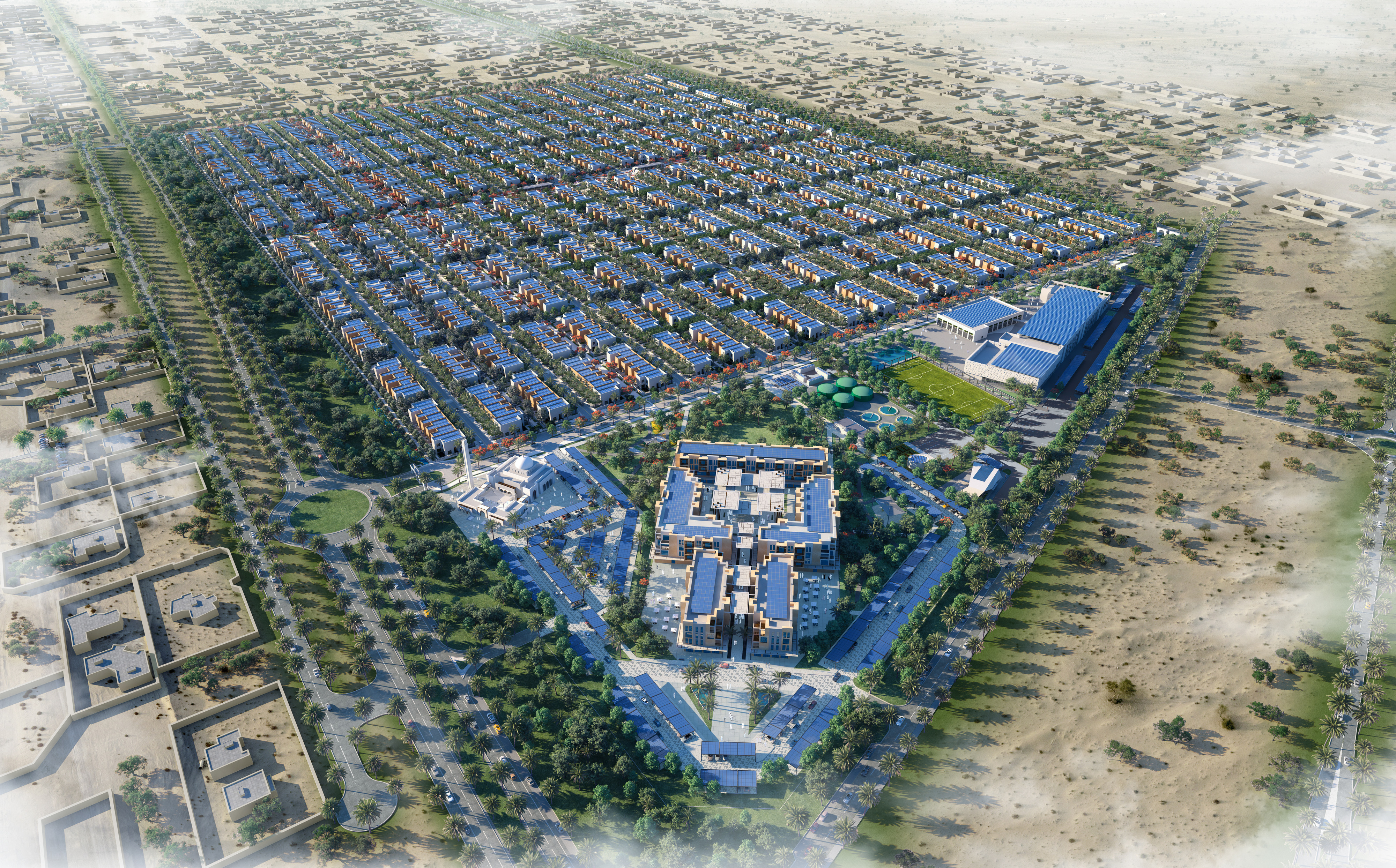
When you stack them side-by-side, Masdar City and Sharjah Sustainable City show two very different ideas of what "sustainability" can look like in the real world. Here's how they actually compare:
| Category | Masdar City | Sharjah Sustainable City |
|---|---|---|
| Main Goal | High-tech innovation and research hub | Real-world sustainable living for families |
| Energy Source | Massive solar farms powering the city | Solar panels on every home |
| Transport Approach | Futuristic pod systems (Personal Rapid Transit) | Normal roads, walkable paths |
| Water Saving | Full-scale recycling and conservation systems | Water-saving fixtures and smart irrigation |
| Waste Strategy | Targeting zero-waste with high-tech recycling | Recycling and composting at home level |
| Neighborhood Feel | Research city – experimental and sparse | Family-centered, community-driven |
| Who's Behind It | Built and run mostly by the government | Public-private development model |
| Progress So Far | Much slower than first planned | Phased and already partially finished |
Big Takeaways

-
Masdar City shot for the moon with tech. Great idea — but real-world costs, tech delays, and human habits made full perfection tricky.
-
Sharjah Sustainable City kept it practical: simpler solutions, phased goals, and easy upgrades for regular families. Less flash, more function.
Which Model Works Better?
If you want a high-profile experiment that pushes tech boundaries — Masdar is impressive.
If you want a working example of how families can live greener without huge lifestyle changes — Sharjah shows a better blueprint.
Both cities matter. Both offer lessons. But only one is already delivering a full community life today — not just a research dream for tomorrow.
FAQ
Q: Why did Masdar City fail to meet its zero-carbon goals?
A: Costs, technology limits, and real-world urban challenges made the original goals unrealistic.
Q: Is Masdar City worth visiting?
A: Yes—especially if you're interested in architecture, urban planning, or renewable energy. It's an active, real-world case study.
Q: Who lives in Masdar City today?
A: Mostly students, researchers, and employees working for Masdar-based companies.
Q: What can other cities learn from Masdar?
A: Dream big, plan flexibly, embrace slow change, and ground idealism in hard economic realities.
Real Talk: Lessons to Remember
-
Green cities aren't built in labs. They’re built in fits and starts, with messy politics, tech failures, and budget headaches.
-
Masdar proves that you can aim high—and still deliver something valuable, even if it’s not perfect.
-
Future eco-cities will have to start smaller, be cheaper, and focus way more on human habits—not just tech.
-
Success isn't about hitting 100% green goals overnight. It's about building frameworks that improve over time.
Wrap Up
Masdar City is a messy, fascinating, important chapter in urban design history.
Not a utopia. Not a failure.
A real, ongoing experiment that future generations will learn from—if they’re smart enough to study both the wins and the mistakes.
Real sustainability isn’t about perfection.
It’s about progress—slow, stubborn, unfinished progress that adapts to the world as it is, not just how we wish it was.