
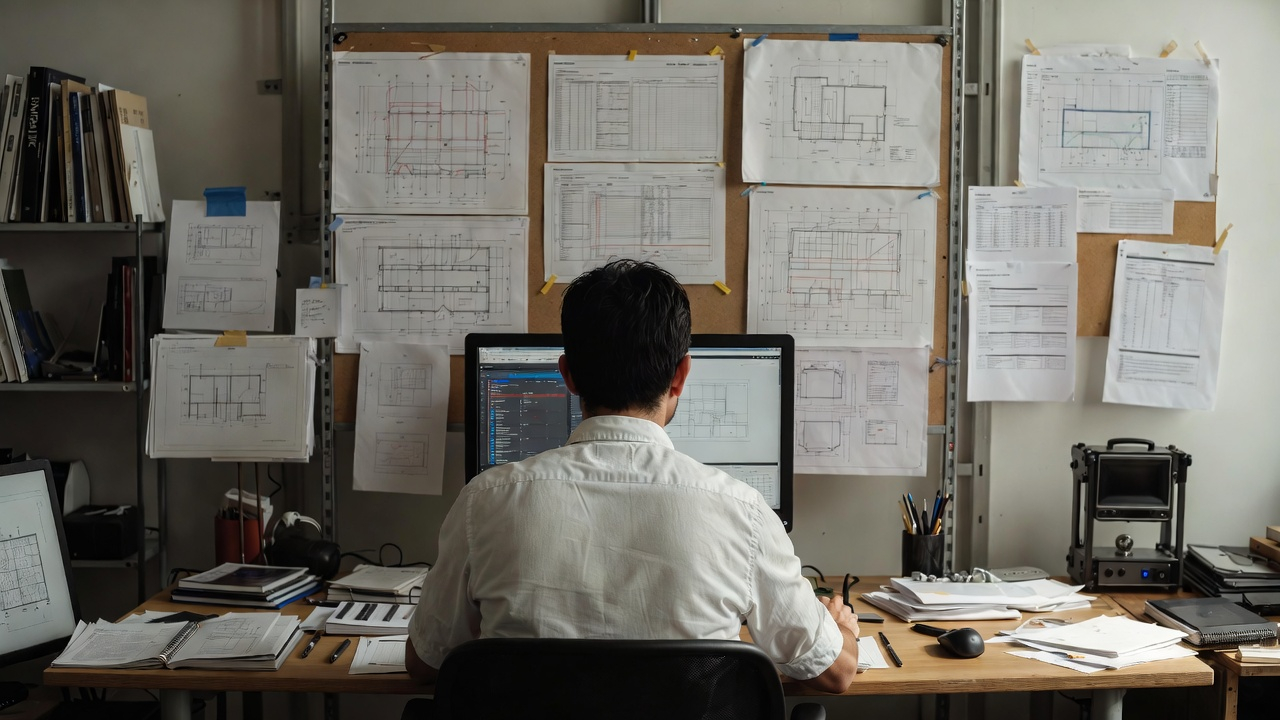
A lot of architecture graduates think the hard part was school.
It wasn't.
School teaches you how to think, present, stay up too late, and make a project sound coherent five minutes before review. Practice starts grading something else. Can you keep a drawing set clean when three consultants are moving at once? Can you answer a contractor without bluffing? Can you tell whether the problem in front of you is design, code, scope, budget, or just bad coordination dressed up as all four?
That is where development after school really starts. Not in one dramatic leap. Usually in smaller, less glamorous ways. Redlines that keep repeating. Permit comments that expose what you missed. Site visits that make old studio habits look a little naive. The slow shift from “I can design” to “I can be trusted with real work.”
If you need the bigger path first, this guide to studying architecture in the United States helps explain how the degree and licensure side usually fits together. If the degree part still feels muddy, this page on what a Bachelor of Architecture really is clears up one of the most common points of confusion fast.
What This Covers
- what changes after school and why office work feels different
- where licensure fits and where people over-romanticize it
- how project experience actually builds judgment
- which office skills quietly decide whether people trust you
- how younger architects usually develop faster and where they stall
School Trains Design Thinking. Practice Trains Consequences
Architecture school is good at some things. It teaches you how to frame a problem, test an idea, work visually, and defend a concept when somebody smarter than you starts pushing on it. That matters. A lot.
What school usually does not teach hard enough is consequence.
In practice, a door is not just a diagram choice. A wall type is not just a graphic move. A dimension that is slightly off does not stay inside your notebook. Somebody prices it, questions it, builds from it, or sends it back with a markup that is much less poetic than your jury comments were.
That is the first real shift after school. Decisions travel. They cost money. They affect other people. They show up later in the job in forms you did not expect.
The faster you understand that chain, the faster you start developing.
Licensure Matters. It Just Doesn't Do All the Work for You
A lot of graduates talk about licensure like it is the clean dividing line between being junior and being legitimate. It is not that simple.
In the U.S., the usual path still runs through a professional degree, documented experience, and registration exams, with the exact requirements depending on the jurisdiction. That is the formal structure. The informal part is slower and harder to measure. Judgment. Reliability. Technical confidence. Communication. Those do not arrive the day you pass an exam.
So yes, take licensure seriously. Track your experience. Learn the exam structure early enough that it does not become this giant vague threat sitting in the background for years. But do not make the mistake of thinking the license replaces development. It confirms one part of it. It does not magically turn somebody into a dependable project architect overnight.
Worth knowing: development does not stop once the credential shows up. This page on continuing education and skill development for architects is useful here, because good architects do not stop learning once the administrative boxes are checked.
Project Experience Is Where Judgment Starts Forming
This is the part people usually underestimate when they are still in school.
Project experience is not just time spent in an office chair. Good experience means seeing how a project actually moves. Early ideas. Design development. Consultant coordination. Permit review. Revisions. Construction questions. Site conditions. Change orders. Budget pressure. The moment the elegant concept collides with structure, ductwork, code, procurement, and a client who suddenly wants something different.
That is where judgment starts taking shape.
Not because the work gets glamorous. Usually the opposite. You learn because the project keeps forcing decisions that are messier, less isolated, and more expensive than studio problems ever were.
A lot of younger staff think development means getting handed “real design work.” Sometimes it does. But honestly, a huge part of growth is simpler than that. Understanding the chain. Who issued what, where, against which set, and what changed since the last round. That sounds boring until you realize most office mistakes live right there.
The people who develop fastest usually get exposed to more than one phase. Not just renderings. Not just redlines. Not just interiors, or only bathroom details, or only permit sets. The growth happens when you start seeing how the pieces connect.
The Office Skills That Quietly Matter Most
There are technical skills, and then there are office skills that decide whether people trust you with more responsibility.
Writing clearly. Emails, meeting notes, bullet responses, sketch follow-ups, consultant questions. Weak writing creates real confusion in practice.
Tracking revisions. A lot of younger architects think the hard part is drawing. Sometimes the hard part is simply knowing which version is current and who has been told about the change.
Reading other people's drawings carefully. Structural. Mechanical. Civil. Interiors. Specifications. Development in practice is not just producing information. It is learning how to catch conflicts before somebody else catches them for you.
Knowing when to ask. Not every uncertainty needs to become a crisis. But early-career architects who guess too much usually create more damage than the ones who ask one precise question at the right moment.
Speaking plainly. School language does not always survive practice. Clients usually do not want a theory lecture. Consultants do not want soft, vague design language. Contractors do not want to decode a paragraph that should have been one clear sentence.
Frankly, some of the most useful younger architects in an office are not the flashiest. They are the ones who can follow an issue all the way through, document it clearly, and keep the team from having the same conversation twice.
Where Younger Architects Usually Get Stuck
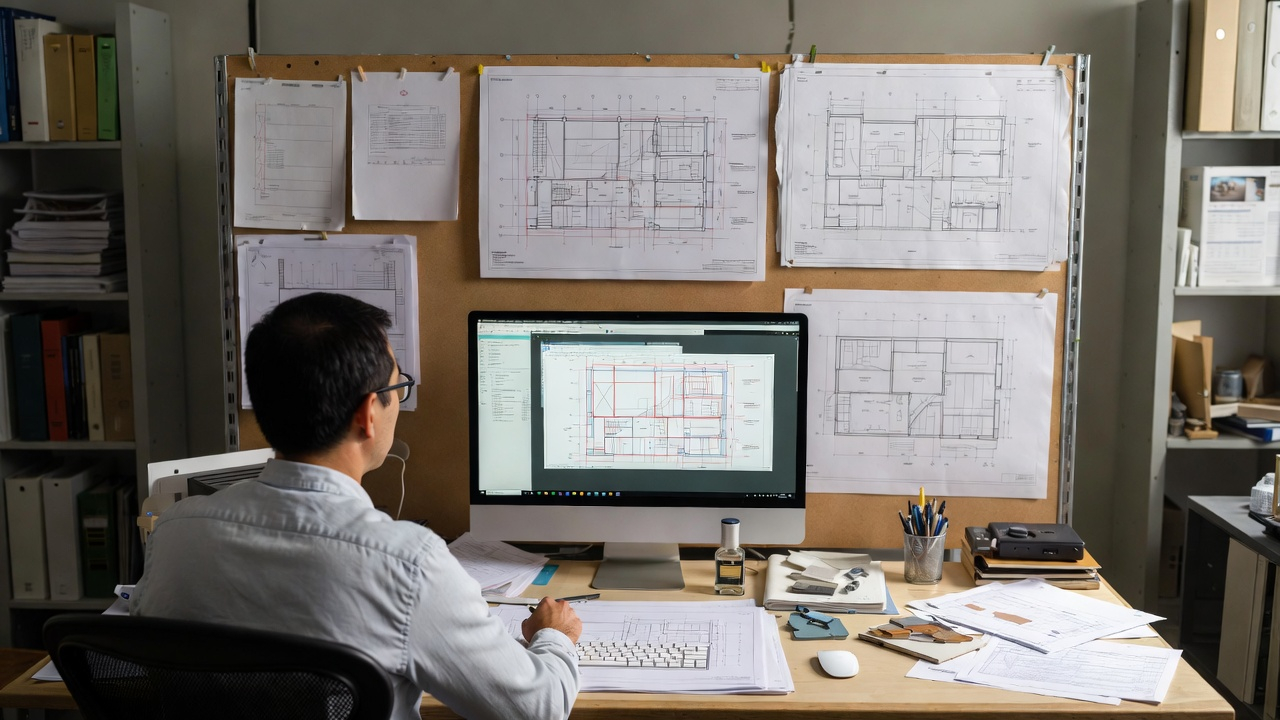
The first problem is repetition.
Development can feel slower than expected because practice repeats things on purpose. Redlines. Door schedules. Coordination comments. Site observations. Markups. Meeting minutes. Submittal notes. That repetition is not always exploitation. Sometimes it is training disguised as routine.
The second problem is confidence. Or the lack of it.
A lot of people come out of school thinking they are behind because they do not feel like architects yet. That feeling is common. The profession takes longer to settle into than people admit. There is a long stretch where you know more than a student and much less than you hoped.
The third problem is confusing software speed with architectural growth. Yes, software matters. Yes, efficiency matters. But someone can be fast in Revit and still be weak at code reading, detailing, consultant coordination, or construction judgment.
Before you move on, this page on how architecture students study is useful for contrast. Some school habits carry over well. Some absolutely do not.
How Architects Usually Develop Faster
Not by pretending to know more than they do.
The faster path is usually less dramatic than people want.
Ask better questions. Keep your own notes. Read redlines closely enough that patterns start showing up. Sit in on coordination calls when you can. Visit the site if your office allows it. Compare what was drawn to what got built. Learn why something changed, not just that it changed.
It also helps to build one honest strength at a time. Maybe you get very solid with envelope details. Maybe you become reliable on coordination. Maybe you start understanding construction administration earlier than expected. Development does not always happen evenly. That is normal.
The real trap is trying to sound advanced before your judgment catches up. That usually reads badly in offices. People would rather trust someone who is observant, careful, and still learning than someone who talks like a finished architect while missing basic coordination problems.
One more thing: the tools are changing, but the responsibility is not. This piece on studying architecture after AI is worth reading if you are trying to sort out what technology changes and what it does not.
The Part Nobody Loves Hearing
A lot of development after school is slow, quiet, and not especially glamorous.
It is not one magical promotion. It is not one exam pass. It is not one heroic all-nighter that proves you belong. It is accumulated trust.
You become more useful. Then more reliable. Then more trusted with small decisions. Then slightly bigger ones. Then one day you realize you are the person explaining the set, catching the clash, answering the younger designer's question, or telling somebody else to stop guessing and go check the drawing properly.
That is the real thing. Less cinematic than people imagine. More valuable too.
FAQ
Do architects really keep developing for years after school?
Yes. School builds a base, but practice adds technical judgment, coordination skill, communication habits, project awareness, and responsibility over time.
Is licensure the most important thing after graduation?
It is important, but it is not the whole picture. Licensure matters. So do office habits, project exposure, technical growth, and whether people can rely on your work.
What helps early-career architects develop faster?
Seeing more project phases, asking sharper questions, reading consultant information carefully, learning from redlines, and visiting jobsites when possible all help.
What office skill is most underrated?
Clear communication is high on the list. Bad emails, vague notes, and sloppy revision tracking create more project damage than many younger architects expect.
Does software mastery mean someone is developing well?
No. It helps, but it is only one part. Real development also includes judgment, coordination, detailing, code awareness, and how well someone handles real project pressure.
When do architects usually start feeling confident?
Later than they expect. Confidence usually grows out of repeated project exposure and fewer surprises, not out of one single milestone.