
Diploma of Building Design: What You Need to Know in 2025
Is a Diploma of Building Design Worth It?
Building design is where creativity meets construction. Below, we break down how a Diploma of Building Design works, what you’ll learn, and how to use it to start a real career in architecture and drafting.
Thinking about turning your design ideas into real buildings?
A Diploma of Building Design might be your best first step.
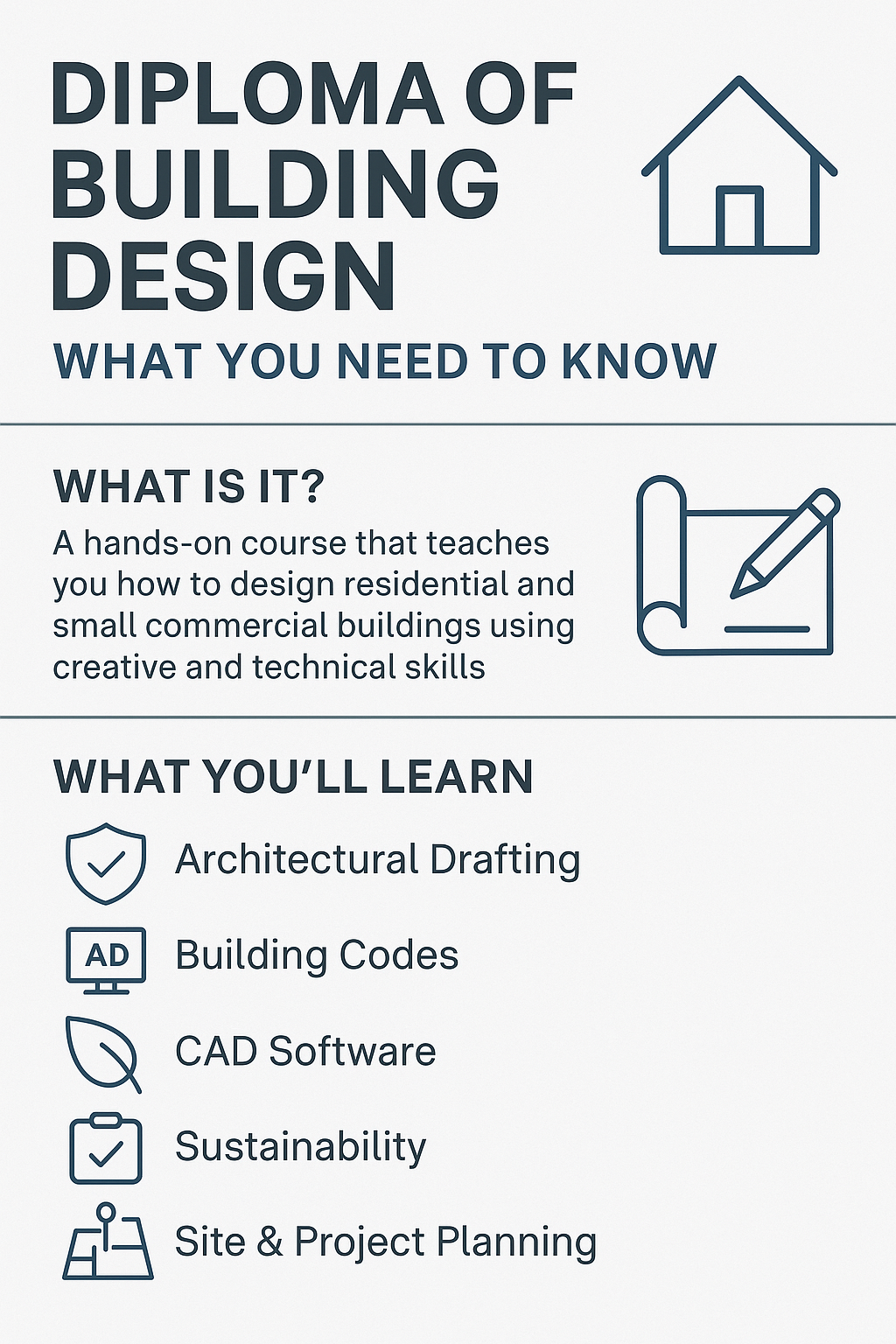
It’s a hands-on qualification that gives you the skills to design houses, small commercial spaces, and renovations using both creativity and technical tools.
Below, we’ll cover exactly what this diploma includes, how long it takes, what you’ll learn, where it can lead, and real tips from people who’ve done it. Whether you’re fresh out of school or changing careers, this guide keeps it simple and real.
What Is a Diploma of Building Design?
It’s a practical, job-ready course that teaches you how to design real buildings—from concept to drafting plans. You’ll learn the basics of construction, software, and code compliance so you can start working as a draftsperson or building designer.
What You’ll Learn (Real Skills That Matter)
● Architectural Drafting – Learn how to sketch and draft proper building plans
● Building Codes – Know the rules for residential and commercial designs
● CAD Software – Get fluent in programs like AutoCAD, Revit, or ArchiCAD
● Sustainability – Learn how to include eco-friendly design features
● Site & Project Planning – Understand how to manage real design jobs from start to finish
How to Start a Career in Building Design
What Jobs Can You Get with a Building Design Diploma?
Why Choose a Diploma of Building Design in 2025?
Choosing a career path isn’t just about money—it’s about what you’ll enjoy doing every day, where it can take you, and whether it fits the way you want to live. If you're creative, like solving problems, and care about how buildings actually get made, this diploma is a smart move.
What Makes It Worth It
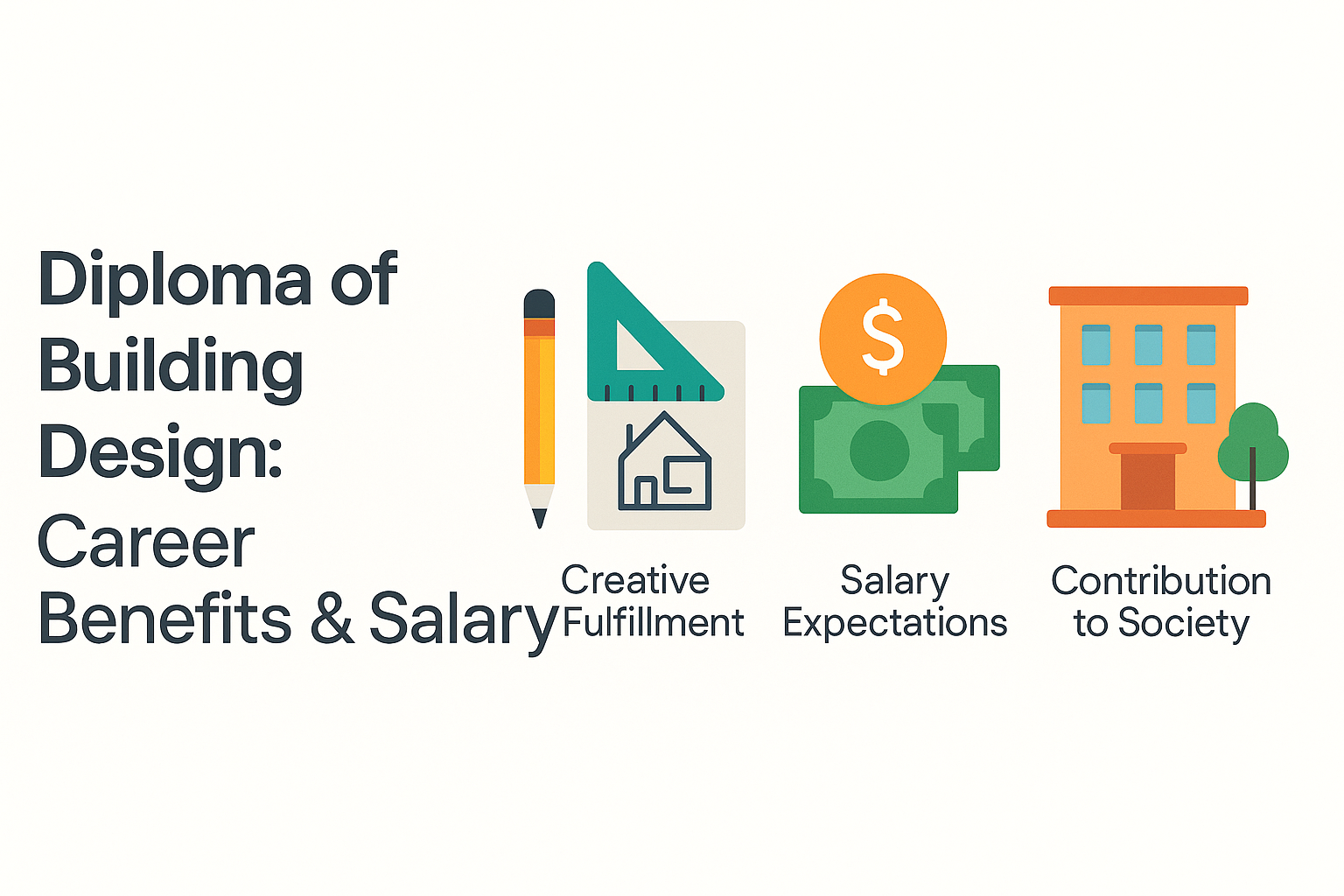
● You get to design real spaces. It’s not just theory. This diploma gives you the skills to draw, plan, and design homes, offices, and community spaces that people actually use.
● It’s creative—but grounded. You're not just sketching nice ideas—you’re learning how to make them real, within budget, building codes, and structural limits.
● You’re employable right out of school. Building designers are in demand in Australia, Canada, the U.S., and beyond.
Let’s break down why this diploma is still a great bet in 2025—and what it really leads to.
Salary Expectations in 2025: Real Numbers by Region
You won’t be stuck in an unpaid internship forever. This career path pays fairly well from day one—and grows fast.
Entry-Level (0–2 Years Experience)
● Australia: AUD 50k–65k in cities like Sydney and Brisbane
● Canada: CAD 42k–55k in Toronto, Vancouver
● USA: USD 45k–60k in most urban markets
● UK: £25k–35k, higher in London
● UAE: AED 120k–180k per year (Dubai/Abu Dhabi)
→ Pro Tip: Entry-level pay tends to be higher if you’ve done a strong portfolio, know BIM/CAD well, and can handle basic client presentations.
Mid-Level (3–6 Years)
● Australia: AUD 70k–90k
● Canada: CAD 65k–85k
● USA: USD 65k–85k
● UK: £40k–55k
● UAE: AED 200k–300k
→ By now, most designers have found a niche—residential, commercial, green design, or project coordination.
Senior-Level (7–10+ Years)
● Australia: AUD 100k–130k
● Canada: CAD 85k–110k
● USA: USD 90k–120k
● UK: £60k–80k
● UAE: AED 350k–500k
→ Want higher pay? Move into team leadership, run your own practice, or specialize in heritage, sustainability, or advanced 3D modeling.
Real Career Value
This isn’t a generic design degree. Here’s what it actually gives you:
● Project-ready skills – from concept sketches to technical drawings to final specs
● In-demand software tools – AutoCAD, Revit, ArchiCAD, SketchUp
● Compliance confidence – you’ll know how to read and apply local building codes
● Portfolio building – you’ll graduate with real projects you can show off
● Client communication – learn how to present your ideas and back them up
Hidden Benefits Most People Miss
● Flexibility – Many graduates go freelance or work part-time from home
● Clear path to licensing – It's a stepping stone to becoming a registered building designer or architect
● You don’t need a 4-year degree – But you can still earn well and grow
● Satisfaction – It’s hard to beat the feeling of walking past a building and saying: “I designed that.”
A Few Smart Tips from Industry Pros
✓ Always build your portfolio—update it every 6–12 months, even after you graduate
✓ Focus on communication skills—clients hire designers they trust, not just those who draw well
✓ Learn beyond the curriculum—get extra skills in energy efficiency, 3D rendering, or sustainable design
✓ Network early—internships, online groups, and LinkedIn help you land that first job
✓ Know your region—what sells in Melbourne doesn’t always work in Calgary or Abu Dhabi
Diploma of Building Design: What It Is, What You’ll Learn, and How to Start in 2025
Why It Still Makes Sense in 2025
With housing challenges, growing cities, and the demand for green buildings, we need people who know how to design smarter homes, not just more expensive ones.
This diploma gives you a seat at that table—whether you want to work for a firm, go solo, or even build your own.
It’s creative, practical, and real-world tested.
And that’s what makes it one of the most balanced career paths in design today.
What to Expect from a Building Design Course (2025 Edition)
Course Structure and Subjects
Understanding the course structure helps you prepare for what lies ahead. Here’s an overview of the typical subjects and structure of a Diploma of Building Design.
Core Subjects
- Architectural Design: Basics of design principles and architectural styles.
- Building Codes and Regulations: Comprehensive study of local and national building codes.
- CAD Software Training: In-depth training in software like AutoCAD, Revit, and SketchUp.
- Construction Materials: Study of various materials used in construction and their properties.
- Sustainable Design: Techniques and practices for designing environmentally friendly buildings.
- Project Management: Skills for managing time, resources, and teams in building design projects.
Elective Subjects
- Interior Design: Basics of interior space planning and design.
- Landscape Design: Integration of natural elements into building projects.
- Urban Planning: Fundamentals of designing urban spaces and communities.
- Advanced CAD Techniques: Specialized CAD training for complex projects.
- Building Information Modeling (BIM): Use of BIM software for project planning and execution.
Diploma of Building Design Careers: Jobs You Can Get After Graduation
Everything You Need to Know About Earning a Building Design Diploma in 2025
Skills You Will Gain
A Diploma of Building Design equips you with a broad range of skills. Here are some of the key skills you’ll develop during the course.
Technical Skills
- Architectural Drawing: Ability to create detailed and accurate architectural plans.
- CAD Proficiency: Competence in using CAD software to produce high-quality designs.
- Knowledge of Building Codes: Understanding of legal requirements and standards in building design.
- Project Management: Skills to manage design projects efficiently.
Creative Skills
- Design Principles: Ability to apply design principles to create aesthetically pleasing buildings.
- Problem-Solving: Creative approaches to solving design and construction challenges.
- Sustainability: Knowledge of sustainable design practices and how to implement them.
Interpersonal Skills
- Communication: Effective communication with clients, contractors, and team members.
- Collaboration: Ability to work as part of a team to complete projects.
- Client Management: Skills to manage client expectations and deliver satisfactory results.
Career Opportunities
Want to start a creative career in design and drafting? Here's everything you need to know about this diploma.
Career Paths with a Diploma of Building Design (2025 Edition)
Thinking about where a Diploma of Building Design can take you? You're not limited to just one path. This qualification opens doors in residential, commercial, industrial, and public design sectors. Here's an updated breakdown of the most relevant and in-demand roles in 2025.

1. Residential Building Designer
Design custom homes or multi-residential units.
- Meet directly with clients to design floor plans and layouts
- Create practical, livable designs that follow local codes
- Best for: Those who enjoy one-on-one client collaboration and creativity
2. Commercial Building Designer
Focus on retail spaces, offices, restaurants, and mixed-use buildings.
- Work with businesses to create branded, functional spaces
- Incorporate accessibility, energy codes, and user flow
- Best for: Designers interested in larger-scale projects and logistics
3. Industrial Designer (Building Focus)
Design practical buildings like factories, warehouses, or logistics hubs.
- Emphasize space planning, circulation, and workflow
- Work closely with engineers and operations managers
- Best for: Problem-solvers who like combining design with technical specs
4. Interior Designer
Shape the look, feel, and function of indoor spaces.
- Choose materials, finishes, and furnishings
- Focus on usability, aesthetics, and client comfort
- Best for: Visual thinkers with an eye for detail
5. Landscape Designer
Design outdoor spaces around buildings or public areas.
- Plan site layouts, pathways, and planting schemes
- Use climate-responsive and sustainable design principles
- Best for: Those who want to connect nature with architecture
6. Urban Planner (with Design Specialization)
Help shape neighborhoods, city layouts, and growth zones.
- Work on zoning, density, mobility, and public space design
- Collaborate with governments and developers
- Best for: Strategic thinkers interested in long-term, city-wide impact
Tip for 2025 Graduates: Many roles now value hybrid skills: knowing both design software and sustainability principles gives you a major edge. Familiarity with BIM (like Revit), CAD, and energy modeling tools is a big plus.
Start smart: Choose a path based on what excites you—designing cozy homes, reshaping cities, or making businesses more functional. This diploma gives you real flexibility.
Top Institutions Offering Diploma of Building Design
Choosing the right institution is crucial for your education and career. Here are some of the top institutions offering a Diploma of Building Design.
2025 updated and practical guide to top institutions offering Diplomas in Building Design or closely related programs across Australia, Canada, New Zealand, the United States, the United Kingdom, and Germany.
Each listing includes direct links to official program pages, making it easier for you to explore and apply.
🇦🇺 Australia
1. TAFE Queensland
Offers the Diploma of Building Design (CPP50921), focusing on residential and small-scale commercial projects. Graduates can apply for Low or Medium Rise Building Design licenses.
🔗 Program Detailswww.slideshare.net+9TAFE NSW+9TAFE NSW+9TAFE Queensland+3TAFE Queensland+3TAFE Queensland+3
2. RMIT University
Provides the Advanced Diploma of Building Design (Architectural), emphasizing hands-on skills for designing various building types.
🔗 Program DetailsDokumen Tips+4RMIT University+4RMIT University+4
3. TAFE NSW
Offers the Diploma of Building Design (CPP50921), developed in consultation with the building design and architecture industry.
🔗 Program DetailsVictoria University, Australia+8TAFE NSW+8TAFE NSW+8
🇨🇦 Canada
1. Herzing College (Toronto)
Provides a Building Design Technician Diploma, a 12-month program with an 8-week work placement, covering AutoCAD, Revit, and Ontario Building Code preparation.
🔗 Program DetailsHerzing College
2. British Columbia Institute of Technology (BCIT)
Offers a two-year Architectural and Building Technology Diploma, focusing on applied learning in architectural design and building systems.
🔗 Program DetailsBCIT - Education for a Complex World
3. Centennial College (Toronto)
Provides an Architectural Technology Diploma, emphasizing energy-efficient and sustainable design strategies.
🔗 Program DetailsCentennial College+1Humber Polytechnic+1
🇳🇿 New Zealand
1. Open Polytechnic
Offers the New Zealand Diploma in Architectural Technology (Level 6), designed for those intending to work as architectural technicians.
🔗 Program DetailsAra Institute of Canterbury+3openpolytechnic.ac.nz+3eit.ac.nz+3
2. Unitec Institute of Technology (Auckland)
Provides the New Zealand Diploma in Architectural Technology (Level 6), preparing students for careers in architectural technology with a mix of building science and systems.
🔗 Program DetailsAra Institute of Canterbury+3Unitec+3openpolytechnic.ac.nz+3
3. Ara Institute of Canterbury
Offers the New Zealand Diploma in Architectural Technology, focusing on producing working drawings and documentation for small and medium-scale projects.
🔗 Program DetailsUnitec+3Ara Institute of Canterbury+3openpolytechnic.ac.nz+3
🇺🇸 United States
1. Parsons School of Design – The New School (New York)
Offers a BFA in Architectural Design, integrating practice in a fine arts context and related disciplines like interior and product design.
🔗 Program DetailsThe New School
2. Pratt Institute (Brooklyn, NY)
Provides programs through its School of Architecture, focusing on developing skills to respond to complex and evolving architectural challenges.
🔗 Program DetailsPratt Institute
3. Savannah College of Art and Design (SCAD)
Offers undergraduate and graduate degrees in architecture, emphasizing interdisciplinary collaboration and real-world application.
🔗 Program DetailsSCAD.edu
United Kingdom
1. University of the Arts London (UAL)
Provides a Foundation Diploma in Art and Design, offering a broad introduction to art and design disciplines, including architecture.
🔗 Program DetailsUAL+2UAL+2Manchester Metropolitan University+2
2. Manchester Metropolitan University
Offers various undergraduate courses in design, including interior and product design, through its Department of Design.
🔗 Program Details
3. Birmingham City University
Provides a range of architecture and design courses, including RIBA-accredited programs, through its Faculty of Arts, Design and Media.
🔗 Program DetailsBirmingham City University+1Birmingham City University+1
🇩🇪 Germany
While Germany offers various architecture and design programs, specific diplomas in building design are less common. However, institutions like Bauhaus University in Weimar provide advanced architectural design programs. For a comprehensive list of design programs in Germany, you can refer to the following resource:
🔗 Design Programs in GermanyUTK College of Architecture + Design
Note: Program offerings and details are subject to change. It's advisable to visit the official institution websites for the most current information.
How to Get Accepted into a Building Design Diploma Program (with Real Tips)
How to Apply for a Diploma of Building Design in 2025
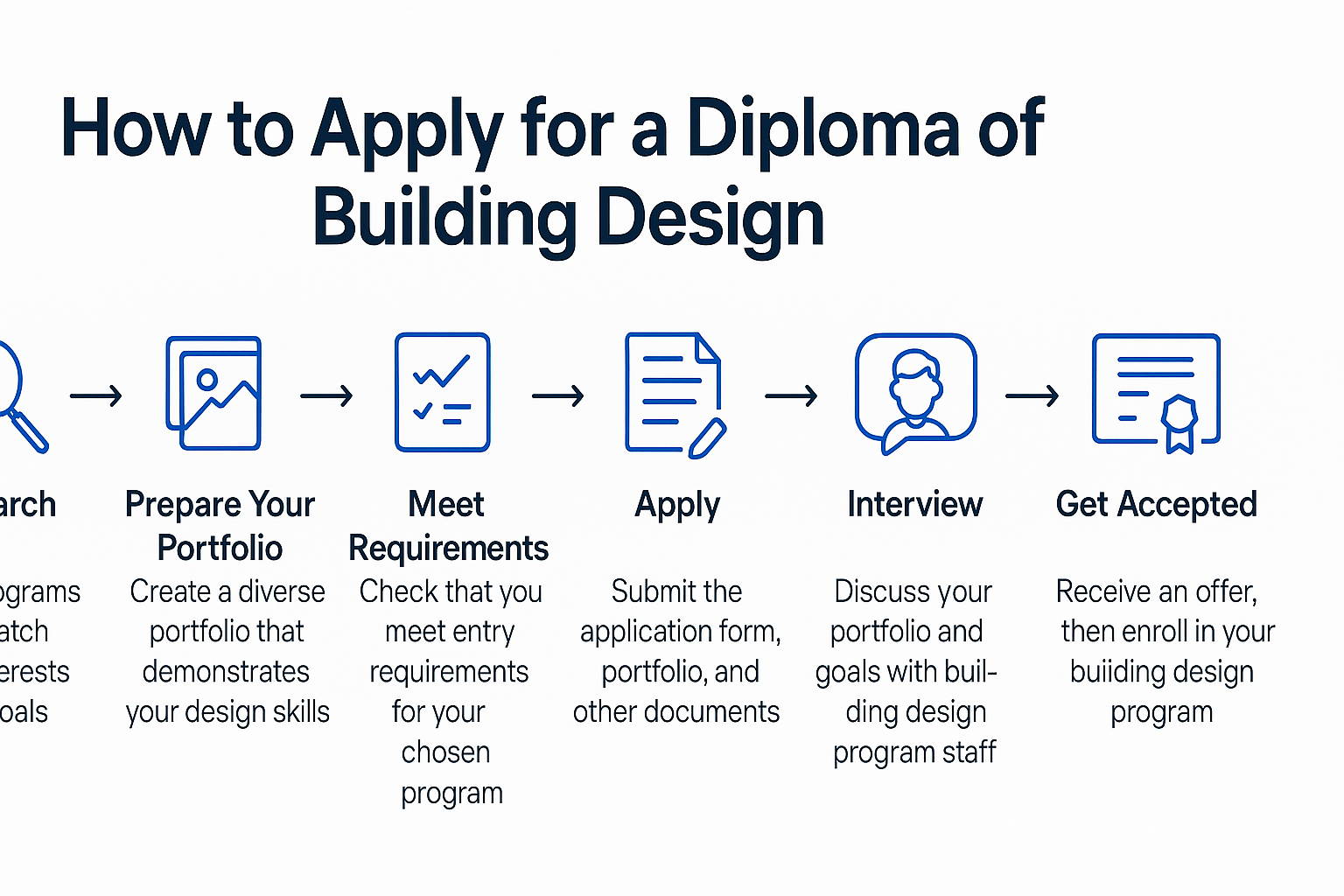
Start With Smart Research Don’t just pick the first course that pops up on Google. Take the time to:
- Check if the program is nationally accredited (like through ASQA in Australia or a provincial body in Canada).
- Compare curriculums: Look for up-to-date software training (AutoCAD, Revit), sustainable design units, and real-world projects.
- Read reviews or forums: See what actual students say about the course.
- Ask about placement: Some schools help you land internships—others don’t.
Understand the Entry Requirements Most programs are accessible, but you still need to:
- Be 18 or older (some accept 17+ with guardian consent).
- Have a high school diploma (or equivalent).
- Show English proficiency if you’re an international student.
- Meet any visual portfolio or interview requirement.
Build a Portfolio That Stands Out If a portfolio is part of the process, don’t overthink it—but don’t wing it either:
- Include 6–10 pieces: Sketches, digital work, floor plans, or even photography.
- Highlight your thinking: Include captions or quick notes about your process.
- Show variety: Don’t submit 10 versions of the same drawing.
- Clean presentation: PDF format, no huge file sizes, and organize clearly.
Write a Strong Statement of Purpose Some programs ask why you want in. Keep it simple:
- Talk about a moment or project that got you interested in design.
- Mention what you hope to learn (e.g. sustainable materials, digital tools).
- Keep it real—don’t try to sound like a brochure.
Roadmap for Getting In Here’s how most successful applicants approach the process:
- 3-6 Months Before Intake: Start researching programs.
- 2-3 Months Before: Finalize your shortlist and begin preparing your portfolio.
- 1-2 Months Before: Submit your application and book your interview.
- 2-3 Weeks After: Expect a response. If accepted, enroll and prepare for study.
Real Tips from Past Students
- "I added a 3D SketchUp mockup of a bus stop I designed in high school. They loved it."
- "Don’t forget to double-check your file sizes. My friend’s portfolio didn’t upload because it was too big."
- "My interview wasn’t scary. They just wanted to know if I really cared about the work."
What to Do If You Don’t Get In First Try
- Ask for feedback.
- Join a short course in drafting or design software.
- Apply again next intake with a stronger portfolio.
Final Thought Applying doesn’t need to be stressful if you plan ahead. Focus on showing your real interest, not perfection. Design programs want motivated students, not just perfect artists.
Best Books for Prep
- Architectural Drafting and Design by Alan Jefferis
- Design Drawing by Francis D.K. Ching
- The Future of Architecture in 100 Buildings by Marc Kushner
Helpful Links
- ASQA: For verifying accredited courses in Australia
- TAFE Australia: Popular provider of building design diplomas
- Canada.ca - Postsecondary Programs: For Canadian programs
Related: Free Architecture Courses with Certificate: Top Online Platforms to Learn and Earn
How Long Does It Take to Get a Diploma of Building Design?
Find out if a building design diploma is right for you, how long it takes, and what real grads say about it.
Cost and Duration
Understanding the cost and duration of the program.
Cost and Duration of a Building Design Diploma in 2025
What You’re Really Paying For—and How Long It Takes
How Long Does It Take?
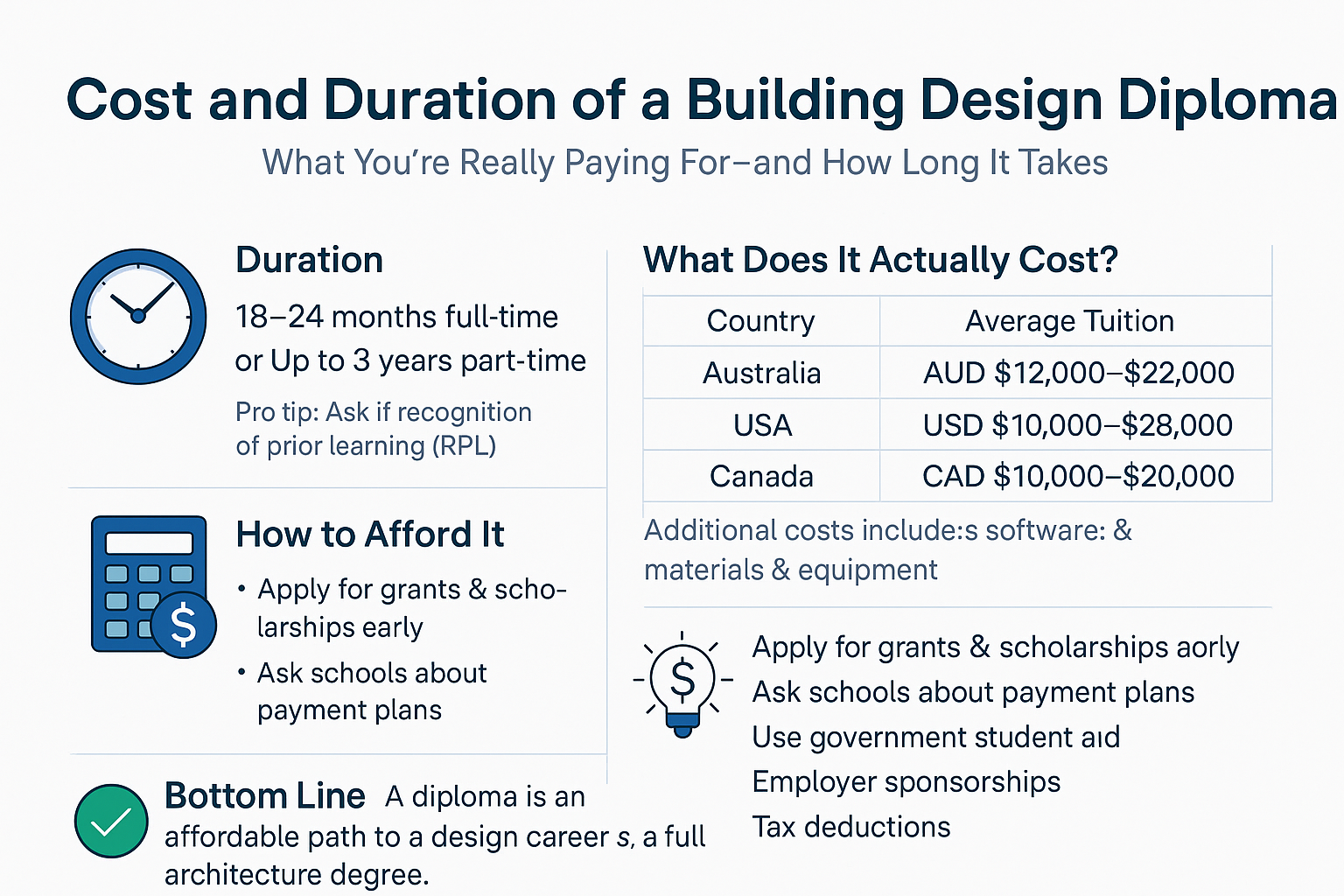
Most Diploma of Building Design programs take:
-
18–24 months full-time
-
Up to 3 years part-time, depending on the provider
If you’re working or have family obligations, flexible or blended learning options (online + in-person) are available at many institutions.
Pro tip: Ask if the program offers “recognition of prior learning (RPL)” if you’ve already worked in construction, drafting, or related fields—it can shorten your course time significantly.
What Does It Actually Cost?
Here’s a rough breakdown for 2025 tuition and materials:
| Country | Average Tuition | Notes |
|---|---|---|
| Australia | AUD $12,000–$22,000 | Includes TAFE & private providers |
| USA | USD $10,000–$28,000 | Varies by state and private vs. public |
| Canada | CAD $10,000–$20,000 | Usually includes materials/lab fees |
| Online Options | USD $4,000–$15,000 | For recognized remote diplomas |
Additional costs to budget for:
-
Software licenses: AutoCAD, Revit, SketchUp (~$300–$700 annually unless provided)
-
Materials & equipment: Sketching tools, laptop, printouts (~$300–$1000)
-
Site visits or fieldwork fees (varies by school)
How to Afford It
Here’s what smart students actually do:
▪ Apply for grants & scholarships early. Many are industry-specific—check organizations like AIBD, NAHB, and local construction associations.
▪ Ask schools about payment plans. Many offer interest-free monthly payments.
▪ Use government student aid (e.g. FAFSA in the U.S., HECS/HELP in Australia, OSAP in Ontario).
▪ Check employer sponsorships. Some construction, real estate, or design firms will partially cover education if you commit to working with them.
▪ Use tax deductions. In some countries, course-related expenses can be tax-deductible—check with your accountant.
Bottom Line: Getting a Diploma of Building Design isn’t cheap—but it’s one of the most affordable paths into a design career compared to a full architecture degree. Plan ahead, explore funding options, and don’t be afraid to ask institutions what past students did to cover their costs.
Related: 10 Essential Skills Needed to Be an Architect
Diploma of Building Design vs. Architecture Degree: What’s the Difference?
Online vs. On-Campus Learning
Both online and on-campus learning have their advantages. Here’s a comparison to help you decide which is best for you.
Online Learning
- Flexibility: Study at your own pace and on your schedule.
- Accessibility: Access course materials from anywhere with an internet connection.
- Cost-Effective: Often more affordable due to lower tuition and no commuting costs.
On-Campus Learning
- Hands-On Experience: Access to workshops, labs, and other facilities.
- Networking: Build relationships with peers, faculty, and industry professionals.
- Structured Learning: Benefit from a structured schedule and direct interaction with instructors.
Hybrid Programs
Some institutions offer hybrid programs that combine online and on-campus learning, providing the best of both worlds.
Related: Is Architecture a Dying Profession? The Surprising Truth About Its Future
Real-Life Success Stories
Real-Life Success Stories: Graduates Who Made It Work
Sometimes the best way to understand what a diploma can actually do for you is to see how others have used it.
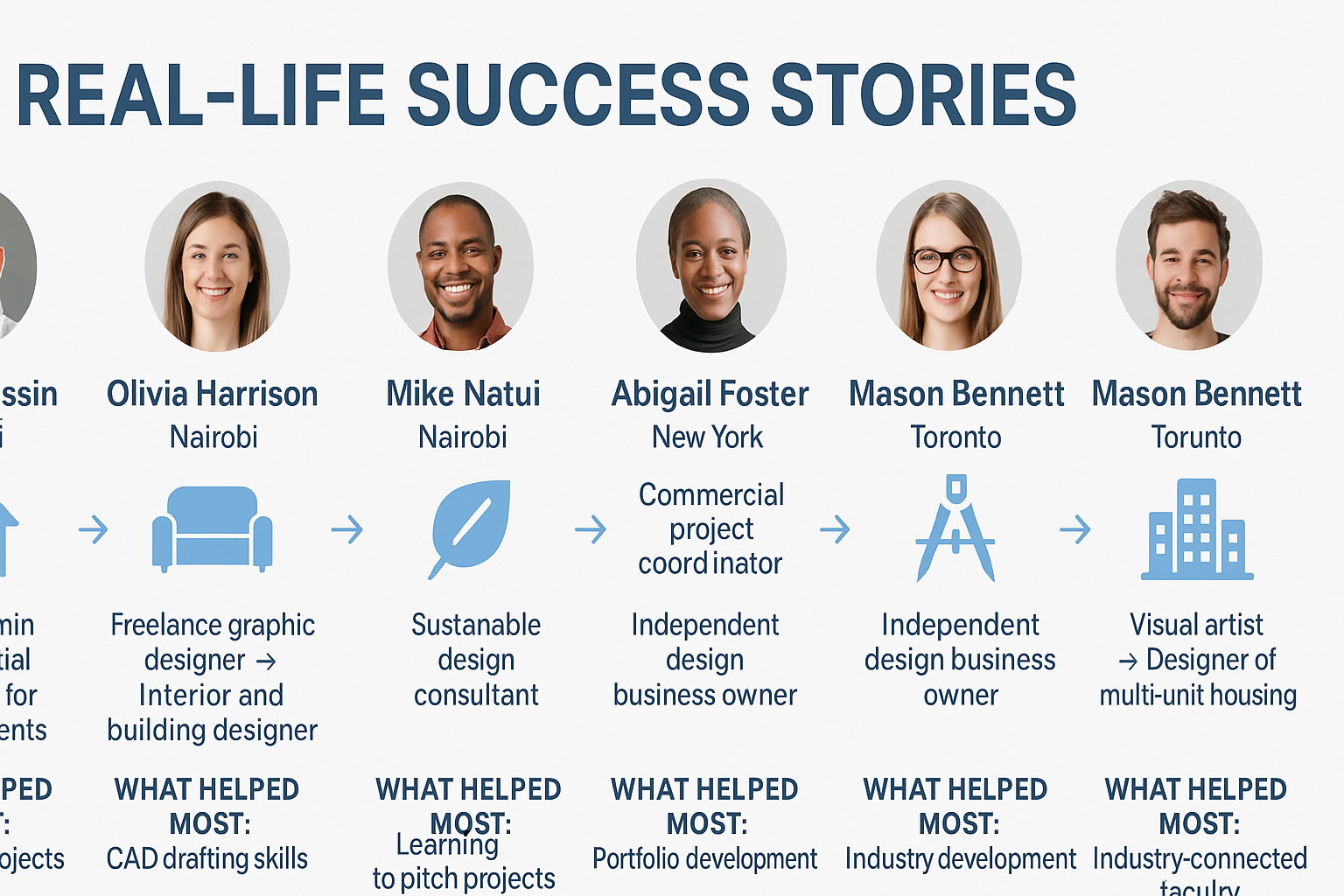
Below are real stories from people who started with a Diploma of Building Design and turned it into something real—new careers, businesses, and even second chances.
These aren’t marketing fluff or polished bios. We reached out through LinkedIn, local alumni groups, and professional design forums to gather real insight from past students.
Amjad Hussin – Dubai
From: Office admin → To: Residential designer for luxury clients
“I didn’t come from an architecture background. I was working in admin at a construction company, always sketching ideas during lunch. The diploma gave me the technical skills and software training to take design seriously. I landed a junior designer role a few months after graduating, and now I’m managing high-end villa projects across the UAE.”
What helped most: Hands-on projects and site visits.
Olivia Harrison – Sydney
From: Freelance graphic designer → To: Interior and building designer
“I’d been freelancing in branding and layout design for years, but I kept getting asked to help with floorplans and interior ideas. I finally took the diploma to make the jump. Now I get to do full interior + exterior work—especially on small home renovations and boutique shops. It’s the perfect mix of design and problem-solving.”
What helped most: CAD drafting + understanding how design applies to real spaces.
Mike Natui – Nairobi
From: General contractor → To: Sustainable design consultant
“I knew how to build, but I didn’t know how to design. That’s what pushed me. The course taught me how to turn ideas into usable plans. Now I work with clients who want eco-friendly houses. I’ve even helped a few NGOs with low-cost housing models.”
What helped most: Sustainable design modules + learning how to pitch design proposals.
Abigail Foster – New York
From: Commercial project coordinator → To: Independent design business owner
“I was working on the project management side, but I was always interested in the design work happening upstream. I did the diploma part-time while still working. Since graduating, I’ve launched a small residential design studio and have a steady stream of work in Brooklyn and upstate.”
What helped most: Portfolio development + mentorship from instructors.
Mason Bennett – Toronto
From: Visual artist → To: Designer of multi-unit housing
“I didn’t know if I had the right background—I came from a fine arts degree. But the course was practical. Once I started learning how to turn drawings into floor plans, it clicked. Now I’m part of a team that designs sustainable duplexes for new urban projects.”
What helped most: Being taught by active professionals—not just academics.
Ethan Parker – London
From: Retail worker → To: Junior designer at a commercial firm
“This course was a restart for me. I wasn’t in the design world at all—I’d been in retail for nearly 8 years. I knew I needed to shift, and this gave me the foundation. It wasn’t easy, but it was worth it. I’m now designing retail fit-outs and small commercial offices.”
What helped most: Industry placement + real feedback on studio projects.
What These Stories Show
These people didn’t all come from the same background—and that’s the point. Whether you’re coming from construction, admin, creative work, or something else entirely, a Diploma of Building Design can be your entry point into a real career.
Things that helped them succeed:
-
Building a solid portfolio during the course
-
Learning how to use CAD and modeling tools professionally
-
Networking with instructors and alumni for opportunities
-
Having real support to navigate job interviews or client work
If you’re on the fence, start small. Research the course, visit open days, talk to past students. The key is not just earning the diploma—it’s using it with purpose.
Expert Tips for Succeeding in Building Design
Real advice from professionals who've done the work.
1. Stay Curious
→ Always keep learning. New software, codes, and methods show up fast. The best designers are the ones who stay sharp.
2. Think Sustainable Early
→ Eco-friendly design isn’t a bonus anymore—it’s expected. Use smart materials, passive cooling, and low-energy systems from day one.
3. Network with Purpose
→ Go to trade shows. Join LinkedIn groups. Message people you admire. Jobs often come through connections—not job boards.
4. Build Thick Skin
→ Clients change their minds. Projects get rejected. Keep showing up, stay professional, and learn from every stumble.
5. Make It About the Client
→ Your design skills matter, but listening is your superpower. Understand their lifestyle, budget, and future plans.
6. Practice Presenting
→ If you can’t explain your design clearly, people won’t buy into it. Practice talking about your work with confidence.
7. Learn the Codes
→ Get familiar with local building codes early. It’ll save you hours—and it impresses clients and contractors alike.
8. Use Feedback Like a Tool
→ Whether it's from a mentor, teacher, or client—don’t take it personally. Use it to improve your work.
9. Start Building a Portfolio Now
→ Even if it’s school projects or personal concepts—show your process, not just pretty renders. Employers want to see how you think.
10. Keep Things Organized
→ Time management, file naming, and clean CAD layers sound boring—but they make you reliable. And reliable people get hired.
Latest Trends in Building Design
Real Trends in Building Design (2025 Edition)
What’s actually shaping the industry—and why it matters.
1. Sustainable, Low-Impact Design
→ It’s no longer optional. Clients want energy-efficient homes that use less water, less power, and smarter materials. Think solar panels, passive design, and high-performance insulation.
2. Smart Integration—Done Right
→ It’s not just about gadgets. In 2025, smart design means well-planned lighting, climate control, and security systems that are intuitive—not overcomplicated. Designers who can plan for future tech get hired first.
3. Biophilic Design That Works
→ Natural light, green roofs, indoor plants, and wood finishes aren’t just trendy—they boost mental well-being. This is big in schools, offices, and homes now.
4. Clean, Quiet Minimalism
→ Clients want calm, clutter-free spaces. That means simple forms, neutral tones, open layouts—but with thoughtful function behind every choice.
5. Adaptive Reuse Is Everywhere
→ More designers are reworking old buildings instead of starting from scratch. It saves money, reduces waste, and keeps local character. Great skill to learn.
Bonus Tip: What’s Not Working in 2025
→ Over-designed facades, excessive automation, and “style over structure” mistakes. Clients want smart, livable spaces—not design experiments that don’t work day-to-day.
FAQ
How long does it take to complete a Diploma of Building Design?
The program typically takes 1 to 2 years to complete, depending on the institution and whether you study full-time or part-time.
What are the admission requirements?
Most programs require a high school diploma or equivalent. Some may also require relevant work experience or a portfolio.
Can I study online?
Yes, many institutions offer online or hybrid programs that combine online and on-campus learning.
What career opportunities are available?
Graduates can pursue careers in residential and commercial building design, interior design, landscape design, urban planning, and more.
How much does the program cost?
The cost varies but typically ranges from $10,000 to $30,000. Financial aid and scholarships are often available.
Is financial aid available?
Many institutions offer financial aid, scholarships, and payment plans. Check with your chosen institution for details.
What skills will I gain?
You’ll gain technical skills in architectural drawing, CAD software, and building codes, as well as creative skills in design principles and sustainability.
Are there opportunities for hands-on experience?
Yes, many programs include practical training, internships, and project-based learning.
Can I specialize in a particular area?
Many programs offer elective subjects that allow you to specialize in areas like interior design, landscape design, or urban planning.
What are the benefits of a Diploma of Building Design?
The diploma provides a comprehensive education in building design, opening up diverse career opportunities and offering the satisfaction of creating functional and beautiful spaces.
Final Thoughts
A Diploma of Building Design isn’t just about learning how to draft buildings—it’s about turning creative ideas into real, usable spaces. It gives you the tools to work in an industry that mixes design, problem-solving, and purpose.
If you’re serious about design and ready to do meaningful work, this diploma can open real doors. Stick with it, stay curious, and keep learning—you’ll be well on your way to a solid career in building design.