
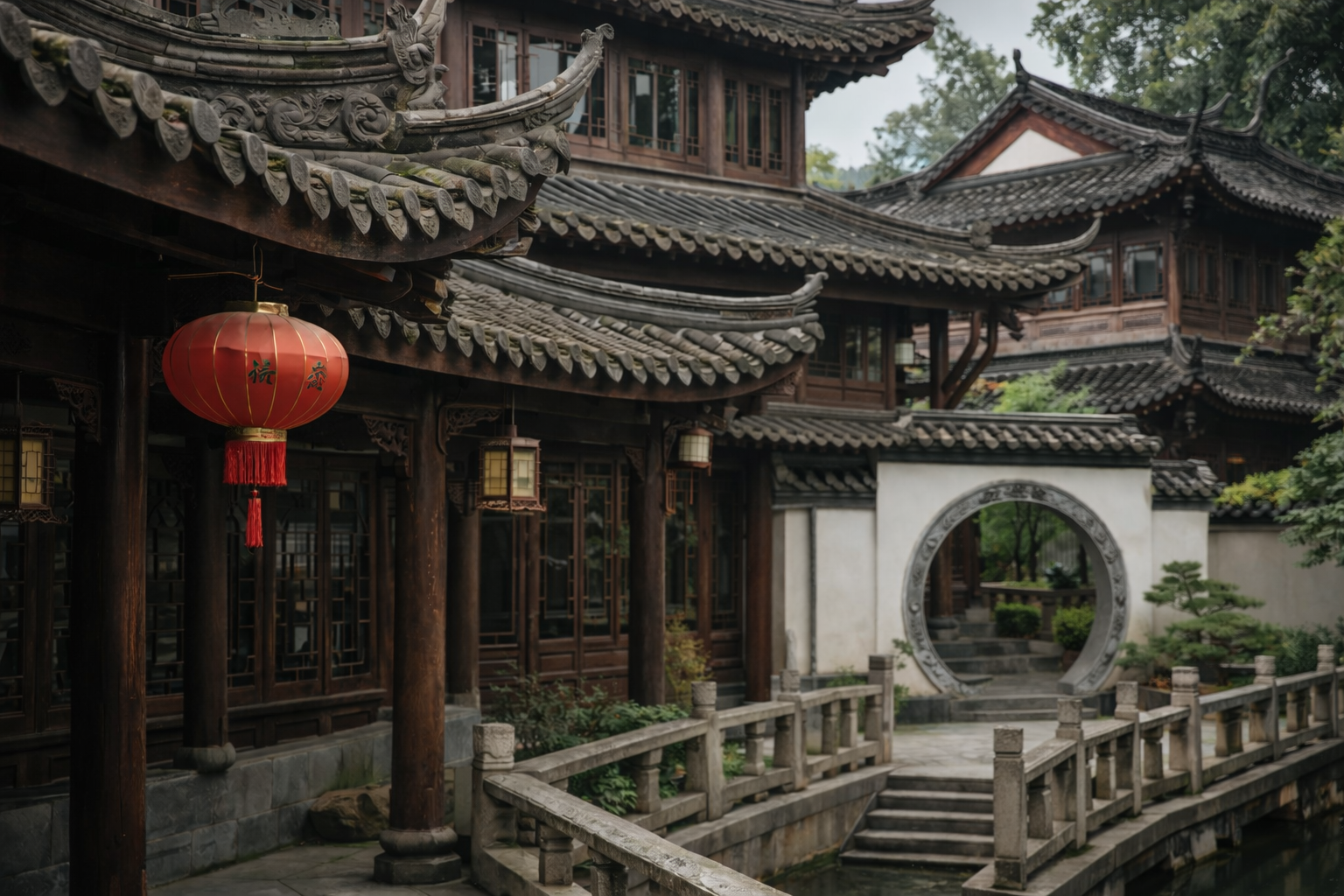
If you read Chinese architecture by the curved roof alone, you will get it wrong fast. The real language is broader than that. The roof gives the first read, but the bracket set explains the structure, the screen wall controls the approach, and the color system tells you a lot about rank, use, and finish.
That is the useful way to look at it. Not “Chinese buildings have dragons and red paint.” Not “everything curves upward.” Start with the four features that actually organize what you are seeing.
- How roofs signal status and period
- Why brackets matter beyond decoration
- What screen walls and courtyard edges actually do
- How color works as a building system, not just ornament
Roofs Carry the First Read
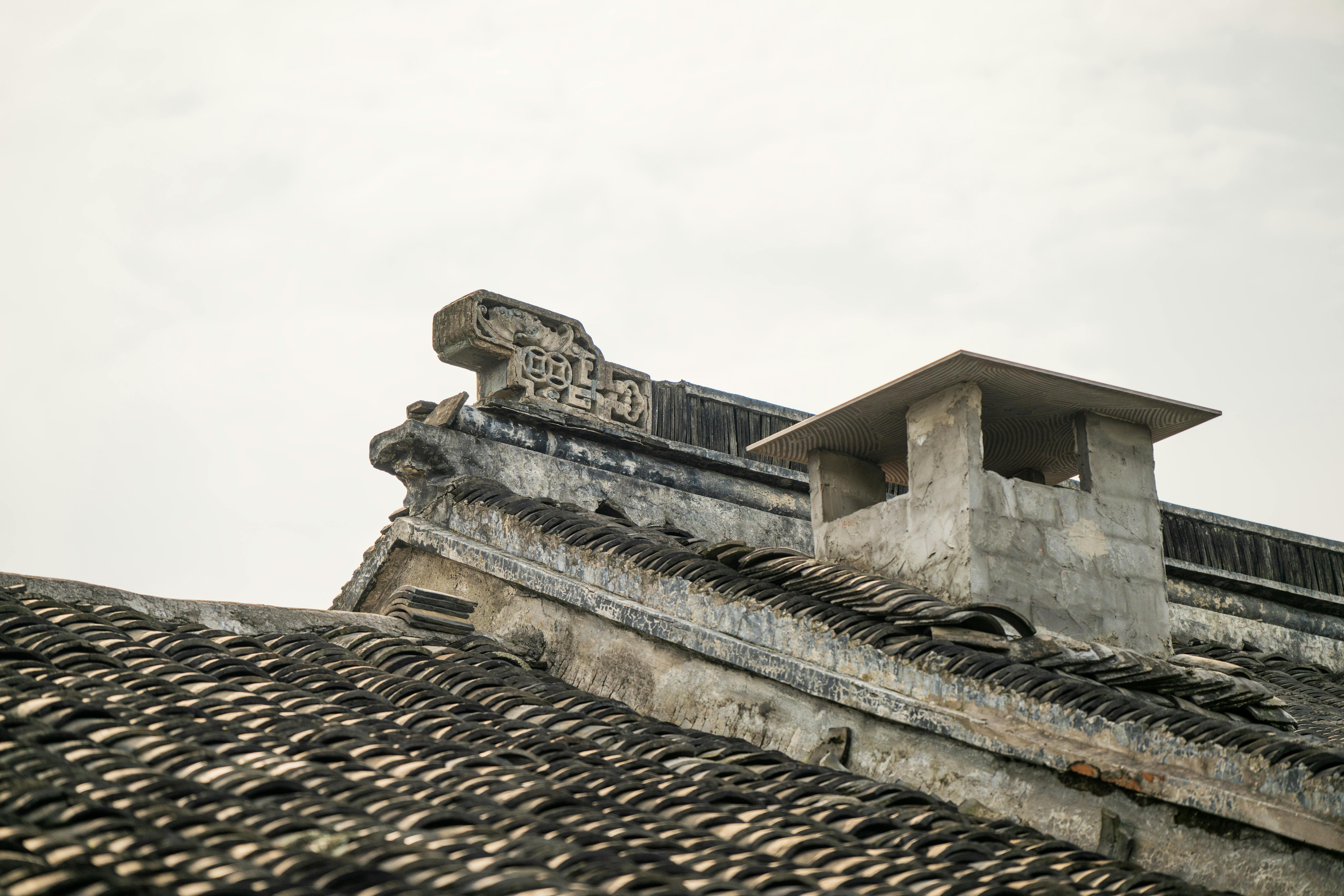
The roof is usually the strongest visual element in traditional Chinese architecture. It projects far beyond the wall line, controls the silhouette, and tells you a surprising amount about status before you even read the rest of the building.
The common mistake. People often assume the defining feature is simply the upward sweep at the corners. That is only part of the story. In earlier periods, especially before the Song dynasty, roof profiles in northern timber buildings could read lower and straighter. From the Song through the Yuan, Ming, and Qing periods, major roofs became more elevated and concave, which is much closer to the image most people now carry in their heads.
What to look for in 10 seconds. Check four things: the depth of the eaves, the roof type, the ridge treatment, and the corner lift. A simple gray-tile courtyard house and a major palace hall may share the same architectural family, but the amount of projection, glazing, and ridge ornament will not be the same. For a broader timeline, see our Chinese architecture timeline.
Why the corners lift. The upturned corner is not just theatrical styling. In the traditional system, the corner eaves also help resolve what would otherwise be a heavy overhang condition at the corners. That is one reason the roof feels so deliberate rather than decorative for decoration’s sake.
Ridge details matter. On higher-status buildings, the ridge line often carries ceramic ornaments and roof figures. In palace architecture, rows of roof creatures commonly appear in odd-number groupings such as 3, 5, 7, or 9, with the count tied to hierarchy. These figures were not only symbolic. Some ridge elements also protected fasteners and vulnerable roof junctions from weather.
So yes, the roof is decorative. But it is also structural, ranked, and highly coded.
Brackets Show You the Structure
If the roof is the first read, the bracket set is the second. This is where a lot of bad summaries fall apart, because they describe the brackets as carved trim. They are not trim.
The classic dougong system is a layered assembly of blocks and arms set between the top of the column and the roof structure above. It helps transfer load, carry projecting eaves, and build a clear transition from vertical support to horizontal roof spread. In plain terms: the bracket set is doing real work while also becoming one of the building’s most recognizable visual features.
How to read it. Look at the column head first. Then look at how many layers step outward, how dense the cluster is, and whether the brackets feel restrained or highly elaborated. By the Song period, bracket clusters had become more complex, and later high-status buildings could push that expression even further.
Why it matters. In a lot of Western traditions, structure gets buried behind finish. In the Chinese timber tradition, the bracket zone is one of the places where structure stays visible. That is why the architecture can feel so legible. You can often see where the roof load is being gathered and redirected. If you want the wider context, our piece on traditional elements in Chinese architecture gets into the larger vocabulary around these details.
Do not overread ornament. Not every building uses a dense, palace-level bracket system. Smaller houses, regional buildings, and lower-rank compounds can be much simpler. The right question is not “Does it have the biggest brackets?” The right question is “How is this building expressing support, depth, and status at the eaves?”
Screens Control Entry and Privacy
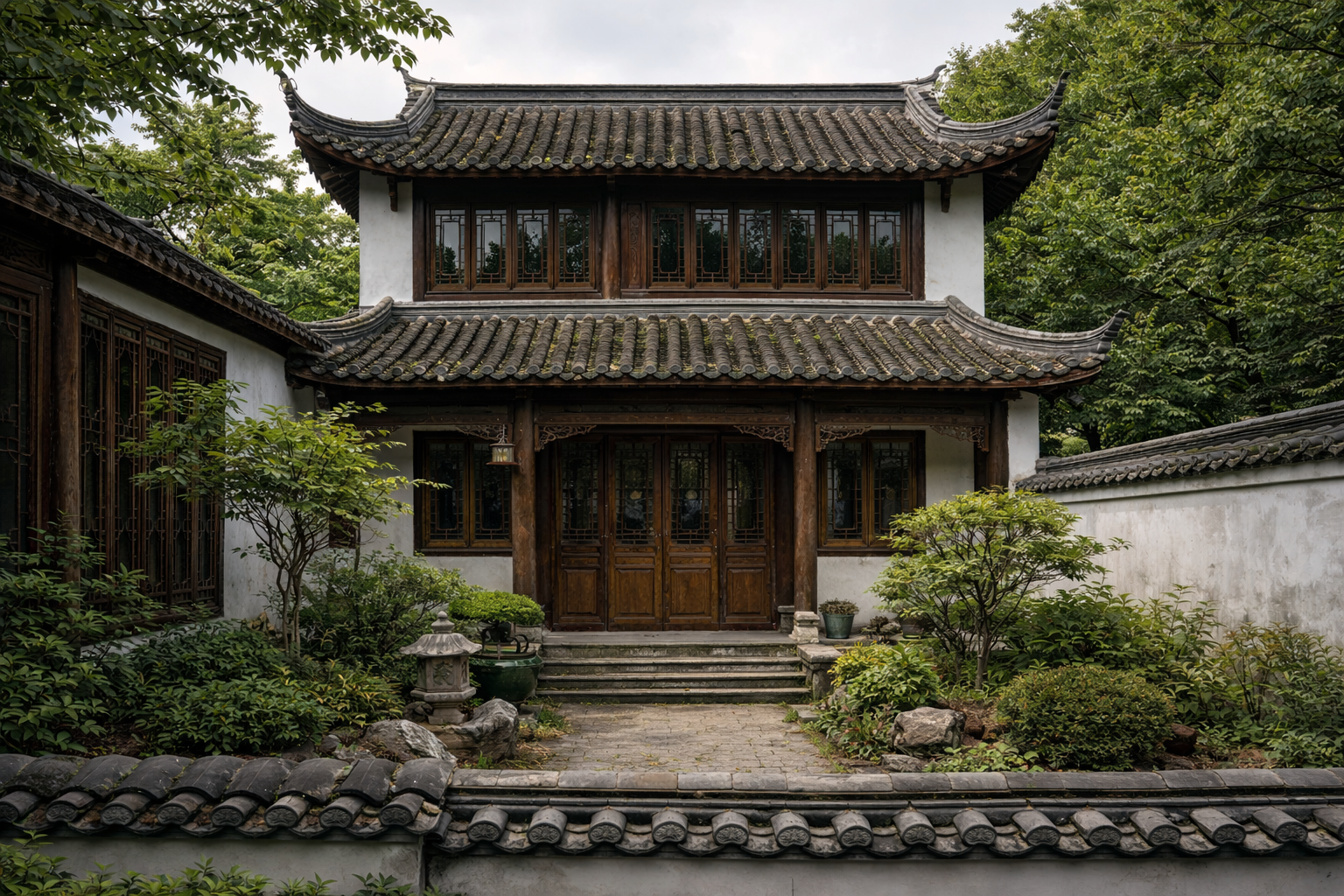
This feature gets skipped all the time, even though it changes how the building is experienced from the first step inside the gate.
A screen wall, often called a yingbi or zhaobi depending on placement, is usually set at the entrance or just inside it. The practical job is simple: block a direct line of sight into the courtyard, create privacy, and slow the approach. The spatial effect is even more important. You do not walk straight from street to main hall. You enter, stop, turn, then continue.
The sequence matters. In a traditional courtyard compound, the read often goes like this:
- Gate
- Screen wall
- Courtyard
- Main hall
That four-part sequence is doing real architectural work. It separates public from private space, organizes movement, and gives the compound a controlled reveal instead of one instant full view.
Where people get it wrong. They treat the screen wall as a decorative panel that could be removed without changing much. In reality, removing it changes privacy, threshold, and the whole first impression of the compound. It is not filler. It is part of the plan logic.
What to watch for. On more elaborate examples, the screen itself may carry glazed tile, relief work, carved stone, or auspicious motifs. On plainer compounds, it can be quieter. Either way, the architectural job comes first. Our guide to Chinese courtyard houses shows this sequence more clearly at the house scale.
Color Was Never Random
Color in Chinese architecture is one of the easiest things to oversimplify. People see red walls and yellow roofs in imperial settings and assume the whole tradition works off one fixed palette. It does not.
Start with hierarchy. Color is tied to building type, status, and setting. Yellow glazed roof tiles are strongly associated with imperial architecture and royal precincts. That does not mean every Chinese building used yellow tile. Most did not. Many domestic and regional buildings rely on gray tile, plain timber, whitewashed surfaces, or much quieter finish systems.
Then read the timber color. Painted architectural polychromy, or caihua, is a major part of the tradition. This is not just paint added for prettiness. It is a formal decorative system applied to architectural members such as beams, brackets, and under-eave zones. In higher-status buildings, the painted work becomes denser, more ordered, and easier to read as a rank signal.
The fast visual rule. The more important the building, the more controlled and deliberate the color system usually becomes. Important halls tend to show clearer hierarchy in tile color, bracket painting, ridge emphasis, and under-eave treatment. Lower-rank buildings usually step that down.
What not to do. Do not describe Chinese architectural color as “red means luck and yellow means power” and stop there. That is not wrong, but it is too thin to be useful. The better read is this: color marks authority, organizes visibility, protects and finishes exposed timber, and helps separate ordinary construction from ceremonial construction. For a tighter look at ornament itself, read our piece on Chinese decorative architectural details.
How These Features Work Together
The strongest buildings do not rely on one feature. They stack the system.
A typical high-status read goes something like this: broad roof projection, visible bracket depth, controlled entry sequence, then a disciplined paint and tile hierarchy. Each layer reinforces the next. That is why the architecture feels coherent. The roof is not fighting the plan. The screen wall is not an afterthought. The color is not detached from the structure.
This also explains why cheap imitations look wrong so quickly. A generic building shell with a pasted-on curved eave may borrow one surface clue, but it does not borrow the sequence, the load expression, or the hierarchy. The result feels thin almost immediately.
The Detail People Misread
This applies most often when someone is trying to identify “Chinese style” from a photo, a travel image, a stage set, or a modern copy.
What people usually do wrong is lock onto the roof curve and stop there. The correct move is to check four things together: roof profile, bracket expression, entrance screening, and color hierarchy. That prevents the most common failure, which is mistaking a surface imitation for the real architectural system.
The mistake usually shows up right away in modern themed buildings: the roof corners lift, but there is no real bracket logic, no threshold sequence, and no disciplined color order. One limit here: modest regional buildings can be much simpler than palace architecture, so the goal is not to hunt for maximum ornament. The goal is to see whether the building’s visible features still work as a coherent system.
How Contemporary Buildings Borrow From It
The better contemporary projects do not copy old palace imagery piece by piece. They borrow the deeper moves instead.
- Roof proportion rather than literal historic replication
- Screened thresholds instead of direct exposed entry
- Timber rhythm and bracket logic rather than pasted ornament
- Controlled material and color hierarchy instead of random symbolism
That is usually the cleaner path. Once the project starts copying dragons, roof beasts, and imperial color schemes without the spatial logic underneath, it starts slipping toward costume architecture. You can see that shift more clearly in our article on modern Chinese architecture.
FAQ
What Are the Main Features of Traditional Chinese Architecture?
The fastest useful answer is this: strong roofs with deep eaves, visible bracket systems, screened and sequenced entry, and a deliberate color hierarchy. Those four features explain much more than a generic list of symbols.
What Is Dougong?
Dougong is the interlocking bracket system placed between the column and the roof structure. It helps support projecting eaves and transfer roof loads while creating a highly visible structural zone.
Why Do Chinese Roofs Curve Up at the Corners?
Part of the answer is visual refinement, but there is also a structural logic at the corners, where the eaves would otherwise project too heavily. The dramatic roof profile most people recognize became more pronounced in later periods, especially from the Song dynasty onward.
What Does a Screen Wall Do?
It blocks direct views, protects privacy, and turns a straight entry into a staged sequence. In courtyard architecture, that changes the experience of the building immediately.
Why Are Red and Yellow So Common in Palace Images?
Because imperial architecture used a strong rank-based color system, with yellow glazed roof tiles closely tied to royal contexts. But that palette does not stand for all Chinese architecture. A large share of traditional buildings use much quieter materials and colors.
Are These Features Still Used in Modern Chinese Architecture?
Yes, but usually in translated form. Good contemporary work is more likely to borrow roof proportion, screened thresholds, courtyard logic, and controlled material hierarchy than to reproduce historic ornament literally.
Final Notes
If you want to read Chinese architecture clearly, do not start with symbolism alone. Start with placement. Look at the roofline, then the bracket zone, then the entrance screen, then the color system. Those four reads will tell you more than a long list of decorative motifs ever will.