

If you are looking at Arizona State for architecture, do not start with the campus photos. Start with the degree path.
That is where most of the confusion lives.
At ASU, the main split is between the preprofessional undergraduate architecture degree and the professional master’s degree. If you miss that, everything after it gets fuzzy: licensure, time, cost, and whether the program actually gets you where you think it does.
If you need the wider U.S. setup first, this guide to studying architecture in the United States helps explain how the degree ladder usually works.
The First Split
ASU’s main undergraduate architecture degree is the Bachelor of Science in Design in Architectural Studies. That is a preprofessional degree.
Important distinction. It gives you design education, studio training, technical grounding, and a serious base in architecture. It is not, by itself, the standard professional degree most students need for the licensure path.
The professional degree at ASU is the Master of Architecture. That is the part students need to look at carefully if the real goal is licensure rather than just a broader design education.
If you are still mixing that up with a five-year professional bachelor’s route, read what a Bachelor of Architecture really is. It clears up this exact confusion.
What the BSD Is and Is Not
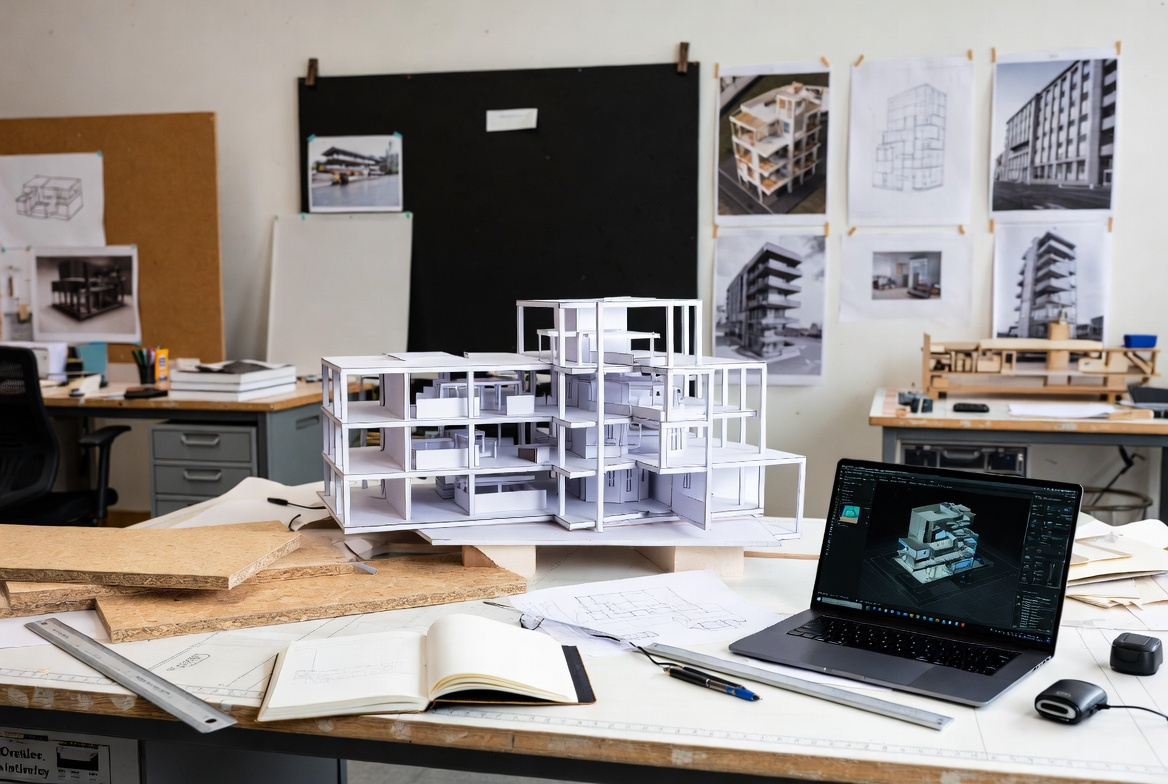
The BSD in Architectural Studies is built as an interdisciplinary design degree inside The Design School. That matters more than it sounds.
This is not a narrow drafting-only path. The program is framed around architecture as both technical work and cultural work, so students are dealing with buildings, environment, cities, systems, materials, and public life all at once. That can be a strength. It can also feel broad if what you wanted was a very tight one-track professional degree from day one.
So the honest read is this: the BSD is a solid architecture start. It is not the end of the licensure conversation.
What the M.Arch Changes
This is where ASU becomes a serious professional-path option.
The Master of Architecture at ASU is NAAB-accredited, and ASU lists two tracks: a two-year track for students who already hold a preprofessional degree, and a three-year track for students coming from a non-preprofessional background. That alone changes the timeline in a very real way.
So if you already know architecture is the career and licensure is the target, do not just ask “Does ASU have architecture?” Ask which track you would actually be entering, and what that does to time and cost.
Before you lock in any school, it also helps to compare it against the wider list of NAAB-accredited architecture programs so you are not judging one path in isolation.
What the School Environment Feels Like
ASU runs architecture through The Design School inside the Herberger Institute, not through some isolated standalone architecture bubble. That shapes the experience.
You are studying architecture next to other design fields, and ASU leans into that. The school talks a lot about design laboratory culture, interdisciplinary work, innovation, sustainability, and urban conditions. In practice, that usually means the work is not just about making a building look good. It spreads into systems, climate, communities, prototyping, public space, and how design actually lands in a fast-growing metro region.
Some students love that. Others want something more narrowly traditional. That is a fit question, not a ranking question.
What Students Usually Underestimate
The first thing they underestimate is the degree structure. People see “architecture” in the BSD title and assume they are already on the straight licensure track. Not necessarily.
The second thing is studio cost. Not just tuition. Printing, model materials, software, hardware that cannot be weak, and the usual living costs all pile on top. That is why old blog posts with tidy tuition ranges are dangerous. They make the math look cleaner than it is.
The third thing is scale. ASU is a big public university. That can be great if you want range, energy, and options. It can also feel loose if you were hoping for a small, tightly held studio culture where everyone knows exactly who did what, where, and against which review deadline.
What the Coursework Usually Means in Real Life
If you are imagining architecture school as mostly lectures with a few design projects, this probably is not that.
Studio culture tends to run the schedule. One project turns into drawings, models, software work, pinups, revisions, and critiques that rewrite half the scheme at the worst possible moment. Normal architecture-school problem. Not unique to ASU. Still real.
ASU’s architecture side also keeps urban and environmental questions pretty close to the center, which makes sense in Arizona. Heat, water, shade, growth, land use, and desert urbanism are not abstract there. They are part of the setting all the time.
If you already know your interests lean more urban than building-only, this page on the Master of Urban Design degree helps show where that path starts to separate.
Who ASU Makes Sense For
ASU is a good fit for students who want a large public university, a design school with range, and a program that keeps sustainability, urban conditions, and interdisciplinary work in the foreground.
It also makes sense for students who are comfortable with the idea that the undergraduate degree is a setup and the professional degree is the higher-stakes step.
It makes less sense for someone who wants a tiny studio culture, a one-degree-and-done professional route from day one, or a school identity built around a very traditional architecture-only experience.
What to Verify Before You Commit
Your exact degree path. BSD first, then M.Arch? Or are you comparing ASU against a B.Arch school instead?
Your M.Arch entry track. Two-year or three-year is not a small difference.
Current tuition and total cost. Use ASU’s live cost pages, not recycled estimates.
Portfolio and admission expectations. Do not assume every design program inside a big university handles this the same way.
Your fit with the school’s scale and culture. Big-school energy is not automatically better. It is just different.
So, Is ASU a Good Choice?
Yes, for the right student.
If you want a design-focused architecture education with real interdisciplinary range, a strong sustainability and urban frame, and a clear professional degree path after the preprofessional stage, ASU is a serious option.
If you want a simpler one-degree professional route from the start, or a smaller school with a more insulated studio culture, compare carefully before you commit.
That is the honest version. ASU is not automatically the answer just because it is well known. It works when the way you want to study architecture matches the way the school is structured to teach it.
If you are still earlier in the decision, these pages on why people study architecture and studying architecture after AI are useful before you get too attached to one school name.