
Barge Board Repair and Replacement: Costs, Steps, and What Actually Works
Walk up to any gable roof and look at the sloping edge. The long board that caps it is the barge board. It’s not just decoration. It shields the rafter ends, stops rain from creeping into the roofline, and makes the roof look finished.
What Happens When Barge Boards Fail
When that board rots or splits, you’ve got more than a paint problem. Water starts seeping into the timber. Gutters loosen because their brackets can’t grip. Birds and wasps move into open gaps. Over time, the roofline warps and rafters weaken.
Repairing or replacing barge boards is basic roof maintenance. Leave it too long and you’ll be paying for structural carpentry and full scaffold jobs instead of a small patch.
Below we’ll cover barge board repair and replacement in plain English: costs, tools, methods, mistakes, and real homeowner examples.
Barge Board Replacement: Cost, Materials, and Tips
The Hidden Weak Point No One Talks About
Most people think barge boards rot from the front face. They don’t.
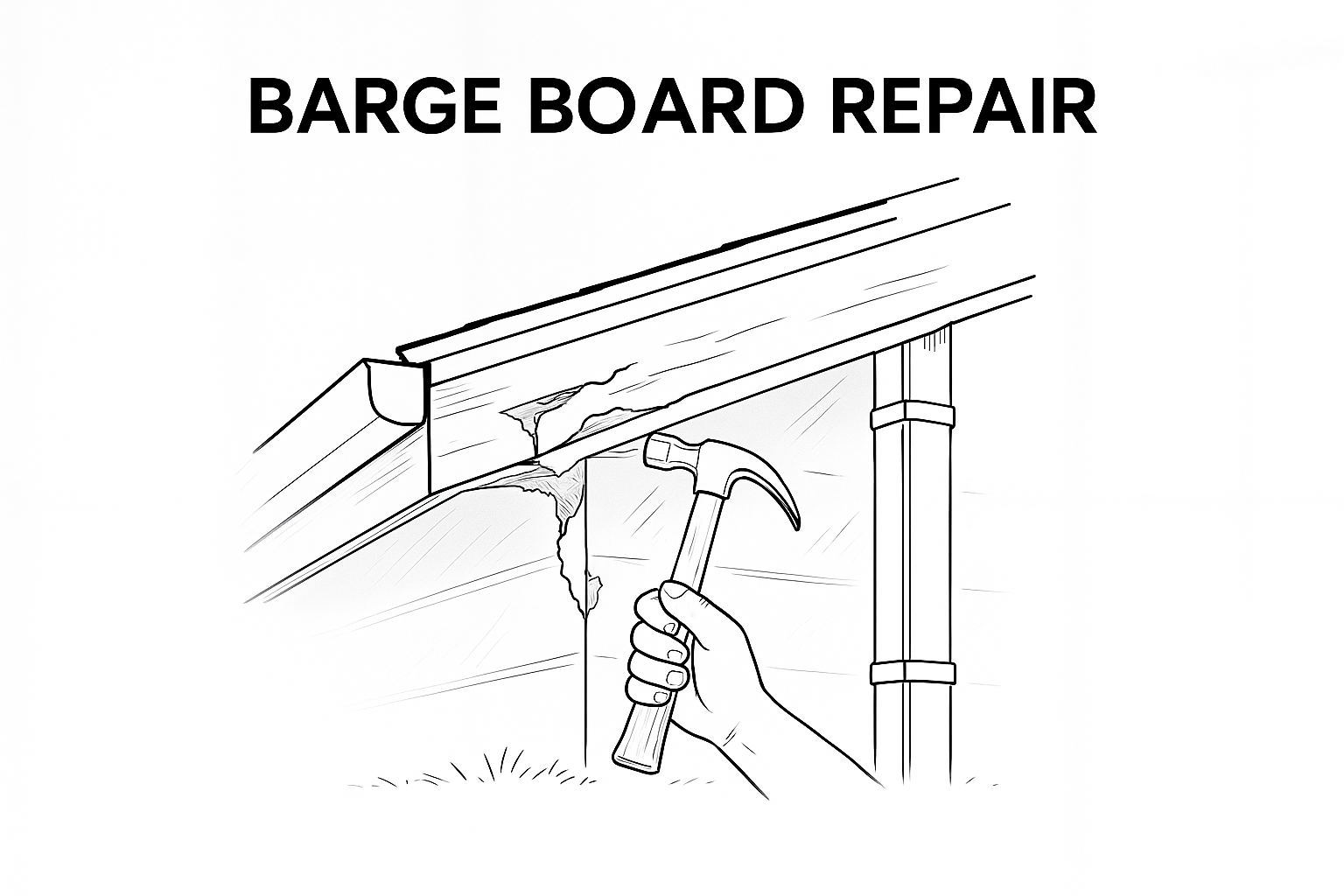
Nine times out of ten, the first place water gets in is the cut end of the timber where it meets the fascia or soffit. Builders nail the board up, splash some paint on the face, and leave the end grain bare. That exposed cut drinks water like a straw. From there, rot spreads down the whole length of the board.
The fix is simple but almost never done right:
-
Seal the cut ends with wood preservative before the board goes up.
-
Prime and paint the ends just as carefully as the face.
-
Use a joint cover or metal plate to shield the join where fascia and barge meet.
Get that detail right and timber barge boards can last decades longer than average. Most houses fail here not because the board was weak, but because the end grain was left raw.
Pro tip: Even with uPVC replacements, check the joints. Water still sneaks behind trims. A bead of quality exterior sealant at the join is cheap insurance.
MUST READ
📘 Complete Book of Framing: An Illustrated Guide for Residential Construction (RSMeans)
Covers timber joints, splicing, and exterior board work. A reference even pros keep.
→ [Buy on Amazon]
What Are Barge Boards?

Think of them as the finishing pieces on the roof’s side edges. They cover and protect the cut ends of the rafters where the roof projects over the gable wall.
-
Location: On the sloping edges of a gable roof, running diagonally.
-
Purpose: Shield timber ends, shed water, block pests, and give the roofline a finished look.
-
Materials:
● Old houses: Softwood or hardwood timber, painted.
● Modern houses: uPVC or composite, which don’t need repainting. -
Difference from Fascia: Fascia boards run flat and horizontal under the eaves, carrying the gutter. Barge boards run up the gable edges. Both meet at the roof corners.
Without them, every rainstorm hits raw timber. It doesn’t take long for that to rot.
Signs of Damage

Barge boards are exposed. You can usually spot problems from the ground. Signs include:
-
Paint peeling again soon after repainting
-
Wood that feels soft or spongy when pressed
-
Boards pulling away from rafters or leaving gaps
-
Splits, cracks, or missing chunks after windstorms
-
Birds, wasps, or squirrels nesting inside the gaps
-
Water stains on the wall below the gable
Real case: A semi in Manchester ignored peeling paint for five years. By the time a roofer inspected it, two rafter ends were rotten. What could have been a £400 scrape and repaint turned into a £3,000 repair and replacement job.
Repairing Barge Boards Cost
You don’t always need a full replacement. Early-stage repairs are cheap.
-
Surface patching: £100–£200 for sanding, filler, primer, and repaint.
-
Partial splice repair: £150–£400 if only a short section has rot.
-
DIY filler and paint: £30–£50 in materials if you do it yourself.
The key is catching it early. Once rot spreads more than a few inches, patch jobs fail. At that point replacement makes more sense.
MUST READ
📘 Black & Decker The Complete Guide to Roofing & Siding
Best-selling reference. Clear step-by-step on fascia, soffits, and exterior trim. Trades use it, homeowners trust it.
→ [Buy on Amazon]
Repair vs Replace
Here’s the blunt breakdown:
-
Repair: Works for shallow damage—surface cracks, peeling paint, or minor soft spots.
-
Replace a section: If one end is rotten but the rest is sound, you can cut out and splice.
-
Full replacement: Needed if the board is warped, pulling away, or rotten along most of its length. Delay only costs more, especially if rafter ends are affected.
FIELD PICK
Ronseal Exterior Wood Preserver (5L)
Top seller in the UK. Protects timber ends—the spot where barge boards always fail first. Worth the spend.
→ [Buy on Amazon]
Repairing Rotten Barge Board Ends
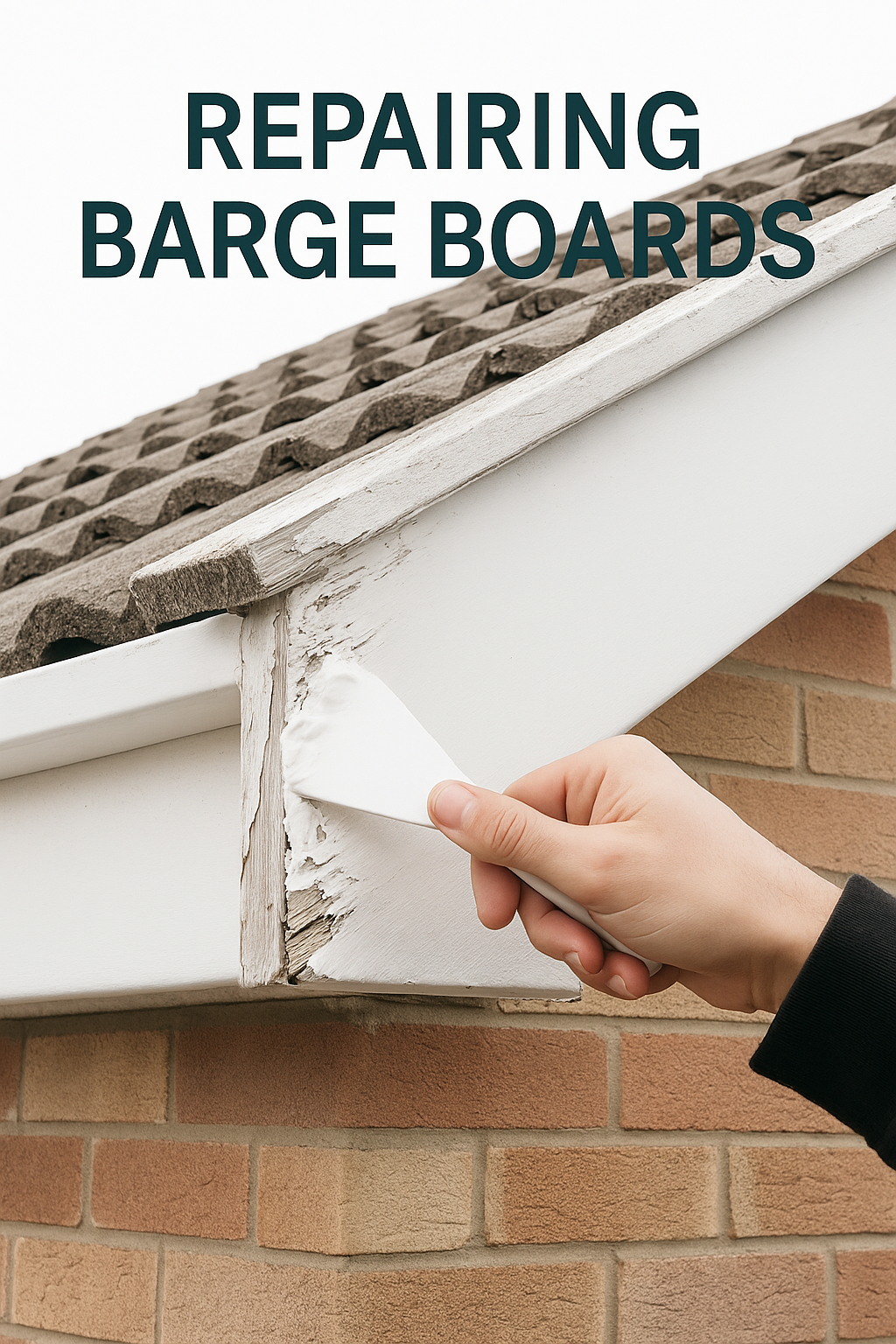
If you look at where most barge boards rot, it’s not the middle. It’s the ends—the joint where the barge meets the fascia or soffit. That’s where water sneaks in. End grain acts like a sponge. Once it’s soaked, rot spreads down the length of the board.
Why this happens
-
Builders often skip sealing the cut ends.
-
Paint wears off fastest at the joints.
-
Gutters drip onto the corner, keeping it wet.
-
Sealant cracks over time, letting in water.
How to fix rotten ends
-
Cut back the rot. Use a saw to remove the soft section until you reach solid wood.
-
Treat the joint. Brush preservative onto the cut timber and the rafter ends.
-
Splice a new piece. Cut a matching length of treated timber, prime it, and screw it into place.
-
Seal the joint. Use exterior caulk or a joint cover trim to stop water sneaking in.
-
Repaint. Two coats of exterior gloss after primer—pay extra attention to the ends.
Pro tip: Don’t just slap filler over rotten ends. It crumbles within a year. A proper splice lasts decades if the cut ends are sealed.
When not to repair
If the rot has spread more than 300–400 mm from the end, replacing the whole board is smarter. Piecemeal repairs at that point are wasted effort.
How to Replace Barge Boards (General Steps)
No matter if you’re fitting timber, PVC, or composite, the basic process is the same:
-
Set up safe access. For two-storey houses, scaffolding is safer than ladders.
-
Remove gutters. Take down brackets and downpipes if they’re attached to the fascia.
-
Remove the old board. Use a pry bar or saw to detach. Cut into sections if rotten.
-
Inspect rafters. Any softness or blackened wood needs cutting back and treating.
-
Cut the new board. Match the length and pitch. Seal timber ends with preservative.
-
Fix securely. Use stainless screws into every rafter end.
-
Seal joints. Use caulk or joint trims to stop water entry.
-
Reinstall gutters. Check slope so water drains to the downpipe.
DIY is possible on a bungalow or shed. Two-storey homes are best left to contractors with safe access.
Wooden Barge Board Replacement
Wood gives a traditional look but needs upkeep. If you want your roofline to match a period home, timber is usually the choice.
Steps:
-
Cut boards from treated softwood or hardwood.
-
Prime and paint all sides before fixing.
-
Screw into place using stainless screws.
-
Paint again after installation—two coats of gloss minimum.
Costs:
-
DIY timber: £20–£30 per metre.
-
Hired labour: £50–£70 per metre including install.
Wood is cheaper upfront than composite but costs more long-term because of maintenance.
Fascia and Barge Board Replacement
Fascia and barge boards fail in the same way. They’re both timber exposed at the roof edge. The fascia runs flat under the eaves and carries the gutters. The barge runs up the gable. If one is rotten, the other usually isn’t far behind.
Replacing just one is possible, but most contractors recommend doing both at the same time. It saves you from paying for scaffolding twice and keeps the roofline consistent.
Costs
-
Semi-detached house: £1,800–£3,000 for fascia and barge together.
-
Add £500–£1,000 if scaffolding is required.
-
Detached houses can cost more depending on roof length and access.
Tip: Always replace soffits at the same time. They interlock with fascia and barge. Leave them out and you’ll be back up the ladder next year.
Rotted Fascia Board Repair Cost
Fascia boards often fail first because they carry gutter brackets. That constant weight plus water exposure speeds up rot.
-
Small filler repair: £100–£200 if only surface holes need patching.
-
Cut and splice repair: £250–£400 when only a section of fascia needs replacing.
-
Full fascia replacement: £1,200–£2,500 depending on house size and access.
If the guttering has been pulling down on rotten fascia for too long, budget more. You may need soffits and gutter replacement as well.
Repairing Rotted Fascia Boards
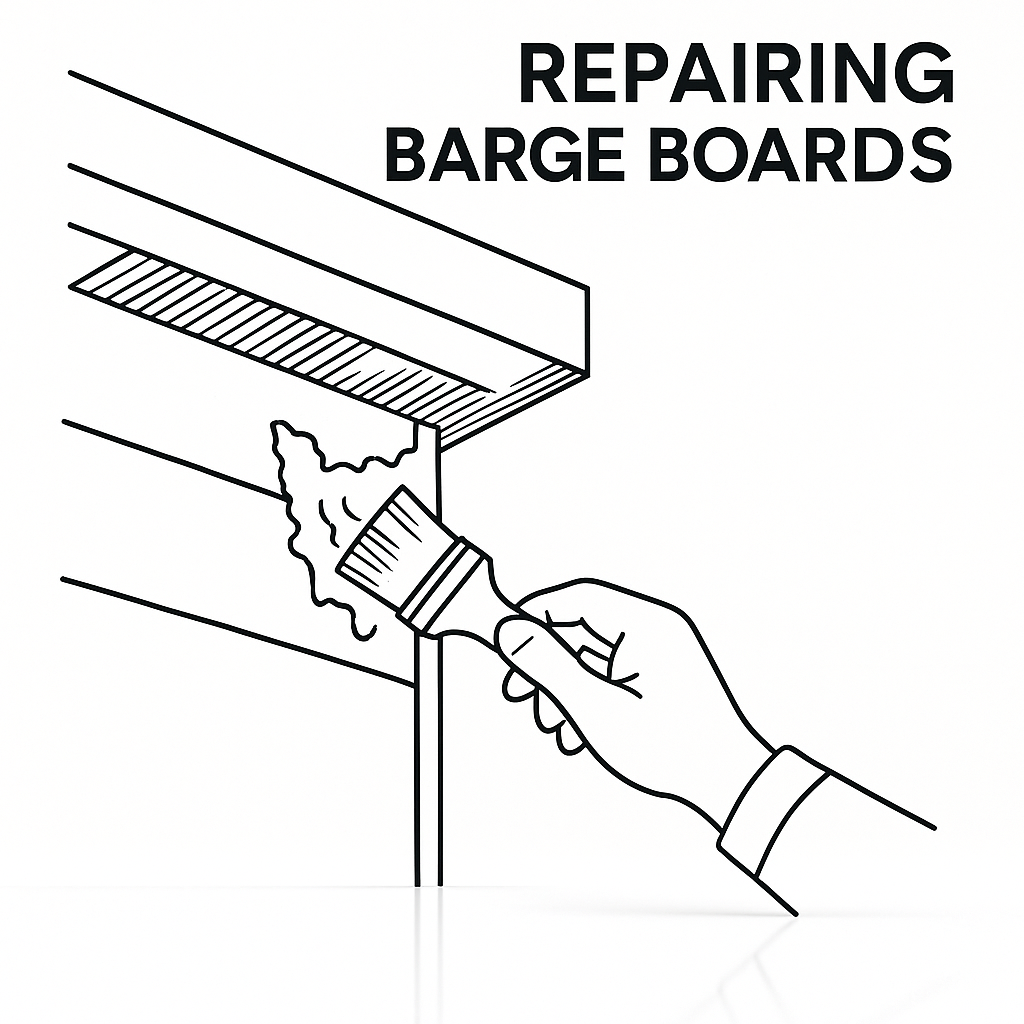
Sometimes it’s worth saving a fascia board if rot is limited. Here’s the process:
-
Remove gutters. They need to be out of the way.
-
Cut out soft timber. Keep going until you hit solid wood. Don’t just scrape the surface.
-
Treat rafters. Brush on a wood preservative so rot doesn’t spread.
-
Splice in new timber. Screw it securely into place.
-
Sand the joint. Blend old and new surfaces.
-
Repaint. Use primer and at least two coats of exterior gloss.
If more than half the board is rotten, don’t waste time patching. Full replacement will outlast piecemeal repairs and save money later.
FIELD PICK
Paslode Cordless XPro 30° Framing Nailer (Model 906800)
Amazon’s Choice. Pro-grade cordless framing nailer. No compressor, no hoses, just battery and fuel cell power.
-
Drives nails flush into tough materials
-
6,000 shots per charge keeps you running all day
-
Lightest cordless framing nailer at 7.9 lbs
-
Trusted brand: over 80 years making jobsite nailers that last
Why it’s worth it: Cuts install time in half on fascia and barge board jobs. Lightweight enough for ladder work. Built for pros, but smart homeowners invest once and use it for years.
→ [Buy on Amazon]
How to Remove Roof Fascia Boards
Removing fascia is harder than it looks because it often locks the soffits in place. Do it wrong and you’ll crack soffits, bend gutters, and even damage rafters.
Step-by-step:
-
Set up scaffolding or stable ladders. Safe access comes first.
-
Detach gutters and downpipes. Unscrew brackets and set gutter sections aside.
-
Check soffits. They often slot into the back of the fascia. Support them before pulling fascia free.
-
Loosen fixings. Use a pry bar to pull nails or a multitool to cut through old screws.
-
Remove in sections. Don’t try to wrench the entire length at once. Shorter pieces come off cleaner.
-
Inspect rafters. Check ends for softness or dark stains. Cut back and treat if necessary.
Warning: Never pull fascia while gutters are still attached. You’ll bend the entire run and may break downpipes.
How to Install Fascia Board by Yourself
If you’ve taken the fascia off cleanly, fitting a new one is straightforward. The challenge is alignment. Get the slope wrong and your gutters won’t drain.
Tools you need
-
Treated timber or uPVC fascia
-
Stainless screws
-
Drill and screwdriver bits
-
Spirit or laser level
-
Exterior caulk
-
Primer and paint if timber
Steps
-
Cut fascia to length. Seal cut ends with wood preservative if using timber.
-
Mark a straight line. Use a level across rafter ends. Slight slope towards the downpipe is fine.
-
Fix in place. Drill pilot holes and screw into every rafter end.
-
Join sections. Use joint trims or caulked butt joints for a watertight seal.
-
Reinstall soffits. Slot them under and secure.
-
Refit gutters. Brackets should be spaced 800–1,000 mm apart with correct slope.
-
Paint timber immediately. Prime and apply at least two coats of exterior gloss.
Tip: Use screws, not nails. Screws hold firmer and make future removals easier.
Reality check: DIY works on sheds and bungalows. On two-storey houses, scaffolding and experience make hiring a pro the safer route.
Pro Gear That Pays for Itself
FIELD PICK
Makita LXT 18V Cordless Circular Saw
Contractor best-seller. Cuts fascia and barge boards clean and straight. Battery lasts, blade doesn’t bind. Worth the higher price.
→ [Buy on Amazon]
MUST HAVE
Festool Dust Extractor CT MIDI I
Top-tier dust control. Pricey, but if you’re cutting or sanding barge boards indoors, this keeps air clean and jobsites professional.
→ [Buy on Amazon]
FIELD PICK
Paslode IM350+ Gas Nail Gun
Used by roofline installers everywhere. Fires stainless nails straight into rafters. Fast, consistent, no splitting.
→ [Buy on Amazon]
MUST READ
📘 Roofing Construction & Estimating by Daniel Atcheson
Industry-standard reference for roofline work. Teaches methods, not just DIY tips. Used by contractors.
→ [Buy on Amazon]
FIELD PICK
Milwaukee M18 Fuel Impact Driver
Powerful, reliable, and one of the highest-rated pro tools for driving long stainless screws into fascia and barge boards.
→ [Buy on Amazon]
Shed Barge Board Replacement
Sheds often use thin, untreated timber for barge boards. That’s why they rot quicker than house boards. Replacing them is straightforward.
Steps
-
Unscrew or pry off the old board.
-
Cut a new treated timber or PVC board to size.
-
If using timber, prime and paint before installation.
-
Fix securely with screws.
-
Reseal joints to stop water creeping behind.
Cost
-
DIY: £50–£150 in materials.
-
Hiring a handyman: £200–£400 depending on location and access.
If your shed sits under trees or in damp ground, always use pre-treated timber or PVC to avoid repeating the job every few years.
Roof Barge Board Replacement Cost
Costs vary based on material, access, and whether scaffolding is needed.
-
DIY timber boards: £20–£30 per metre.
-
Contractor timber replacement: £40–£70 per metre fitted.
-
uPVC boards: £35–£60 per metre fitted.
-
Full house replacement: £1,500–£3,500.
-
Scaffolding hire: Adds £500–£1,000.
Detached houses, steep pitches, and decorative trims can push prices higher.
Cost of Replacing Barge Boards
Here’s a clearer breakdown:
-
Small repair (corner section): £150–£300.
-
One gable: £400–£700.
-
Two gables: £800–£1,500.
-
Whole house with fascia: £2,000+.
Remember: costs jump fast when scaffolding is required. On a two-storey house, scaffolding often makes up 25–30% of the bill.
Barge Board Replacement Near Me
When hiring someone for barge or fascia work, don’t just pick the first roofer you find online. A few checks save you from sloppy jobs.
What to check
-
Look up “roofline contractors” or “fascia soffit barge replacement” in your area.
-
Ask to see photos of their past work. A good contractor has them.
-
Make sure they carry insurance and are willing to provide a written quote.
-
Look for guarantees—10 years is common for PVC installations.
-
Get at least three quotes to compare.
Don’t cut corners here. A bad roofline job leads to leaks, warped gutters, and more repair costs.
Mistakes, Pro Tips, and Real Example
Mistakes to Avoid
-
Painting over rot instead of cutting it out properly.
-
Using indoor filler on exterior timber. It crumbles within a year.
-
Forgetting to treat timber ends before installing. Moisture enters through cut ends first.
-
Leaving joints unsealed. Even a small gap lets water in.
-
Attempting DIY on tall houses without proper scaffolding. Ladder accidents are one of the top causes of injury.
Pro Tips
-
Always seal timber ends before fixing. Preservative on cut edges extends life.
-
Use stainless screws, not nails. They don’t rust or pull out.
-
Replace fascia, soffit, and barge boards together. They interlock and fail at the same time.
-
Don’t skip scaffolding on tall houses. It speeds the job and keeps it safe.
-
Prime and paint timber before fixing, then repaint after. Two coats minimum.
Real Example
A homeowner in Leeds had original 1930s pine barge boards. By 2020 they were peeling and soft. Instead of swapping them for PVC, he chose oak to keep the period look.
-
Materials: £750
-
Labour: £1,200
-
Total: £1,950
His reasoning: “I wanted it to match the house’s style. Oak costs more, but painted properly it’ll outlast me.”
FIELD PICKS: What’s Actually Worth Buying
MUST READ
📘 Black & Decker The Complete Guide to Roofing & Siding
Best-selling reference. Clear step-by-step on fascia, soffits, and exterior trim. Trades use it, homeowners trust it.
→ [Buy on Amazon]
FIELD PICK
Ronseal Exterior Wood Preserver (5L)
Top seller in the UK. Protects timber ends—the spot where barge boards always fail first. Worth the spend.
→ [Buy on Amazon]
MUST HAVE
Stanley Pry Bar Set
Cheap tools bend. This one doesn’t. Essential for removing old fascia and barge boards cleanly.
→ [Buy on Amazon]
FIELD PICK
Werner Aluminium Extension Ladder
Best-seller for safe roofline access. Strong, reliable, wide steps. Don’t risk your life on a bargain ladder.
→ [Buy on Amazon]
MUST READ
📘 Complete Book of Framing: An Illustrated Guide for Residential Construction (RSMeans)
Covers timber joints, splicing, and exterior board work. A reference even pros keep.
→ [Buy on Amazon]
Final Word
Barge boards are easy to ignore until they’re falling apart. By then, the damage has spread into rafters and gutters. Early repairs cost a couple hundred pounds. Full replacements with scaffolding run into thousands.
Check your boards every year. Repaint every five to seven years if timber. Replace fascia, soffits, and barge boards together when the time comes. And don’t gamble with ladders on two-storey homes—hire a professional.
FAQs
Repair and Fixing
Can you repair damaged fascia?
Yes, if the damage is small. Fill holes with exterior-grade filler, sand smooth, prime, and repaint. If the board feels soft when you press it, it’s too far gone and should be replaced.
How do you patch a hole in fascia board?
Clean out the hole, fill it with two-part wood filler, let it set hard, then sand and paint. If the hole is large, cut out the whole section and splice in new timber.
How do you fix a wooden fascia board?
Cut out rotten areas. Splice in a fresh piece of treated wood. Screw it in and repaint. If the board is cracked right through or crumbling, replace it.
Can torn fascia be repaired?
Wood can sometimes be glued and screwed back together. PVC fascia isn’t worth repairing once split—replace the section.
How do you fix a plastic fascia board?
For small cracks, use plastic epoxy or PVC adhesive. For bigger splits, reinforce with a patch plate or replace the board.
How do you fix peeling fascia?
Scrape all loose paint, sand back to solid wood, prime, and apply two coats of exterior gloss.
How do you fill gaps in fascia boards?
Use exterior caulk for movement joints and wood filler for solid gaps. Always paint over fillers to seal them.
How do you repair fascia on a house?
Take down the gutters first. Check if the wood is solid. Patch holes if minor, splice timber if partly rotten, or replace the whole run if badly decayed.
How do you fix uPVC fascia board?
Light scratches can be sanded and buffed. Cracks can be glued with PVC adhesive. If the board sags, re-fix it with fresh screws into rafter ends.
How do you fix a broken wooden board?
Splice in new wood with glue and screws, sand flush, and paint. For deep damage, full replacement saves time.
How do you fix a cracked board?
Drill tiny holes at both ends of the crack to stop it spreading. Glue, clamp, and fill before sanding.
How do you fix a broken plastic board?
Glue with a strong plastic adhesive. Reinforce the back with another piece of plastic or metal strip.
Replacement
How do you replace a barge board?
Take down the gutters if they connect. Remove the old nails or screws. Cut the new board to size, prime if timber, screw it into rafters, and seal the joints.
How do you replace a damaged fascia board?
Detach gutters first. Pry off the old fascia. Cut a new one to length, screw it into every rafter end, seal, then reinstall gutters with the right slope.
How do you replace a shed barge board?
Unscrew the old timber. Fit a new pre-treated board. Prime and paint before fixing if it’s wood.
Materials and Sizes
What material is used for barge boards?
Traditionally timber. These days many people use uPVC or composite because they last longer with less maintenance.
What wood is best for barge boards?
Hardwood like cedar or oak lasts longer. Treated softwood is cheaper but needs more frequent painting.
What wood is best for fascia boards?
Cedar or pressure-treated pine. Avoid untreated pine—it rots fast.
What is the best material for fascia boards?
If you want low upkeep: uPVC. If you want strength and a traditional look: hardwood.
What is the best material for barge boards?
Hardwood or composite for durability. PVC if you want easy upkeep and don’t mind the look.
What sizes do barge boards come in?
Most are 18–25 mm thick and 150–250 mm deep. Standard lengths are 3–5 m.
How thick should a barge board be?
At least 18 mm, often 25 mm for durability.
How thick should fascia boards be?
16–25 mm. They need to carry gutter brackets without bending.
How thick is PVC fascia?
Replacement fascia boards are usually 16–20 mm thick. Capping boards that cover old timber are thinner, around 8–10 mm.
What are common barge board sizes?
150 x 18 mm and 225 x 25 mm are two common timber options.
How much depth does a barge board need?
It should cover the rafter ends fully. Usually 150–225 mm deep.
Structure and Purpose
Are barge boards structural?
No. They don’t hold up the roof. Their job is to protect the rafter ends from weather and finish the gable neatly.
Is fascia board load bearing?
No. Fascia boards carry gutters, not the roof. If rafters rot, that’s the structure failing—not the fascia.
What is the purpose of a barge board?
To shield rafter ends from rain and give the roof edge a clean finish. Without it, water soaks into timber and starts rot.
Where do you use barge board?
On the sloping edges of gable roofs. That’s the only place they go.
Are barge boards necessary?
Yes. Leave them off and your rafters will be exposed.
Painting and Finishing
What paint is best for fascia boards?
High-quality exterior gloss, either oil-based or acrylic. Two coats over primer.
What paint is best for barge boards?
Same as fascia—oil-based gloss or weatherproof acrylic. Gloss holds longest outdoors.
How many coats of paint on fascia boards?
At least two, with primer underneath. Three is safer if boards are fully bare.
How do you fill gaps in boards?
For joints that move, use exterior caulk. For solid holes, use a two-part filler.
What is best to fill gaps in wood?
Two-part epoxy filler. It sets hard, sands smooth, and can be painted.
What do builders use to fill gaps?
Exterior filler, caulk, or sometimes foam for bigger voids. Then trimmed and painted.
How big of a gap can wood filler fill?
About 10–12 mm. Anything bigger should be fixed with a splice of wood.
How do you fix an oversized hole in wood?
Glue in a dowel or timber plug, then re-drill. Filler alone won’t hold screws.
What’s the difference between wood filler and wood putty?
Filler hardens and can be sanded/painted. Putty stays soft and flexible but doesn’t take paint well.
Fixings and Installation
How do you attach a barge board?
Line it up with rafter ends, drill pilot holes, and screw it in. Don’t just nail—it will loosen.
How do you join barge boards?
Butt joints sealed with exterior caulk or a joint trim.
How do you fasten barge boards?
Stainless screws into rafters. Pilot holes prevent splitting.
How do you attach a fascia board?
Hold it flush to rafter ends, screw into every rafter, check alignment, then reinstall gutters.
What is the fixing distance for fascia boards?
Every rafter end—usually 400–600 mm apart.
What size nails for fascia boards?
50–65 mm stainless nails. Screws are better for removals later.
Can you use screws for fascia boards?
Yes, and you should. They hold stronger and don’t work loose.
PVC, Plastic, and Cement Boards
Is PVC good for fascia?
Yes. It’s low maintenance and doesn’t rot. But it can warp in high heat.
What’s the downside of PVC board?
Plastic look, possible warping, and it can crack if fixed poorly.
How do you rip PVC boards?
Use a fine-tooth saw or a circular saw blade designed for plastic.
What’s the best glue for broken plastic?
Two-part epoxy or solvent-based PVC adhesive.
How do you glue plastic boards?
Clean surfaces, apply adhesive, clamp until cured.
Can you glue fascia board instead of screwing it?
No. Screws are needed for strength. Adhesive alone won’t last.
Can cement board be repaired?
Small chips can be patched with filler. Larger breaks usually need replacement.
Do you screw or glue cement board?
Always screw it. Glue is not enough.
Can I use adhesive instead of cement?
Not for cement boards. They need screws.
What’s the best fastener for cement board?
Special corrosion-resistant cement board screws.
What’s the best adhesive for cement board?
Polyurethane construction adhesive, but only as backup to screws.
History, Terms, and Extra Questions
What’s another name for a barge board?
Verge board. Same thing.
Why are they called barge boards?
From the old word “bargen,” meaning edge or projecting beam.
What’s the difference between a barge board and a verge board?
They’re the same. Verge board is just another term.
What’s the difference between a fascia board and a barge board?
Fascia runs flat along the eaves. Barge runs up the gable.
What’s the angle of a barge board?
The roof pitch—commonly 30 to 45 degrees.
What types of barge boards exist?
Plain boards, decorative verge trims on period houses, and modern uPVC versions.
Why is it called a barge?
It comes from old English “berg” or “bargen,” meaning protection.
Extra Quick Hits
How long do barge boards last?
Wood: 20–30 years with upkeep. PVC: 25–40 years.
Can I replace barge boards myself?
Yes, on sheds or bungalows. For two-storey homes, scaffolding and pro help are safer.
Do barge boards affect roof structure?
No. They don’t hold the roof. They just protect rafters.
How much to repair one corner?
£150–£250 for patching or a small splice.
Can I cover old boards with PVC?
Yes, it’s called capping. But it traps moisture, so full replacement is better.
Should fascia and barge boards be replaced together?
Yes. They meet at the corners. Doing both prevents gaps later.