
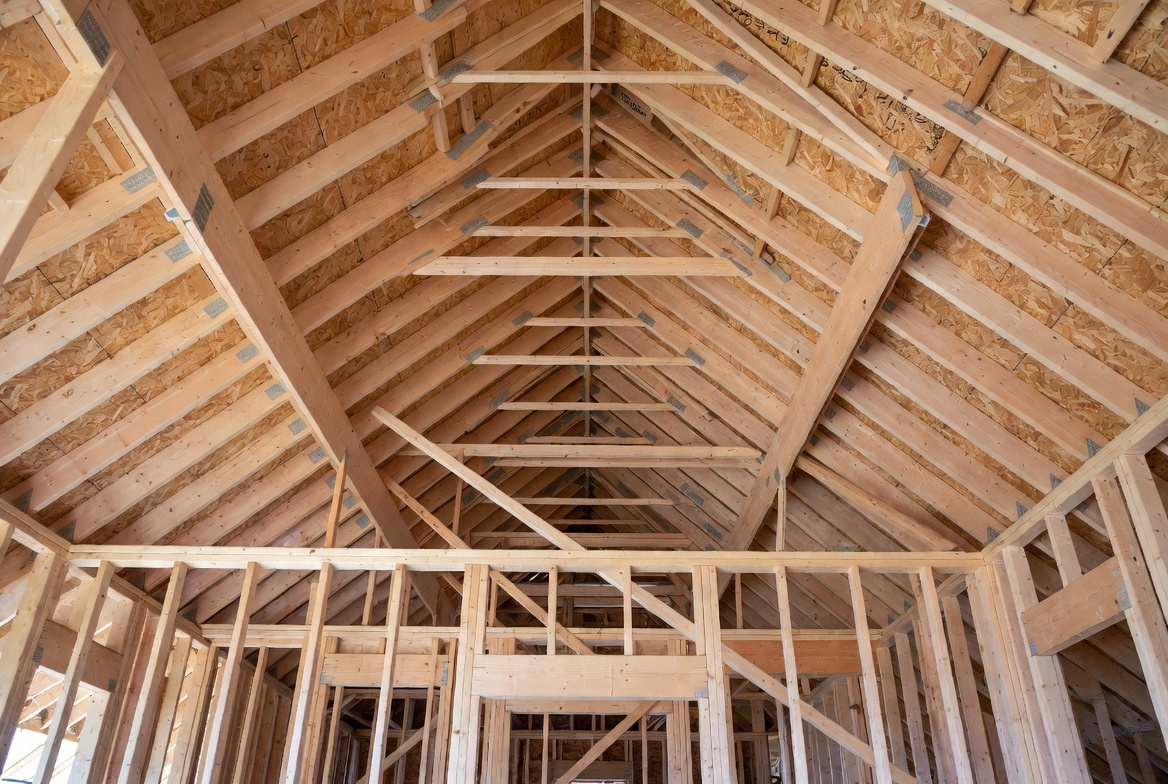
Truss details are where roof problems start or stay avoided.
Not at the label. Not at the shape. At the joint, the bearing point, the heel, the wall connection, the girder condition, the gable end, the bracing note that looked minor until something moved.
That is the part worth slowing down for: how the truss goes together, where the load lands, and which details cannot be treated like afterthoughts.
Where Truss Problems Start

Not every truss detail carries the same weight. Some are finish-level questions. Some are the roof.
| Detail | What It Controls | Where Jobs Go Wrong | Better Move |
|---|---|---|---|
| Truss-to-wall connection | Load transfer and uplift resistance | Weak clips, bad fastening, wrong hardware | Match the connector and fastening schedule to the engineered truss package and wind zone |
| Bearing length | How the load lands on the wall or beam | Too little bearing, crushed plates, split framing | Keep the bearing condition exactly where the truss design expects it |
| Heel detail | Insulation room, eave geometry, wall alignment | Compressed insulation, awkward soffits, poor air-sealing room | Choose heel height on purpose, not by accident |
| Girder truss support | Load pickup from other trusses | Underbuilt support wall or weak beam below | Trace the load all the way down before the truss is set |
| Bracing details | Lateral stability during and after installation | Assuming the truss is stable once it is standing | Brace immediately and follow the permanent restraint notes |
| Openings and interruptions | Load rerouting around skylights, dormers, chimneys | Cutting or field-modifying trusses | Frame the opening from the engineered layout, not from guesswork |
| Spacing and layout | Sheathing support and roof stiffness | Wrong spacing, drift across long runs, missed layout lines | Snap layout cleanly and check spacing before the lift starts |
This part matters. If you need the bigger structural picture before getting lost in these connection details, read Introduction to Roof Structures.
Where Type Changes the Detail
Truss types are not just names on a list. Each one shifts which details carry risk.
King Post and Queen Post
These are simpler than many other truss families, which is why they show up so often in teaching examples. Simple does not mean forgiving.
The main details are the center post connection, the bottom chord tie, and the bearing at each end. Short-span king post trusses can look easy on paper, then go sloppy fast if the joint geometry is off or the bearing is weak. Queen post trusses stretch wider, so the middle gets more sensitive. That makes the joint detailing more important, not less.
On exposed timber work, the detail is structural and visual at the same time. Mortise-and-tenon joinery, pegs, steel side plates, or tie rods all change the look and the load path together.
Fink and Common House Trusses
This is where a lot of residential roofs live. Fink trusses are common because they span efficiently, use lumber well, and fit standard house geometry without much drama.
The detail work here is less about decorative joinery and more about plate-connected webs, heel conditions, spacing, and bracing. Most jobsite trouble comes from layout drift, sloppy bearing, and weak temporary bracing during installation.
Also useful. If you need the broader family breakdown before staying in the weeds, Roof Trusses: Types, Design, and Installation Guide is the better wide-angle read.
Scissor Trusses
Scissor trusses create space, but they also make the roof less forgiving. The sloped bottom chords change ceiling geometry, reduce room for insulation at some points, and put more pressure on accurate heel and bearing details.
So the small stuff starts early: heel height, plate height, ceiling line coordination, and how the truss package works with the wall assembly below. Good scissor-truss jobs are not just about getting a vaulted ceiling. They are about making that ceiling work structurally and thermally.
Gable and Hip Ends
Gable-end trusses and hip packages bring their own detail problems. The end condition has to support sheathing, wall alignment, overhangs, and finish transitions without turning flimsy.
Hip systems raise the difficulty. More corners. More geometry. More special pieces. The framing can look clean when finished, but the layout has to be tighter to get there.
Girder Trusses
Girder trusses deserve more respect than they usually get. They are not just bigger trusses. They pick up other loads. Sometimes several of them.
If one lands over a weak wall, underbuilt post, or undersized beam, the problem is not in the truss plant. It is in the support below. That is why girder details are not only truss details. They are whole-load-path details.
Where Truss Problems Start

Most roof failures do not start with the main shape. They start where one member meets another.
Plate-Connected Wood Trusses
On standard house trusses, metal connector plates do most of the work at the joints. Those plates are engineered around lumber species, member size, angle, force, and location. They are not decorative hardware. They are the joint.
That is why field modification is such a bad move. Cut a web, notch a chord, move a plate zone, or drill where you were not supposed to, and the truss is no longer what the engineer signed off on.
Bolted and Welded Steel Connections
Steel truss details change the conversation. Welds, bolts, gusset plates, seat connections, and corrosion protection start doing more of the heavy lifting. The upside is span capacity and precision. The downside is that connection mistakes are less forgiving and harder to hide.
The detail set has to tell you what is welded, what is bolted, what gets shop-fabricated, what gets done in the field, and where movement or tolerance is expected.
Timber Joinery and Exposed Work
On exposed timber trusses, the connection detail is often the whole story. Mortise and tenon. Pegged joints. Knife plates. Steel straps. Tie rods. These details carry both structure and appearance.
If the page is only about structural behavior, metal plate-connected trusses are simpler. If the build is supposed to stay exposed and read as part of the architecture, the joinery details stop being secondary.
Truss-to-Wall Connections
This is one of the most important details on the page.
A truss has to land correctly on the wall below and stay there. That means bearing, uplift hardware, fastener schedule, and wall alignment all have to match the engineered set. In wind-prone areas, this gets even less optional. Hurricane ties, straps, clips, and fastening patterns are not backup hardware. They are the load path.
Read this next. Roof Bracing is where the stability side of these connections gets more specific.
What Gets Missed Before the Lift

Some mistakes happen before the crane even shows up.
Layout Lines and Spacing
Truss spacing looks easy until the run gets long. A little drift at one end turns into bad bearing at the other. Sheathing edges stop landing where they should. Fascia lines get ugly. Fixes get improvised.
That is why layout still matters even on prefab work. Snap the lines. Check the run. Confirm the spacing. Do not assume the top plate is close enough.
Heel Height and Energy Detail
Heel height gets treated like a truss-shop decision too often. It is not. It affects soffit depth, insulation room at the eave, air-sealing space, and how cleanly the roof meets the wall assembly.
Low heels crowd insulation near the edge. Raised heels solve some of that, but they change proportions and detailing. So the question is not which one sounds better. The question is what the wall and roof assembly need.
Openings in the Roof Plane
Skylights, dormers, chimneys, vents, and attic access points all interrupt the clean logic of the truss layout. That is fine when the opening is designed into the system. It becomes a problem when the opening gets figured out later with a saw.
Truss openings need framed rerouting, not site improvisation. If a skylight or dormer is coming, that should be in the design package early enough for the truss layout to respond.
Girder Locations and Load Buildup
When one truss is carrying others, the plan has to show that clearly. That means girder tags, reactions, support conditions, and the wall or beam below. Miss that on paper and the jobsite fix gets ugly fast.
The Right Installation Order

Truss installation is not just lifting and fastening. It is a sequence problem.
- Check the supports first. Wall lines, bearing points, plate straightness, and layout need to be right before the first lift.
- Set the first truss and brace it immediately. Not later. Not after the next one. Right away.
- Work in sequence. Start from the right end condition, keep spacing clean, and do not let the run drift.
- Add temporary lateral and diagonal bracing as you go. A standing truss is not a stable roof.
- Install permanent restraint and sheathing in the right order. The roof does not become stable because the trusses are standing. It becomes stable as the system gets tied together.
Wind changes everything here. A half-braced roof frame can go over much faster than people expect.
| Better Move | Common Shortcut | Why It Backfires |
|---|---|---|
| Brace each stage as it is set | Wait until the whole run is standing | Temporary instability is where a lot of damage starts |
| Follow the truss package and engineered notes | Rely on memory from a different job | Spacing, reactions, and restraint details change from job to job |
| Keep the lift sequence simple and controlled | Set pieces out of order to save a few minutes | Sequence errors create drift and weak temporary conditions |
| Stop and correct bad bearing or plumb early | Assume sheathing will pull it into place | Sheathing is not a fix for a bad setup |
| Use the right structural fasteners | Substitute whatever is on site | Connection details are part of the design, not leftovers |
Where These Pages Go Wrong
A lot of truss-detail pages drift into one of two bad versions.
One turns into a generic truss-types article and never reaches the detail work.
The other turns into a pile of technical terms with no judgment, no sequence, and no clue which details are carrying risk.
The details that matter most are the ones that keep repeating on jobs:
- bearing that does not match the design
- bad truss-to-wall connections
- layout drift across long runs
- weak girder support below concentrated loads
- field changes made without engineering review
- temporary bracing treated like an afterthought
If a detail page does not help a reader see those problems earlier, it is not doing much.
Common Questions
Can I cut or notch a roof truss on site?
Not without engineering approval. Trusses are designed as complete systems. Cut one member and the load path changes.
How much bearing does a truss need?
That depends on the truss design and support condition. The safe answer is simple: give it exactly the bearing the engineered package expects.
Are wood and steel truss details interchangeable?
No. They solve similar structural problems with different connection logic, different tolerances, and different failure points.
Do trusses always go at 24 inches on center?
No. Twenty-four inches on center is common, but spacing depends on the design, sheathing, loads, and roof assembly.
What is a girder truss?
A girder truss carries extra load from other framing members or other trusses. It needs stronger support below and clearer load-path planning.
When do heel details start to matter?
Early. Heel height affects insulation room, soffit geometry, and how the roof and wall assemblies meet.
Read This Next
This page should stay with the details. If the next question is broader, move out to the broader page on purpose.
- Roof Trusses: Types, Design, and Installation Guide if you need the full truss-family overview.
- Roof Bracing if the problem is stability, restraint, and keeping the roof frame from moving.
- Introduction to Roof Structures if you need to step back and look at the full roof system first.