

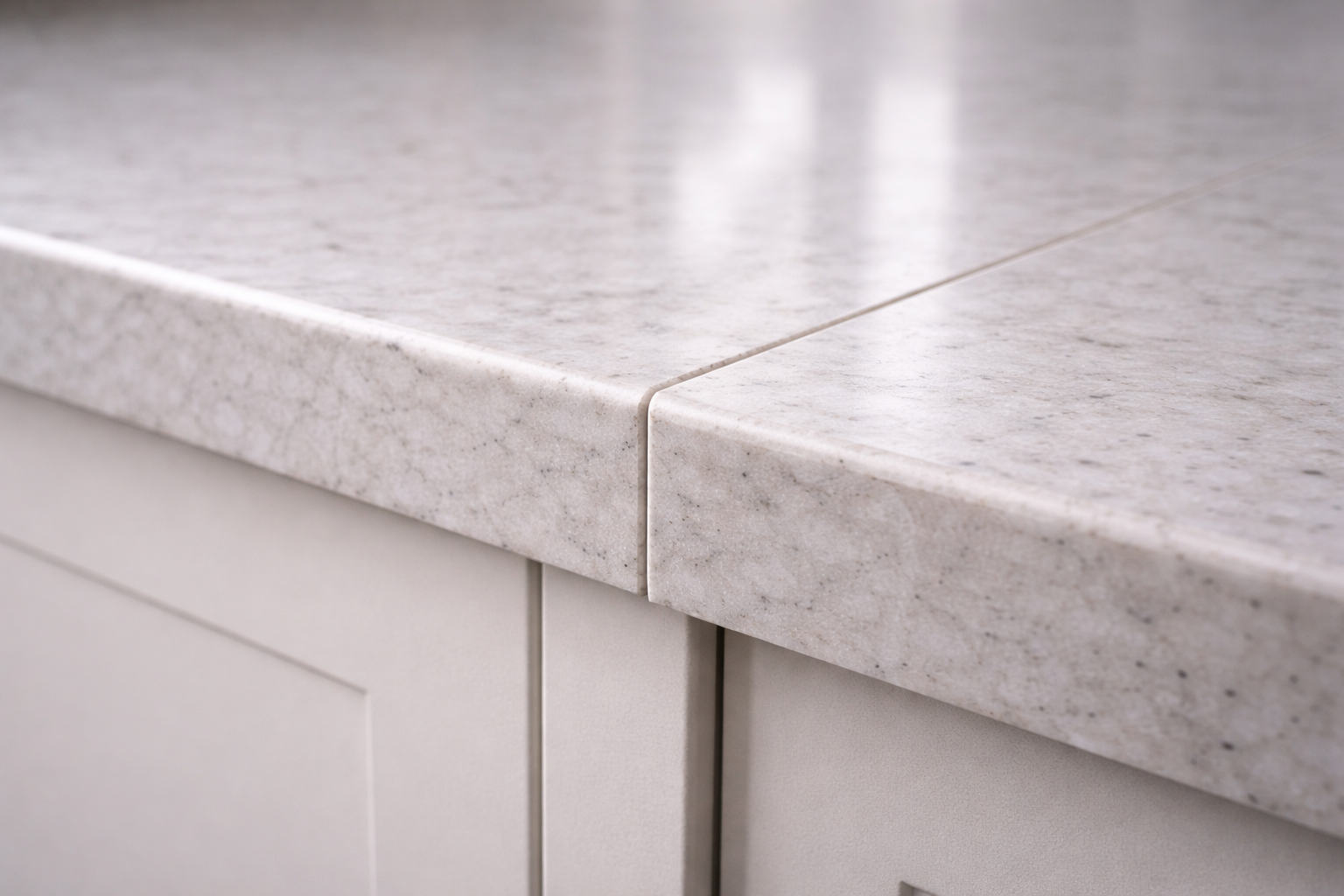
Start with the edge’s job
(it’s not trim)
The edge is the abuse zone. Hips hit it. Bags get dragged across it. Wet dish towels sit there. Someone leans full weight on the corner while talking.
So edge choice is mostly two things:
- How it handles impact (chipping, bruising, corner damage)
- How it handles mess (crumb drop, wipe-down, water running under)
If this is a busy kitchen, a slightly softened edge beats a sharp “knife” look. Over and over.
Quick picks
(the ones that don’t cause drama)
If you don’t want to spiral on options, start here:
- Eased / straight (softened) — clean, modern, easy to live with.
- Small bevel — still clean, hides tiny dings better than dead-square.
- Half bullnose / pencil radius — good for families, less corner chipping, still wipes clean.
The fancier you go (ogee, deep curves, stacked laminations), the more you’re paying for edge labor — and the more you’re committing to a specific look.
Popular countertop edge profiles

“Edges are little light traps. Some give you one clean highlight line. Some throw shadow. Some hide damage. Some show every ding.”
A quick way to “see” edges: they’re little light traps. Some give you one clean highlight line. Some throw shadow. Some hide damage. Some show every ding.
1) Straight / eased edge (the default for a reason)
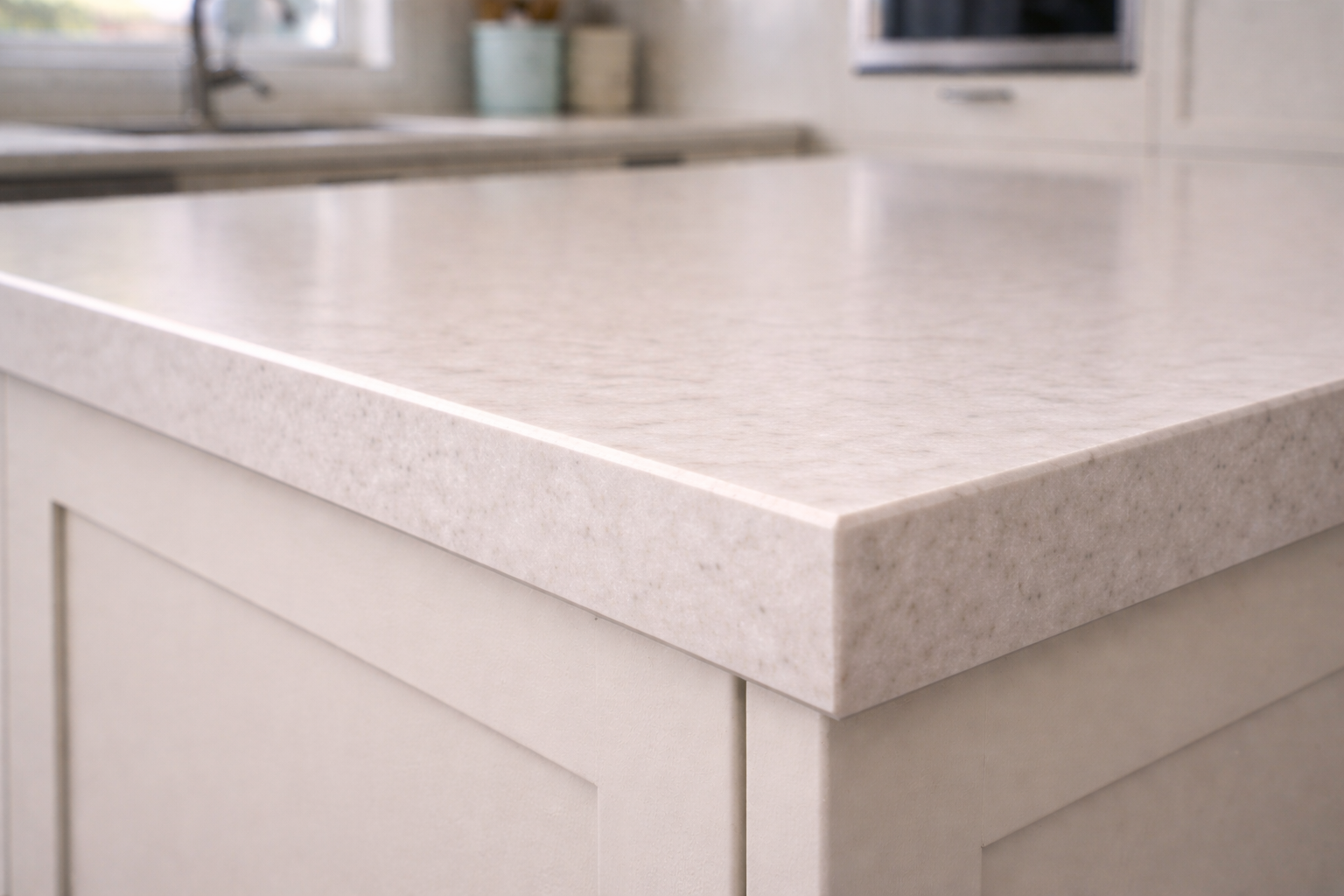
- What it looks like: sharp arris with a tiny radius. Minimal shadow. Clean line.
- Best for: modern kitchens, rentals, busy homes, slab doors, Shaker, flat-panel.
- What it does well: wipes fast, doesn’t look dated, works with most cabinet doors.
- What bites later: when the “tiny radius” is basically zero. The corner chips, especially on islands. Little dings that catch light forever.
2) Bevel (tiny angle, big visual change)
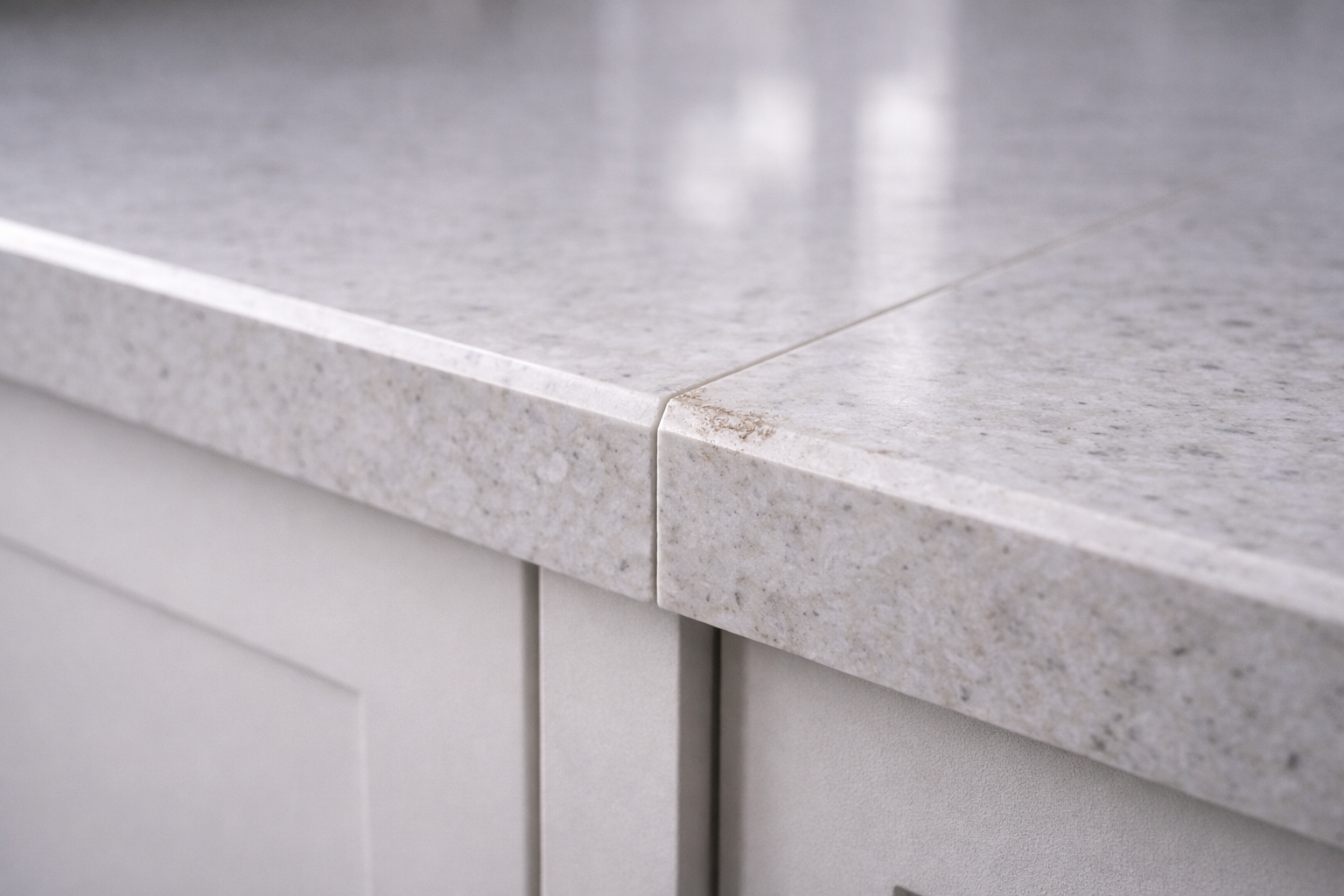
- What it looks like: a flat facet that catches light. You get a crisp highlight line.
- Best for: transitional kitchens, simple cabinets that need a bit of definition.
- What it does well: hides small abuse better than dead-square because the hit lands across the facet, not on a razor corner.
- What bites later: heavy bevels start reading “decorative,” and they can collect grime at the top corner if nobody wipes properly.
3) Half bullnose / pencil radius (family-proof without looking dated)

- What it looks like: half-round shadow roll on top, flat underside.
- Best for: islands, kid-heavy kitchens, tight walkways where people bump corners.
- What it does well: softer on hips and shoulders, less corner chipping, still easy to wipe.
- What bites later: if the radius is big, it leans traditional. Keep it tighter if the kitchen is clean-modern.
4) Full bullnose (rounded top + bottom)

- What it looks like: fully rounded nose. Soft shadow. Very “profile.”
- Best for: traditional kitchens, softer looks, some laminates and stone installs.
- What it does well: safest edge to run into. Less sharp-corner damage.
- What bites later: the “crumb roll.” Stuff drops under the curve and ends up on drawers/cabinet faces. People get tired of it fast.
5) Ogee (decorative S-curve)
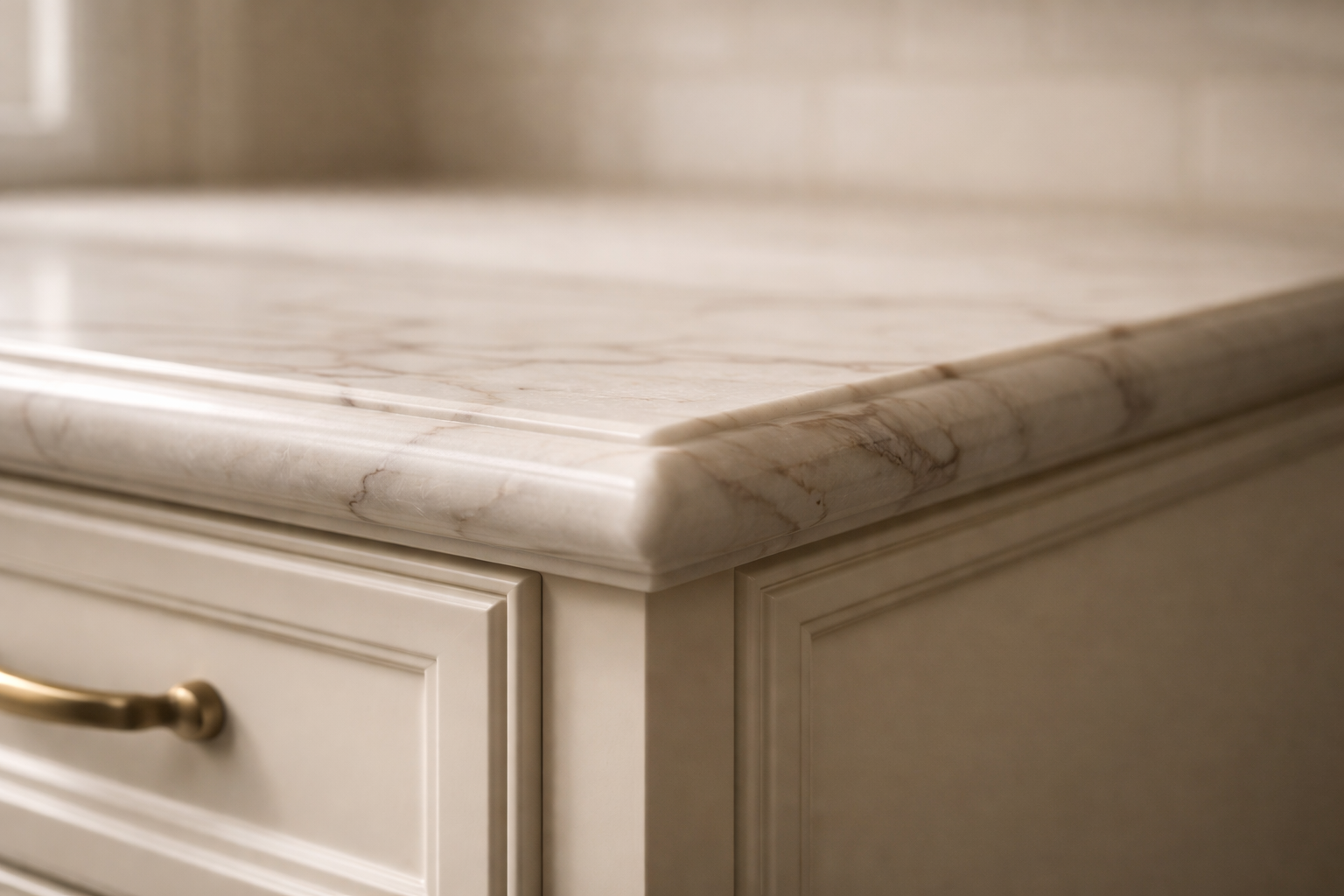
- What it looks like: S-curve with a highlight line + a shadow line. Reads “detailed.”
- Best for: classic detailing, raised-panel doors, traditional hardware, crown-heavy kitchens.
- What it does well: looks expensive when the rest of the kitchen supports it.
- What bites later: it’s an edge you wipe. And you pay for. Fine — just a choice.
6) Cove (concave undercut)
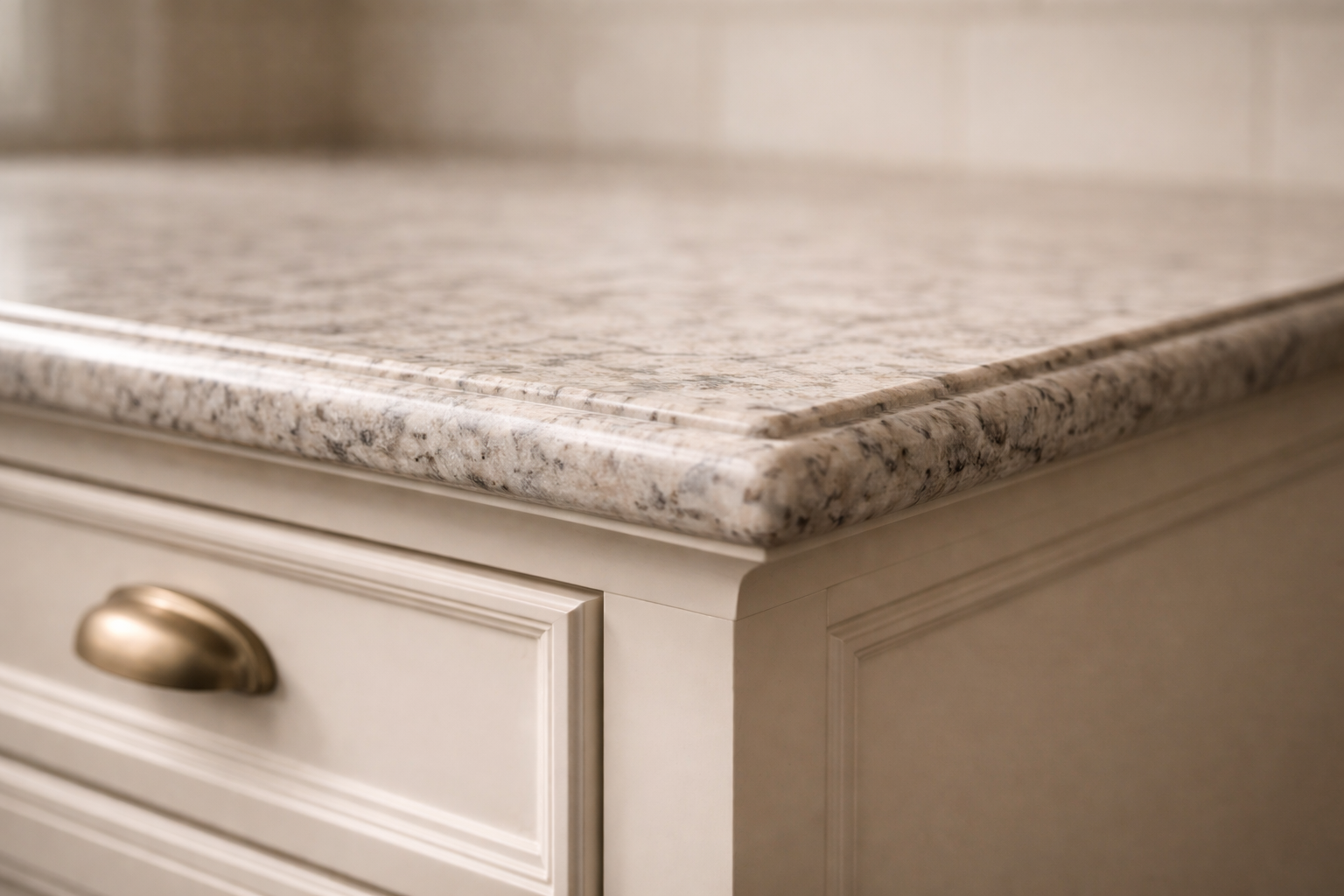
- What it looks like: a concave undercut shadow. More “furniture edge” than “slab edge.”
- Best for: classic kitchens, furniture-style islands, thicker-looking tops that you want to feel lighter.
- What it does well: makes the underside visually tuck away, so the top looks slimmer than it is.
- What bites later: deep coves collect grime. Also: thin undercuts can be chip points if pots smack into them around prep zones.
7) Dupont (step + radius transition)
- What it looks like: a small step, then a radius. Strong shadow line. Less “swirly” than ogee.
- Best for: traditional and transitional kitchens, Shaker with classic hardware.
- What it does well: the step changes where impacts land, so corners often hold up better than a sharp square edge.
- What bites later: it can look busy on minimal cabinetry, and the step is another wipe line (grease lives there if you ignore it).
8) Mitered edge (fake-thick look, less slab)

- What it looks like: thick top with a seam line somewhere (or almost invisible if the shop is good and the pattern lines up).
- Best for: anyone who wants a thicker visual without buying a thicker slab.
- What it does well: gets the “chunky” look on islands and feature runs, while keeping a modern profile.
- What bites later: seam placement and epoxy color matching. Good shops make it disappear. Average shops leave you a line you stare at forever.
9) Waterfall edge (vertical drop)
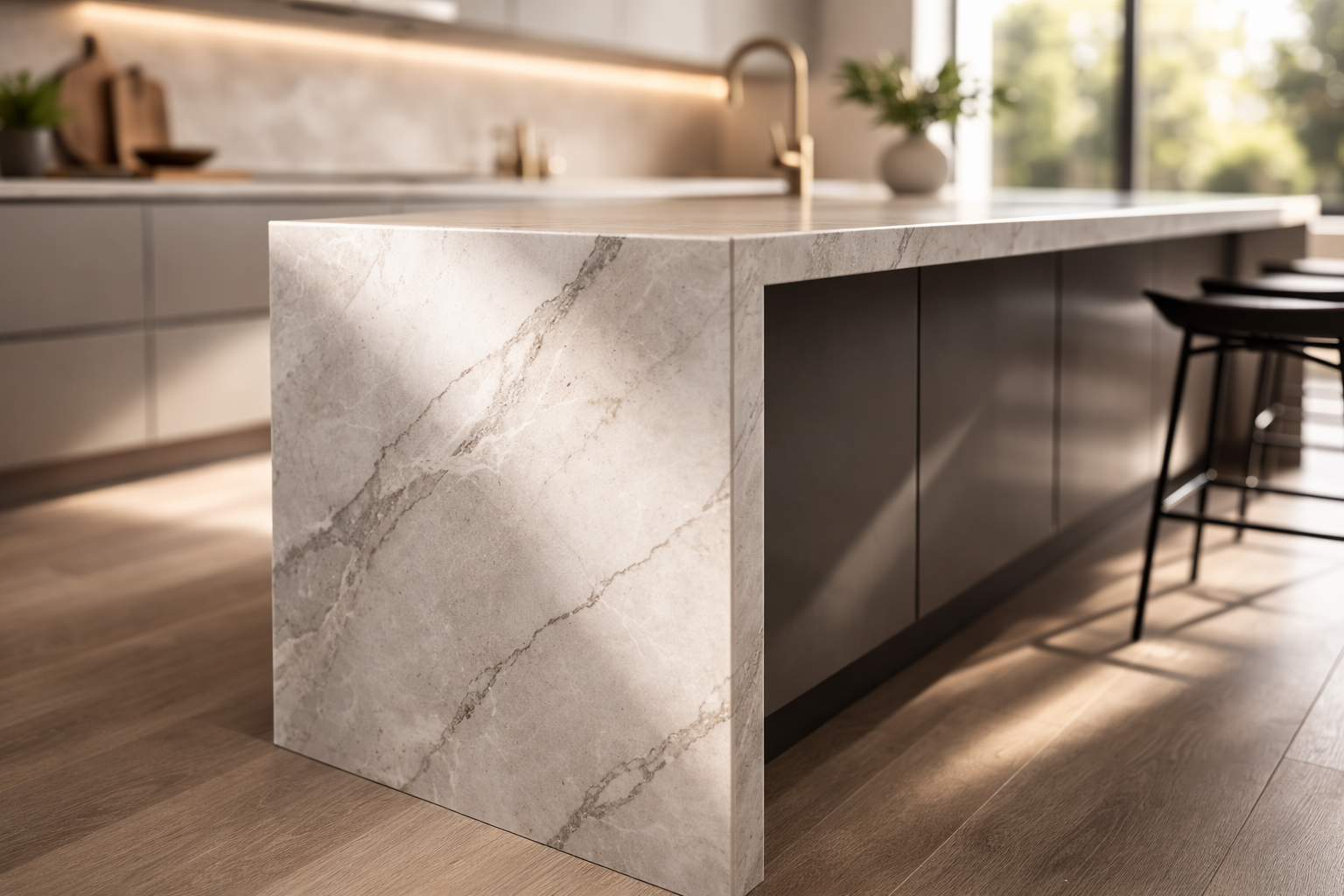
- What it looks like: the slab drops down the cabinet side. Big plane. Big visual weight.
- Best for: modern kitchens where the island is the centerpiece.
- What it does well: protects cabinet ends from chair scuffs and vacuum hits, and it can look sharp.
- What bites later: cost (material + labor) and pattern alignment. Veins that don’t line up make it look off.
Quartz countertop edge styles: what to ask the shop
Quartz brands show a menu of edge profiles, but the real limiter is the fabricator and what they execute cleanly every week. Some shops are careful. Some are fast.
- Ask for a small radius on “straight” edges. Dead-sharp corners chip.
- Ask how they treat corners. A slightly eased corner survives better than a crisp point, especially on islands.
- Ask where seams will land. If you’re doing mitered edges or long runs, seam layout matters more than the profile name.
- Ask what they warranty. Not the brand brochure. The install reality: corners, seams, sink cutouts.
If you’re still picking surfaces, keep the countertop decision tied to how you use the room. This page keeps the whole benchtop picture in one place: kitchen benchtop guide (materials + pros/cons).
Laminate countertop edge styles: what lasts
Laminate fails in boring ways: water gets in at the sink cutout, steam hits the front edge by the dishwasher, the seam swells, the edge band lifts. It’s not “bad.” It’s just less forgiving.
Postformed / rolled front edge (most forgiving)
- Why people like it: no seam on the front edge, fast wipe-down, less edge lifting.
- Reality: true postforming needs the right laminate grade and controlled heat/bending — it’s not a casual DIY bend on any sheet laminate.
Square edge with edge band / end caps
- Why people like it: more modern and boxy, can mimic stone profiles.
- Reality: seams are the weak point. If water sits on that joint, swelling is next.
If this is a budget kitchen and you’re deciding what to upgrade first: seal the sink cutout properly, pick a forgiving edge, and don’t leave raw seams exposed at the splash.
Design details: the stuff you notice every day
- Island corners: if the island sits in the main traffic lane, soften corners. A small radius changes daily life.
- Overhang + stools: deep overhangs look good, but they amplify edge contact. Support and edge choice matter more than people think.
- Sink cutout sealing: especially laminate (and wood). Water doesn’t need a flood — it needs a routine drip.
- Backsplash junction: if the edge profile creates a ledge, plan the caulk line and wipe path. Grime loves ledges.
Need custom dimensions, odd shapes, or you’re trying to make a thin slab look thicker? This is where spec decisions matter: custom benchtop selection tips.
If you’re doing a waterfall, the profile choice still matters — it changes whether the vertical leg reads like a monolith or a clean plane. This page covers the waterfall-specific tradeoffs: waterfall countertop notes + best uses.
Checklist: choosing an edge in 5 minutes
- Busy household? Default to eased/straight with a small radius.
- Kids + tight clearances? Half bullnose / pencil radius beats sharp corners.
- Love ornate details? Ogee or Dupont can work — commit to wiping it.
- Want thick look on a budget? Ask about a mitered edge and seam placement.
- Laminate? Choose the edge that minimizes seams on the front edge.
- Island is the “hangout”? Spend extra attention on corner treatment and overhang support.
FAQ
What’s the most popular countertop edge style right now?
Eased/straight edges. They match most cabinet styles and don’t demand maintenance.
What edge chips the least?
Profiles with a bit of radius tend to survive bumps better than crisp corners. Sharp edges chip. Rounded edges bruise instead.
Is full bullnose a cleaning problem?
It can be. Crumbs and drips roll under the curve and land on cabinet faces. Half bullnose keeps the softer top without the full underside roll.
Does an ogee edge date a kitchen?
Only if the rest of the kitchen is modern-minimal. Ogee looks fine when the cabinet door style and hardware live in the same world.
Is a waterfall edge worth it?
Sometimes. It protects cabinet ends and can look great, but it’s extra material and fabrication. Pattern matching becomes a real job.
Can laminate do a modern square edge?
Yes, but seams and water protection become the whole game. If the sink area is wet every day, pick the edge that resists water intrusion, not the sharpest look.
Can an edge profile be changed later?
On stone/quartz, sometimes a shop can rework an edge, but it’s messy and limited. Better to decide early.
MUST READ
Kitchen design pocket reference (layouts + specs)
Handy for sanity-checking details before you sign off on a quote.