

Image: Sleek kitchen interior with all-white Shaker cabinets and countertop, creating a clean, minimalist look.
Shaker-Style Cabinets: A Simple Guide for Modern Kitchens
Are Shaker Cabinets Still a Good Choice in 2025? Here’s What to Know
Learn how to choose, customize, and install Shaker-style cabinets with tips on colors, layouts, and hardware that actually work.
The Ultimate Outline: Shaker-Style Cabinets from A–Z
What Are Shaker-Style Cabinets?
Why They’re Still a Top Choice in 2025
Shaker cabinets are one of the most popular kitchen cabinet styles today—and for good reason. Their clean lines and simple design make them easy to match with almost any kitchen style, whether you’re going modern, farmhouse, or somewhere in between.
Key Features of Shaker Cabinets:
-
Flat center panel with square edges
-
Minimal or no ornamentation
-
Solid wood or wood-look materials
-
Can be painted or stained
-
Works well with both modern and traditional kitchens
Why people love them:
They’re neat, simple, and never go out of style. That’s why designers and homeowners keep choosing Shaker-style year after year.
What Makes Shaker Cabinets So Popular in Today’s Homes?
Shaker-Style Cabinets: How to Choose, Customize, and Style Them
A Quick Look Back: The History of Shaker Cabinets

Image: Cream-colored Shaker kitchen cabinets with a stainless steel faucet, blending modern and classic design elements.
Where the Style Comes From and Why It Matters
Shaker-style cabinets were first created by the Shakers, a religious group known for living simply and making high-quality furniture. Their design philosophy was all about function, honesty, and clean craftsmanship—no extra frills.
Shaker Design Roots:
-
Born from the Shaker religious movement in the 18th century
-
Focused on simplicity, durability, and purpose
-
Made with strong joinery and hand-built care
-
Originally used in homes, churches, and community spaces
From history to today:
Over time, this style spread beyond Shaker communities and into modern design. Now, it’s seen in kitchens everywhere—because that same no-fuss look still feels fresh and practical.
Thinking About Shaker Cabinets? Read This First
How to Style Your Kitchen with Shaker Cabinets (Without Overthinking It)
Modern Variations of Shaker Cabinets
How Designers Are Updating a Classic Look
While the basic shape of Shaker cabinets hasn’t changed, the details definitely have. Today’s kitchens mix Shaker simplicity with small twists to match different tastes and trends.
Popular Modern Takes:
-
Slim-frame Shaker: Thinner edges for a more minimal, modern look
-
Beaded Shaker: Small groove detailing adds texture
-
Handleless Shaker: Push-to-open drawers or sleek, hidden pulls
-
Two-tone combos: Shaker cabinets in different colors for uppers and lowers
Why it matters:
These updates let you enjoy the clean look of Shaker while still keeping your kitchen fresh and personal.
What Are Shaker Cabinets and Are They Still a Good Choice in 2025?
How to Choose the Right Shaker-Style Cabinets for Your Space
Best Shaker Cabinet Colors for 2025
What’s Trending—and What Always Works
Color plays a big role in how your cabinets feel. In 2025, designers are sticking with calm, natural tones but also bringing in a few bold choices to make kitchens pop.
Trending Colors:
-
Soft white – classic, bright, and easy to pair with any wall or counter
-
Warm greige – a blend of grey and beige that feels cozy and modern
-
Sage green – earthy, calming, and popular in both rustic and clean spaces
-
Matte black – bold, modern, and pairs well with light counters
-
Deep navy – rich and dramatic, but still timeless
Pro tip:
Stick with colors that feel calm or natural. They hold up better over time and work with more decor styles.
Shaker Cabinets vs Other Styles: Which One Works Best for You?
Thinking About Shaker Cabinets? Here’s What to Keep in Mind
Shaker Cabinets in Different Kitchen Styles
Yes, They Fit Almost Everywhere
One of the best things about Shaker cabinets is how flexible they are. They can shift between looks depending on the materials, colors, and hardware you choose.
Style Pairings That Work:
-
Modern kitchens: Pair white Shaker cabinets with black hardware and quartz countertops
-
Farmhouse kitchens: Use warm wood tones and vintage handles
-
Scandi-inspired spaces: Go all-white or light wood with open shelving
-
Industrial: Matte black or charcoal grey cabinets with metal pulls
-
Traditional: Classic cream or off-white cabinets with brushed gold hardware
Why it works:
The clean shape of Shaker doors doesn’t fight for attention, so they adapt well to any style.
Shaker Door and Drawer Styles Explained
Types of Shaker Cabinet Fronts: What to Know Before You Choose
Which Shaker Cabinet Door Style Is Right for You?
A Simple Guide to Shaker Door and Drawer Front Options
Door & Drawer Front Designs: Choosing the Right Shaker Door Style for Your Kitchen
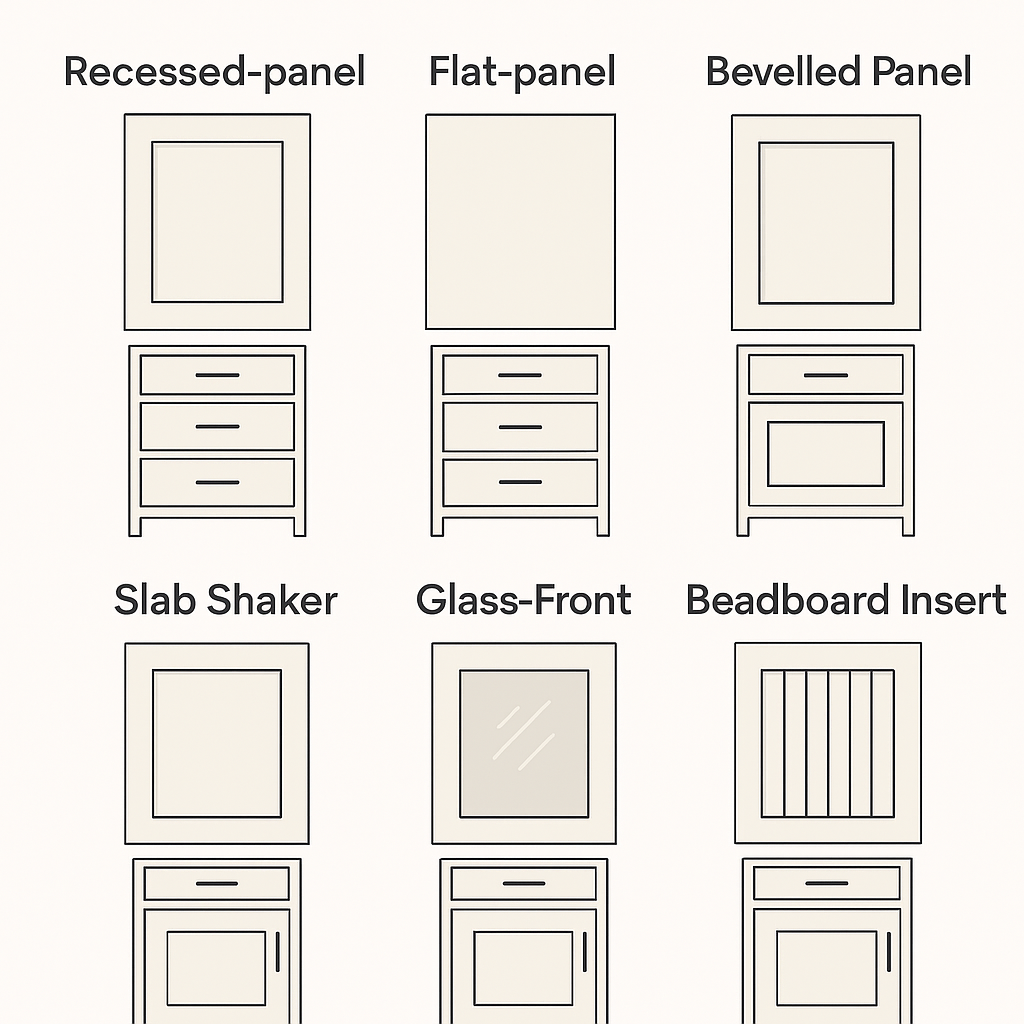
Image: Infographic comparing different door types, such as panel, shaker, glass panel, and bi-fold doors, with clear labels for easy comparison.
Different Shaker Styles and What They Mean for Your Kitchen
Shaker cabinets might seem simple at first glance, but there's actually a lot of variety when it comes to the design of the door and drawer fronts. Small changes in shape, profile, or finish can totally change how the cabinets feel—ranging from ultra-modern to cozy and traditional.
Here’s a breakdown of the main options to know before you pick.
Different Front Styles for Shaker Cabinets (With Real-Life Tips)
Shaker Cabinet Door Designs: From Recessed Panels to Glass Inserts
Recessed-Panel vs. Flat-Panel
The subtle difference that defines the look
-
Recessed-panel (true Shaker): This is the classic style—flat center panel with a raised frame. Clean, minimal, and timeless.
-
Flat-panel: Often called "slab" doors, these are completely flat with no border or indentation. They’re more modern and sleek.
Tip: Stick with recessed-panel for a traditional Shaker look. Use flat-panel for more modern or Scandinavian-style kitchens.
Beaded & Bevelled Profiles
A touch of detail, without going over the top
Some Shaker-style doors add a thin bead or bevel along the inside edge of the frame. It’s a small change, but it adds visual texture.
-
Beaded: Adds a soft groove along the inside of the frame. Nice for a farmhouse or cottage-style kitchen.
-
Bevelled: Slight angled cut on the inside edges. Subtle but gives a more polished feel.
These details won’t overpower the design—but they will help your cabinets feel more custom and finished.
Slim (Slab-Style) Shaker Doors
A thinner frame for a cleaner, lighter vibe
This is a modern twist on the Shaker look—same basic layout, but with narrower stiles and rails (the vertical and horizontal frame pieces).
-
Looks great in smaller kitchens or minimalist designs
-
Works well with modern hardware
-
Keeps the profile light without losing structure
I’ve seen this used in urban apartments where space is tight, and it instantly made the kitchen feel more open and modern.
Inset vs. Full-Overlay
How the doors sit on the cabinet frame
This refers to how the cabinet doors are mounted.
-
Inset: The doors sit inside the cabinet frame. This gives a flush, built-in look—more craftsman-like and high-end.
-
Full-overlay: Doors cover the entire cabinet face frame. Cleaner and more modern in appearance. Also adds storage space.
Note: Inset is more precise and can be pricier. Full-overlay is more common in modern remodels and easier to install.
Glass-Front & Beadboard Inserts
More character, more openness
Want to break up a row of solid doors? Inserts are a great way to add depth and personality.
-
Glass-front: Helps open up a kitchen visually and is perfect for displaying dishes or decor
-
Beadboard insert: Brings texture and a casual, cottage-style vibe
-
Frosted or reeded glass: Great for a balance of light and privacy
Don’t overdo it—1 to 3 upper cabinets with inserts is usually enough to get the look without losing storage.
Raised-Panel Shaker Doors
A blend of Shaker and traditional
Technically not true Shaker, but still popular. Raised-panel means the center panel is slightly elevated instead of flat or recessed.
-
Gives a slightly more formal look
-
Works well in transitional kitchens
-
Adds shadow lines and dimension
Use this if you want to lean toward classic without going full-traditional.
Color Variations & Combinations

Image: Stylish kitchen interior with blue Shaker-style cabinets, combining classic form with a fresh, modern design.
-
Classic neutrals: Natural, Cashmere, Ivory Shaker
-
Bold hues: Black, Navy, Emerald, Teal, Mustard, Blush, Lilac
-
Two-tone schemes: Cream + navy/charcoal/wood-tone
-
Accent backsplashes & islands (e.g. Bright cream + yellow backsplash)
-
Trending palettes: Grey Shaker kitchens, pastel-accented Shaker
Shaker-Style Cabinets: Everything You Need to Know Before Choosing
Shaker-Style Cabinets for Modern Kitchens: Clean Looks, Smart Choices
Cabinet Types & Applications
-
Kitchen: base cabinets, wall cabinets, islands, peninsula units
-
Pantry & larder cabinets
-
Corner cabinets & pull-outs
-
Bathroom vanities: single, double, wall-hung Shaker units
-
Laundry/mudroom storage & utility cabinets
-
Closets, entertainment units, armoire doors
Sourcing & Brands
-
Off-the-shelf & stock: Ikea Shaker, Home Depot, B&Q, Howdens
-
RTA (ready-to-assemble) options
-
Custom & bespoke: KraftMaid, Quaker Style, local cabinetmakers
-
Replacement doors & refacing kits
Shaker-Style Cabinets: Design Tips, Color Ideas, and Hardware Picks
This guide covers everything you need to know about Shaker cabinets—from measuring to refacing, plus color and style ideas.
Construction Materials
-
Solid hardwoods: oak, maple, cherry, hickory, ash, knotty alder
-
Engineered & budget options: MDF, thermofoil, melamine, plywood
-
Unfinished, primed, pre-painted options
Finishes & Paint Styles
-
Unfinished vs. painted vs. stained
-
Cream, white, off-white, ivory
-
Grey tones: dove, slate, charcoal, stone grey
-
Glossy vs. satin/matte vs. textured
-
High-gloss “white gloss Shaker”
Installing, Refacing, and Customizing Your Shaker Cabinets Like a Pro
Step-by-Step Guide: Updating Shaker Cabinets with the Right Fit and Finish
How to Install and Customize Shaker Cabinets the Right Way
Shaker Cabinet Upgrades: From Measuring to Hardware That Works
What to Know Before Updating or Replacing Shaker Cabinets
If you're planning to install or update Shaker-style cabinets, there are a few key things to know that will save you time, money, and mistakes. Whether you're doing a full remodel or just swapping doors, this section walks you through everything—from measuring to refacing to choosing the right hardware.
Measuring for Replacement Shaker Doors
Get this wrong, and nothing fits.
Before ordering any replacement doors, double-check your measurements—twice.
-
Measure the height and width of each cabinet opening.
-
Note the overlay size if you’re keeping the same hinges.
-
If switching from framed to frameless cabinets (or vice versa), adjust measurements accordingly.
Pro tip: I once measured based only on the old doors—not the frame. The result? A half-inch gap on all sides. Lesson learned: Always measure the opening, not just the door.
Frame vs. Frameless Construction
Know what you have—or what you want.
-
Framed cabinets: Have a front face frame. Doors attach to this frame. Very common in traditional kitchens.
-
Frameless (in-frame or European style): No face frame. Doors attach directly to the cabinet box, offering a sleeker, more modern look.
Do this:
-
Match your new doors and hinges to your cabinet type.
-
Frameless needs full-overlay doors; framed can take partial or full overlay.
Don’t do this:
-
Don’t assume all Shaker cabinets are framed—they're not. Check before you buy.
Refacing vs. Full Replacement
Save money—or start fresh?
Refacing means keeping your cabinet boxes and simply replacing the doors and drawer fronts. It’s faster and more affordable.
Full replacement means removing everything and starting from scratch.
Choose refacing if:
-
Your cabinet boxes are solid and undamaged
-
You want to refresh the look without major construction
-
You’re on a tighter budget
Choose full replacement if:
-
The cabinet structure is old, warped, or falling apart
-
You’re changing the kitchen layout
-
You want a totally new material or construction style
Building Your Own Shaker Doors
Yes, you can DIY—but it’s not for the faint of heart.
Most Shaker doors are built with cope & stick or stile & rail construction—four frame pieces joined around a flat center panel.
What to know:
-
Use strong, straight wood like maple or birch
-
Get familiar with a router table or pocket screw system
-
Sand everything smooth and prime well before painting
I once tried this on a whim—without the right clamps—and my first door warped like a taco. Lesson?
If you're going DIY, invest in proper tools and take your time. It’s doable, but not a shortcut project.
Hardware Placement & Soft-Close Hinges
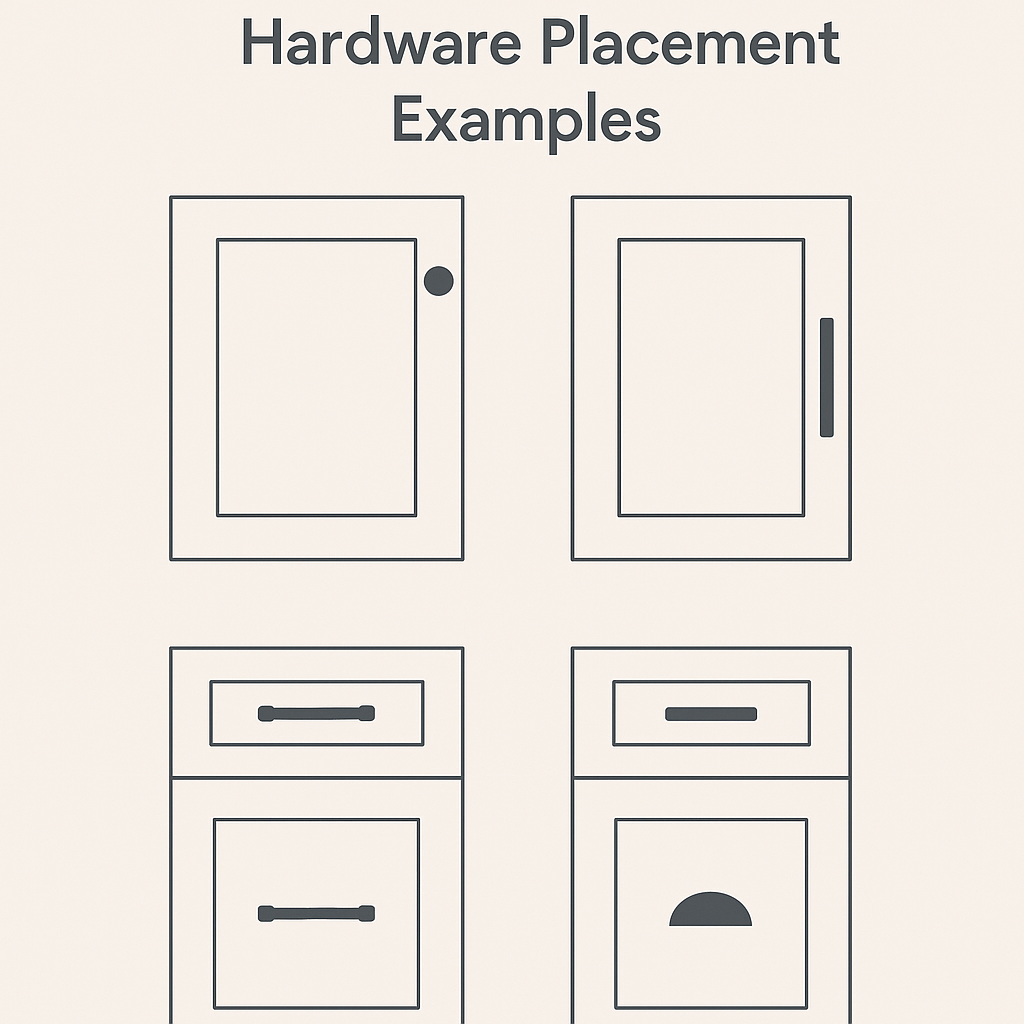
Image: Carousel-style infographic illustrating cabinet hardware placement examples for drawers and doors, with clear visual layout for knobs, pulls, and handles.
Small details that make a big difference
Where you place handles and pulls can affect both looks and function.
-
Knobs: Usually centered on the drawer front or top corner of cabinet doors
-
Pulls: For modern looks, go horizontal on drawers and vertical on doors
-
Cup pulls: Work best on drawers—place slightly above center for comfort
-
Soft-close hinges: Absolutely worth the upgrade. They prevent slamming and extend cabinet life.
Tip: Use a hardware jig to drill consistent holes—it’ll save hours and avoid crooked installs.
Hardware Tips for Shaker Cabinets
How to Choose Handles and Pulls That Fit the Look
Hardware might seem like a small detail, but it finishes the cabinet like a frame on a painting. The wrong hardware can feel out of place, while the right choice elevates the whole space.
Top Hardware Matches:
-
Matte black pulls – sleek, bold, and perfect for white, greige, or wood-tone cabinets
-
Brushed brass – adds a touch of warmth; works great with navy, sage, and earthy tones
-
Antique bronze – ideal for rustic and farmhouse kitchens
-
Satin nickel or chrome – clean and simple, best for transitional or modern styles
-
Cup pulls and round knobs – classic choices for a vintage or cottage feel
Expert Dos and Don’ts:
✅ Do keep the shapes simple—Shaker cabinets already have clean lines.
✅ Do match the hardware finish to your faucet or light fixtures if possible.
✅ Do hold hardware samples up to your cabinet before installing—looks change under real lighting.
❌ Don’t mix too many styles or finishes. One consistent look is more professional.
❌ Don’t go too ornate—Shaker design is meant to be simple.
I’ve tried to “dress up” Shaker doors with fancy, baroque handles once. It looked forced. Trust the style—it speaks for itself. Clean and strong always wins here.
Hardware & Accessories
-
Knobs vs. pulls vs. cup handles
-
Materials: brass, bronze, matte black, stainless
-
Soft-close dampers (Blum, compact Blumotion)
-
Integrated lighting & interior organizers
Modern Trends & Styling Tips
-
Slim & micro-Shaker profiles
-
Contemporary Shaker islands & open shelving
-
Mixing slab/drawer fronts with Shaker doors
-
Industrial touches: metal, concrete, open hardware
-
Mid-century & Scandinavian mash-ups
DIY vs. Professional
-
DIY strengths: cost savings, simple repaint or refacing
-
Pro services: complex install, spray-finish, inset doors
-
When to tackle yourself & when to hire pros
Maintenance & Cleaning
-
Recommended cleaners & cabinet creams
-
What to avoid: harsh degreasers, bleach, abrasive pads
-
Routine care tips
Budget, Cost & Value
-
Price ranges: RTA ($50/door) → custom hardwood ($200+/door)
-
Cheap Shaker cabinets vs. high-end
-
ROI & resale appeal
FAQ
Below are 20 of the most-searched questions people ask about Shaker cabinets—complete with concise, expert answers.
-
What defines a true Shaker cabinet?
A true Shaker cabinet has a five-piece door (stiles and rails) with a recessed center panel, simple profiles, and no ornate trim—designed for function and durability. -
How do I convert flat cabinets to Shaker style?
• Add 1×3” rails and stiles around flat panels.
• Use cope-and-stick joinery or pre-milled Shaker door frames.
• Paint or stain to match your existing finish. -
Can I buy just Shaker cabinet doors?
Yes—many retailers (Ikea, Home Depot, Howdens) and door-only suppliers offer standard and custom Shaker doors for refacing projects. -
What’s the best paint sheen for Shaker cabinets?
• Satin: Soft sheen, easy touch-ups, hides imperfections.
• Semi-gloss: Durable, washable, shows minor flaws if prep isn’t perfect. -
What materials are best for Shaker cabinet doors?
• Solid wood (oak, maple, cherry): Premium look, can be stained or painted.
• MDF: Smooth surface for paint, more affordable.
• Thermofoil: Budget-friendly, wipe-clean finish (avoid in high-heat zones). -
How much do Shaker cabinets cost?
• RTA stock doors: $50–$80 per door.
• Prefinished semi-custom: $100–$200 per door.
• Custom solid wood: $200–$400+ per door, depending on species and finish. -
Are Shaker cabinets out of style?
Not at all—Shaker’s clean lines remain timeless. They adapt to modern, farmhouse, and transitional looks year after year. -
What’s the difference between inset and overlay Shaker cabinets?
• Inset: Door sits flush inside the frame—high-end, precise fit.
• Overlay: Door covers the frame partially or fully—more forgiving install, lower cost. -
How do I measure for replacement Shaker doors?
• Measure the existing door’s width and height from the outside edge.
• Note hinge style and overlay depth (full, partial).
• Check thickness (¾” is standard). -
Can I use Shaker cabinets in a modern kitchen?
Absolutely—choose flat-front slabs, hidden pulls, and high-gloss finishes for a sleek, contemporary twist. -
What hardware works best with Shaker cabinets?
• Bar pulls: Stainless or matte black for modern flair.
• Knobs: Brushed brass or oil-rubbed bronze for classic warmth.
• Cup pulls: Vintage look on lower drawers. -
How do I clean and maintain Shaker cabinets?
• Wipe spills immediately with mild dish soap and water.
• Use a cabinet-safe cream cleaner (e.g., Parker & Bailey).
• Avoid harsh degreasers, bleach, and abrasive pads. -
Can I paint existing cabinets to look Shaker?
Yes—if the structure is sound:-
Remove doors.
-
Sand and clean.
-
Attach frame moldings to create recessed panels.
-
Prime and paint with cabinet-grade paint.
-
-
What color schemes pair well with Shaker cabinets?
• Classic white or cream with marble counters.
• Navy or charcoal lowers with white uppers.
• Wood-tone islands for two-tone warmth.
• Bold accents (mustard, teal, blush) on furniture or backsplash. -
Are RTA Shaker cabinets durable?
Good-quality RTA with solid plywood boxes and hardwood doors can last decades—it depends on brand and installation. -
How do I install Shaker cabinet doors?
-
Align hinges on the cabinet frame.
-
Drill pilot holes for screws.
-
Attach doors, adjust hinge tension for even gaps.
-
Check for level and smooth operation.
-
-
Can I have glass inserts in Shaker cabinet doors?
Yes—many Shaker-style doors offer glass-panel options (clear, frosted, or mullioned) for display cabinets. -
What’s the difference between MDF and solid wood Shaker doors?
• MDF: Smooth, crack-resistant, ideal for paint but can swell if wet.
• Solid wood: Rich grain for stain, more expensive, can react to humidity. -
How do I fix gaps in Shaker cabinet doors?
• Adjust hinge plates inward.
• Use hinge screws to tweak door alignment.
• For large gaps, install jamb kits or filler strips. -
What’s the lead time for custom Shaker cabinets?
Custom orders typically take 6–12 weeks from measurement to delivery—plan ahead if you’re on a tight renovation schedule.
Related
- Kitchen Colour Schemes with Cream Cabinets: 10 Perfect Combinations
- Cream Kitchen Cabinets: Design Tips, Color Matches, and Modern Ideas
- Are Antique Cream Kitchen Cabinets Still a Good Idea?
- The Complete List of Building Materials: Key Types and Their Applications
Further Reading
Top Books:
-
The New Kitchen Idea Book by Heather J. Paper — Hundreds of real-world layouts and Shaker applications.
-
Kitchen Think by Nancy Hiller — Deep dive into classic cabinet styles, including Shaker, with practical tips.
-
Styled by Emily Henderson — Inspiring photos and how-to’s on mixing Shaker with modern accents.
Resources
-
Howdens Shaker Kitchens
Comprehensive design guides, door styles, and customization options straight from one of the UK’s biggest cabinet makers.
https://www.howdens.com/kitchens/shaker -
Ikea Shaker-Style Doors
Affordable Metod system with Shaker-profile door fronts, plus step-by-step assembly and styling tips.
https://www.ikea.com/metod-shaker -
Home Depot Shaker Cabinet Buying Guide
US-focused overview of stock and semi-custom Shaker doors, pricing tiers, and installation advice.
https://www.homedepot.com/shaker-cabinets