

How Gustave Eiffel’s Architecture Redefined the Eiffel Tower and Paris
The story of Gustave Eiffel—the genius who created the Eiffel Tower. From early career milestones to the iconic tower’s design and impact, learn what made Eiffel a legend.
Gustave Eiffel: The Visionary Behind Paris’s Iconic Tower and Beyond

Learn how Gustave Eiffel designed and defended the Eiffel Tower against criticism, turning it into a global symbol. Discover the man behind the iron and his remarkable contributions to engineering.
Gustave Eiffel’s Personal Life and Legacy
Gustave Eiffel’s life was filled with both triumphs and challenges. In 1862, he married Marie Gaudelet, and together they had five children. Tragically, Marie passed away in 1877, leaving Eiffel to raise their children alone. This loss deeply affected him, but he remained committed to his family, ensuring they had a stable and nurturing environment.
Eiffel also faced significant hurdles in his professional life. In the late 1890s, he became embroiled in the Panama Canal scandal, a major financial crisis that implicated many prominent figures in France. Although he was later cleared of wrongdoing, the scandal cast a shadow on his reputation. Despite this setback, he didn’t stop working; instead, he turned his focus to scientific research.
When we think of Paris, we picture the Eiffel Tower soaring high into the sky. Behind this iconic landmark is the fascinating story of Gustave Eiffel, the engineer whose ideas and determination brought the tower to life. Eiffel wasn’t just about building tall structures; he was a problem-solver and a visionary, a man whose contributions went far beyond his iron masterpiece.
Growing Up: How It All Began
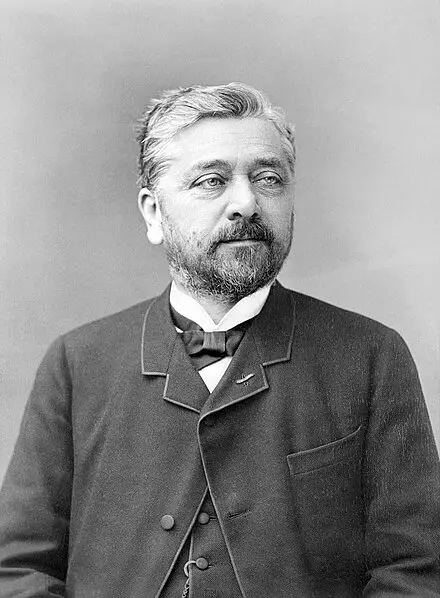
Gustave Eiffel was born on December 15, 1832, in Dijon, France. His family wasn't wealthy, but they valued hard work and education. Eiffel’s mother played a crucial role in his upbringing, running a successful coal business that provided enough stability to invest in his education.
As a child, Eiffel was curious and bright, especially drawn to science. His family encouraged his studies, and he eventually earned a spot at the prestigious École Centrale des Arts et Manufactures in Paris, one of France’s top engineering schools. He graduated in 1855 with a degree in chemistry, but it wasn't long before he shifted his focus to engineering and construction.
The Start of His Career: Bridges and Railways
Eiffel’s first job after college wasn’t glamorous, but it set him on the path to greatness. He began by working on railway bridges, which were in high demand as rail travel expanded across Europe. His first significant project was in Bordeaux, where he designed an iron bridge over the Garonne River, showcasing his innovative use of metal construction—a relatively new approach at the time.
Soon, Eiffel’s reputation grew, and he took on projects across Europe and beyond. He designed a major railway station in Hungary and tackled projects in South America. By the time he was in his 40s, he was known as a master of metal structures and a leader in his field.
A Scientist at Heart: Eiffel’s Later Years
Even after leaving large-scale engineering projects behind, Eiffel stayed active in scientific fields. He was particularly interested in aerodynamics and meteorology. At the base of the Eiffel Tower, he built a wind tunnel where he conducted experiments on air resistance, contributing to the early development of aviation. He also used the tower for meteorological research, collecting data on weather patterns and atmospheric conditions. His scientific work earned him respect in the scientific community and showcased his love for innovation.
Gustave Eiffel’s Legacy
Gustave Eiffel left behind more than just a famous tower; he created a legacy of innovation, resilience, and creativity. His work showed that metal structures could be both functional and beautiful, inspiring future generations of architects and engineers. Today, the Eiffel Tower stands not only as a monument to Eiffel’s talent but also as a symbol of human ingenuity, reminding us that even the boldest ideas can become a lasting reality.
Eiffel lived a full life, filled with both successes and challenges. He passed away in 1923 at the age of 91, but his name lives on through the tower that continues to draw millions of visitors each year. The Eiffel Tower serves as a powerful reminder that with determination and vision, what seems impossible can become a landmark that endures for centuries.
The Birth of the Eiffel Tower Idea

In 1886, Paris was planning a huge celebration—the Exposition Universelle, or World’s Fair, set for 1889. This event would mark the 100th anniversary of the French Revolution, and France wanted to show the world its industrial power. A competition was launched to create a centerpiece for the event, and many designers submitted their ideas. Gustave Eiffel and his team entered with a bold proposal: a 300-meter iron tower that would be the tallest structure in the world.
The design was unlike anything people had seen before. Eiffel’s idea was to use a lattice framework, an open, airy design that would make the tower light yet strong. At the time, most people couldn’t imagine a structure made entirely of iron reaching such heights, but Eiffel believed it could be done. He wanted to create something that wasn’t just a building but a symbol of what modern engineering could achieve.
Building the Tower: Challenges and Triumphs

Constructing the Eiffel Tower was no easy task. Work began in January 1887, and it would take just over two years to complete. Eiffel faced many challenges, from technical issues to public criticism. The tower’s design required over 18,000 individual iron parts, held together by more than 2.5 million rivets. Eiffel’s team prefabricated these parts off-site and then assembled them on location, piece by piece.
Safety was also a priority. Eiffel introduced safety measures that were ahead of his time, like using scaffolding and guardrails to protect workers. Amazingly, only one person lost their life during construction, which was rare for such a large project in those days. By March 1889, the tower was complete, standing at a height of 300 meters (984 feet)—a true marvel of its time.
A Controversial Monument

Not everyone was happy about the Eiffel Tower when it was finished. In fact, many Parisians thought it was an eyesore. Artists and intellectuals signed petitions calling it a “monstrous skeleton” that would ruin the beauty of Paris. One famous critic, writer Guy de Maupassant, even claimed he would eat lunch inside the tower’s restaurant every day just so he wouldn’t have to look at it.
Despite the backlash, the Eiffel Tower quickly became a popular attraction, drawing thousands of visitors to marvel at the views from the top. Originally, the plan was to dismantle the tower after 20 years, but Eiffel had other ideas. He believed the tower could serve a practical purpose, so he adapted it as a radio antenna. This innovation proved so valuable, especially during World War I, that the tower was saved from demolition.
The Eiffel Tower: Architectural, Engineering, and Structural Design in Detail
From Gustave Eiffel’s Vision to a Global Icon

From architectural drawings to final construction, explore the history and design details of the Eiffel Tower by Gustave Eiffel.
The Eiffel Tower, an iconic symbol of Paris, stands as a testament to innovative engineering and design. Its creation was a collaborative effort involving visionaries who transformed a bold concept into reality.
Conception and Design
In 1884, engineers Maurice Koechlin and Émile Nouguier, working for Gustave Eiffel's company, envisioned a 300-meter iron tower as a centerpiece for the 1889 Exposition Universelle, celebrating the French Revolution's centennial. Architect Stephen Sauvestre joined the team, enhancing the design with decorative arches and glass pavilions, adding aesthetic appeal to the structural concept. Gustave Eiffel recognized the project's potential and secured the rights from his colleagues, leading to the tower bearing his name.
Engineering and Structural Design

The tower's design was groundbreaking, featuring a lattice framework that provided strength while minimizing wind resistance. This open structure was not only innovative but also essential for the tower's stability. The four iron legs, set on masonry foundations, curve inward and converge to form a single tower, connected by horizontal girders at various levels, creating platforms for visitors.
Construction Process

Construction began in January 1887 and was completed in March 1889, an impressive feat for the time. The process involved assembling over 18,000 iron parts, held together by 2.5 million rivets. Prefabrication played a crucial role; components were manufactured off-site with precision and then assembled on-site, ensuring efficiency and accuracy. Special cranes and innovative lifting techniques were employed to handle the heavy iron pieces, and safety measures were implemented to protect workers, resulting in minimal accidents during construction. Eiffel Tower
Roles of Key Contributors
- Gustave Eiffel: As the project's leader, Eiffel oversaw the design and construction, ensuring the tower met both aesthetic and structural requirements. His vision and leadership were instrumental in bringing the project to fruition.
- Maurice Koechlin and Émile Nouguier: These engineers conceived the initial design and addressed the structural challenges, laying the foundation for the tower's innovative framework.
- Stephen Sauvestre: The architect who refined the design, adding decorative elements that enhanced the tower's visual appeal, making it not just an engineering marvel but also an artistic landmark.
Public Reception and Legacy

Initially, the Eiffel Tower faced criticism from some artists and intellectuals who viewed it as an eyesore. However, upon completion, it quickly became a symbol of modern engineering and French innovation. Today, it stands as one of the most recognizable structures globally, attracting millions of visitors annually and serving as a testament to the collaborative efforts of its creators.
Fun Facts About Gustave Eiffel and His Tower
- Eiffel’s Secret Apartment: At the top of the Eiffel Tower, Gustave Eiffel had a small private apartment where he entertained famous guests, including American inventor Thomas Edison. The apartment wasn’t lavish, but it offered a unique, private view of Paris.
- The Tower’s Changing Colors: The Eiffel Tower wasn’t always the bronze color we see today. It’s repainted every seven years, and over the years, it has been various shades, including reddish-brown and yellow. The current shade is known as “Eiffel Tower Brown.”
- Temperature and Height Changes: Due to its iron structure, the Eiffel Tower actually “grows” and “shrinks” depending on the temperature. On hot days, it can expand by up to 6 inches (15 cm).
- A New Use for the Tower: After its initial purpose as a World’s Fair attraction, Eiffel adapted the tower for radio communications, making it an essential tool for military use during World War I. This practical use helped secure its place as a permanent fixture in Paris.
Standing Up for Vision: How Architectural Marvels Almost Didn’t Happen and the Power of Belief
The story of the Eiffel Tower, from the vision of architect Gustave Eiffel to the innovative designs that made history.
It’s hard to imagine that some of the world’s most iconic buildings were once close to being scrapped. But without architects who fiercely believed in their vision and fought for their work, we’d be missing some of today’s architectural wonders. This idea isn’t just about design or construction; it speaks to the determination and resilience needed to bring bold ideas to life, especially when others can’t see the potential.
Gustave Eiffel and the Tower that Almost Didn’t Happen
How architect Gustave Eiffel’s vision shaped the Eiffel Tower, transforming it into a global symbol of architectural excellence.
Take Gustave Eiffel and his famous tower. When he proposed the idea of a 300-meter iron structure as the centerpiece of the 1889 World’s Fair, critics called it an eyesore. Artists, writers, and intellectuals saw it as a monstrosity that would ruin the Paris skyline.
It wasn’t easy to stand up to public opinion, but Eiffel believed in the tower’s design and value. He fought not only for his own vision but also for a new era of architecture that embraced engineering as art. Without Eiffel’s determination, the tower might never have seen the light of day.
Other Visionaries Who Fought for Their Designs
Gustave Eiffel isn’t alone in this fight. Many architects have faced similar hurdles, where their bold designs were met with skepticism or outright rejection. Here are a few famous examples:
- Frank Lloyd Wright and the Guggenheim Museum: When Frank Lloyd Wright was commissioned to design the Guggenheim Museum in New York, his unique spiral structure faced heavy criticism. Many argued that a round building couldn’t properly display art. Wright, however, stood by his design, believing that architecture should engage visitors on a journey through space. Today, the Guggenheim is an icon of modern architecture, visited by millions.
- Jørn Utzon and the Sydney Opera House: Danish architect Jørn Utzon faced numerous challenges with the Sydney Opera House. The complex design caused delays and budget issues, leading to massive public and political backlash. Utzon eventually left the project, but his vision remained. The Opera House was completed according to his designs and has since become one of the most recognized buildings worldwide.
- Le Corbusier and Chandigarh: When Le Corbusier was invited to design the city of Chandigarh in India, many doubted his modernist approach to urban planning. His vision was bold, focusing on clean lines, open spaces, and functional living. The project faced resistance, but today, Chandigarh is celebrated as a pioneering city that set a new standard for urban planning.
The Psychology of Believing in Bold Ideas
What these examples teach us is that visionary architecture often demands more than just technical skill; it requires a certain psychology of resilience. Architects who bring radical designs to life are often driven by a deep, unshakable belief in their ideas. This determination acts as a shield against criticism, allowing them to keep pushing forward even when the odds are against them.
But standing up for a vision comes with challenges. Facing constant doubt can lead to self-questioning, stress, and even burnout. Architects who push boundaries often walk a fine line between confidence and self-doubt. Those who succeed are often able to keep their focus on the bigger picture, seeing beyond the immediate criticism and imagining the impact their work could have on future generations.
Lesson Learned: The Importance of Standing by Your Vision
These stories offer a powerful lesson: to create something truly extraordinary, you have to believe in it—even if no one else does. Architects like Gustave Eiffel, Frank Lloyd Wright, and Jørn Utzon remind us that groundbreaking ideas often meet resistance. The key is not to let that resistance turn you away from your vision. Sometimes, the world isn’t ready for what you’re creating, but that doesn’t mean it’s not worth building.
For anyone facing doubts or criticism, these stories offer a reminder that the most iconic achievements often start with a challenge. When you’re willing to stand up for what you believe in, you have the chance to leave a mark that can inspire others for generations to come.
Gustave Eiffel’s Involvement in the Panama Canal Scandal
While Gustave Eiffel is celebrated for the Eiffel Tower, he faced a major controversy in his career that cast a shadow over his reputation. This wasn’t related to his beloved Parisian tower but rather a grand, troubled project on the other side of the world—the Panama Canal.
The Panama Canal Project: A Grand Vision with Serious Problems
In the 1880s, the French government launched an ambitious plan to build a canal across the Isthmus of Panama. This canal would connect the Atlantic and Pacific Oceans, creating a vital shipping route that would save ships weeks of travel around South America. Given Eiffel’s expertise and his reputation for innovative designs, he was contracted to build the canal’s locks—a complex and essential part of the project.
However, from the start, the Panama Canal project faced numerous issues. The worksite was plagued by diseases like malaria and yellow fever, which claimed thousands of lives. On top of that, the project was poorly managed and over budget, leading to mounting concerns and frustration back in France.
Financial Scandal and Eiffel’s Involvement
As the problems with the Panama Canal worsened, financial scandals began to surface. Investigations revealed corruption and mismanagement, with funds reportedly being misused by company officials and prominent figures involved in the project. Gustave Eiffel became one of the accused, facing charges of fraud and misappropriation of funds.
In 1893, Eiffel was convicted of these charges and sentenced to two years in prison, along with a fine of 20,000 francs. Although Eiffel maintained his innocence, the scandal was a major blow to his career, leading to public embarrassment and a significant setback.
Acquittal and Aftermath
Eiffel’s conviction didn’t stick for long. Later in 1893, the French Supreme Court reviewed his case and overturned the conviction, ultimately clearing his name. Despite the acquittal, the damage to his reputation had already been done, and the experience left a lasting impact on him. Feeling the sting of public criticism and the weight of the scandal, Eiffel decided to step back from large-scale engineering projects.
Turning to Science and Reinventing His Career
After the Panama Canal scandal, Eiffel shifted his focus to scientific research, especially in aerodynamics and meteorology. He used the Eiffel Tower as a laboratory, conducting experiments in wind resistance and atmospheric pressure. This shift in focus allowed him to continue contributing to society, but in a different way than he had before.
A Lesson from the Scandal
The Panama Canal scandal serves as a reminder that even the most respected professionals can face serious challenges and setbacks. For Eiffel, the scandal was a painful chapter in his life, highlighting the importance of transparency and accountability in massive engineering projects. Despite the difficulties, Eiffel adapted and moved forward, proving that resilience and reinvention can carry you through even the darkest times.
FAQs: The Architecture and Design of the Eiffel Tower
1. Who designed the Eiffel Tower?
The Eiffel Tower was designed by a team led by engineer Gustave Eiffel. While Eiffel oversaw the project and gave it his name, the initial design was conceived by two engineers at his company, Maurice Koechlin and Émile Nouguier, with architectural enhancements by Stephen Sauvestre.
2. Why was the Eiffel Tower built?
The Eiffel Tower was constructed as the centerpiece for the 1889 Exposition Universelle (World’s Fair) in Paris, celebrating the 100th anniversary of the French Revolution. It was intended to showcase France’s industrial and engineering prowess to the world.
3. What materials were used to build the Eiffel Tower?
The Eiffel Tower is made entirely of iron, specifically puddled iron. Over 18,000 individual iron pieces were prefabricated, transported, and then assembled with 2.5 million rivets, creating a durable yet flexible structure.
4. How tall is the Eiffel Tower?
When it was completed in 1889, the Eiffel Tower stood at 300 meters (984 feet). Today, with the addition of antennas, it reaches a height of approximately 324 meters (1,063 feet).
5. What makes the Eiffel Tower’s design unique?
The Eiffel Tower’s open-lattice structure is unique because it reduces wind resistance. This lattice design allows wind to pass through the tower, making it more stable and enabling it to withstand strong gusts without needing solid walls for support.
6. How was the Eiffel Tower built so quickly?
Construction of the Eiffel Tower took just over two years, from January 1887 to March 1889. Prefabrication played a crucial role; parts were manufactured off-site to precise specifications and assembled on-site, streamlining the process and minimizing errors.
7. What was the biggest challenge in building the Eiffel Tower?
One of the main challenges was designing a structure that could withstand strong winds without compromising height. Eiffel’s team calculated exact angles and dimensions to create a tapered effect, allowing the tower to “shed” wind and sway only slightly under pressure.
8. Why did some people dislike the Eiffel Tower when it was first built?
Many artists and intellectuals criticized the Eiffel Tower as an “eyesore” and feared it would ruin Paris’s beautiful skyline. Some even signed petitions to stop its construction. However, public opinion shifted as people were amazed by its height, views, and engineering brilliance.
9. What is the Eiffel Tower used for today?
Besides being a major tourist attraction, the Eiffel Tower is used as a broadcast tower for radio and television signals. Originally, it even helped with early radio transmissions, which saved it from being dismantled after the World’s Fair.
10. How often is the Eiffel Tower repainted?
To protect the iron from rust, the Eiffel Tower is repainted approximately every seven years. Its color has changed over the years, but today it is painted in a bronze shade known as “Eiffel Tower Brown.”
11. Does the Eiffel Tower move or sway?
Yes, due to its height and structure, the Eiffel Tower can sway up to 6-7 cm (about 2-3 inches) in high winds. Additionally, the metal expands and contracts with temperature changes, causing it to grow or shrink by about 15 cm (6 inches).
12. Why is the Eiffel Tower considered a masterpiece of engineering?
The Eiffel Tower is seen as an engineering masterpiece because it combined strength, height, and stability in a way that was revolutionary for its time. Its open-lattice design, use of iron, and prefabrication techniques were cutting-edge in the late 19th century, influencing the development of skyscrapers and modern architecture.