

Modern Meets Historic: Smart Ways to Combine Styles
See how architects and designers combine old homes with modern features that work. Clean, useful, no fluff.
Stop Ruining Old Buildings with Fake Modernism
Slapping glass boxes onto old stone walls doesn’t make a building modern. It just makes it confused.
Good architecture respects context. If you're blending old and new, you need more than just contrast—you need structure, purpose, and restraint. Real fusion takes work. And guts.
This guide breaks down how to actually mix architectural eras without wrecking either. Materials, layout, sightlines, surfaces. It's all here.
FIELD PICK
The Architecture Briefs series (17 books) covers everything from design thinking to materials. No fluff. Just solid insight from real architects.
✓ Fast, practical reads
✓ Built for how architects actually work
✓ Great if you're mixing old and new
Architectural Fusion: Mixing Traditional and Contemporary Design
Combining Old and New Buildings: What Works, What Fails
How to Merge Classic Architecture with Modern Living
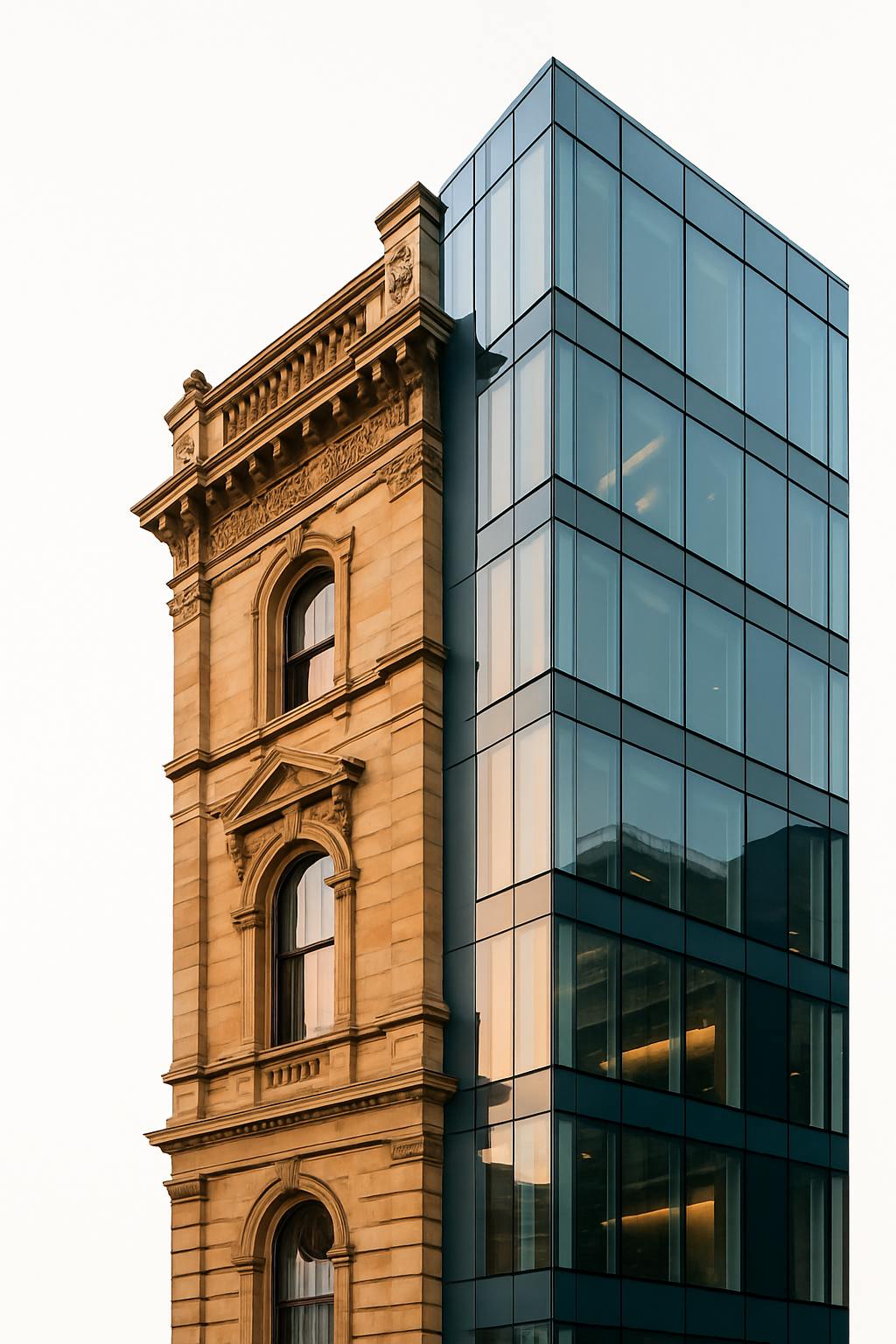
Learn what it takes to merge historic architecture with modern needs: from materials to layout to visual balance.
Old House, New Life: Updating Heritage Without Ruining It
1. Know What You're Working With
Before adding anything new, understand the old.
● What era is the building from?
● What materials were used—brick, stone, timber?
● What does the structure allow or limit?
Too many renovations skip this. They force “modern” ideas into bones that can’t hold them. Result? Sagging additions, weird spatial logic, or total visual dissonance.
Example: A Victorian home in Montreal had original stone masonry walls. The owner wanted skylights and wide spans. The team had to reinforce the attic with a hidden steel frame—not just open walls and hope.
2. Respect the Materials—or Replace Them Honestly
Historic buildings weren’t made with drywall and vinyl siding. Don’t insult them by pretending otherwise.
When updating:
● Match weight with weight (e.g. solid wood to solid wood)
● Use modern materials intentionally, not to fake the past
● Let contrast be real—glass, steel, concrete—but grounded in proportion
FIELD PICK
If you're restoring old wood, this wax-oil finish keeps it alive without fake gloss.
Osmo Polyx-Oil Clear Finish
3. Let the Old Stay Old
Don’t erase the past. Frame it.
Preserve patina, cracks, original joinery when possible. New work should highlight these elements, not cover them up with drywall and paint.
Use modern framing, lighting, or minimalist surfaces to surround the original—never overwrite it.
Case in Point:
In a Berlin loft, exposed 1920s brick was left raw. The new addition? A floating steel staircase that didn’t touch the walls—just hovered in the space.
4. Align Layouts, Not Just Aesthetics
The biggest mistake? Making the new space feel disconnected.
Old buildings followed tight plans: rooms, corridors, structural rhythm. New spaces often favor openness. The trick is bridging both without killing flow.
● Use transitional zones (glass connectors, covered breezeways, sunken thresholds)
● Maintain rhythm—match ceiling heights or axis lines
● Avoid sudden shifts in material or lighting
Pro Tip:
If the original house has small rooms, don’t gut it. Let new additions handle the open plan. Old stays cozy. New handles air and light.
5. Don’t Use History as a Theme
This isn’t a museum. Don’t “theme” it.
Avoid fake corbels, retro wallpaper, and salvaged junk just to force charm. Honor the original by being honest. If it’s 1890s brick, let it be brick. Don’t turn it into a Pinterest parody.
Modern insertion done right:
An addition to a Georgian farmhouse used clean white stucco, no frills. But the proportion, symmetry, and scale nodded to the original. Respect beats imitation.
6. Solve for Function, Not Fashion
Why are you adding something modern? More light? Better flow? New use?
Don’t build trends—build answers.
● A sunroom should bring light into the old part
● A kitchen extension should solve storage, not show off marble
● A second floor should add space without drowning the facade
Example:
A 1930s brick bungalow in Toronto had a rear box extension added—not to show off but to fit a real kitchen, pantry, and laundry. The new flat roof kept the focus on the original facade.
7. Let Contrast Be Quiet
The best modern additions don’t shout.
They sit back. They let the original structure lead.
Use muted tones, simple forms, sharp materials—but nothing flashy. Modern steel doesn’t need curves. Just presence. Balance comes from tension, not noise.
Visual Detail Tip:
Try layering light—LED uplights on stone, recessed lighting on new surfaces. It helps old and new read in separate layers.
When It Works, It Hits Hard
You walk in, and nothing feels forced.
The old beams are still cracked. The brick still smells like dust. But the floor is polished concrete, the kitchen is steel and oak, and the light—real daylight—cuts across both centuries at once.
That’s what good blending does. It doesn’t fake harmony. It builds tension and makes it work.
You feel it in the quiet.
No trim battles. No crown molding glued onto drywall like a costume. Just structure, balance, and guts.
You don’t need to explain it. You just stand there and get it.
Real Mistakes to Avoid
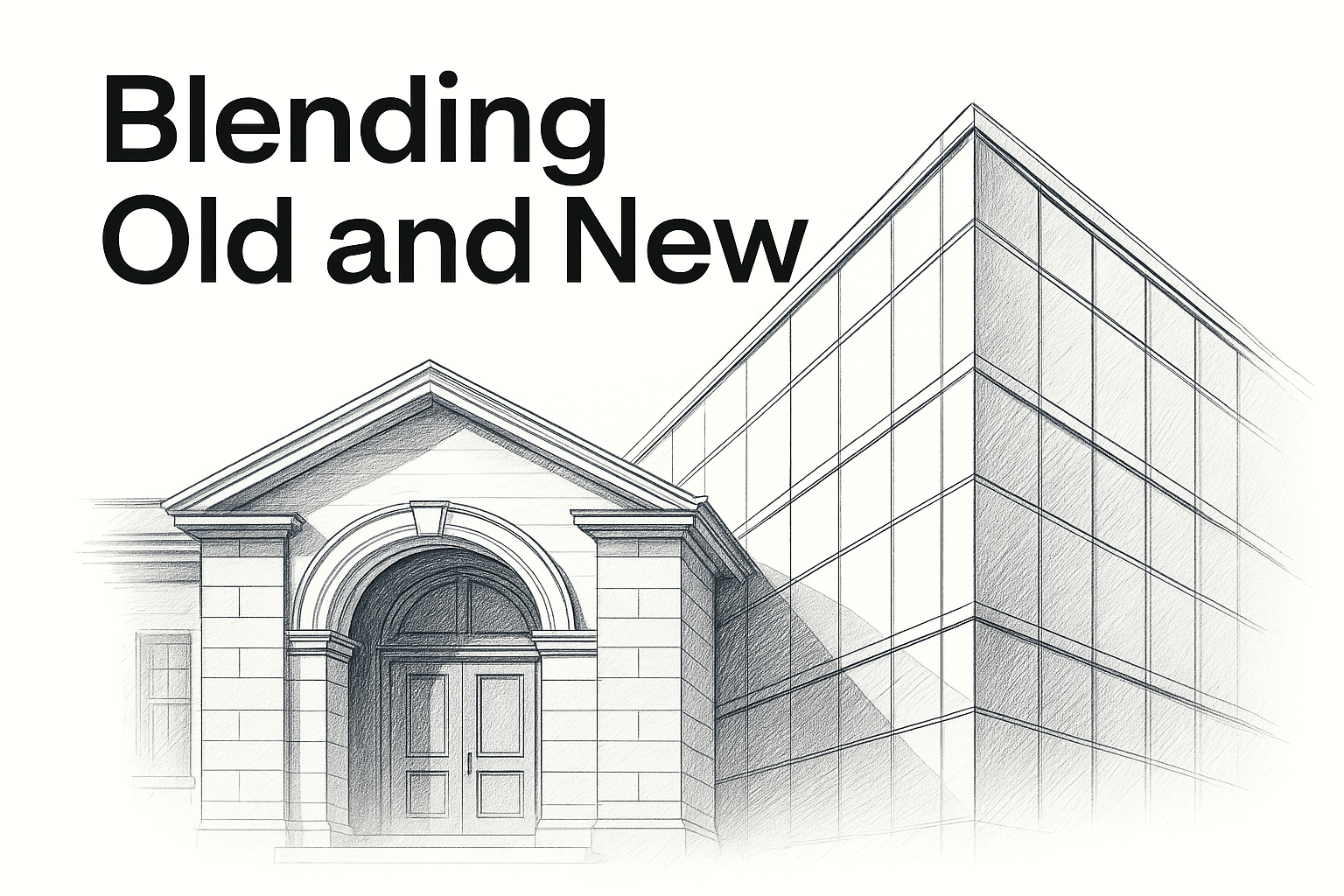
Renovating Historic Homes with Modern Design That Actually Fits
✕ Fake antique finishes on new builds
✕ Glass boxes on heritage buildings just to look "bold"
✕ Ignoring structural limits of older buildings
✕ Over-lighting or whitewashing old materials
✕ Mixing historical styles that don’t belong together (Victorian + Scandinavian minimalism = disaster)
What It Took: A Real Project That Almost Failed
They almost tore it down.
A 1912 brick warehouse in Philadelphia, three stories, cracked façade, no insulation, pigeon-infested. The new owner wanted a live-work loft space with rooftop access and full glass on the rear.
Three architects walked away.
The fourth one didn’t.
What made it work?
▪ They kept 70% of the original brick, but rebuilt the corners using reclaimed brick from a demolished factory two blocks over.
▪ The steel moment frame had to be snuck in piece-by-piece through an alley with only 4 feet of clearance.
▪ HVAC couldn’t run through the floors, so it was tucked between new drop ceilings and exposed beams—every vent aligned with original joist bays.
▪ The new rear wall? Blackened steel with triple-glazed glass, recessed flush with the old masonry. No overlap. No gimmicks.
The hardest part?
Bracing the structure during demolition without losing the parapet. One wrong cut, and the entire front would’ve collapsed.
The project ran $140,000 over budget. Took 18 months. The result? One of the most functional, visually balanced, brutally honest mixes of old and new in the neighborhood.
No glass box. No fake vintage signs. Just architecture that worked its ass off.
Checklist: How to Blend Old and New Without Killing Either

✓ Study the original structure first
✓ Choose honest materials for both eras
✓ Keep layout transitions smooth
✓ Don’t fake “old” or overstate “new”
✓ Always build for use, not trends
✓ Let old features breathe
✓ Design for contrast—but make it respectful
KEEP LEARNING
Top Resource: Old Buildings, New Designs: Architectural Transformations by Charles Bloszies
Why it’s worth it: Real examples, pro-level detail, and clean diagrams. Doesn’t waste your time.
→ Buy on Amazon
Affiliate Disclosure: We may earn from qualifying purchases.
FAQ
Q: Is it okay to mix ultra-modern with historic architecture?
Yes—but only if done with restraint. Materials, scale, and sightlines matter more than style.
Q: Should I restore or replace damaged historic materials?
Restore when you can. Replace only when it fails structurally—and match quality.
Q: What’s the best way to link old and new spaces?
Use transitional connectors—glass bridges, sunken levels, shadow gaps—to create separation that feels natural.
Q: Can I add a modern extension to a heritage-listed property?
You’ll need permission. But many cities allow it if it’s structurally independent and visually respectful.
Q: How do I light a mixed-era space?
Layer lighting. Use warm tones on old materials, sharper tones on new ones. Avoid flooding everything with uniform light.