
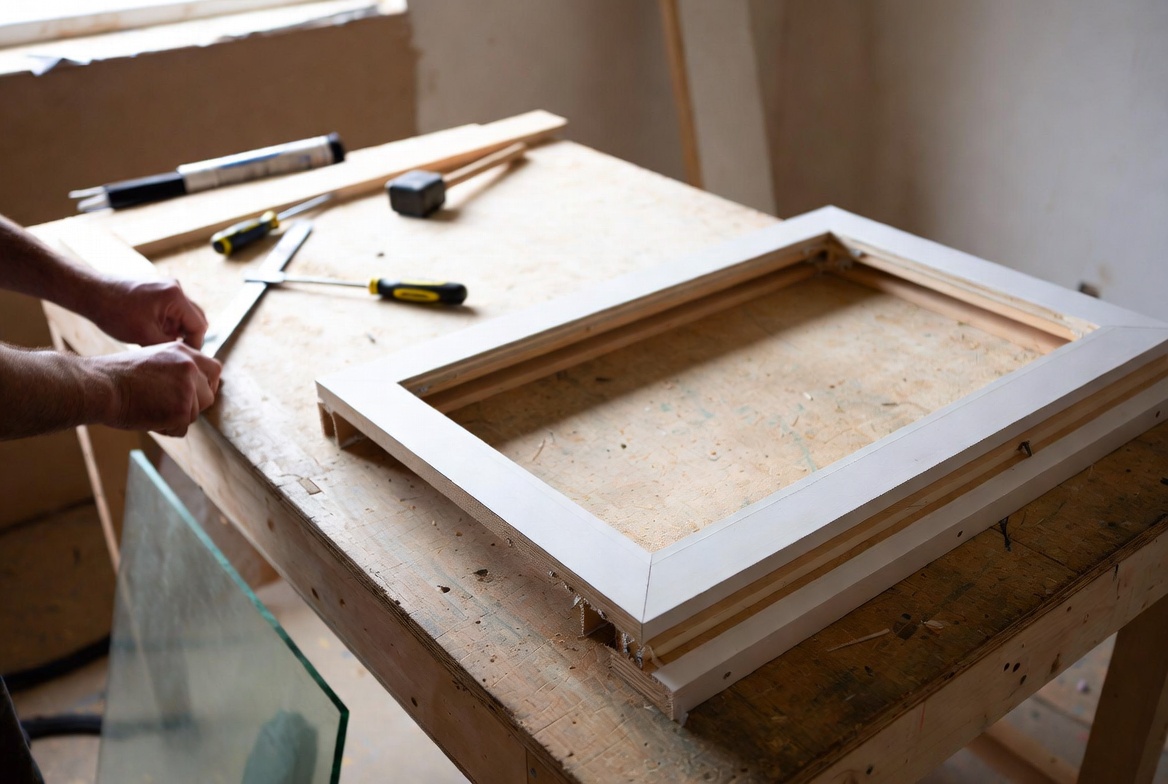
Windows cause trouble fast. They leak, stick, rot at the sill, fog between panes, or make a room feel cold even when the heat is on.
That usually means one thing: the window is being treated like a product, not a small wall assembly.
A window has to handle water, air, glass, structure, trim, and movement in a very small space. Miss one layer and the failure often shows up at the same place: the bottom corner, the sill, or the gap hidden behind the casing.
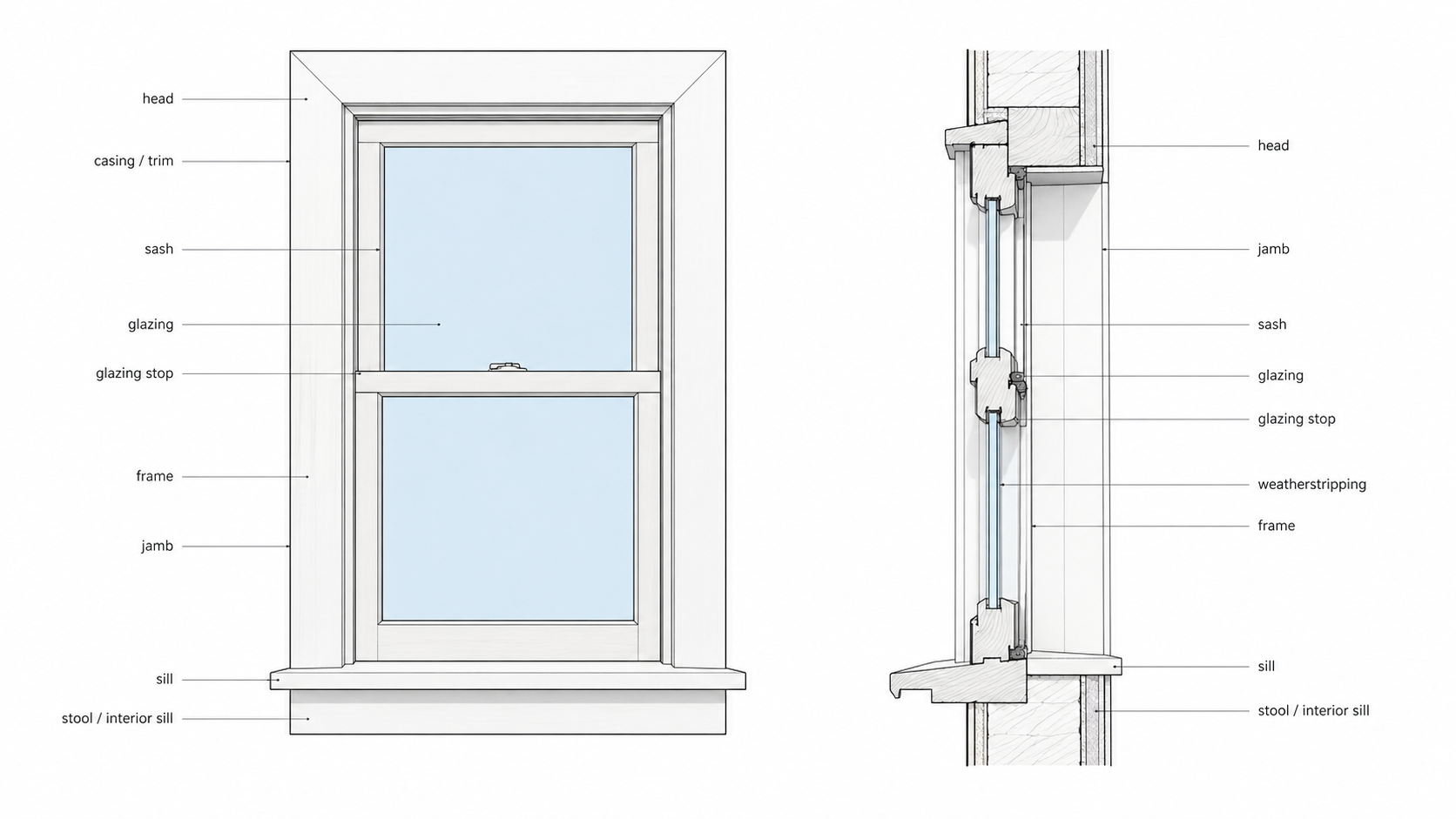
Illustration by ArchitectureCourses.org. A double-hung window showing the sash, frame, glass, trim, sill, and basic parts.
What the Window Has to Do
Light and ventilation are the easy parts.
The harder job is sitting inside a hole cut through the wall. That hole interrupts framing, sheathing, housewrap, siding, insulation, interior finish, and exterior trim. The window has to reconnect those layers without trapping water or letting air move through the gap.
Most failures are small details. A sill is too flat. Flashing is lapped backward. A replacement unit is smaller than the old opening. The rough opening is out of square so the sash never works right.
| Part | Job | Common Failure |
|---|---|---|
| Frame | Holds the window in the opening | Rot, movement, weak corners |
| Sash | Holds the glass and opens or closes | Binding, loose joints, poor weatherstrip |
| Glass | Provides light, view, and thermal separation | Cracks, fogging, failed seals |
| Sill | Moves water away from the wall | Flat slope, soft wood, water backflow |
| Flashing | Directs water outward | Missing tape, wrong lap order |
| Rough opening | Receives and supports the window unit | Out of square, oversized gaps, bad shimming |
The Opening Comes First
A window cannot fix a bad opening.
The header carries load over the hole. Jack studs support the header. King studs tie the opening back into the wall. The rough sill supports the lower edge of the window area.
If the opening racks, the sash binds. If the sill rots, the frame drops. If the wall around the window is wet, the new window will sit inside the same problem.
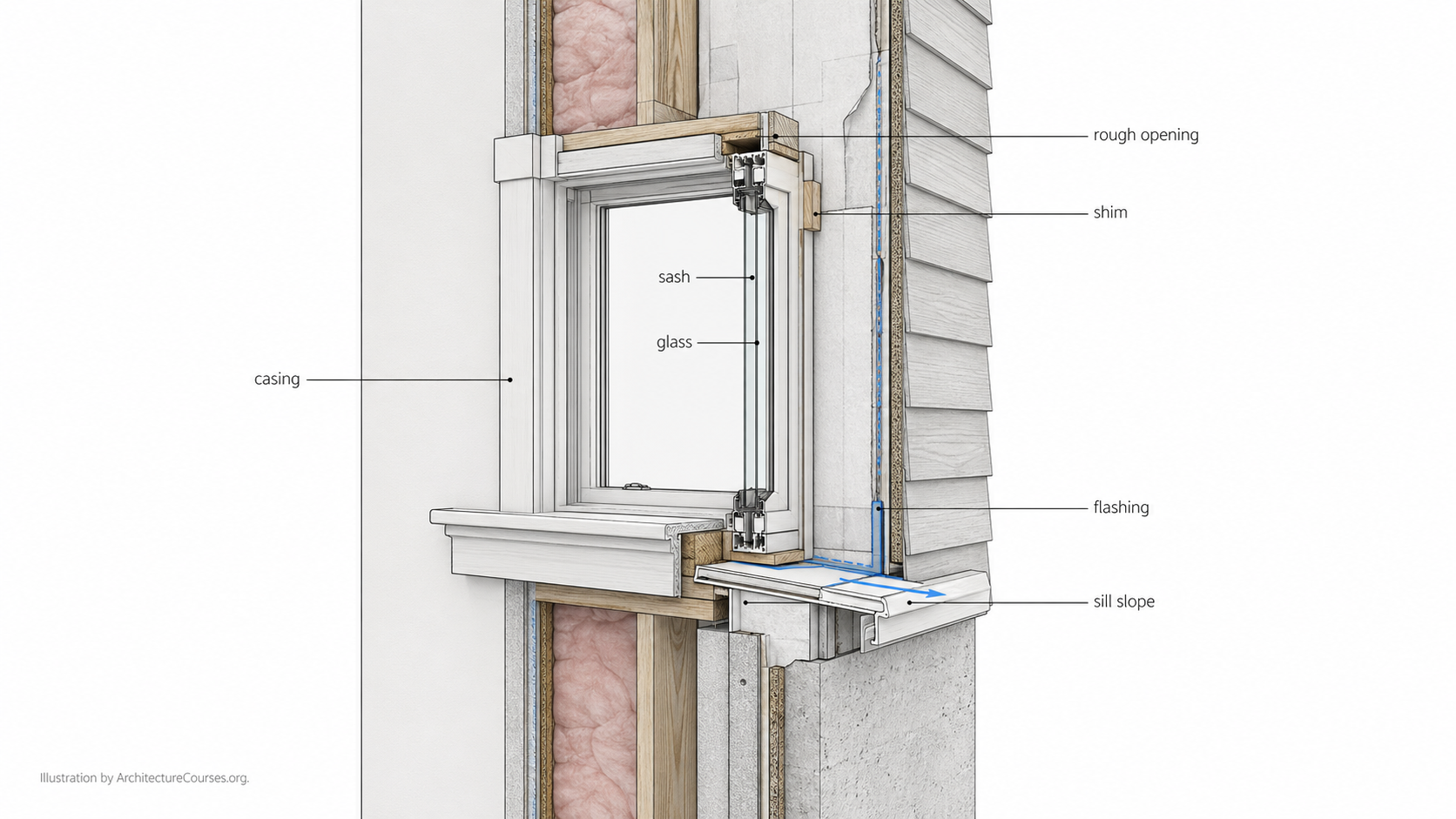
Illustration by ArchitectureCourses.org. A wall section showing the window frame, flashing, shims, and sloped sill inside the rough opening.
Check the opening before blaming the window. Look for rot, soft sheathing, a sagging sill, old water stains, and gaps that were hidden behind trim.
Basic Window Parts
The frame is the outer structure of the unit. The sash holds the glass. Jambs run up the sides. The head is the top. The sill is the lower piece that should slope outward.
Inside, you may see a stool, apron, and casing. Outside, trim or cladding covers the joint between the wall and frame.
For the broader overview of operating styles and layouts, start with types of windows.
Frame Materials
Frame material changes the repair, the look, and the weak point.
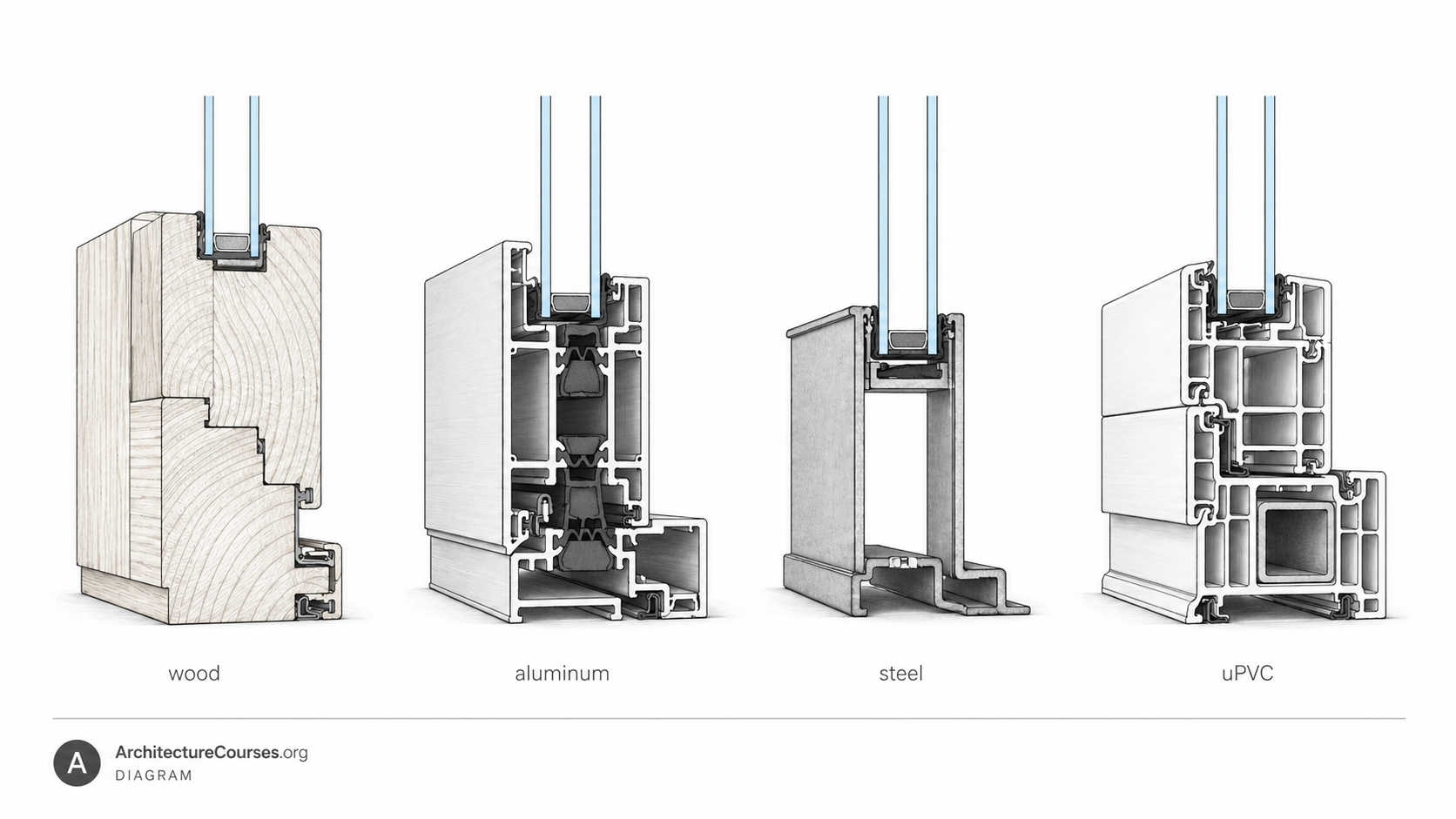
Illustration by ArchitectureCourses.org. Wood, aluminum, steel, and uPVC frame sections shown at the same scale.
| Material | Where It Works | Watch For |
|---|---|---|
| Wood | Older houses and repairable windows | Rot, paint failure, swelling |
| Aluminum | Thin modern profiles and durable exterior frames | Thermal bridging and condensation |
| Steel | Historic or industrial windows | Corrosion and heat loss |
| Vinyl | Common replacement units | Thick profiles and limited repair |
| Fiberglass | Stable replacement frames | Higher cost |
For deeper material pages see aluminum window frames and wooden window frames.
Old Wood Windows
Old wood windows get replaced too quickly.
Some are finished. Rotten sills, broken joints, missing parts, and badly warped sash can make repair a poor use of money.
But many are not failed. They are neglected. Loose glazing putty, broken sash cords, paint buildup, worn weatherstripping, and tired exterior paint are repair issues.
When the frame and sill are still sound, repair plus a good storm window can work well and keeps the original glass size and trim proportions.
If the frame itself is damaged, start with wooden window frame replacement.
Replacement Windows
Replacement windows are not automatically an upgrade.
Insert replacements slide into the existing frame. That means less labor but also less glass area and thicker visible edges.
Full-frame replacement removes the old frame so the opening can be repaired and flashed properly. It solves deeper problems but involves siding, trim, insulation, and interior finish work.
| Type | Use It When | Main Risk |
|---|---|---|
| Insert replacement | The existing frame is still solid | Reduced glass area |
| Full-frame replacement | The frame or opening is damaged | More wall repair |
| Sash repair | The frame is good but sash is worn | Hidden air leaks remain |
| Storm window | Original window is worth keeping | Condensation if poorly detailed |
Leaks Start in Small Places
Most window leaks are boring. That is what makes them dangerous.
A missing drip edge. A flat sill. Flashing lapped the wrong way. Caulk where water needed a drainage path.
Water does not always show where it enters. It may come in above the window and appear lower on the wall.
Drafts Hide Behind Trim
Drafts are often blamed on the sash.
Sometimes that is true. But many drafts come from the gap between the frame and the rough opening. Trim hides that gap.
If that joint was never sealed well, cold air moves through the wall and appears around the casing.
Energy Performance
Glass technology matters, but installation still matters more.
Low-E coatings, insulated glass units, and better frames help. But if the surrounding wall leaks air, the room will still feel cold.
For deeper coverage see energy efficient windows.
Building Your Own Windows
You can build some windows.
Simple fixed windows for sheds, porches, or workshops are realistic projects. Operable windows with weather seals and hardware are harder. Sealed double-pane glass units are factory products.
For fabrication guidance see build your own windows.
Storm Windows and Inserts
Storm windows add another layer outside or inside the original window.
They can reduce drafts and protect old sash. They also have to allow water to drain and air to dry.
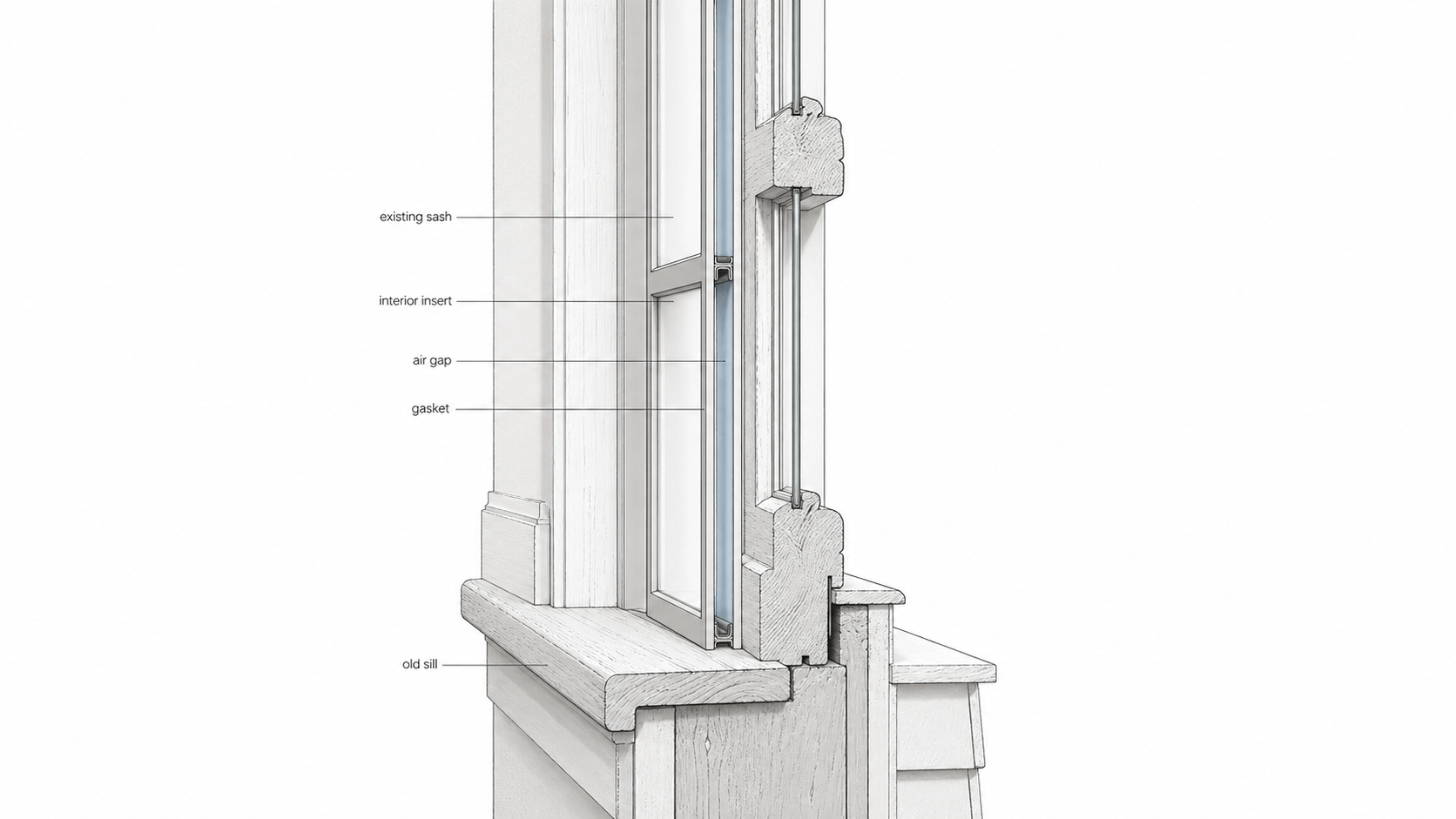
Illustration by ArchitectureCourses.org. Interior storm insert creating a small air space.
Window Screens
Screens are simple but still need proper fit.
A loose screen rattles, bows, or leaves gaps for insects. Most problems come from bent frames, loose mesh tension, or the wrong spline size.
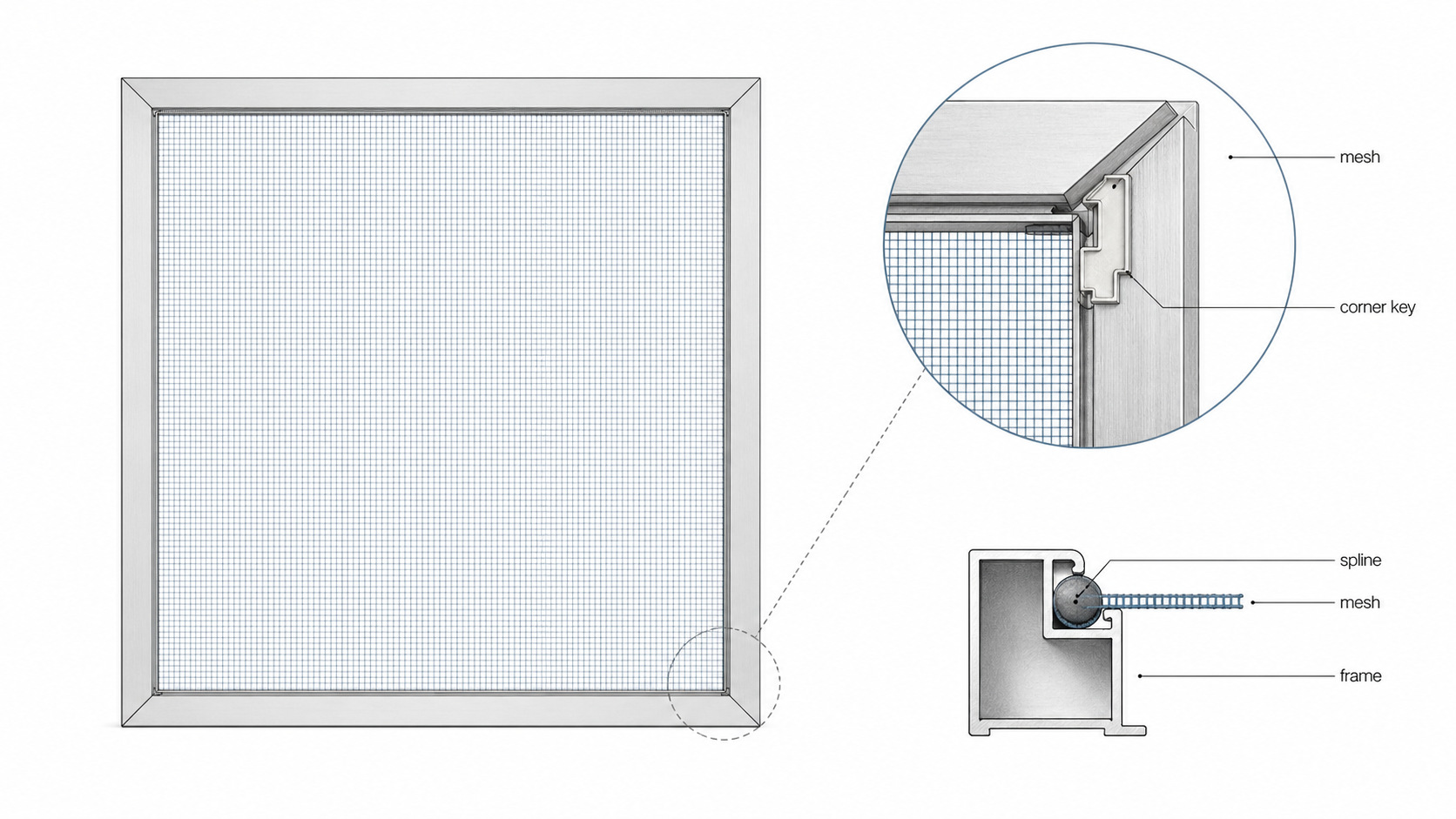
Illustration by ArchitectureCourses.org. Screen frame showing mesh, spline groove, spline, and corner key.
Shutters and Blinds
Shutters and blinds are not structural parts of the window but they affect how the opening works visually and functionally.
Exterior shutters often look wrong when they are sized incorrectly. Interior shutters and blinds need enough frame depth to work without crowding the opening.
Common Failures
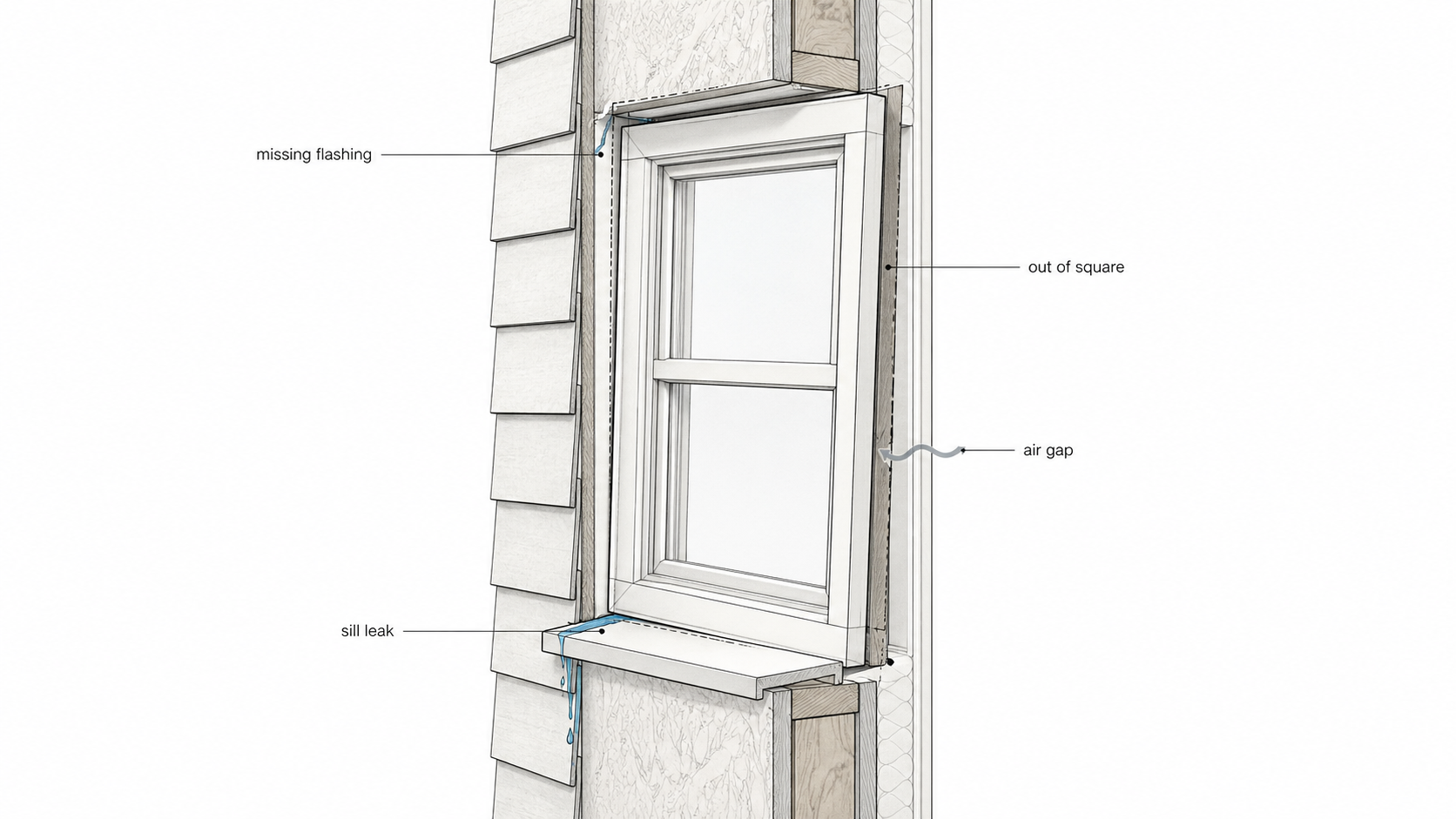
Illustration by ArchitectureCourses.org. Typical window installation failures.
| Problem | Likely Cause | First Check |
|---|---|---|
| Leak at sill | Flat sill or bad flashing | Water path and wood condition |
| Draft around trim | Unsealed frame gap | Frame-to-opening joint |
| Binding sash | Out-of-square frame | Diagonal measurements |
| Fogged glass | Failed insulated glass seal | Glass unit replacement |
| Small looking replacement | Insert unit inside old frame | Glass area |
FAQ
Why do windows leak?
Usually flashing, sill slope, or the wall around the window. The glass itself is rarely the main cause.
Can I build my own window?
Yes for simple fixed windows. Operable sealed units are much harder and normally factory built.
Are old wood windows worth repairing?
Often yes if the frame and sill are still solid. Reglazing, weatherstripping, and storm windows can restore performance.
Why do replacement windows sometimes look worse?
Insert units sit inside the old frame and reduce the visible glass area.
What part of a window rots first?
Usually the sill or the lower corners of the frame because water collects there first.
Do storm windows help?
Yes when they are installed so water can still drain and the assembly can dry.
Read Next
For operating styles and layouts see types of windows.
For fabrication and DIY builds see build your own windows.
For repairing old frames see wooden window frame replacement.
For efficiency upgrades see energy efficient windows.